Visualizar em escala
 Enviar
 Compartilhar
 Ver detalhes
 Guia de Obras do Aluno

 Baixar imagem
 Semelhantes
 Raio X
 Apresentação de slides
 Estatísticas
Gotteron
 Oil On Canvas
- WallArt
- Expressionist Landscape
 1943
1943- Modern
 115.0 x 99.0 cm
 Ver mais
A obra de arte exibida nesta página é protegida por leis de direitos autorais, o que significa que não podemos criar ou vender legalmente uma reprodução idêntica. Esta proteção é aplicada por meio de acordos internacionais, tais como a Convenção de Berna e pelas leis nacionais, incluindo as estabelecidas por Lei de Direitos Autorais dos EUA - Título 17.
Como uma alternativa respeitosa e legal, oferecemos obras de arte personalizadas e pintadas à mão, inspiradas na obra original. Nossos artistas profissionais e experientes estudam cuidadosamente o estilo, a atmosfera e a essência artística da obra original para criar uma peça nova e única que evoque a mesma sensação — permanecendo como uma criação original por direito próprio.
Este método cumpre plenamente as regulamentações de direitos autorais, pois não envolve a cópia ou duplicação da obra protegida. Em vez disso, trata-se de uma reinterpretação criativa — uma nova pintura que é influenciada pela original, mas não idêntica a ela.
Reprodução em Óleo Feita à Mão
Óleo sobre tela pintado à mão no tamanho e moldura de sua escolha, feito sob encomenda pelos nossos artistas. ( Alternar para Impressão Ver Imagem Digital)




P118B €10

P118H €10

P118W €10

P438Z €10

P508JH €12

P508YH €12

P805H €10

P805Z €10

P919BZ €10

P919G €10

P919XJ €10

P959ZH €10

P968JZ €12

W106C €8

W218G €10

W218JH €8

W218Y €10

W307PJ €10

W316G €10

W316PJ €8

W316Y €10

W398PJ €8

W4111J €10

W500HY €15

W500JH €15

W692G €12

W849H €8

W940BG €15

W953PJ €8




Escolha entre os nossos tamanhos pré-definidos que respeitam as proporções originais da obra de arte.

Digite a largura e a altura de que necessita, para se ajustar à sua moldura ou à sua parede. Esta obra é pintada à mão, por isso, para um tamanho com uma proporção diferente, o artista pode pintar um pouco mais ao redor da imagem ou cortar um pouco — você escolhe. Enviamos-lhe uma maquete digital para aprovação antes de a pintura começar. A imagem exibida nesta página não mostra o resultado real — apenas a maquete mostra.
Após o pedido, a equipa OriginalUniqueArt.com enviará um e-mail ao cliente para solicitar instruções e fornecer uma prévia do esboço.
Entrega mundial () em 3 a 4 semanas, em vez das 5 semanas padrão. (25 Outubro). Sem comprometer a qualidade.

Envio expresso gratuito para todo o mundo

Tela de Linho Premium

Seguro de transporte total

Garantia de Reembolso de Impostos Alfandegários

Garantia de Fidelidade de Cor

Política de Devolução em 100 Dias (Apenas para Defeitos)

Garantia de reembolso de 100%

Desconto para múltiplas unidades
 A opção de vidro está disponível apenas para tamanhos inferiores a 110 cm

Gotteron
Técnica de Reprodução
Dimensões da Reprodução
-


Preço Total
€ 263
Balthus's *Gotteron*: A Descent into the Eerie Heart of Expressionism
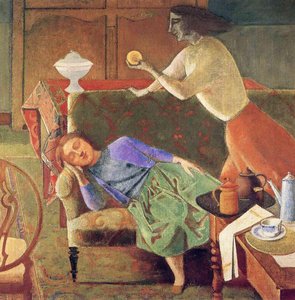
Balthus’s 1943 painting, *Gotteron*, is not merely a depiction of a forest; it’s an immersion in atmosphere, a carefully constructed descent into the unsettling heart of Expressionist emotion. Executed during a pivotal moment in his career, this black and white canvas – measuring 115 x 99 cm – reveals Balthus's profound understanding of form, light, and shadow, combined with a deeply personal and often unnerving vision. The painting’s stark simplicity—trees, rocks, and the encroaching darkness—amplifies its impact, forcing the viewer to confront the primal anxieties embedded within the natural world.
- Style & Technique: Rendered in oil on canvas, *Gotteron* exemplifies Balthus’s signature style. His meticulous brushwork creates a palpable sense of texture and depth, particularly evident in the rough bark of the trees and the jagged edges of the rocks. The deliberate lack of color intensifies the drama, stripping away any superficial distractions and focusing attention on the fundamental elements of composition and mood.
- Expressionist Roots: As a key work within the Expressionist movement, *Gotteron* reflects the era’s fascination with subjective experience and emotional intensity. Balthus wasn't interested in simply representing reality; he sought to evoke a feeling—a sense of isolation, dread, and perhaps even a hint of forbidden desire – through his artistic choices.
- Historical Context: Created in 1943, during the Second World War, *Gotteron* carries an added layer of significance. The painting’s themes of darkness and uncertainty resonate with the anxieties of the time, reflecting a world grappling with conflict and loss.
Decoding the Symbolism: Nature's Dark Embrace
*Gotteron* is replete with symbolic weight, inviting contemplation on the relationship between humanity and nature. The forest itself becomes a metaphor for the unconscious – a place of both beauty and danger, where reason yields to instinct. The towering trees, rendered in stark detail, suggest an imposing, almost malevolent presence, while the scattered rocks represent obstacles and challenges. The absence of any discernible light source further contributes to the painting’s sense of mystery and foreboding, suggesting a realm beyond human comprehension.
- Geometric Composition: The use of geometric shapes – lines defining the trees and rocks – adds to the painting's formal structure, grounding the emotional intensity within a carefully considered composition.
- Themes of Darkness & Time: Balthus frequently explored themes of death and the supernatural, and *Gotteron* is no exception. The darkness symbolizes mortality and the unknown, while the timeless quality of the scene suggests an eternal struggle between humanity and its primal fears.
Balthus's Legacy & the Value of a Masterpiece
Balthus’s *Gotteron* is more than just a painting; it’s a testament to his unique artistic vision and his profound understanding of human emotion. His work, highly sought after by collectors and art enthusiasts alike, continues to captivate audiences with its unsettling beauty and psychological depth. A hand-painted reproduction of this iconic piece offers an unparalleled opportunity to experience the power and artistry of Balthus’s genius in your own space. Its dimensions (115 x 99 cm) make it suitable for a variety of interior design settings, from grand salons to smaller, more intimate rooms. The painting's enduring appeal lies in its ability to evoke a profound emotional response – a reminder of the darkness and beauty that reside within us all.
Perguntas e Respostas
Como "Gotteron" equilibra luz e sombra?
"Gotteron" possui deep_shadow de brilho geral, e sua luminância é Dark.
De qual país é a obra do Expressionist Landscape "Gotteron"?
A obra do Expressionist Landscape "Gotteron" foi realizada por um artista nascido em França.
Por que o status de direitos autorais de "Gotteron" é como é?
"Gotteron" de Balthus está em ainda protegido por direitos autorais. Os termos de direitos autorais são calculados a partir do falecimento do artista, e Balthus faleceu em 2001.
Biografia do Artista
A World Apart: The Enigmatic Vision of Balthus
Balthasar Klossowski de Rola, universally known as Balthus, remains one of the most compelling and controversial figures in 20th-century art. Born in Paris on February 29, 1908, into a family steeped in intellectual and artistic circles, his life was marked by an early immersion in culture and a deliberate rejection of prevailing artistic trends. His father, Erich Klossowski, was a respected art historian, while his mother, Baladine Klossowska, was a painter herself, fostering an environment where aesthetic contemplation was not merely encouraged but lived. This upbringing instilled in the young Balthus a deep reverence for the Old Masters and a skepticism towards the burgeoning avant-garde movements that dominated the Parisian scene. He wasn’t interested in breaking with tradition; rather, he sought to revitalize classical forms with a distinctly modern sensibility, creating a world uniquely his own—a world often unsettling, always captivating.Formative Years and Artistic Awakening
Balthus's early life was nomadic, disrupted by the outbreak of World War I and his parents’ subsequent separation. These experiences instilled in him a sense of displacement and introspection that would profoundly influence his artistic vision. He began drawing at a remarkably young age, demonstrating an exceptional talent for capturing form and atmosphere. Mentored by Rainer Maria Rilke during his mother's relationship with the poet, Balthus received encouragement to pursue his artistic inclinations. This period was crucial in shaping his aesthetic sensibilities; Rilke’s poetic explorations of inner life resonated deeply with the young artist, fostering a fascination with psychological depth and symbolic resonance. He absorbed influences from diverse sources—pre-Renaissance Italian painters like Piero della Francesca and Simone Martini, as well as literary figures such as Emily Brontë and Lewis Carroll—creating a unique artistic language that defied easy categorization. His early works already hinted at the themes that would define his career: adolescence, solitude, and the complex interplay between innocence and desire. The influence of Rilke is particularly evident in Balthus’s early drawings, which are characterized by their haunting beauty and emotional intensity.Controversy and Recognition
Balthus first exhibited publicly in 1934, presenting a body of work that immediately sparked controversy. Paintings like *The Guitar Lesson*, with its ambiguous depiction of a young girl receiving instruction from an older man, ignited debate about the artist’s intentions and the nature of his gaze. Critics were divided, some condemning the perceived eroticism while others praised the painting's psychological complexity and technical mastery. The subject matter itself – a seemingly innocent scene imbued with a subtle sense of unease – became a focal point of discussion. This controversy, however, only served to solidify Balthus’s reputation as a provocative and unconventional artist. He deliberately cultivated an air of mystery around himself, resisting attempts at biographical interpretation and insisting that his paintings should be experienced directly, without the filter of external commentary. Throughout the 1930s and 40s, he continued to develop his distinctive style, characterized by elongated figures, dramatic lighting, and a meticulous attention to detail. His compositions often featured young girls in states of reverie or contemplation, their poses both graceful and unsettling. The paintings were not merely portraits; they were explorations of the inner lives of his subjects, rendered with an almost obsessive precision.A Legacy of Introspection and Influence
Despite remaining somewhat aloof from the mainstream art world, Balthus achieved significant recognition during his lifetime. He held major exhibitions at the Museum of Modern Art in New York (1956) and throughout Europe, solidifying his position as a leading figure in 20th-century painting. In 1977, he was appointed director of the Académie de France in Rome, a prestigious post that further cemented his status within the artistic establishment. His influence can be seen in the work of numerous contemporary artists, including Jan Saudek, Will Barnet, Duane Michals, and John Currin, who share his interest in figurative painting, psychological realism, and the exploration of complex emotional states. Balthus’s enduring appeal lies not only in his technical virtuosity but also in his ability to tap into universal human experiences—the longing for connection, the fear of isolation, and the search for meaning in a chaotic world. His work continues to be studied and debated by art historians and critics alike, revealing new layers of interpretation with each passing generation.Key Works and Enduring Themes
Throughout his career, Balthus consistently returned to certain motifs and themes. *La Rue* (1933) exemplifies his early mastery of composition and atmosphere, depicting a street scene with an unsettling sense of isolation. *The Mountain* (1937), a monumental work featuring two adolescent girls in a stark landscape, embodies the artist’s fascination with youth and solitude. Later works, such as *Girl at a Window* (1957) – famously featured in François Truffaut's film Domicile Conjugal – showcase his ability to capture fleeting moments of introspection and vulnerability. His paintings are often characterized by a sense of stillness and silence, inviting viewers to contemplate the inner lives of his subjects. He was also deeply influenced by music, particularly the works of Wolfgang Amadeus Mozart, which he believed reflected the same balance between order and emotion that he sought to achieve in his art. Balthus’s enduring appeal lies not only in his technical skill but also in his ability to tap into universal human experiences—the longing for connection, the fear of isolation, and the search for meaning in a chaotic world. His paintings are not merely images; they are portals into a realm of dreams, anxieties, and unspoken desires—a testament to the enduring power of art to challenge our perceptions and illuminate the hidden corners of the human soul.
Balthus
1908 - 2001 , França
Informações Rápidas
- Artistic Movement Or Style: Clássico, Figurativo
- Artists Or Movements Influenced By This Artist:
- Rilke
- Surrealismo
- Artists Who Influenced This Artist:
- Masaccio
- Piero
- Date Of Birth: 29/02/1908
- Date Of Death: 18/02/2001
- Full Name: Balthasar Klossowski de Rola
- Nationality: Francês-Polaco
- Notable Artworks:
- A Rua
- Garota com Gato
- Place Of Birth: Paris, França
Artigos Relacionados

Os 10 Quadros Mais Famosos Dominados pelo Branco: Arte e Decoração
Descubra os 10 quadros mais famosos dominados pelo branco, de Monet a Kandinsky! Explore a história da arte, técnicas e o poder da paleta neutra. Encontre reproduções de alta qualidade para sua decoração em OriginalUniqueArt.com.

John Constable: As 25 Obras-Primas que Definem o Mestre da Paisagem Inglesa | OriginalUniqueArt
Descubra as 25 obras-primas de John Constable, o mestre da paisagem inglesa! Explore a arte romântica, cores vibrantes e histórias fascinantes por trás de 'Hay Wain' e outras pinturas icônicas. Encontre reproduções de alta qualidade para decorar sua casa com OriginalUniqueArt.com.

Os 10 Mestres da Paisagem Romântica: Arte para Inspirar a Sua Casa
Descubra os 10 quadros mais emblemáticos da Paisagem Romântica! Explore a história de Turner, Friedrich e outros mestres. Encontre reproduções de arte exclusivas para inspirar sua decoração em OriginalUniqueArt.com.

As 10 Pinturas Mais Famosas Dominadas pelo Preto: Arte, História e Decoração
Descubra as 10 pinturas mais icônicas dominadas pelo preto! Explore a história, técnica e emoção por trás de obras-primas do Romantismo, Realismo e Expressionismo. Encontre reproduções de arte exclusivas na OriginalUniqueArt.com.

Katsushika Hokusai: As 25 Obras-Primas que Definem um Mestre da Arte Japonesa
Descubra as 25 obras-primas de Katsushika Hokusai, o mestre do ukiyo-e! Explore a história por trás de 'A Grande Onda' e outras gravuras japonesas icônicas. Encontre reproduções de arte exclusivas para decorar sua casa com elegância em OriginalUniqueArt.com.