
 Visualizar na parede
 Compartilhar
 Compartilhar
 Detalhes

 Baixar imagem
 Semelhantes
 Raio X
 Slideshow
Villiers David


 Ler mais
Giclée / Impressão de Arte
Impressão giclée ou em tela de qualidade de museu, com produção rápida e opções flexíveis de acabamento. ( Comprar pintura feita à mão Comprar imagem)




P118B $10

P118H $10

P118W $10

P438Z $10

P508JH $12

P508YH $12

P805H $10

P805Z $10

P919BZ $10

P919G $10

P919XJ $10

P959ZH $10

P968JZ $12

W106C $8

W218G $10

W218JH $8

W218Y $10

W307PJ $10

W316G $10

W316PJ $8

W316Y $10

W398PJ $8

W4111J $10

W500HY $15

W500JH $15

W692G $12

W849H $8

W940BG $15

W953PJ $8




Escolha entre os nossos tamanhos pré-definidos que respeitam as proporções originais da obra de arte.

Você pode inserir suas próprias dimensões para se ajustar a uma moldura ou espaço específico. Se o tamanho selecionado não corresponder às proporções da imagem original, iremos recortar a obra de arte ou estender a imagem com uma borda espelhada ou preenchimento sólido. Um mockup digital será enviado para sua aprovação antes do início da produção.
Por favor, observe que a visualização na tela não reflete o recorte ou a extensão real. Apenas o mockup mostrará com precisão a composição final.
Embora tamanhos personalizados estejam disponíveis, recomendamos selecionar uma dimensão da lista predefinida para preservar as proporções originais.
Entrega mundial () em 2 semanas, em vez das 4/5 semanas padrão. (23 Agosto)

Envio expresso gratuito para todo o mundo

Tela de Linho de Alta Qualidade

Seguro de transporte completo

Garantia de Reembolso de Impostos Alfandegários

Garantia de Fidelidade Cromática

Política de Devolução em 60 Dias (Apenas para Defeitos)

Garantia de reembolso de 100%

Oferta de desconto por quantidade
 A opção de vidro está disponível apenas para tamanhos inferiores a 110 cm

Villiers David
Giclée / Impressão de Arte
Tamanho da Reprodução
-


Preço Total
$ 80
Descrição do Colecionável
The Subject: An Intimate Gaze
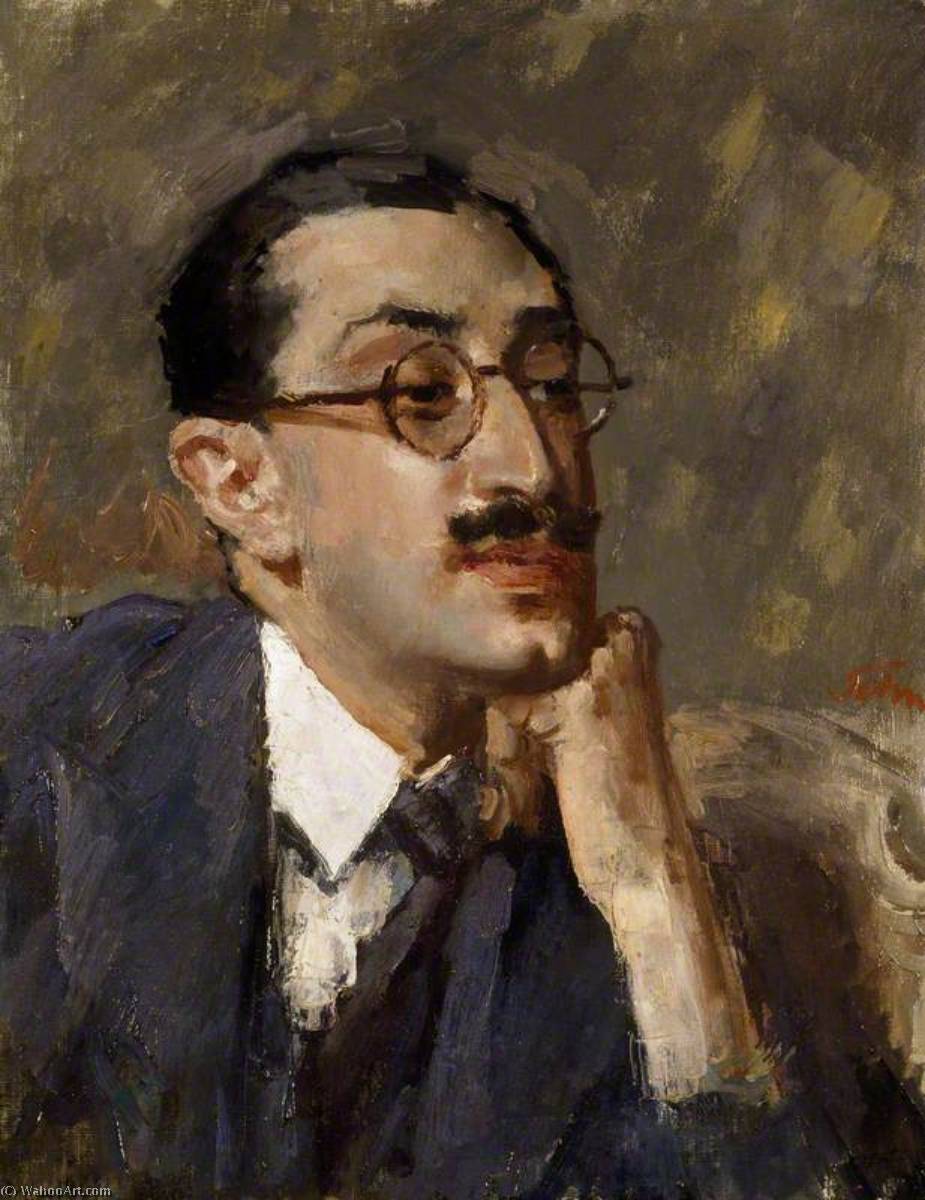
“ Villiers David,” painted in 1932 by Augustus Edwin John, isn’t a grand historical portrait or a flamboyant depiction of celebrity. Instead, it offers a remarkably intimate glimpse into the face and demeanor of an unknown gentleman. The subject, dressed in the restrained elegance of a well-tailored suit – a dark grey wool that speaks to both wealth and understated taste – is seated with his hands resting thoughtfully on his chin. His gaze, direct yet not confrontational, holds a quiet confidence, a subtle suggestion of intelligence and perhaps even melancholy. John’s masterful observation captures the nuances of human expression, revealing more than just physical features; he conveys a sense of personality, a hint of inner life.
- The man's attire – the tie, the jacket, the overall cut – speaks to a period of relative prosperity and formality.
- His posture, relaxed yet attentive, invites the viewer into his world.
- Notice the subtle lines around his eyes and mouth; these are not signs of age but rather evidence of a life lived with contemplation.
The Style: A Welsh Bohemian’s Vision
Augustus Edwin John was, by nature, an artist who defied easy categorization. Born in Wales, he cultivated a distinctly bohemian lifestyle, flitting between London and the French Riviera, always seeking inspiration and challenging conventional artistic norms. His style is characterized by a remarkable sensitivity to light and color, combined with a loose, expressive brushstroke that imbues his paintings with a palpable sense of movement and emotion. “ Villiers David” exemplifies this approach perfectly – it’s not a meticulously rendered likeness but rather an impression, a feeling captured on canvas.
John's work is often described as ‘impressionistic,’ though he deliberately avoided strict adherence to the style, preferring instead to develop his own unique visual language.Technique and Composition: A Dance of Light and Shadow
The painting’s strength lies in John’s skillful manipulation of light and shadow. He employs a broken brushstroke technique, layering colors rather than blending them smoothly, creating a shimmering effect that seems to emanate from within the canvas. The background is deliberately muted – a simple chair provides minimal distraction – allowing the viewer's attention to remain firmly focused on the subject’s face. The use of warm tones in his clothing contrasts with the cooler shades of the background, further emphasizing his presence and drawing us into his gaze. John’s meticulous attention to detail, particularly in rendering the textures of the fabric and the subtle nuances of light reflecting off the man's glasses, is truly remarkable.
Historical Context and Symbolism: A Window into a Changing World
Painted in 1932, “ Villiers David” reflects a period of significant social and cultural change. Britain was emerging from the austerity of the Great Depression, and there was a growing sense of uncertainty about the future. John’s portrait can be interpreted as a meditation on these anxieties – the man's quiet confidence suggests resilience in the face of adversity, while his contemplative gaze hints at the complexities of human experience. The inclusion of the glasses is particularly noteworthy; they symbolize intellect and observation, suggesting that this individual possesses both wisdom and a critical eye. The portrait also speaks to John’s lifelong fascination with the Romani people, whom he often depicted in his work, capturing their vibrant spirit and unique perspective.
Emotional Impact: A Moment of Quiet Reflection
Ultimately, “ Villiers David” is a profoundly moving painting. It's not merely a portrait; it’s an invitation to connect with another human being, to share in his thoughts and feelings. The man’s gaze holds a quiet dignity and a hint of melancholy, prompting us to consider our own place in the world. It’s a reminder that even in the midst of uncertainty, there is beauty and meaning to be found in simple moments of reflection. Reproductions of this piece offer a chance to bring this intimate portrait into your home, inviting contemplation and adding a touch of understated elegance to any space.
Biografia do Artista
A Welsh Bohemian: The Life and Art of Augustus Edwin John
Augustus Edwin John, uma figura singular na história da arte britânica, transcendeu a mera definição de pintor. Sua vida e obra foram intrinsecamente ligadas à intensidade emocional, à busca por autenticidade e a um estilo vibrante que desafiou as convenções do seu tempo. Nascido em Tenby, no coração de Gales, em 4 de janeiro de 1878, John foi moldado desde cedo pela paisagem selvagem e pela cultura rica da região, elementos que se refletiriam profundamente em sua arte. Sua jornada artística não foi linear; marcada por momentos de aclamação e desafios, seu legado permanece como um testemunho da força da individualidade e da capacidade da arte de capturar a essência do ser humano.Influências e o Desenvolvimento de um Estilo Único
A alma de Augustus Edwin John era alimentada por uma miríade de influências, que se entrelaçaram para criar um estilo inconfundível. A influência primordial reside nos mestres clássicos, especialmente Peter Paul Rubens, cujas composições dinâmicas e paletas de cores exuberantes o inspiraram a buscar a vitalidade e a expressividade em suas telas. Paralelamente, absorveu as inovações dos contemporâneos franceses como Matisse e Gauguin, abraçando sua liberdade cromática e a rejeição das rígidas amarras da academia. A sutileza tonal de Puvis de Chavannes também deixou uma marca indelével em sua visão estética, influenciando-o a explorar a atmosfera e as emoções através do uso magistral da luz e sombra. Essa convergência de influências resultou em um estilo caracterizado por cores vibrantes, pinceladas fluidas e um foco implacável na revelação da vida interior de seus personagens. John não se contentava em reproduzir a aparência; buscava desvendar as emoções fugazes que definiam cada indivíduo, capturando a essência do ser através de sua arte.Portraits e o Fascínio pelos Romani: Uma Vida Plena
A fama de Augustus Edwin John reside primordialmente em seus retratos, obras que transcendem a mera representação para se tornarem janelas para a alma de seus modelos. Suas telas revelam personalidades marcantes da aristocracia e do mundo literário, como David Lloyd George, James Joyce e George Bernard Shaw, cada um capturado com uma profundidade psicológica que desafia as expectativas. O retrato de Archibald Henry Macdonald Sinclair (1924) e Francis Henry Crittall (1919) exemplificam sua maestria nesse gênero, demonstrando sua capacidade de transmitir a complexidade e a individualidade de seus sujeitos. No entanto, o interesse artístico de John se estendia muito além dos limites convencionais do retrato. Um fascínio profundo pela cultura Romani o impulsionou a adotar um estilo de vida nômade, viajando em uma caravana com sua família por um período prolongado. Essa imersão total na cultura Romani impregnou sua arte com temas de liberdade, desejo de aventura e a beleza da natureza selvagem. Sua conexão íntima com essa comunidade culminou em sua presidência da Gypsy Lore Society, consolidando seu compromisso com a compreensão e a celebração de suas tradições únicas. *Air Mechanic Shaw* (1935), um retrato de T.E. Lawrence, é outro exemplo notável de sua habilidade em capturar a complexidade dos personagens com sensibilidade excepcional.Um Legado Complexo: Reconhecimento e Reavaliação
Ao longo de sua carreira, John experimentou tanto o reconhecimento generalizado quanto períodos de crítica variável. Inicialmente celebrado por suas técnicas inovadoras de pintura a óleo e desenhos figurativos, alguns críticos posteriormente consideraram seu trabalho excessivamente flamboyant ou carente de refinamento pictórico. Seu serviço como artista de guerra durante a Primeira Guerra Mundial, atuando como oficial no exército canadense, resultou em retratos memoráveis de soldados, mas um incidente infeliz levou à sua convocação para retornar à Inglaterra. Apesar desses desafios, Augustus Edwin John permaneceu uma figura importante na história da arte britânica. Foi um dos poucos artistas de sua época a alcançar reconhecimento público amplo e desempenhou um papel crucial na popularização do pós-impressionismo no Reino Unido. Recebeu a Ordem do Mérito em 1942, e documentou sua vida e filosofia artística em dois volumes de autobiografia: *Chiaroscuro* (1952) e *Finishing Touches* (publicado postumamente em 1964). Embora sua reputação tenha diminuído um pouco após a Segunda Guerra Mundial, seu trabalho tem sido redescoberto nos últimos anos, especialmente pela vivacidade e originalidade de suas obras iniciais. Seu legado é enriquecido ainda mais pelas realizações artísticas de sua irmã, Gwen John, cuja própria visão única contribuiu significativamente para o movimento modernista.- Nascido: 4 de janeiro de 1878, Tenby, Gales
- Faleceu: 31 de outubro de 1961, Fordingbridge, Inglaterra

Augusto Edwin John
1878 - 1961 , Reino Unido
Dados Rápidos
- Artistic Movement Or Style: Pós-Impressionismo
- Artists Or Movements Influenced By This Artist: ['Modernistas Britânicos']
- Artists Who Influenced This Artist:
- Rubens
- Matisse
- Gauguin
- Date Of Birth: 4 de janeiro de 1878
- Date Of Death: 31 de outubro de 1961
- Full Name: Augustus Edwin John
- Nationality: Britânico
- Notable Artworks:
- Caspar
- Shaw
- Lawrence
- Place Of Birth: Tenby, Gales
Artigos Relacionados

John Singer Sargent: As 25 Obras-Primas que Definem um Ícone da Arte
Descubra as 25 obras-primas de John Singer Sargent, o mestre do retrato e do impressionismo americano. Explore a história, técnica e beleza atemporal de seus quadros mais famosos. Encontre reproduções de arte exclusivas para decorar sua casa com elegância em OriginalUniqueArt.com.

John Constable: As 25 Obras-Primas que Definem o Mestre da Paisagem Inglesa | OriginalUniqueArt
Descubra as 25 obras-primas de John Constable, o mestre da paisagem inglesa! Explore a arte romântica, cores vibrantes e histórias fascinantes por trás de 'Hay Wain' e outras pinturas icônicas. Encontre reproduções de alta qualidade para decorar sua casa com OriginalUniqueArt.com.

Oil on Canvas: A Historical & Technical Exploration of a Timeless Artistic Medium
Explore the rich history & enduring techniques of oil painting on canvas. Discover the science behind its longevity, conservation practices, and contemporary relevance. Expert insights for art enthusiasts.

The Enduring Legacy of Oil on Canvas: Technique, History & Aesthetic Impact
Explore the rich history & techniques of oil painting – from Renaissance masters to Impressionism. Discover pigments, layering methods, and why this timeless medium endures. Expert insights for artists & art enthusiasts.

O Legado Duradouro da Pintura a Óleo sobre Tela: Técnica, História e Prática Contemporânea
Explore a história e as técnicas da pintura a óleo com especialistas. Descubra os mestres, materiais essenciais e o futuro desta arte atemporal. Reproduções de qualidade museológica.



