Post-Impressionism · 1909
Caspar (Augusto Edwin John, 1909)
Augusto Edwin John (1878–1961) criou Caspar. Data de 1909. Pertence ao movimento Post-Impressionism. É feito em Oil On Canvas. Está conservada no Museu Fitzwilliam, em Cambridge, Reino Unido. Mede 41 × 33 cm.
- 1909
- Oil On Canvas
- 41 × 33 cm
- Museu Fitzwilliam, Cambridge

 Visualizar na parede

 Pintura a Óleo Feita à Mão
 Compartilhar
 Compartilhar
 Ficha técnica


 Baixar imagem
 Semelhantes
 Raio X
 Ver diaporama
 Perguntas e Respostas

 Estatísticas
Caspar, em resumo
- Título
- Caspar
- Artista
- Augusto Edwin John (1878–1961)
- Artista nascido em
- Tenby, Reino Unido
- Data
- 1909
- Técnica
- Oil On Canvas
- Dimensões
- 41 × 33 cm
- Onde ver
- Museu Fitzwilliam, Cambridge, Reino Unido
- Movimento
- Post-Impressionism
- Período
- Modern
- Tema
- portrait, youth, innocence, reflection, texture, observation
O que Caspar retrata?
A Glimpse into Youthful Innocence
In the tenderly rendered portrait Caspar, created in 1909 by the celebrated Welsh artist Augustus Edwin John, we are invited into a moment of profound quietude. This intimate work captures the essence of a young boy, whose face serves as the emotional anchor of the composition. Through a masterful use of realistic brushstrokes and a soft, diffused light, John breathes life into the subject, presenting a study of youthful innocence that feels both timeless and deeply personal. The close-up framing pulls the viewer into the boy's immediate orbit, creating a sense of gentle observation that borders on the voyeuristic, yet remains entirely respectful of the subject's quiet contemplation.
The painting is a triumph of texture and light, where the organic forms of the boy’s features are balanced against a rich, layered background. The artist employs a technique reminiscent of Post-Impressionism, where visible brushwork does not merely define shape but adds a rhythmic, tactile quality to the canvas. This textured approach allows the background to pulse with a life of its own, providing a sense of depth and atmosphere without ever distracting from the central figure. The interplay of light and shadow across the boy's face emphasizes the soft contours of his skin and the structural elements of his clothing, lending a sculptural weight to an otherwise ethereal moment.
Symbolism and Artistic Legacy
Beyond its surface beauty, Caspar carries subtle symbolic weight. The inclusion of the boy's hat serves as more than just a compositional element; it hints at identity and perhaps a burgeoning sense of social standing or persona. Within the broader context of Augustus Edwin John’s career, this piece reflects his ability to blend exceptional draughtsmanship—honed during his years at the Slade School of Fine Art—with a bohemian, expressive spirit. The painting captures a pivotal era in British art, where the boundaries between realism and impressionistic emotion were being beautifully redrawn.
For the discerning collector or interior designer, this reproduction offers more than just a decorative element; it provides a focal point of emotional depth. The muted palette and soft textures make it an ideal addition to spaces that require a sense of calm, sophistication, and historical resonance. Whether placed in a sunlit study or a contemporary living space, Caspar acts as a window into the early 20th century, evoking a nostalgic longing for simplicity and the quiet beauty found in the most fleeting of human expressions.
Em qual museu se encontra Caspar?
Museu Fitzwilliam
Cambridge, Reino Unido
A Sanctuary of Art and Antiquity: Exploring the Fitzwilliam College Nestled within the venerable heart of Cambridge, England, the Fitzwilliam College transcends its designation as a mere museum; it’s an immersive journey into the very soul of human creativity. Founded in 1816 by Richard FitzWilliam, 7th Viscount FitzWilliam, with a profound desire to share his extraordinary collection, the institution has blossomed into one of the United Kingdom's most treasured cultural landmarks – a vibrant space where history whispers from ancient artifacts and masterpieces ignite the imagination. The building itself, George Basevi’s Founder’s Building, completed in 1843, embodies classical elegance, its inviting façade hinting at the world of artistic wonders contained within.


Imagens em alta resolução de Caspar
Protected by copyright: these files are for personal reference, not a licence to republish.
Augusto Edwin John, Caspar (1909), Museu Fitzwilliam.
Perguntas sobre Caspar respondidas
Em qual museu se encontra a obra original de "Caspar"?
"Caspar", de Augusto Edwin John está em exibição no Museu Fitzwilliam, Cambridge, Reino Unido. A referência ao museu diz respeito à obra original, não a reproduções.
Em que ano foi criada a obra "Caspar", de Augusto Edwin John?
"Caspar" data de 1909. A data situa a obra na carreira de Augusto Edwin John e em sua época.
De que técnica é feita a obra "Caspar"?
A técnica de "Caspar", de Augusto Edwin John é Oil On Canvas. As reproduções visam reproduzir a aparência desta técnica.
Quais são as dimensões da obra original "Caspar", de Augusto Edwin John?
As dimensões registradas de "Caspar", de Augusto Edwin John são 41 x 33 cm. Reproduções podem ser encomendadas em outros tamanhos, mantendo as mesmas proporções.
O que representa "Caspar"?
"Caspar", de Augusto Edwin John retrata: portrait, youth, innocence, reflection, texture, observation, victorian, welshart.
A imagem de "Caspar", de Augusto Edwin John pode ser reproduzida livremente?
"Caspar", de Augusto Edwin John está em ainda protegido por direitos autorais. Este status determina como a imagem da obra pode ser reproduzida.
A qual artista "Caspar" é atribuída?
"Caspar" é atribuída a Augusto Edwin John.
A qual estilo pertence "Caspar"?
O movimento associado a "Caspar", de Augusto Edwin John é Post-Impressionism. Esta classificação situa a obra entre artistas e obras de arte relacionados.
A que período da carreira de Augusto Edwin John pertence "Caspar"?
"Caspar" representa o Mature Period de Augusto Edwin John.
Sobre o artista, Augusto Edwin John

1878–1961, Reino Unido
Augusto Edwin John
A Welsh Bohemian: The Life and Art of Augustus Edwin John Augustus Edwin John, uma figura singular na história da arte britânica, transcendeu a mera definição de pintor. Sua vida e obra foram intrinsecamente ligadas à intensidade emocional, à busca por autenticidade e a um estilo vibrante que desafiou as convenções do seu tempo. Nascido em Tenby, no coração de Gales, em 4 de janeiro de 1878, John foi moldado desde cedo pela paisagem selvagem e pela cultura rica da região, elementos que se refletiriam profundamente em sua arte. Sua jornada artística não foi linear; marcada por momentos de aclamação e desafios, seu legado permanece como um testemunho da força da individualidade e da capacidade da arte de capturar a essência do ser humano.
Sobre Augusto Edwin John Obras notáveis de Augusto Edwin John
Também de Augusto Edwin John
 Portrait of a Young Man1929
 Air Mechanic Shaw (Colonel T. E. Lawrence of Arabia, 1888–1935)1935
 Two Jamaican Girls1937
 Carlotta1904
Ensaios sobre Caspar
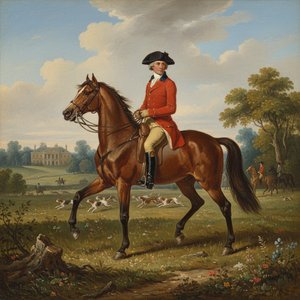 John Nost Sartorius: Equestrian Portraiture & the Shifting Social Landscape of 18th-Century EnglandExplore the captivating equestrian art of John Nost Sartorius (1759-1828). Discover his detailed paintings of racehorses, hunting scenes & …
 British pre-raphaelite paintersMasterpieces by Rossetti and Millais define British Pre-Raphaelite art. Explore the full collection online at OriginalUniqueArt.com.
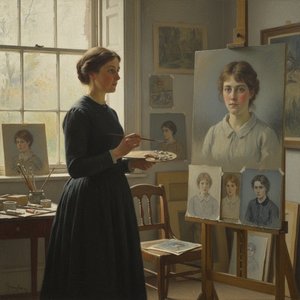 Gwen John: Intimacy, Modernity & the Quiet Power of Welsh PortraitureExplore the captivating world of Gwen John, a pioneering Welsh artist renowned for her intimate portraits & subtle style. Discover her life…