Fauvism · 1911
Vegetable fields (August Macke, 1911)
August Macke (1887–1914) criou Vegetable fields. Data de 1911. Pertence ao movimento Fauvism. É feito em Oil On Canvas. Está conservada no Kunstmuseum Bonn, em Bonn, Alemanha. Mede 47 × 64 cm.
- 1911
- Oil On Canvas
- 47 × 64 cm
- Kunstmuseum Bonn

 Visualizar na parede

 Pintura a Óleo Feita à Mão
 Compartilhar
 Compartilhar
 Ficha técnica


 Baixar imagem
 Semelhantes
 Raio X
 Ver diaporama
 Perguntas e Respostas

 Estatísticas
Vegetable fields, em resumo
- Título
- Vegetable fields
- Artista
- August Macke (1887–1914)
- Artista nascido em
- Meschede, Alemanha
- Data
- 1911
- Técnica
- Oil On Canvas
- Dimensões
- 47 × 64 cm
- Onde ver
- Kunstmuseum Bonn, Bonn, Alemanha
- Movimento
- Fauvism
- Tema
- rural landscape, haystacks, blue flowers, path, roads, color field
O que Vegetable fields retrata?
August Macke’s ‘Vegetable Fields’: A Fauvist Echo of Rural Melancholy
This captivating oil painting, “Vegetable Fields,” created in 1911 by August Macke, offers a potent glimpse into the burgeoning world of German Expressionism. Measuring 47 x 64 cm, this work transcends a simple depiction of a rural landscape; it’s an intensely felt experience rendered through bold color and simplified forms – hallmarks of the Fauvist movement. Macke, tragically cut short by the First World War at just 27, was already producing art that resonated with a raw emotionality, anticipating the full force of Expressionism while still retaining traces of Impressionist influence.
- Subject Matter: The scene unfolds in a stylized countryside, dominated by haystacks, fields ablaze with blue flowers, and a prominent pathway leading the viewer’s eye into the distance. This isn't a meticulous rendering of reality; rather, it’s an interpretation filtered through Macke’s emotional lens.
- Style & Technique: The painting firmly embraces Fauvist principles – prioritizing color over precise representation. Thick impasto brushstrokes build texture and physicality onto the canvas, creating a vibrant, almost tactile surface. Lines are deliberately expressive, guiding the viewer's gaze and contributing to the overall sense of movement.
Decoding the Emotional Landscape
Macke’s use of color is particularly striking. The dominant blues and greens evoke a feeling of tranquility, yet they’re punctuated by jarring yellows and reds, creating an underlying tension. This deliberate dissonance reflects the anxieties and uncertainties of the era – a world on the cusp of profound change. The flattened perspective, prioritizing emotional impact over realistic spatial illusion, further intensifies this effect. It's as if Macke is inviting us to step into his subjective experience, rather than simply observing a landscape.
- Symbolism: The diverging paths in the distance are rich with symbolic potential, representing choices, journeys, or perhaps the fragmented nature of modern life. The isolated setting contributes to a sense of melancholy, hinting at themes of loneliness and contemplation.
- Historical Context: Created in 1911, “Vegetable Fields” sits squarely within the period of experimentation that preceded the full flowering of German Expressionism. Macke’s work foreshadowed the movement's emphasis on subjective emotion and distorted form, while still retaining a connection to earlier artistic traditions.
A Masterclass in Texture and Light
The painting’s technical brilliance lies not just in its color palette but also in Macke’s masterful manipulation of light and texture. The diffuse lighting suggests an overcast day, eliminating harsh shadows and contributing to the overall mood of quiet contemplation. The thick impasto technique – applying paint thickly to create a textured surface – is particularly evident in the haystacks and fields, adding a remarkable physicality to the composition. This deliberate roughness further emphasizes the emotional intensity of the work.
Collecting this Powerful Image
A hand-painted reproduction of “Vegetable Fields” offers an exceptional opportunity to bring this evocative artwork into your home or office. OriginalUniqueArt’s meticulous reproductions capture the essence of Macke's vision, faithfully recreating the painting’s vibrant colors and expressive brushwork. This piece is more than just a decoration; it’s a window into the soul of a brilliant artist and a poignant reflection on the human condition.
Em qual museu se encontra Vegetable fields?
Kunstmuseum Bonn
Bonn, Alemanha
Um Santuário de Expressão: A Alma do Kunstmuseum Bonn Aninhado no coração histórico de Bonn, uma cidade onde os ecos das composições de Beethoven pairam no ar, encontra-se o Kunstmuseum Bonn —um santuário profundo para aqueles que buscam o poder bruto e emotivo do modernismo. Entrar nesta instituição é embarcar em uma jornada através da psique turbulenta, porém bela, do século XX. Nascido da necessidade de reconstruir não apenas paredes, mas uma identidade cultural durante a era transformadora da reconstrução pós-guerra, o museu evoluiu desde então para se tornar um farol global para o Expressionismo Renano .

Imagens em alta resolução de Vegetable fields

August Macke, Vegetable fields (1911), Kunstmuseum Bonn. Domínio público.
Perguntas sobre Vegetable fields respondidas
Onde "Vegetable fields", de August Macke está em exibição hoje?
A obra original "Vegetable fields" pode ser vista no Kunstmuseum Bonn, Bonn, Alemanha.
Em que ano foi criado "Vegetable fields", de August Macke?
"Vegetable fields" data de 1911. A data situa a obra na carreira de August Macke e em sua época.
Qual é a técnica utilizada em "Vegetable fields", de August Macke?
A técnica de "Vegetable fields", de August Macke é Oil On Canvas. As reproduções visam reproduzir a aparência desta técnica.
Quais são as dimensões de "Vegetable fields", de August Macke na vida real?
A obra original "Vegetable fields", de August Macke mede 47 x 64 cm.
O que "Vegetable fields", de August Macke retrata?
"Vegetable fields", de August Macke retrata: rural landscape, haystacks, blue flowers, path, roads, color field, expressionism, geometric forms.
"Vegetable fields" está em domínio público?
Quanto aos direitos autorais, "Vegetable fields" está em em domínio público — seus direitos autorais expiraram.
A qual artista "Vegetable fields" é atribuída?
O artista por trás de "Vegetable fields" é August Macke. A obra está catalogada sob o nome de August Macke.
A qual movimento artístico "Vegetable fields", de August Macke pertence?
"Vegetable fields" é uma obra do Fauvism. O movimento indica a tradição artística da qual a obra faz parte.
A que período da carreira de August Macke pertence "Vegetable fields"?
"Vegetable fields" representa o Mature Period de August Macke.
Sobre o artista, August Macke
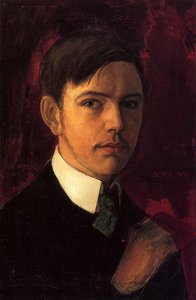
1887–1914, Alemanha
August Macke
Primeiros Anos, Família e Formação A história de August Macke tem início na cidade de Meschede, na Alemanha, onde nasceu em 3 de janeiro de 1887. Ele foi o único filho de August Friedrich Hermann Macke, um empreiteiro e artista amador, e Maria Florentine. Sua infância foi moldada pelas flutuações da fortuna da empresa de seu pai, que levou a família para Colônia e, posteriormente, para Bonn. Mesmo ainda criança, a inclinação para a expressão visual era evidente; ele passava seus primeiros anos esboçando e desenhando cenários para peças escolares, encontrando uma maneira de traduzir o que o rodeava para o papel muito antes de ingressar em uma academia formal.
Também de August Macke
 Mulher em um Casaco Verde1913
 Bathing Girls com Cidade ao Fundo1913
 A Loja de Chapéus1913
 Portrait of the Artist's Wife with Hat1909

Ensaios sobre Vegetable fields
 August Macke: Expressionist Visions of Harmony & Modern LifeExplore the vibrant Expressionist paintings of August Macke (1887-1914). Discover his key role in Der Blaue Reiter, Fauvist influences, and…
 Expressionismo: 10 Obras-Primas que Moldaram a Arte Moderna | OriginalUniqueArtDescubra as 10 obras-primas do Expressionismo que revolucionaram a arte moderna! Explore a emoção, cores vibrantes e histórias de Munch, Ki…
 Brushes of Anguish: The Psychological Landscape of Emotional Distress in Post-Impressionist ArtExplore the profound psychological depth of Post-Impressionist masters. Discover how color and form mirror human emotion.