

 Visualizar em escala
 Enviar
 Compartilhar
 Ver detalhes
 Guia de Obras do Aluno

 Baixar imagem
 Semelhantes
 Raio X
 Apresentação de slides
 Estatísticas
Three girls in yellow straw hats I
 Acrylic On Canvas
- WallArt
- German Expressionism
 1913
1913 875.0 x 1040.0 cm
 Kunstmuseum
 Ver mais
Giclée / Impressão de Arte
Impressão giclée ou em tela de qualidade de museu, com produção rápida e opções flexíveis de acabamento. ( Encomendar reprodução pintada à mão Ver Imagem Digital)




P118B $10

P118H $10

P118W $10

P438Z $10

P508JH $12

P508YH $12

P805H $10

P805Z $10

P919BZ $10

P919G $10

P919XJ $10

P959ZH $10

P968JZ $12

W106C $8

W218G $10

W218JH $8

W218Y $10

W307PJ $10

W316G $10

W316PJ $8

W316Y $10

W398PJ $8

W4111J $10

W500HY $15

W500JH $15

W692G $12

W849H $8

W940BG $15

W953PJ $8




Escolha entre os nossos tamanhos pré-definidos que respeitam as proporções originais da obra de arte.

Você pode inserir suas próprias dimensões para se ajustar a uma moldura ou espaço específico. Se o tamanho selecionado não corresponder às proporções da imagem original, iremos recortar a obra de arte ou estender a imagem com uma borda espelhada ou preenchimento sólido. Um mockup digital será enviado para sua aprovação antes do início da produção.
Por favor, observe que a visualização na tela não reflete o recorte ou a extensão real. Apenas o mockup mostrará com precisão a composição final.
Embora tamanhos personalizados estejam disponíveis, recomendamos selecionar uma dimensão da lista predefinida para preservar as proporções originais.
Entrega mundial () em 2 semanas, em vez das 4/5 semanas padrão. (25 Setembro)

Envio expresso gratuito para todo o mundo

Tela de Linho Premium

Seguro de transporte total

Garantia de Reembolso de Impostos Alfandegários

Garantia de Fidelidade de Cor

Política de Devolução em 100 Dias (Apenas para Defeitos)

Garantia de reembolso de 100%

Desconto para múltiplas unidades
 A opção de vidro está disponível apenas para tamanhos inferiores a 110 cm

Three girls in yellow straw hats I
Giclée / Impressão de Arte
Dimensões da Reprodução
-


Preço Total
$ 80
A Moment Frozen in Time: August Macke’s “Three Girls in Yellow Straw Hats”
August Macke's "Three Girls in Yellow Straw Hats" isn't merely a depiction of a rural scene; it’s a vibrant distillation of joy, community, and the fleeting beauty of summer. Painted in 1913, during a pivotal period of his artistic evolution – a time when he was deeply influenced by Robert Delaunay’s pioneering use of color and light – this work embodies Macke's signature style: an optimistic blend of Impressionism, Fauvism, and the burgeoning principles of Orphism. The painting captures a group of young women engaged in simple pleasures within a sun-drenched woodland setting, radiating an almost palpable sense of carefree delight.
Macke’s technique is remarkably fluid and expressive. He employs loose, broken brushstrokes, layering colors with a deliberate lack of precision that creates a shimmering effect—a visual dance of light and shadow. The palette is dominated by warm yellows, greens, and blues, evoking the golden hues of late afternoon sunlight filtering through the trees. Notice how he doesn’t meticulously render individual features; instead, he uses color to suggest form and atmosphere, prioritizing feeling over strict realism. This approach aligns perfectly with Delaunay's influence – Macke isn’t trying to replicate reality but rather to capture its essence through a carefully orchestrated symphony of hues.
The Echoes of Orphism and the German Expressionist Movement
Macke’s encounter with Robert Delaunay in 1911 proved transformative. Delaunay's “Orphism,” characterized by its use of fragmented forms, vibrant color fields, and a rejection of traditional perspective, resonated deeply with Macke’s own artistic sensibilities. This influence is particularly evident in the painting’s composition – the figures are not arranged realistically but rather seem to float within a luminous space, their outlines dissolving into the surrounding colors. Simultaneously, “Three Girls in Yellow Straw Hats” retains elements of German Expressionism, reflecting Macke's engagement with the movement’s exploration of subjective experience and emotional intensity.
The painting’s context is equally important to understanding its significance. Created during a period of immense social and political upheaval – just months before the outbreak of World War I – “Three Girls in Yellow Straw Hats” offers a poignant counterpoint to the anxieties of the time. It's a celebration of simple pleasures, a reminder of the beauty that can be found in everyday life, and a testament to the enduring power of human connection. The girls’ relaxed postures and shared smiles suggest a sense of camaraderie and belonging, creating an atmosphere of warmth and optimism.
Symbolism and the Language of Light
Beyond its immediate visual appeal, “Three Girls in Yellow Straw Hats” is rich in symbolic meaning. The yellow straw hats themselves are particularly evocative, representing not only summer and youth but also a sense of innocence and joy. The dappled sunlight filtering through the trees creates an ethereal atmosphere, suggesting a realm beyond the mundane. Macke masterfully uses light as a key element of his composition, transforming the scene into a luminous dreamscape.
The choice of subject matter – young women in a rural setting – also carries symbolic weight. It harkens back to traditional depictions of pastoral life, but Macke imbues these images with a distinctly modern sensibility. He’s not simply portraying a nostalgic vision of the past; he's capturing a fleeting moment of beauty and connection that transcends time and place. The painting invites us to pause, reflect, and appreciate the simple joys of life – a message particularly relevant in our increasingly complex world.
A Legacy of Color and Emotion
August Macke’s “Three Girls in Yellow Straw Hats” remains one of his most beloved works, admired for its vibrant colors, expressive brushwork, and profound sense of optimism. It stands as a testament to the artist's ability to capture the essence of human experience through the language of color and light. Today, reproductions of this painting continue to inspire and uplift viewers, offering a glimpse into a world where beauty, joy, and connection prevail.
Biografia do Artista
A Life Cut Short: The Vibrant World of August Macke
August Robert Ludwig Macke, a name inextricably linked to the brief but brilliant flowering of German Expressionism, lived a life tragically curtailed by the horrors of the First World War. Born in 1887 in Meschede, Westphalia, his artistic journey was one of rapid evolution and profound exploration – a relentless pursuit of capturing not just what he *saw*, but how he *felt* about it. Macke’s early years were marked by a restless spirit and an insatiable curiosity, shaping him into the innovative artist he would become. His formative years in Bonn, where he received his initial education, laid the groundwork for his distinctive style, while independent study and travel exposed him to a diverse range of influences that would ultimately coalesce into his unique artistic vision.Early Influences and Artistic Beginnings
Macke’s early artistic development was profoundly shaped by the vibrant cultural landscape of late 19th-century Germany. He began drawing at a young age, driven by an innate desire to capture the beauty of the natural world – the rolling hills of Westphalia, the dense forests, and the shimmering waters of the Rhine. Initially, he sought guidance from formal art academies, studying at the Düsseldorf Art Academy from 1904-1906 under Adolf Maennchen. However, Macke quickly found himself chafing against the rigid academic traditions, which emphasized meticulous draftsmanship and historical subject matter. He yearned for a more expressive and personal approach to art – one that prioritized emotion and sensation over strict adherence to convention. Seeking alternative sources of inspiration, Macke immersed himself in the burgeoning world of theatre design, working as a stage designer for the Düsseldorf Playhouse. This experience honed his compositional skills, sharpened his eye for color and form, and exposed him to the dynamic energy of performance – all of which would later inform his paintings. Crucially, he also began frequenting art exhibitions and absorbing the ideas of leading modernists like Henri Matisse and Paul Gauguin, whose bold use of color and simplified forms resonated deeply with his own artistic sensibilities. He was particularly drawn to the Fauves’ rejection of traditional academic painting techniques, embracing a more direct and emotionally charged approach.Parisian Revelations: Orphism and Beyond
In 1912, Macke embarked on a transformative journey to Paris – a pivotal moment in his artistic development. It was here that he encountered Robert Delaunay and the burgeoning movement of Orphism, a branch of Cubism focused on pure abstraction and vibrant color harmonies. Delaunay’s work, characterized by its broken planes of color and dynamic compositions, profoundly influenced Macke's approach to painting, encouraging him to move beyond representational imagery and explore the expressive potential of color itself. He began experimenting with simultaneous contrast – the principle that colors appear different depending on the colors surrounding them – creating paintings that shimmered with energy and vitality. Simultaneously, Macke’s close friendship with Franz Marc, a fellow Expressionist and member of Der Blaue Reiter (The Blue Rider), provided him with invaluable intellectual and artistic support. Der Blaue Reiter was a loosely organized group of artists who sought to create art that reflected the spiritual and emotional realities of modern life. The group's emphasis on intuition, symbolism, and the exploration of inner experience aligned perfectly with Macke’s own artistic goals. He participated in several of their exhibitions, contributing works that showcased his evolving style – a blend of Fauvist color, Cubist form, and Expressionist emotion.The Blue Rider and a Unique Vision
As a member of Der Blaue Reiter, Macke played a crucial role in shaping the group’s aesthetic direction. Unlike some of his colleagues who leaned towards darker, more angst-ridden themes, Macke consistently sought to portray beauty and harmony in the world around him. His paintings – such as Bathing Girls with Town in the Background – radiate warmth and vitality through their bold color palettes and confident brushwork. He masterfully blended elements of Fauvism, Cubism, and Futurism into a distinctly personal style, creating compositions that are both visually striking and emotionally resonant. His work often depicted scenes from everyday life – landscapes, portraits, interiors – imbued with a sense of joy and optimism. Macke’s fascination with the natural world extended to his depictions of animals, which he treated not as mere subjects but as embodiments of primal energy and instinct. His paintings of horses, birds, and other creatures are characterized by their dynamic poses, vibrant colors, and expressive brushstrokes – capturing a sense of movement and vitality that transcends simple representation. His luminist approach, particularly evident in works like Türkisches Café, demonstrates his remarkable sensitivity to light and shadow, creating images that shimmer with an ethereal glow.A Tragic End and Lasting Legacy
The outbreak of World War I brought a sudden and devastating end to Macke’s promising career. Driven by patriotic fervor, he volunteered for military service in 1914 and was tragically killed in action on September 26th near Champagne, France, at the young age of 27. His final painting, Farewell, poignantly captures the somber mood that descended upon Europe as war engulfed the continent. Despite his untimely death, August Macke’s legacy endures. His paintings – celebrated for their vibrant colors, dynamic compositions, and optimistic vision – continue to captivate audiences around the world. He remains a significant figure in the history of Expressionism, a testament to the power of art to transcend personal tragedy and inspire hope amidst darkness. His works are held in prominent collections across Europe, offering visitors a chance to experience the beauty and emotional depth of his unique artistic vision.Exploring Macke’s World Today
Today, August Macke's works are exhibited in museums throughout Germany and beyond, including the Staatsgalerie Moderner Kunst in Munich, the Museum Ludwig in Cologne, and the Kunsthaus Zürich. Numerous online resources provide detailed information about his life, work, and artistic influences – offering a rich tapestry of insights for art enthusiasts and scholars alike. The Westfälisches Landesmuseum Münster and the Kunstmuseum Bonn are particularly noteworthy for their extensive holdings of Macke’s paintings, providing a comprehensive overview of his artistic development. Exploring his paintings through online databases such as OriginalUniqueArt allows for a closer examination of his technique and subject matter, revealing the enduring appeal of this remarkable artist whose life was tragically cut short but whose legacy continues to shine brightly.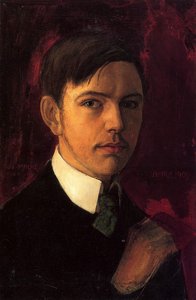
Augusto Macke
1887 - 1914 , Alemanha
Informações Rápidas
- Artistic Movement Or Style: Expressionismo
- Artists Or Movements Influenced By This Artist: ['Der Blaue Reiter']
- Artists Who Influenced This Artist:
- Robert Delaunay
- Franz Marc
- Date Of Birth: 3 de janeiro de 1887
- Date Of Death: 26 de setembro de 1914
- Full Name: August Robert Ludwig Macke
- Nationality: Alemão
- Notable Artworks:
- Mulher em um Casaco Verde
- Banhistas com Cidade
- Café Turco
- Place Of Birth: Meschede, Alemanha
Artigos Relacionados
August Macke: Expressionist Visions of Harmony & Modern Life
Explore the vibrant Expressionist paintings of August Macke (1887-1914). Discover his key role in Der Blaue Reiter, Fauvist influences, and captivating depictions of modern life. A comprehensive guide for art enthusiasts & collectors.

Rogier van der Weyden: Emotion, Innovation & the Early Netherlandish Renaissance
Explore the revolutionary art of Rogier van der Weyden, a pivotal figure of the Early Netherlandish Renaissance. Discover his emotional realism, innovative compositions, and lasting impact on painting history.
Renoir: As 25 Obras-Primas do Mestre Impressionista | OriginalUniqueArt
Descubra as 25 obras-primas de Renoir, o mestre do Impressionismo! Explore a história, cores vibrantes e emoção por trás de quadros icônicos como 'Bal au moulin de la Galette'. Encontre reproduções de arte exclusivas para decorar sua casa com elegância em OriginalUniqueArt.com.
Renascimento Primitivo Flamenco: 10 Obras-Primas Essenciais para Decorar com Arte
Descubra as 10 obras-primas do Renascimento Primitivo Flamenco! Explore a arte de Jan van Eyck, Robert Campin e outros mestres. Reproduções de alta qualidade para decorar sua casa com beleza e história. Explore a coleção completa em OriginalUniqueArt.com

Hugo van der Goes: Devotion, Innovation & the Psychological Depth of Early Netherlandish Painting
Explore the revolutionary art of Hugo van der Goes – a master of Early Netherlandish painting renowned for his dramatic realism, psychological depth & profound influence on Renaissance artists. Discover his iconic works and lasting legacy.


