

 Visualizar na parede
 Compartilhar
 Compartilhar
 Detalhes
 Guia
Guia

 Baixar imagem
 Semelhantes
 Raio X
 Ver diaporama
 Estatísticas
Man Reading in a Park


 Ler mais
Reprodução em Óleo Feita à Mão
Óleo sobre tela pintado à mão no tamanho e moldura de sua escolha, feito sob encomenda pelos nossos artistas. ( Alternar para Impressão Alternar para Imagem Digital)




P118B €10

P118H €10

P118W €10

P438Z €10

P508JH €12

P508YH €12

P805H €10

P805Z €10

P919BZ €10

P919G €10

P919XJ €10

P959ZH €10

P968JZ €12

W106C €8

W218G €10

W218JH €8

W218Y €10

W307PJ €10

W316G €10

W316PJ €8

W316Y €10

W398PJ €8

W4111J €10

W500HY €15

W500JH €15

W692G €12

W849H €8

W940BG €15

W953PJ €8




Escolha entre os nossos tamanhos pré-definidos que respeitam as proporções originais da obra de arte.

Insira a largura e a altura desejadas para se ajustarem à sua moldura ou parede. Como esta obra é pintada à mão, para um tamanho com proporções diferentes, o artista poderá pintar um pouco mais ao redor da imagem ou reduzir ligeiramente a composição — você escolhe. Enviamos uma maquete digital para sua aprovação antes de iniciar a pintura. A imagem exibida nesta página não representa o resultado real — apenas a maquete mostra o resultado final.
Após o pedido, a equipa OriginalUniqueArt.com enviará um e-mail ao cliente para solicitar instruções e fornecer uma prévia do esboço.
Entrega mundial () em 3 a 4 semanas, em vez das 5 semanas padrão. (27 Outubro). Sem comprometer a qualidade.

Envio expresso gratuito para todo o mundo

Tela de Linho de Alta Qualidade

Seguro de transporte completo

Garantia de Reembolso de Impostos Alfandegários

Garantia de Fidelidade Cromática

Política de Devolução em 100 Dias (Apenas para Defeitos)

Garantia de reembolso de 100%

Oferta de desconto por quantidade
 A opção de vidro está disponível apenas para tamanhos inferiores a 110 cm

Man Reading in a Park
Técnica de Reprodução
Tamanho da Reprodução
-


Preço Total
€ 264
A Moment Suspended in Time: The Leisure of August Macke
To gaze upon Man Reading in a Park is to step through a veil into a perfect afternoon—a moment so richly imbued with quiet contemplation that it feels almost suspended outside the rush of modern life. This painting by August Macke captures more than just a man on a bench; it encapsulates the very essence of leisure, the profound luxury of simply being present amidst the vibrant chaos of nature and society. The composition draws the eye immediately to the central figure, absorbed in the narrative held within his newspaper, yet the surrounding park life—the distant figures, the delicate perch of a bird against the foliage—reminds us that solitude is often found within community.
The Luminous Brushwork of German Expressionism
Macke’s technique here is a masterful blend of Impressionistic light play and the emotional depth characteristic of early German Expressionism. While his style hints at the bright, almost joyous palette associated with the movement, there is an underlying sense of poignant introspection. Observe the handling of the paint; it possesses a palpable texture, suggesting Macke’s skilled use of impasto that allows the sunlight filtering through the leaves to become visible pigment itself. The background is not merely painted scenery; it breathes. It vibrates with color and suggestion, allowing the viewer's own imagination to fill in the details of conversation or activity happening just beyond our direct focus.
Context and the Fleeting Nature of Joy
Painted in 1914, this work carries the bittersweet resonance of its time. August Macke’s life was tragically cut short by the looming shadow of global conflict, making works like this an artifact imbued with a poignant nostalgia for peace and simple pleasures. The park setting becomes a sanctuary—a temporary haven before the storm. It speaks to a yearning for permanence in an era defined by rapid change, suggesting that true beauty resides in these small, unrepeatable pockets of calm.
Symbolism of Solitude Amidst Life
The symbolism within Man Reading in a Park is wonderfully layered. The newspaper itself acts as a barrier and a portal; it connects the man to the outside world's discourse while simultaneously isolating him in his personal bubble of thought. Meanwhile, the surrounding activity—the other figures enjoying their day—serves as a beautiful counterpoint, reminding us that even when we seek quietude, we are always part of a larger, interconnected human tapestry. The bird perched overhead is nature’s silent witness, observing the ritual of human repose.
Bringing Macke's Atmosphere Home
For collectors and designers alike, this piece offers more than mere decoration; it offers an emotional anchor. Reproducing the luminosity and evocative mood of Man Reading in a Park allows one to infuse a space with sophisticated tranquility. Imagine this scene rendered on a wall—a vibrant conversation starter that whispers tales of sun-drenched afternoons and thoughtful repose, transforming any room into a curated retreat.
Perguntas e Respostas
Posso ver "Man Reading in a Park", de Augusto Macke na minha própria parede antes de comprar?
"Man Reading in a Park" possui uma prévia em realidade aumentada: a página de Prévia em RA da obra permite visualizá-la no seu próprio espaço através de um dispositivo compatível.
Posso ver "Man Reading in a Park", de Augusto Macke sob diferentes luzes?
A visualização em Raio-X de "Man Reading in a Park", de Augusto Macke está disponível na página Raio X da obra: um exame interativo da imagem através de onze camadas ópticas.
Quem criou "Man Reading in a Park" e em que ano?
A obra "Man Reading in a Park" é de autoria de Augusto Macke e data de 1914.
Biografia do Artista
A Life Cut Short: The Vibrant World of August Macke
August Robert Ludwig Macke, a name inextricably linked to the brief but brilliant flowering of German Expressionism, lived a life tragically curtailed by the horrors of the First World War. Born in 1887 in Meschede, Westphalia, his artistic journey was one of rapid evolution and profound exploration – a relentless pursuit of capturing not just what he *saw*, but how he *felt* about it. Macke’s early years were marked by a restless spirit and an insatiable curiosity, shaping him into the innovative artist he would become. His formative years in Bonn, where he received his initial education, laid the groundwork for his distinctive style, while independent study and travel exposed him to a diverse range of influences that would ultimately coalesce into his unique artistic vision.Early Influences and Artistic Beginnings
Macke’s early artistic development was profoundly shaped by the vibrant cultural landscape of late 19th-century Germany. He began drawing at a young age, driven by an innate desire to capture the beauty of the natural world – the rolling hills of Westphalia, the dense forests, and the shimmering waters of the Rhine. Initially, he sought guidance from formal art academies, studying at the Düsseldorf Art Academy from 1904-1906 under Adolf Maennchen. However, Macke quickly found himself chafing against the rigid academic traditions, which emphasized meticulous draftsmanship and historical subject matter. He yearned for a more expressive and personal approach to art – one that prioritized emotion and sensation over strict adherence to convention. Seeking alternative sources of inspiration, Macke immersed himself in the burgeoning world of theatre design, working as a stage designer for the Düsseldorf Playhouse. This experience honed his compositional skills, sharpened his eye for color and form, and exposed him to the dynamic energy of performance – all of which would later inform his paintings. Crucially, he also began frequenting art exhibitions and absorbing the ideas of leading modernists like Henri Matisse and Paul Gauguin, whose bold use of color and simplified forms resonated deeply with his own artistic sensibilities. He was particularly drawn to the Fauves’ rejection of traditional academic painting techniques, embracing a more direct and emotionally charged approach.Parisian Revelations: Orphism and Beyond
In 1912, Macke embarked on a transformative journey to Paris – a pivotal moment in his artistic development. It was here that he encountered Robert Delaunay and the burgeoning movement of Orphism, a branch of Cubism focused on pure abstraction and vibrant color harmonies. Delaunay’s work, characterized by its broken planes of color and dynamic compositions, profoundly influenced Macke's approach to painting, encouraging him to move beyond representational imagery and explore the expressive potential of color itself. He began experimenting with simultaneous contrast – the principle that colors appear different depending on the colors surrounding them – creating paintings that shimmered with energy and vitality. Simultaneously, Macke’s close friendship with Franz Marc, a fellow Expressionist and member of Der Blaue Reiter (The Blue Rider), provided him with invaluable intellectual and artistic support. Der Blaue Reiter was a loosely organized group of artists who sought to create art that reflected the spiritual and emotional realities of modern life. The group's emphasis on intuition, symbolism, and the exploration of inner experience aligned perfectly with Macke’s own artistic goals. He participated in several of their exhibitions, contributing works that showcased his evolving style – a blend of Fauvist color, Cubist form, and Expressionist emotion.The Blue Rider and a Unique Vision
As a member of Der Blaue Reiter, Macke played a crucial role in shaping the group’s aesthetic direction. Unlike some of his colleagues who leaned towards darker, more angst-ridden themes, Macke consistently sought to portray beauty and harmony in the world around him. His paintings – such as Bathing Girls with Town in the Background – radiate warmth and vitality through their bold color palettes and confident brushwork. He masterfully blended elements of Fauvism, Cubism, and Futurism into a distinctly personal style, creating compositions that are both visually striking and emotionally resonant. His work often depicted scenes from everyday life – landscapes, portraits, interiors – imbued with a sense of joy and optimism. Macke’s fascination with the natural world extended to his depictions of animals, which he treated not as mere subjects but as embodiments of primal energy and instinct. His paintings of horses, birds, and other creatures are characterized by their dynamic poses, vibrant colors, and expressive brushstrokes – capturing a sense of movement and vitality that transcends simple representation. His luminist approach, particularly evident in works like Türkisches Café, demonstrates his remarkable sensitivity to light and shadow, creating images that shimmer with an ethereal glow.A Tragic End and Lasting Legacy
The outbreak of World War I brought a sudden and devastating end to Macke’s promising career. Driven by patriotic fervor, he volunteered for military service in 1914 and was tragically killed in action on September 26th near Champagne, France, at the young age of 27. His final painting, Farewell, poignantly captures the somber mood that descended upon Europe as war engulfed the continent. Despite his untimely death, August Macke’s legacy endures. His paintings – celebrated for their vibrant colors, dynamic compositions, and optimistic vision – continue to captivate audiences around the world. He remains a significant figure in the history of Expressionism, a testament to the power of art to transcend personal tragedy and inspire hope amidst darkness. His works are held in prominent collections across Europe, offering visitors a chance to experience the beauty and emotional depth of his unique artistic vision.Exploring Macke’s World Today
Today, August Macke's works are exhibited in museums throughout Germany and beyond, including the Staatsgalerie Moderner Kunst in Munich, the Museum Ludwig in Cologne, and the Kunsthaus Zürich. Numerous online resources provide detailed information about his life, work, and artistic influences – offering a rich tapestry of insights for art enthusiasts and scholars alike. The Westfälisches Landesmuseum Münster and the Kunstmuseum Bonn are particularly noteworthy for their extensive holdings of Macke’s paintings, providing a comprehensive overview of his artistic development. Exploring his paintings through online databases such as OriginalUniqueArt allows for a closer examination of his technique and subject matter, revealing the enduring appeal of this remarkable artist whose life was tragically cut short but whose legacy continues to shine brightly.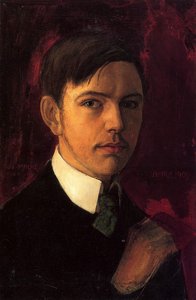
Augusto Macke
1887 - 1914 , Alemanha
Dados Rápidos
- Artistic Movement Or Style: Expressionismo
- Artists Or Movements Influenced By This Artist: ['Der Blaue Reiter']
- Artists Who Influenced This Artist:
- Robert Delaunay
- Franz Marc
- Date Of Birth: 3 de janeiro de 1887
- Date Of Death: 26 de setembro de 1914
- Full Name: August Robert Ludwig Macke
- Nationality: Alemão
- Notable Artworks:
- Mulher em um Casaco Verde
- Banhistas com Cidade
- Café Turco
- Place Of Birth: Meschede, Alemanha
Artigos Relacionados

Unmasking Emotion: A Journey Through the Raw Power and Visceral Beauty of German Expressionism
Explore the raw emotional power of German Expressionism. From Kirchner to Die Brücke, discover how artists used distortion and vibrant color to unmask the human psyche. A deep dive into art history for the discerning collector and enthusiast.

Expressionismo Alemão: 10 Obras-Primas que Moldaram a Arte Moderna | OriginalUniqueArt
Descubra as 10 obras-primas do Expressionismo Alemão que revolucionaram a arte moderna. Explore a paixão de Munch, Kirchner e Kandinsky! Reproduções de museu em OriginalUniqueArt.com. Explore a coleção online.
August Macke: Expressionist Visions of Harmony & Modern Life
Explore the vibrant Expressionist paintings of August Macke (1887-1914). Discover his key role in Der Blaue Reiter, Fauvist influences, and captivating depictions of modern life. A comprehensive guide for art enthusiasts & collectors.

Paisagens Impressionistas Icônicas: 10 Obras que Mudaram a Arte | OriginalUniqueArt
Descubra as 10 obras impressionistas que revolucionaram a arte! Explore Monet, Renoir e outros mestres da paisagem. Encontre reproduções de alta qualidade para decorar sua casa com a beleza do Impressionismo em OriginalUniqueArt.com.
The Visceral Cry of a Nation: Exploring Emotion & Distortion in German Expressionism
Explore the powerful world of German Expressionism with OriginalUniqueArt. Discover Kirchner, Nolde & Die Brücke's emotive masterpieces. Learn about this pivotal art movement and its lasting impact on modern art.


