

 Visualizar na parede
 Compartilhar
 Compartilhar
 Detalhes
 Guia
Guia

 Baixar imagem
 Semelhantes
 Raio X
 Ver diaporama
 Estatísticas
Elisabeth at the Table
 Oil On Canvas
- WallArt
- Fauvist Style
 1909
1909- Modern
 22.0 x 16.0 cm
 Ler mais
Reprodução em Óleo Feita à Mão
Óleo sobre tela pintado à mão no tamanho e moldura de sua escolha, feito sob encomenda pelos nossos artistas. ( Alternar para Impressão Alternar para Imagem Digital)




P118B €10

P118H €10

P118W €10

P438Z €10

P508JH €12

P508YH €12

P805H €10

P805Z €10

P919BZ €10

P919G €10

P919XJ €10

P959ZH €10

P968JZ €12

W106C €8

W218G €10

W218JH €8

W218Y €10

W307PJ €10

W316G €10

W316PJ €8

W316Y €10

W398PJ €8

W4111J €10

W500HY €15

W500JH €15

W692G €12

W849H €8

W940BG €15

W953PJ €8




Escolha entre os nossos tamanhos pré-definidos que respeitam as proporções originais da obra de arte.

Insira a largura e a altura desejadas para se ajustarem à sua moldura ou parede. Como esta obra é pintada à mão, para um tamanho com proporções diferentes, o artista poderá pintar um pouco mais ao redor da imagem ou reduzir ligeiramente a composição — você escolhe. Enviamos uma maquete digital para sua aprovação antes de iniciar a pintura. A imagem exibida nesta página não representa o resultado real — apenas a maquete mostra o resultado final.
Após o pedido, a equipa OriginalUniqueArt.com enviará um e-mail ao cliente para solicitar instruções e fornecer uma prévia do esboço.
Entrega mundial () em 3 a 4 semanas, em vez das 5 semanas padrão. (26 Outubro). Sem comprometer a qualidade.

Envio expresso gratuito para todo o mundo

Tela de Linho de Alta Qualidade

Seguro de transporte completo

Garantia de Reembolso de Impostos Alfandegários

Garantia de Fidelidade Cromática

Política de Devolução em 100 Dias (Apenas para Defeitos)

Garantia de reembolso de 100%

Oferta de desconto por quantidade
 A opção de vidro está disponível apenas para tamanhos inferiores a 110 cm

Elisabeth at the Table
Técnica de Reprodução
Tamanho da Reprodução
-


Preço Total
€ 263
A Moment of Quietude: August Macke's "Elisabeth at the Table"
August Macke’s “Elisabeth at the Table,” painted in 1909, is more than just a depiction of two women sharing a moment; it’s a vibrant distillation of Fauvist principles and a poignant glimpse into the burgeoning artistic spirit of early 20th-century Germany. Measuring a modest 22 x 16 cm, this oil on canvas radiates an immediate warmth, drawing the viewer into a scene of intimate companionship rendered with a boldness rarely seen before its time. Macke, a key figure within the influential Der Blaue Reiter group, masterfully employs color and brushstroke to evoke not just what he saw, but how he *felt* about it – a characteristic hallmark of Expressionism.
Fauvist Color and Energetic Form
The painting’s power lies fundamentally in its embrace of Fauvism. Macke abandons traditional representational accuracy for an unrestrained use of color, employing hues that are often jarringly bright and deliberately non-naturalistic. The reds, blues, and yellows aren't meant to mimic reality; instead, they pulsate with emotional intensity, contributing to the painting’s dynamic energy. Notice how the brushstrokes themselves – loose, gestural, and applied with a palpable urgency – further amplify this effect. This technique wasn't simply about aesthetics; it was a deliberate attempt to convey subjective experience, a core tenet of the movement.
A Portrait of Modern Life
The subject matter itself—two women seated at a table laden with books, handbags, and chairs – speaks volumes about the changing social landscape of the period. This isn’t a formal portrait intended to elevate status; it's an observation of everyday life, imbued with a sense of quiet contemplation. The objects themselves are rendered with a remarkable degree of detail, suggesting a comfortable domesticity, yet they are presented within Macke’s intensely colored framework, elevating them to something almost symbolic. The woman on the left, seemingly engrossed in a book, and the other, perhaps engaged in conversation or simply enjoying the moment, create an atmosphere of relaxed intimacy.
Historical Context and Artistic Influence
"Elisabeth at the Table" was created during a period of immense artistic upheaval. Macke’s work reflects the broader trends of his time – the rejection of academic conventions in favor of subjective expression, and the exploration of new visual languages. His association with Der Blaue Reiter (The Blue Rider) further contextualizes the painting, placing it within a circle of artists who were pushing the boundaries of artistic convention. Macke’s influence extends beyond Fauvism; his emphasis on emotional intensity and dynamic brushwork foreshadowed many later developments in modern art.
Collecting this Masterpiece – A Reproduction Opportunity
OriginalUniqueArt offers a meticulously crafted hand-painted reproduction of August Macke’s “Elisabeth at the Table,” allowing you to bring this captivating artwork into your home or office. Each reproduction is created using archival materials and techniques, ensuring its longevity and fidelity to the original. This isn't merely a print; it's an investment in art history, a tangible connection to one of the most significant figures of the early 20th-century art scene. Consider this piece as more than just decoration – it’s a window into a world of vibrant color, emotional intensity, and profound artistic vision.
Perguntas e Respostas
Qual é a saturação e a intensidade de "Elisabeth at the Table", de Augusto Macke?
As cores de "Elisabeth at the Table", de Augusto Macke apresentam uma saturação Subtle Color com uma intensidade Monochromatic.
Para quem "Elisabeth at the Table", de Augusto Macke é recomendado como presente?
"Elisabeth at the Table" é uma sugestão de presente para Birthday.
A qual estilo pertence "Elisabeth at the Table"?
O movimento associado a "Elisabeth at the Table", de Augusto Macke é Fauvist Style. Esta classificação situa a obra entre artistas e obras de arte relacionados.
Biografia do Artista
A Life Cut Short: The Vibrant World of August Macke
August Robert Ludwig Macke, a name inextricably linked to the brief but brilliant flowering of German Expressionism, lived a life tragically curtailed by the horrors of the First World War. Born in 1887 in Meschede, Westphalia, his artistic journey was one of rapid evolution and profound exploration – a relentless pursuit of capturing not just what he *saw*, but how he *felt* about it. Macke’s early years were marked by a restless spirit and an insatiable curiosity, shaping him into the innovative artist he would become. His formative years in Bonn, where he received his initial education, laid the groundwork for his distinctive style, while independent study and travel exposed him to a diverse range of influences that would ultimately coalesce into his unique artistic vision.Early Influences and Artistic Beginnings
Macke’s early artistic development was profoundly shaped by the vibrant cultural landscape of late 19th-century Germany. He began drawing at a young age, driven by an innate desire to capture the beauty of the natural world – the rolling hills of Westphalia, the dense forests, and the shimmering waters of the Rhine. Initially, he sought guidance from formal art academies, studying at the Düsseldorf Art Academy from 1904-1906 under Adolf Maennchen. However, Macke quickly found himself chafing against the rigid academic traditions, which emphasized meticulous draftsmanship and historical subject matter. He yearned for a more expressive and personal approach to art – one that prioritized emotion and sensation over strict adherence to convention. Seeking alternative sources of inspiration, Macke immersed himself in the burgeoning world of theatre design, working as a stage designer for the Düsseldorf Playhouse. This experience honed his compositional skills, sharpened his eye for color and form, and exposed him to the dynamic energy of performance – all of which would later inform his paintings. Crucially, he also began frequenting art exhibitions and absorbing the ideas of leading modernists like Henri Matisse and Paul Gauguin, whose bold use of color and simplified forms resonated deeply with his own artistic sensibilities. He was particularly drawn to the Fauves’ rejection of traditional academic painting techniques, embracing a more direct and emotionally charged approach.Parisian Revelations: Orphism and Beyond
In 1912, Macke embarked on a transformative journey to Paris – a pivotal moment in his artistic development. It was here that he encountered Robert Delaunay and the burgeoning movement of Orphism, a branch of Cubism focused on pure abstraction and vibrant color harmonies. Delaunay’s work, characterized by its broken planes of color and dynamic compositions, profoundly influenced Macke's approach to painting, encouraging him to move beyond representational imagery and explore the expressive potential of color itself. He began experimenting with simultaneous contrast – the principle that colors appear different depending on the colors surrounding them – creating paintings that shimmered with energy and vitality. Simultaneously, Macke’s close friendship with Franz Marc, a fellow Expressionist and member of Der Blaue Reiter (The Blue Rider), provided him with invaluable intellectual and artistic support. Der Blaue Reiter was a loosely organized group of artists who sought to create art that reflected the spiritual and emotional realities of modern life. The group's emphasis on intuition, symbolism, and the exploration of inner experience aligned perfectly with Macke’s own artistic goals. He participated in several of their exhibitions, contributing works that showcased his evolving style – a blend of Fauvist color, Cubist form, and Expressionist emotion.The Blue Rider and a Unique Vision
As a member of Der Blaue Reiter, Macke played a crucial role in shaping the group’s aesthetic direction. Unlike some of his colleagues who leaned towards darker, more angst-ridden themes, Macke consistently sought to portray beauty and harmony in the world around him. His paintings – such as Bathing Girls with Town in the Background – radiate warmth and vitality through their bold color palettes and confident brushwork. He masterfully blended elements of Fauvism, Cubism, and Futurism into a distinctly personal style, creating compositions that are both visually striking and emotionally resonant. His work often depicted scenes from everyday life – landscapes, portraits, interiors – imbued with a sense of joy and optimism. Macke’s fascination with the natural world extended to his depictions of animals, which he treated not as mere subjects but as embodiments of primal energy and instinct. His paintings of horses, birds, and other creatures are characterized by their dynamic poses, vibrant colors, and expressive brushstrokes – capturing a sense of movement and vitality that transcends simple representation. His luminist approach, particularly evident in works like Türkisches Café, demonstrates his remarkable sensitivity to light and shadow, creating images that shimmer with an ethereal glow.A Tragic End and Lasting Legacy
The outbreak of World War I brought a sudden and devastating end to Macke’s promising career. Driven by patriotic fervor, he volunteered for military service in 1914 and was tragically killed in action on September 26th near Champagne, France, at the young age of 27. His final painting, Farewell, poignantly captures the somber mood that descended upon Europe as war engulfed the continent. Despite his untimely death, August Macke’s legacy endures. His paintings – celebrated for their vibrant colors, dynamic compositions, and optimistic vision – continue to captivate audiences around the world. He remains a significant figure in the history of Expressionism, a testament to the power of art to transcend personal tragedy and inspire hope amidst darkness. His works are held in prominent collections across Europe, offering visitors a chance to experience the beauty and emotional depth of his unique artistic vision.Exploring Macke’s World Today
Today, August Macke's works are exhibited in museums throughout Germany and beyond, including the Staatsgalerie Moderner Kunst in Munich, the Museum Ludwig in Cologne, and the Kunsthaus Zürich. Numerous online resources provide detailed information about his life, work, and artistic influences – offering a rich tapestry of insights for art enthusiasts and scholars alike. The Westfälisches Landesmuseum Münster and the Kunstmuseum Bonn are particularly noteworthy for their extensive holdings of Macke’s paintings, providing a comprehensive overview of his artistic development. Exploring his paintings through online databases such as OriginalUniqueArt allows for a closer examination of his technique and subject matter, revealing the enduring appeal of this remarkable artist whose life was tragically cut short but whose legacy continues to shine brightly.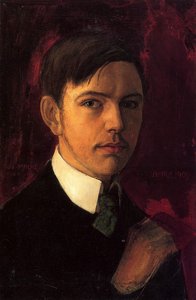
Augusto Macke
1887 - 1914 , Alemanha
Dados Rápidos
- Artistic Movement Or Style: Expressionismo
- Artists Or Movements Influenced By This Artist: ['Der Blaue Reiter']
- Artists Who Influenced This Artist:
- Robert Delaunay
- Franz Marc
- Date Of Birth: 3 de janeiro de 1887
- Date Of Death: 26 de setembro de 1914
- Full Name: August Robert Ludwig Macke
- Nationality: Alemão
- Notable Artworks:
- Mulher em um Casaco Verde
- Banhistas com Cidade
- Café Turco
- Place Of Birth: Meschede, Alemanha
Artigos Relacionados

The Enduring Legacy of Fine Art Prints: Technique, History & Aesthetic Impact
Explore the rich history & techniques of fine art prints. Discover investment potential, assess authenticity, and learn how to preserve your collection with expert guidance. Trusted insights for discerning collectors.

Echoes of Time: Exploring the Enduring Appeal & Historical Context of Vintage Art Prints
Explore the captivating world of vintage art prints! Discover their history, collecting tips & enduring appeal. Expert insights on chromolithography and building a legacy collection with OriginalUniqueArt.
Fauvismo: 10 Obras-Primas que Definiram a Expressão Artística | OriginalUniqueArt
Descubra as 10 obras-primas do Fauvismo com Matisse, Derain e Vlaminck. Explore a história, cores vibrantes e emoção por trás deste movimento artístico revolucionário. Reproduções de arte exclusivas em OriginalUniqueArt.com!

Giclée Prints: Archival Quality & Aesthetic Nuances for the Discerning Collector
Explore the world of giclée prints with OriginalUniqueArt. Learn about archival quality, aesthetic nuances & investment potential. Expert guidance for discerning art collectors seeking museum-quality reproductions and lasting value.
Fauvismo: 10 Obras-Primas que Revolucionaram a Arte Moderna | OriginalUniqueArt
Descubra as 10 obras-primas do Fauvismo, com Matisse e Derain! Explore a história, cores vibrantes e técnicas revolucionárias deste movimento artístico. Encontre reproduções de arte exclusivas para decorar sua casa em OriginalUniqueArt.com.


