

 Visualizar em escala
 Enviar
 Compartilhar
 Ver detalhes
 Guia de Obras do Aluno

 Baixar imagem
 Semelhantes
 Raio X
 Apresentação de slides
 Estatísticas
Shield with Gorgon


 Ver mais
Giclée / Impressão de Arte
Impressão giclée ou em tela de qualidade de museu, com produção rápida e opções flexíveis de acabamento. ( Encomendar reprodução pintada à mão Ver Imagem Digital)




P118B €10

P118H €10

P118W €10

P438Z €10

P508JH €12

P508YH €12

P805H €10

P805Z €10

P919BZ €10

P919G €10

P919XJ €10

P959ZH €10

P968JZ €12

W106C €8

W218G €10

W218JH €8

W218Y €10

W307PJ €10

W316G €10

W316PJ €8

W316Y €10

W398PJ €8

W4111J €10

W500HY €15

W500JH €15

W692G €12

W849H €8

W940BG €15

W953PJ €8




Escolha entre os nossos tamanhos pré-definidos que respeitam as proporções originais da obra de arte.

Digite a largura e a altura de que necessita, para se ajustar à sua moldura ou à sua parede. Uma impressão só pode ser cortada, nunca ampliada além da imagem original, pelo que um tamanho com uma proporção diferente perderá parte da imagem. Enviamos-lhe uma maquete digital para aprovação antes de imprimirmos qualquer coisa. A imagem apresentada nesta página não mostra o corte real — apenas a maquete o faz.
Entrega mundial () em 2 semanas, em vez das 4/5 semanas padrão. (22 Outubro)

Envio expresso gratuito para todo o mundo

Tela de Linho Premium

Seguro de transporte total

Garantia de Reembolso de Impostos Alfandegários

Garantia de Fidelidade de Cor

Política de Devolução em 100 Dias (Apenas para Defeitos)

Garantia de reembolso de 100%

Desconto para múltiplas unidades
 A opção de vidro está disponível apenas para tamanhos inferiores a 110 cm

Shield with Gorgon
Giclée / Impressão de Arte
Dimensões da Reprodução
-


Preço Total
€ 70
Shield with Gorgon – A Meditation on Mortality and Ancient Myth
The sculpture “Shield with Gorgon’s Head,” created by Arnold Böcklin in 1897, stands as a haunting testament to the artist's fascination with Greco-Roman mythology and his profound contemplation of death. Exhibited prominently at the Musée d’Orsay in Paris, this piece transcends mere representation; it invites viewers into a realm of psychological exploration where beauty intertwines with unsettling truths. Böcklin, deeply influenced by Nietzschean philosophy – specifically the concept of eternal recurrence – sought to capture not just an image but an experience, mirroring the cyclical nature of existence and confronting us with our inevitable demise.Style and Technique: Symbolist Precision
Böcklin’s style aligns perfectly with the tenets of Symbolism, a movement that rejected realism in favor of conveying emotions and ideas through suggestive imagery rather than literal depiction. Unlike Impressionists who aimed to capture fleeting moments of light and color, Böcklin meticulously crafted his sculpture using a technique rooted in meticulous observation and symbolic distillation. The artist employed a combination of modeling clay and bronze casting – a process demanding considerable skill and patience – to achieve an astonishing level of detail. Notice the subtle gradations of tone within the Gorgon’s head; these aren't merely aesthetic choices but deliberate efforts to convey texture and depth, mirroring the complexities of human emotion. The smooth surface contrasts sharply with the rough contours of the snake’s coils, creating a visual dialogue that underscores the sculpture’s thematic concerns.Historical Context: Nietzschean Echoes and Late Romantic Sentiment
Böcklin's artistic output flourished during the waning years of the Romantic era, a period characterized by an obsession with emotion, imagination, and the sublime—experiences perceived as exceeding human comprehension yet simultaneously elevating the soul. However, Böcklin’s vision extended beyond traditional Romantic tropes; he actively engaged with the burgeoning intellectual currents of his time, particularly Nietzsche's proclamation that “God is dead.” This existential crisis fueled Böcklin’s exploration of themes like nihilism and mortality—concepts central to both Nietzschean thought and Symbolist art. The sculpture reflects a broader cultural preoccupation with confronting death not as an end but as a transformative stage in the cosmic cycle, mirroring Nietzsche's assertion that life itself is an affirmation of eternal recurrence.Symbolism Unleashed: Gorgon’s Head – Terror and Transformation
The Gorgon Medusa represents more than just monstrous horror; she embodies the terrifying power of transformation—a concept inextricably linked to Böcklin’s Symbolist worldview. According to Greek mythology, Medusa possessed snakes for hair that turned anyone who gazed upon them into stone. This image served as a potent symbol of inescapable fate and the destructive force of repressed emotions. The sculptor skillfully captures this duality: the Gorgon's gaze exudes palpable terror, yet simultaneously hints at an underlying process of metamorphosis—a suggestion that confronting death can lead to profound spiritual renewal. Böcklin’s deliberate use of serpentine coils reinforces this symbolism, representing both constriction and liberation – mirroring the artist’s own preoccupation with reconciling beauty and darkness.Emotional Impact: A Confrontation With Eternity
Ultimately, “Shield with Gorgon’s Head” compels viewers to confront their own mortality—to grapple with the inescapable reality that life is finite yet perpetually reborn. The sculpture's unsettling stillness invites contemplation, prompting us to consider our place within the grand scheme of cosmic time. Böcklin doesn’t offer comfort or reassurance; instead, he presents a stark portrait of existence stripped bare – confronting us with the beauty and terror inherent in accepting death as an inevitable component of life’s eternal dance. It is precisely this unflinching gaze—this refusal to shy away from uncomfortable truths—that secures “Shield with Gorgon’s Head”'s enduring power as a masterpiece of Symbolist art and a timeless meditation on the human condition.Perguntas e Respostas
Qual disposição melhor se adapta ao formato de "Shield with Gorgon" de Arnold Böcklin?
O formato Square de "Shield with Gorgon" de Arnold Böcklin é recomendado para um(a) Living Room. O formato e o espaço juntos orientam a disposição de uma reprodução.
De que forma o tema de "Shield with Gorgon" se relaciona com os temas habituais de Arnold Böcklin?
Entre os temas registrados de Arnold Böcklin — greek mythology, symbolism, death, mortality themes, romantic idealism vision, classical forms beauty, medieval gothic style — "Shield with Gorgon" traz seu próprio foco em mythology, gorgon, snake, sculpture, classical, death, symbolism, medieval.
De que material é feita a obra "Shield with Gorgon"?
Arnold Böcklin utilizou a técnica de Acrylic On Canvas para "Shield with Gorgon". A técnica define a natureza material da obra original.
Biografia do Artista
Early Life and Training
Arnold Böcklin, a figure of profound melancholy and haunting beauty, was born on October 16, 1827, in Basel, Switzerland—a city steeped in history and artistic tradition. His father, Christian Frederick Böcklin, descended from an old family rooted in the silk trade, while his mother, Ursula Lippe, hailed from the same city as well. From a young age, Arnold displayed a keen interest in art, enrolling at the Düsseldorf Academy under the tutelage of Johann Wilhelm Schirmer. It was here that he forged a lasting friendship with Anselm Feuerbach, a connection that would profoundly shape his artistic sensibilities. Böcklin’s time in Düsseldorf firmly placed him within the orbit of the Düsseldorf School of Painting, an environment known for its emphasis on realism and meticulous technique. This early training provided him with a solid foundation, but it was his subsequent travels and encounters that truly ignited his unique vision.Artistic Career and Symbolism
Böcklin’s artistic journey took him beyond the familiar landscapes of Düsseldorf, leading him through Paris and Rome—cities brimming with artistic heritage and inspiring new avenues for exploration. In Paris, he found work at the Louvre, immersing himself in the masterpieces of the Old Masters, a period that would deeply influence his later style. His time in Rome proved equally transformative, exposing him to the grandeur of classical architecture and the evocative atmosphere of the Italian countryside. This exposure led Böcklin to incorporate allegorical and mythological figures into his work—a departure from purely landscape painting—and to explore themes of death, mortality, and the subconscious. His early works, such as *Great Park*, showcased ancient mythology with a dramatic flair, establishing a distinctive style characterized by a blend of Romanticism, Symbolism, and a touch of the macabre. Pieces like *Nymph and Satyr* (1858) and *Sappho* (1859) further solidified his reputation as an artist capable of capturing both beauty and unsettling emotion. Notably, Böcklin’s self-portrait, *Portrait of Myself with Death Playing the Violin* (1872), stands out for its introspective nature and symbolic depth, offering a glimpse into the artist's own preoccupation with mortality.The Isle of the Dead and Last Years
Perhaps the most enduring legacy of Arnold Böcklin’s career is his five versions of *The Isle of the Dead* (1880-1886). This series, inspired by the English Cemetery in Florence—where his daughter was buried—became an iconic representation of death and remembrance. The paintings evoke a sense of profound melancholy and timelessness, drawing upon elements of Gothic architecture, classical mythology, and dreamlike imagery. *The Isle of the Dead* resonated deeply with audiences and artists alike, influencing figures such as the composer Rachmaninoff, who drew inspiration for his symphonic poem of the same name, and the Surrealist painter Salvador Dalí, who saw in Böcklin’s work a precursor to his own explorations of the subconscious. In his later years, Böcklin retreated to Italy, settling near Fiesole, where he continued to paint haunting landscapes and allegorical scenes—works that reflected his deepening preoccupation with death and the mysteries of the afterlife.Legacy and Influence
Arnold Böcklin’s impact on the art world extends far beyond his own creations. He is considered a pivotal figure in the development of Symbolism, a movement characterized by its emphasis on subjective experience, emotional intensity, and the exploration of hidden meanings. His work anticipated many of the themes and techniques that would later be embraced by Surrealist artists such as Max Ernst and Giorgio de Chirico, who saw in Böcklin’s paintings a profound expression of the irrational and the uncanny. Böcklin's distinctive style—characterized by its somber palette, evocative imagery, and symbolic depth—continues to fascinate and inspire artists today. His influence can be seen in countless works of art, literature, and music, solidifying his place as one of the most important and enigmatic figures in modern European art.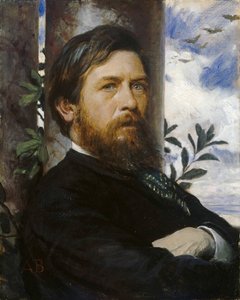
Arnold Böcklin
1827 - 1901 , Suíça
Informações Rápidas
- Artistic Movement Or Style: Simbolismo
- Artists Or Movements Influenced By This Artist:
- Hans Thoma
- Pre-Rafaelitas
- Artists Who Influenced This Artist:
- Schirmer
- Feuerbach
- Date Of Birth: 16 Out 1827
- Date Of Death: 16 Jan 1901
- Full Name: Arnold Böcklin
- Nationality: Suíço
- Notable Artworks:
- Ilha dos Mortos
- Ninfas e Sâtiros
- Safo
- Place Of Birth: Basel, Suíça
Artigos Relacionados

Theatricality & Triumph: Baroque Drama in Painting & Sculpture
Explore the dramatic world of Baroque art! Discover its history, defining characteristics, & lasting influence on painting & sculpture. Expert insights into Caravaggio, Zurbarán, and Bernini – plus high-quality reproductions at OriginalUniqueArt.

The Enduring Form: Exploring Themes & Techniques in Sculpture Across Historical Periods
Explore the rich history of sculpture from ancient masterpieces to contemporary innovations. Discover key techniques, influential artists & investment potential for discerning art collectors.

Esculturas em Bronze Icônicas: 10 Obras que Revolucionaram a Arte | OriginalUniqueArt
Descubra as 10 esculturas em bronze mais icônicas da história! Explore a arte de Rodin, Michelangelo e outros mestres. Encontre reproduções de alta qualidade para sua casa em OriginalUniqueArt.com.

The Enduring Form: Sculpture Across History, Technique & Emotional Resonance
Explore the rich history of sculpture with OriginalUniqueArt. Discover key techniques, influential artists & investment potential for discerning collectors. Expert insights into valuing and collecting timeless masterpieces.

As 10 Obras em Bronze Mais Icônicas que Transformaram a História da Arte | OriginalUniqueArt
Descubra as 10 esculturas em bronze mais influentes da história! Explore a arte de Rodin, Michelangelo e outros mestres. Reproduções de alta qualidade para decorar sua casa com elegância. OriginalUniqueArt.
