Visualizar na parede
 Compartilhar
 Compartilhar
 Detalhes

 Baixar imagem
 Semelhantes
 Raio X
 Slideshow
 Estatísticas
William Fermor
 Oil On Canvas
- WallArt
- Neoclassicism
 1757
1757- Early Modern
 61.0 x 47.0 cm
 Museu Ashmolean de Arte e Arqueologia
 Ler mais
Giclée / Impressão de Arte
Impressão giclée ou em tela de qualidade de museu, com produção rápida e opções flexíveis de acabamento. ( Comprar pintura feita à mão Alternar para Imagem Digital)




P118B $10

P118H $10

P118W $10

P438Z $10

P508JH $12

P508YH $12

P805H $10

P805Z $10

P919BZ $10

P919G $10

P919XJ $10

P959ZH $10

P968JZ $12

W106C $8

W218G $10

W218JH $8

W218Y $10

W307PJ $10

W316G $10

W316PJ $8

W316Y $10

W398PJ $8

W4111J $10

W500HY $15

W500JH $15

W692G $12

W849H $8

W940BG $15

W953PJ $8




Escolha entre os nossos tamanhos pré-definidos que respeitam as proporções originais da obra de arte.

Você pode inserir suas próprias dimensões para se ajustar a uma moldura ou espaço específico. Se o tamanho selecionado não corresponder às proporções da imagem original, iremos recortar a obra de arte ou estender a imagem com uma borda espelhada ou preenchimento sólido. Um mockup digital será enviado para sua aprovação antes do início da produção.
Por favor, observe que a visualização na tela não reflete o recorte ou a extensão real. Apenas o mockup mostrará com precisão a composição final.
Embora tamanhos personalizados estejam disponíveis, recomendamos selecionar uma dimensão da lista predefinida para preservar as proporções originais.
Entrega mundial () em 2 semanas, em vez das 4/5 semanas padrão. (10 Setembro)

Envio expresso gratuito para todo o mundo

Tela de Linho de Alta Qualidade

Seguro de transporte completo

Garantia de Reembolso de Impostos Alfandegários

Garantia de Fidelidade Cromática

Política de Devolução de 100 Dias (Apenas Defeitos)

Garantia de reembolso de 100%

Oferta de desconto por quantidade
 A opção de vidro está disponível apenas para tamanhos inferiores a 110 cm

William Fermor
Giclée / Impressão de Arte
Tamanho da Reprodução
-


Preço Total
$ 80
A Vision of Neoclassical Grace: The Portrait of William Fermor
In the delicate transition between the exuberant flourishes of the Rococo and the disciplined clarity of Neoclassicism, Anton Raphael Mengs’s 1757 masterpiece, “William Fermor,” emerges as a profound testament to artistic evolution. This striking oil on canvas does more than merely capture the likeness of a Scottish-born officer in the Imperial Russian Army; it serves as a window into an era where the intellectual rigor of the Enlightenment began to reshape the visual language of Europe. As one gazes upon the portrait, there is an immediate sense of dignified resolve, a quality that transcends the sitter's individual identity to touch upon universal ideals of nobility and strength.
The technical execution of the piece reveals Mengs’s unparalleled mastery over light and form. Utilizing a sophisticated application of chiaroscuro, the artist orchestrates a dramatic interplay between shadow and illumination to sculpt Fermor’s features with sculptural precision. The subtle textures of the background wall act as a quiet stage, ensuring that the viewer's focus remains anchored on the subject's commanding presence. Every brushstroke contributes to a sense of tactile reality, from the crispness of the white cravat to the heavy, luxurious weight of the crimson coat, inviting the observer to appreciate the meticulous craftsmanship that defines this pivotal work of the mid-18th century.
Symbolism and the Language of Authority
Beyond its surface beauty, “William Fermor” is rich with symbolic layers that would have been deeply legible to a contemporary audience. The sitter’s attire—a vibrant crimson coat embellished with gleaming gold buttons—is far from a mere fashion statement; it is a deliberate reference to royal heraldry, signaling prestige, authority, and a high social standing. This sartorial grandeur is balanced by the refined elegance of his powdered wig and cravat, elements that evoke the idealized dignity of Roman antiquity. Through these details, Mengs aligns Fermor with the classical virtues of gravitas and decorum, echoing the influential aesthetic theories of Johann Joachim Winckelmann.
The composition itself functions as a visual anchor for the Neoclassical movement. By placing Fermor against a restrained, subtly textured backdrop, Mengs avoids the distracting ornamentation typical of the preceding Rococo style, opting instead for a clarity that mirrors the stability and order sought during the Seven Years’ War era. This deliberate simplicity allows the emotional weight of the portrait to resonate more deeply, making it an ideal centerpiece for those who appreciate art that communicates power through restraint rather than excess.
An Enduring Legacy for the Modern Collector
For the discerning collector or interior designer, a high-quality reproduction of “William Fermor” offers much more than a decorative element; it provides a profound connection to art history. The painting’s palette of deep reds, brilliant golds, and soft neutrals possesses a timeless versatility, capable of anchoring a room with a sense of historical weight and intellectual sophistication. Whether placed in a formal study, a grand library, or a contemporary living space, the portrait introduces an atmosphere of stately composure and refined taste.
Owning a piece that embodies the bridge between two great eras allows for a continuous dialogue with the past. The artwork’s ability to evoke both the warmth of human character and the cold precision of classical ideals makes it a captivating subject for contemplation. It remains an evocative choice for those seeking to surround themselves with art that inspires respect, commands attention, and celebrates the enduring beauty of the human spirit captured through the lens of classical perfection.
Biografia do Artista
Uma Ponte Entre Mundos: A Vida e a Arte de Anton Raphael Mengs
Anton Raphael Mengs emergiu durante um período fascinante da arte europeia, uma época em que os ornamentos rebuscados do Rococó começavam a ceder lugar a uma renovada apreciação pelos ideais clássicos. Nascido em 1728, em Ústí nad Labem, Boêmia – região que hoje integra a República Tcheca – sua jornada artística foi profundamente moldada tanto por sua linhagem quanto pelas correntes intelectuais do Iluminismo. Seu pai, Ismael Mengs, um pintor dinamarquês que encontrou patrocínio na corte de Dresden, reconheceu precocemente o talento excepcional do jovem Anton. Esse reconhecimento levou a uma mudança crucial em 1741: uma mudança para Roma, onde o artista iniciante mergulhou no estudo de obras-primas antigas e nos trabalhos de mestres do Renascimento, como Rafael. Foi essa exposição que marcaria indelévelmente sua sensibilidade estética, instilando nele uma profunda reverência pela forma clássica, clareza e composição – qualidades que se tornariam as marcas registradas de seu estilo maduro. Seus primeiros anos foram dedicados à cópia meticulosa, não apenas como um exercício de técnica, mas como um profundo ato de peregrinação artística, absorvendo a essência do gênio de Rafael.De Dresden a Madrid: Uma Carreira Entre Cortes
A carreira de Mengs desenrolou-se através de várias cortes europeias proeminentes, cada uma deixando sua marca única em seu desenvolvimento artístico. Em 1749, ele conquistou uma posição prestigiosa como pintor da corte de Frederico Augusto, Eleitor da Saxônia, um papel que lhe proporcionou tanto estabilidade financeira quanto a liberdade de manter uma base em Roma – o epicentro de sua inspiração artística. No entanto, foram seus afrescos que verdadeiramente estabeleceram sua reputação. O Parnasso na Villa Albani, em Roma, concluído por volta de 1761, tornou-se um sucesso instantâneo, louvado por sua composição harmoniosa, figuras elegantes e uma evocação sutil, porém poderosa, da mitologia clássica. Esta obra não era meramente um floreio decorativo; era uma declaração – uma tentativa deliberada de sintetizar a grandeza Barroca com os princípios emergentes do Neoclassicismo. Outros encargos seguiram-se, incluindo o deslumbrante afresco que adorna a cúpula da Igreja de Sant'Eusebio, em Roma, demonstrando seu domínio sobre a decoração monumental e a ilusão espacial. Talvez sua empreitada mais ambiciosa tenha surgido com um convite da corte espanhola em 1761. Ele viajou para Madrid, onde foi encarregado de decorar vários palácios reais, culminando no magnífico teto do Salão de Banquetes do Palácio Real – uma obra considerada um de seus maiores feitos, demonstrando uma habilidade notável de fundir a elegância italiana com a sensibilidade espanhola.A Conexão Winckelmann: Moldando o Pensamento Neoclássico
A evolução artística de Mengs não foi impulsionada apenas pelo estudo visual; ela estava profundamente entrelaçada com o discurso intelectual. Um ponto de viragem crucial ocorreu com sua estreita amizade e colaboração com Johann Joachim Winckelmann, o historiador da arte pioneiro cujos escritos se tornariam fundamentais para o movimento Neoclássico. Winckelmann defendia um retorno à pureza e simplicidade percebidas na arte grega antiga, advogando por uma estética baseada na razão, ordem e formas idealizadas. Mengs não estava apenas ilustrando as teorias de Winckelmann; ele estava ativamente engajado em moldá-las, traduzindo conceitos abstratos em expressões artísticas tangíveis. Juntos, eles acreditavam que a verdadeira beleza não residia na ornamentação superficial, mas nos princípios subjacentes de harmonia e proporção encontrados na antiguidade clássica. Essa parceria estendeu-se para além das discussões teóricas; manifestou-se nas próprias pinturas de Mengs, que refletiam cada vez mais a ênfase de Winckelmann na nobre simplicidade e na emoção contida. A influência era recíproca: os escritos de Winckelmann forneceram uma estrutura filosófica para os empreendimentos artísticos de Mengs, enquanto a arte de Mengs serviu como prova visual da viabilidade – e da beleza – dos ideais Neoclássicos.Legado e Influência: Um Pioneiro de Seu Tempo
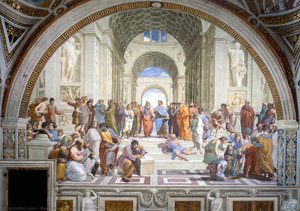
Anton Raphael Mengs faleceu em Roma, em 1779, deixando um legado que se estendeu muito além de seu impressionante corpo de obras. Ele foi mais do que apenas um pintor; foi uma figura central na transição de uma era artística para outra. Embora enraizado na tradição Barroca – evidente em seu uso dramático de luz e sombra e em seu domínio das técnicas ilusionistas – Mengs abraçou corajosamente os princípios emergentes do Neoclassicismo, abrindo caminho para artistas como Jacques-Louis David e Antonio Canova. Sua ênfase nos ideais clássicos, combinada com sua virtuosidade técnica, estabeleceu-o como uma força de liderança na formação da arte do século XVIII. A Escola de Atenas, pintada para o Duque de Northumberland, permanece como um testemunho de sua capacidade de sintetizar o precedente histórico com as sensibilidades artísticas contemporâneas. Além de suas pinturas e afrescos, a influência de Mengs estendeu-se à educação; ele serviu como diretor da Escola de Pintura do Vaticano, nutrindo uma nova geração de artistas imbuídos de princípios clássicos. Ele era uma figura complexa – um católico devoto que também dialogava com o pensamento iluminista, um artista que equilibrava tradição e inovação. Sua vida e obra representam uma intersecção fascinante de habilidade artística, curiosidade intelectual e circunstância histórica, consolidando seu lugar como um verdadeiro pioneiro da arte Neoclássica. Seu impacto ressoa ainda hoje, lembrando-nos do poder duradouro dos ideais clássicos para inspirar e transformar a expressão artística.
Anton Raphael Mengs
1728 - 1779 , República Checa
Dados Rápidos
- Artistic Movement Or Style: Neoclassicism
- Artists Or Movements Influenced By This Artist:
- David
- Canova
- Artists Who Influenced This Artist:
- Raphael
- Winckelmann
- Date Of Birth: 12 Mar. 1728
- Date Of Death: 29 Jun. 1779
- Full Name: Anton Raphael Mengs
- Nationality: German
- Notable Artworks:
- The School of Athens
- Parnassus
- Place Of Birth: Ústí nad Labem, Bohemia
Artigos Relacionados

Baroque Classicism: The Grandeur of Order and Drama in 17th-Century Art History
Explore the profound elegance of Baroque Classicism. Discover how 17th-century masters synthesized dramatic emotion with classical order through the lens of the Counter-Reformation and the works of legends like Carlo Maratta and Andrea Sacchi.

Neoclassical Art: The Timeless Elegance of Order, Virtue, and Classical Grace
Explore the profound elegance of Neoclassical art. Discover the principles of order, symmetry, and virtue through the works of masters like David and Mengs. Immerse yourself in a journey of classical grace and timeless aesthetic perfection.
Baroque Classicism: Reconciling Drama & Order in 17th-Century Art
Explore the captivating world of Baroque Classicism! Discover its history, key artists like Caravaggio & Rubens, and defining characteristics. Expert insights & high-quality reproductions at OriginalUniqueArt.
Neoclassicism Unveiled: The Timeless Elegance of Order, Reason, and Classical Antiquity
Explore the profound elegance of Neoclassicism. Discover how Enlightenment ideals, the discovery of Pompeii, and masters like Jacques-Louis David revived the glory of Greek and Roman antiquity through art defined by order, reason, and timeless beauty.
As 25 Obras-Primas de Rafael: Uma Jornada pela Arte Renascentista | OriginalUniqueArt
Descubra as 25 obras-primas de Rafael, o mestre do Renascimento italiano! Explore a história por trás das pinturas mais famosas, como 'A Escola de Atenas' e suas Madonas. Encontre reproduções de arte exclusivas para decorar sua casa com beleza clássica em OriginalUniqueArt.com.