Visualizar em escala
 Enviar
 Compartilhar
 Ver detalhes
 Guia de Obras do Aluno

 Baixar imagem
 Semelhantes
 Raio X
 Apresentação de slides
 Estatísticas
Self Portrait
 Acrylic On Canvas
- WallArt
- Neoclassical Painting
 1774
1774 562.0 x 735.0 cm
 Walker Art Gallery
 Ver mais
Reprodução em Óleo Feita à Mão
Óleo sobre tela pintado à mão no tamanho e moldura de sua escolha, feito sob encomenda pelos nossos artistas. ( Alternar para Impressão Ver Imagem Digital)




P118B €10

P118H €10

P118W €10

P438Z €10

P508JH €12

P508YH €12

P805H €10

P805Z €10

P919BZ €10

P919G €10

P919XJ €10

P959ZH €10

P968JZ €12

W106C €8

W218G €10

W218JH €8

W218Y €10

W307PJ €10

W316G €10

W316PJ €8

W316Y €10

W398PJ €8

W4111J €10

W500HY €15

W500JH €15

W692G €12

W849H €8

W940BG €15

W953PJ €8




Escolha entre os nossos tamanhos pré-definidos que respeitam as proporções originais da obra de arte.

Digite a largura e a altura de que necessita, para se ajustar à sua moldura ou à sua parede. Esta obra é pintada à mão, por isso, para um tamanho com uma proporção diferente, o artista pode pintar um pouco mais ao redor da imagem ou cortar um pouco — você escolhe. Enviamos-lhe uma maquete digital para aprovação antes de a pintura começar. A imagem exibida nesta página não mostra o resultado real — apenas a maquete mostra.
Após o pedido, a equipa OriginalUniqueArt.com enviará um e-mail ao cliente para solicitar instruções e fornecer uma prévia do esboço.
Entrega mundial () em 3 a 4 semanas, em vez das 5 semanas padrão. (23 Outubro). Sem comprometer a qualidade.

Envio expresso gratuito para todo o mundo

Tela de Linho Premium

Seguro de transporte total

Garantia de Reembolso de Impostos Alfandegários

Garantia de Fidelidade de Cor

Política de Devolução em 100 Dias (Apenas para Defeitos)

Garantia de reembolso de 100%

Desconto para múltiplas unidades
 A opção de vidro está disponível apenas para tamanhos inferiores a 110 cm

Self Portrait
Técnica de Reprodução
Dimensões da Reprodução
-


Preço Total
€ 264
The Enigmatic Gaze: Unpacking Anton Raphael Mengs’ “Self Portrait”
Anton Raphael Mengs' "Self Portrait," painted in 1774, isn’t merely a likeness; it’s a carefully constructed tableau of intellectual ambition and introspective melancholy. Captured with the precision characteristic of the Neoclassical movement, this painting offers a rare glimpse into the mind of an artist grappling with his burgeoning fame and the weighty expectations placed upon him. The image immediately draws the eye to the subject's face – a man in his mid-forties, rendered with a remarkable sensitivity that belies the formality of the attire. His mouth is slightly open, a subtle gesture hinting at contemplation or perhaps even a quiet sadness; it’s an expression that invites prolonged observation and fuels speculation about the thoughts swirling within him.
The composition itself speaks volumes. Mengs sits three-quarters to his right, a pose favored by portrait painters of the era, suggesting both dignity and engagement with the viewer. The rich brown coat, meticulously detailed, anchors him in a world of established artistic circles, while the scarf draped loosely around his neck adds a touch of understated elegance. Yet, it’s the lighting – masterful chiaroscuro reminiscent of Rembrandt – that truly elevates the piece. Dark shadows pool beneath his eyes and across his shoulders, creating a sense of depth and drawing attention to the delicate lines of his face. The light catches the texture of his clothing and highlights the subtle nuances of his expression, transforming a simple portrait into a study in mood and atmosphere.
A Bridge Between Worlds: Mengs’ Artistic Genesis
Mengs' journey to this moment was profoundly shaped by his lineage and the intellectual currents of the Enlightenment. Born in 1728 in Ústí nad Labem, Bohemia – a region now part of the Czech Republic – he inherited a legacy of artistic talent from his father, Ismael Mengs, a Danish painter who found patronage at the Dresden court. This early exposure to the refined tastes and exacting standards of the German aristocracy instilled within young Anton a deep appreciation for classical ideals and meticulous technique. Crucially, in 1741, he was sent to Rome – a pivotal decision that irrevocably shaped his artistic development.
Immersed in the heart of the Roman art world, Mengs spent years studying the masterpieces of Raphael, Michelangelo, and other Renaissance giants. He meticulously copied their works, absorbing not just their technical skill but also their profound understanding of human anatomy, perspective, and composition. This immersion in classical antiquity would become the bedrock of his artistic style – a commitment to clarity, balance, and idealized beauty that defined Neoclassicism. The influence is immediately apparent in “Self Portrait,” where Mengs consciously adopts a pose reminiscent of ancient Roman portraiture, signaling his ambition to emulate the masters and establish himself as a leading figure in the revival of classical art.
Symbolism and Context: The Weight of Ambition
Beyond its technical brilliance, “Self Portrait” is laden with symbolic meaning. The open mouth, as previously noted, suggests introspection – perhaps a moment of self-doubt amidst the pressures of his career. The carefully chosen attire—the brown coat, the scarf—reflects his position within European artistic circles, signaling both his status and his adherence to established conventions. However, there’s also an underlying sense of weariness in Mengs' gaze, hinting at the sacrifices required to achieve success and the loneliness inherent in a life devoted to art.
Painted just three years before his untimely death at the age of 51, the portrait captures a man on the cusp of greatness but also burdened by mortality. Mengs was a celebrated artist throughout Europe, a key figure in the creation of Neoclassicism, yet he faced constant challenges – financial difficulties, professional rivalries, and the relentless demands of his patrons. “Self Portrait” offers a poignant glimpse into the inner life of an artist grappling with these complexities, reminding us that even the most accomplished figures are subject to human vulnerability and uncertainty.
A Timeless Reflection: Reproduction and Artistic Legacy
Reproductions of Mengs’ “Self Portrait” continue to resonate today, offering a window into the artistic sensibilities of the 18th century. The painting's masterful use of light and shadow, combined with its psychologically astute portrayal of the subject, ensures its enduring appeal. Whether displayed in a grand salon or a contemporary art space, this work serves as a powerful reminder of the transformative power of art – its ability to capture not just likeness but also essence, emotion, and the complexities of the human experience. Consider commissioning a hand-painted reproduction to bring this captivating piece into your own home, preserving Mengs’ legacy for generations to come.
Perguntas e Respostas
Está disponível para download em alta resolução a obra "Self Portrait"?
Para obter um arquivo digital de "Self Portrait" de Anton Raphael Mengs, peça download de imagem digital em alta resolução em sua página Imagem Digital.
Qual cor predomina na composição de "Self Portrait" de Anton Raphael Mengs?
Espresso (#372623) é a cor predominante de "Self Portrait" de Anton Raphael Mengs.
Em que técnica foi executada a obra "Self Portrait" de Anton Raphael Mengs?
Anton Raphael Mengs utilizou a técnica de Acrylic On Canvas para "Self Portrait". A técnica define a natureza material da obra original.
Biografia do Artista
Uma Ponte Entre Mundos: A Vida e a Arte de Anton Raphael Mengs
Anton Raphael Mengs emergiu durante um período fascinante da arte europeia, uma época em que os ornamentos rebuscados do Rococó começavam a ceder lugar a uma renovada apreciação pelos ideais clássicos. Nascido em 1728, em Ústí nad Labem, Boêmia – região que hoje integra a República Tcheca – sua jornada artística foi profundamente moldada tanto por sua linhagem quanto pelas correntes intelectuais do Iluminismo. Seu pai, Ismael Mengs, um pintor dinamarquês que encontrou patrocínio na corte de Dresden, reconheceu precocemente o talento excepcional do jovem Anton. Esse reconhecimento levou a uma mudança crucial em 1741: uma mudança para Roma, onde o artista iniciante mergulhou no estudo de obras-primas antigas e nos trabalhos de mestres do Renascimento, como Rafael. Foi essa exposição que marcaria indelévelmente sua sensibilidade estética, instilando nele uma profunda reverência pela forma clássica, clareza e composição – qualidades que se tornariam as marcas registradas de seu estilo maduro. Seus primeiros anos foram dedicados à cópia meticulosa, não apenas como um exercício de técnica, mas como um profundo ato de peregrinação artística, absorvendo a essência do gênio de Rafael.De Dresden a Madrid: Uma Carreira Entre Cortes
A carreira de Mengs desenrolou-se através de várias cortes europeias proeminentes, cada uma deixando sua marca única em seu desenvolvimento artístico. Em 1749, ele conquistou uma posição prestigiosa como pintor da corte de Frederico Augusto, Eleitor da Saxônia, um papel que lhe proporcionou tanto estabilidade financeira quanto a liberdade de manter uma base em Roma – o epicentro de sua inspiração artística. No entanto, foram seus afrescos que verdadeiramente estabeleceram sua reputação. O Parnasso na Villa Albani, em Roma, concluído por volta de 1761, tornou-se um sucesso instantâneo, louvado por sua composição harmoniosa, figuras elegantes e uma evocação sutil, porém poderosa, da mitologia clássica. Esta obra não era meramente um floreio decorativo; era uma declaração – uma tentativa deliberada de sintetizar a grandeza Barroca com os princípios emergentes do Neoclassicismo. Outros encargos seguiram-se, incluindo o deslumbrante afresco que adorna a cúpula da Igreja de Sant'Eusebio, em Roma, demonstrando seu domínio sobre a decoração monumental e a ilusão espacial. Talvez sua empreitada mais ambiciosa tenha surgido com um convite da corte espanhola em 1761. Ele viajou para Madrid, onde foi encarregado de decorar vários palácios reais, culminando no magnífico teto do Salão de Banquetes do Palácio Real – uma obra considerada um de seus maiores feitos, demonstrando uma habilidade notável de fundir a elegância italiana com a sensibilidade espanhola.A Conexão Winckelmann: Moldando o Pensamento Neoclássico
A evolução artística de Mengs não foi impulsionada apenas pelo estudo visual; ela estava profundamente entrelaçada com o discurso intelectual. Um ponto de viragem crucial ocorreu com sua estreita amizade e colaboração com Johann Joachim Winckelmann, o historiador da arte pioneiro cujos escritos se tornariam fundamentais para o movimento Neoclássico. Winckelmann defendia um retorno à pureza e simplicidade percebidas na arte grega antiga, advogando por uma estética baseada na razão, ordem e formas idealizadas. Mengs não estava apenas ilustrando as teorias de Winckelmann; ele estava ativamente engajado em moldá-las, traduzindo conceitos abstratos em expressões artísticas tangíveis. Juntos, eles acreditavam que a verdadeira beleza não residia na ornamentação superficial, mas nos princípios subjacentes de harmonia e proporção encontrados na antiguidade clássica. Essa parceria estendeu-se para além das discussões teóricas; manifestou-se nas próprias pinturas de Mengs, que refletiam cada vez mais a ênfase de Winckelmann na nobre simplicidade e na emoção contida. A influência era recíproca: os escritos de Winckelmann forneceram uma estrutura filosófica para os empreendimentos artísticos de Mengs, enquanto a arte de Mengs serviu como prova visual da viabilidade – e da beleza – dos ideais Neoclássicos.Legado e Influência: Um Pioneiro de Seu Tempo
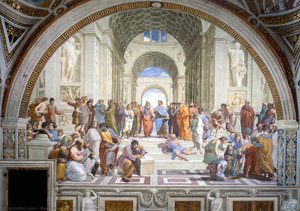
Anton Raphael Mengs faleceu em Roma, em 1779, deixando um legado que se estendeu muito além de seu impressionante corpo de obras. Ele foi mais do que apenas um pintor; foi uma figura central na transição de uma era artística para outra. Embora enraizado na tradição Barroca – evidente em seu uso dramático de luz e sombra e em seu domínio das técnicas ilusionistas – Mengs abraçou corajosamente os princípios emergentes do Neoclassicismo, abrindo caminho para artistas como Jacques-Louis David e Antonio Canova. Sua ênfase nos ideais clássicos, combinada com sua virtuosidade técnica, estabeleceu-o como uma força de liderança na formação da arte do século XVIII. A Escola de Atenas, pintada para o Duque de Northumberland, permanece como um testemunho de sua capacidade de sintetizar o precedente histórico com as sensibilidades artísticas contemporâneas. Além de suas pinturas e afrescos, a influência de Mengs estendeu-se à educação; ele serviu como diretor da Escola de Pintura do Vaticano, nutrindo uma nova geração de artistas imbuídos de princípios clássicos. Ele era uma figura complexa – um católico devoto que também dialogava com o pensamento iluminista, um artista que equilibrava tradição e inovação. Sua vida e obra representam uma intersecção fascinante de habilidade artística, curiosidade intelectual e circunstância histórica, consolidando seu lugar como um verdadeiro pioneiro da arte Neoclássica. Seu impacto ressoa ainda hoje, lembrando-nos do poder duradouro dos ideais clássicos para inspirar e transformar a expressão artística.
Anton Raphael Mengs
1728 - 1779 , República Checa
Informações Rápidas
- Artistic Movement Or Style: Neoclassicism
- Artists Or Movements Influenced By This Artist:
- David
- Canova
- Artists Who Influenced This Artist:
- Raphael
- Winckelmann
- Date Of Birth: 12 Mar. 1728
- Date Of Death: 29 Jun. 1779
- Full Name: Anton Raphael Mengs
- Nationality: German
- Notable Artworks:
- The School of Athens
- Parnassus
- Place Of Birth: Ústí nad Labem, Bohemia
Artigos Relacionados

Rembrandt van Rijn: As 25 Obras-Primas que Definem um Mestre da Luz e Sombra | OriginalUniqueArt
Descubra as 25 obras-primas de Rembrandt van Rijn, o mestre da luz e sombra! Explore a história por trás de 'A Ronda Noturna', seus auto-retratos e muito mais. Encontre reproduções de arte exclusivas para decorar sua casa com OriginalUniqueArt.com.
Reflecting the Self: A History of Portraiture & Psychological Insight
Explore the fascinating history of self-portraiture from Renaissance masters like Dürer & Rembrandt to modern interpretations. Discover the psychological insights and artistic techniques behind these iconic works. Expert analysis for art enthusiasts.
Adriaen van Ostade: A Master of Dutch Genre Painting & Social Commentary
Explore the life & work of Adriaen van Ostade, a leading Dutch Golden Age painter. Discover his realistic genre scenes, social commentary, and lasting influence on art history. Learn more at OriginalUniqueArt.
Decoding Van Gogh's Turmoil: OriginalUniqueArt’s Masterful Reproductions of Emotional Depth
Discover exquisite Van Gogh reproductions from OriginalUniqueArt – expert art specialists offering museum-quality prints & custom paintings. Trust our authentic process and elevate your collection today.

Os 10 Mestres do Pós-Impressionismo: Obras que Transformaram a Arte e Decoram o Lar
Descubra os 10 quadros pós-impressionistas que revolucionaram a arte! Explore Van Gogh, Monet e Cézanne. Encontre reproduções de alta qualidade para decorar sua casa com obras atemporais em OriginalUniqueArt.com.