Visualizar na parede
 Compartilhar
 Compartilhar
 Detalhes
 Guia
Guia

 Baixar imagem
 Semelhantes
 Raio X
 Ver diaporama
 Q&A
Q&A Estatísticas
Self-Portrait
 Oil On Canvas
- WallArt
- Neoclassical Painting
 1744
1744- Early Modern
 55.0 x 42.0 cm
 Galeria dos Mestres Velhos
 Ler mais
Giclée / Impressão de Arte
Impressão giclée ou em tela de qualidade de museu, com produção rápida e opções flexíveis de acabamento. ( Comprar pintura feita à mão Alternar para Imagem Digital)




P118B €10

P118H €10

P118W €10

P438Z €10

P508JH €12

P508YH €12

P805H €10

P805Z €10

P919BZ €10

P919G €10

P919XJ €10

P959ZH €10

P968JZ €12

W106C €8

W218G €10

W218JH €8

W218Y €10

W307PJ €10

W316G €10

W316PJ €8

W316Y €10

W398PJ €8

W4111J €10

W500HY €15

W500JH €15

W692G €12

W849H €8

W940BG €15

W953PJ €8




Escolha entre os nossos tamanhos pré-definidos que respeitam as proporções originais da obra de arte.

Insira a largura e a altura desejadas para se ajustarem à sua moldura ou parede. Uma impressão pode ser apenas cortada, nunca ampliada além da imagem original; portanto, um tamanho com proporções diferentes resultará na perda de parte da imagem. Enviamos uma maquete digital para sua aprovação antes de realizarmos a impressão. A imagem exibida nesta página não mostra o corte real — apenas a maquete o faz.
Entrega mundial () em 2 semanas, em vez das 4/5 semanas padrão. (29 Outubro)

Envio expresso gratuito para todo o mundo

Tela de Linho de Alta Qualidade

Seguro de transporte completo

Garantia de Reembolso de Impostos Alfandegários

Garantia de Fidelidade Cromática

Política de Devolução em 100 Dias (Apenas para Defeitos)

Garantia de reembolso de 100%

Oferta de desconto por quantidade
 A opção de vidro está disponível apenas para tamanhos inferiores a 110 cm

Self-Portrait
Giclée / Impressão de Arte
Tamanho da Reprodução
-


Preço Total
€ 71
A Glimpse into Enlightenment Self-Reflection
This captivating self-portrait by Anton Raphael Mengs transports us directly into the intellectual atmosphere of the mid-eighteenth century. The subject, portrayed with an arresting directness, meets the viewer's gaze with a profound seriousness that speaks volumes about the sitter’s inner life. Dressed simply in a white shirt and adorned with a delicate gold necklace, the focus remains intensely on her expression—a masterful study in controlled emotion. Mengs captures not merely a likeness, but a moment of considered introspection, inviting us to ponder the complexities of self-perception during an era of burgeoning Enlightenment thought.
Mastery of Classical Form and Depth
Technically, the painting showcases Mengs' profound grounding in classical ideals, evident from his formative years studying the great masters in Rome. The composition is remarkably balanced, yet it achieves a palpable sense of depth. Beyond the figure, the background unfolds into a detailed landscape featuring trees and architectural elements. This juxtaposition—the intimate portrait against the expansive world—is handled with remarkable skill, giving the entire scene an almost three-dimensional quality on the canvas. One can almost feel the crisp air emanating from that distant vista, contrasting beautifully with the immediacy of the sitter’s presence.
Historical Echoes: The Transition in Art
Painted in 1744, this work stands at a fascinating crossroads in art history. It captures the moment when the exuberant ornamentation of the Rococo style began to yield ground to a renewed commitment to classical clarity and structure. Mengs embodies this transition; his technique retains a certain grace while embracing the intellectual rigor and idealized form favored by Neoclassicism. Owning a reproduction of this piece is to possess a tangible link to that pivotal shift in aesthetic philosophy, suggesting an appreciation for enduring beauty over fleeting fashion.
Symbolism and Emotional Resonance
The direct gaze of the subject acts as the painting's emotional anchor. It suggests confidence, intelligence, and perhaps a quiet yearning for recognition. The landscape behind her is not merely decorative; it symbolizes the world—the backdrop against which personal identity is formed. For the collector or designer, this piece offers more than mere decoration; it serves as a sophisticated conversation starter, hinting at an appreciation for history, art theory, and enduring human depth. It imbues any space with an air of cultured contemplation.
Bringing Renaissance Grandeur Home
The dimensions of 55 x 42 cm make this portrait an ideal focal point for a drawing-room or study. Reproducing Mengs’ delicate brushwork and the rich tonal variations allows modern admirers to incorporate the grandeur of 18th-century European painting into contemporary décor. It is a piece that whispers tales of Roman academies, enlightened minds, and the enduring power of the self-portrait.
Perguntas e Respostas
Onde deve ser pendurada uma reprodução de "Self-Portrait", de Anton Raphael Mengs?
O formato (Portrait) e o ambiente recomendado (Living Room) são as duas informações de posicionamento registradas para "Self-Portrait", de Anton Raphael Mengs.
Em que ambiente sugere-se exibir "Self-Portrait", considerando a sua paleta de cores?
A paleta de cores Earthy de "Self-Portrait", de Anton Raphael Mengs harmoniza perfeitamente com o ambiente recomendado: um(a) Living Room.
Qual tamanho de reprodução é sugerido para "Self-Portrait", de Anton Raphael Mengs?
Sugere-se uma reprodução de Medium para "Self-Portrait", de Anton Raphael Mengs. O tamanho pode ser ajustado mantendo as proporções.
Biografia do Artista
Uma Ponte Entre Mundos: A Vida e a Arte de Anton Raphael Mengs
Anton Raphael Mengs emergiu durante um período fascinante da arte europeia, uma época em que os ornamentos rebuscados do Rococó começavam a ceder lugar a uma renovada apreciação pelos ideais clássicos. Nascido em 1728, em Ústí nad Labem, Boêmia – região que hoje integra a República Tcheca – sua jornada artística foi profundamente moldada tanto por sua linhagem quanto pelas correntes intelectuais do Iluminismo. Seu pai, Ismael Mengs, um pintor dinamarquês que encontrou patrocínio na corte de Dresden, reconheceu precocemente o talento excepcional do jovem Anton. Esse reconhecimento levou a uma mudança crucial em 1741: uma mudança para Roma, onde o artista iniciante mergulhou no estudo de obras-primas antigas e nos trabalhos de mestres do Renascimento, como Rafael. Foi essa exposição que marcaria indelévelmente sua sensibilidade estética, instilando nele uma profunda reverência pela forma clássica, clareza e composição – qualidades que se tornariam as marcas registradas de seu estilo maduro. Seus primeiros anos foram dedicados à cópia meticulosa, não apenas como um exercício de técnica, mas como um profundo ato de peregrinação artística, absorvendo a essência do gênio de Rafael.De Dresden a Madrid: Uma Carreira Entre Cortes
A carreira de Mengs desenrolou-se através de várias cortes europeias proeminentes, cada uma deixando sua marca única em seu desenvolvimento artístico. Em 1749, ele conquistou uma posição prestigiosa como pintor da corte de Frederico Augusto, Eleitor da Saxônia, um papel que lhe proporcionou tanto estabilidade financeira quanto a liberdade de manter uma base em Roma – o epicentro de sua inspiração artística. No entanto, foram seus afrescos que verdadeiramente estabeleceram sua reputação. O Parnasso na Villa Albani, em Roma, concluído por volta de 1761, tornou-se um sucesso instantâneo, louvado por sua composição harmoniosa, figuras elegantes e uma evocação sutil, porém poderosa, da mitologia clássica. Esta obra não era meramente um floreio decorativo; era uma declaração – uma tentativa deliberada de sintetizar a grandeza Barroca com os princípios emergentes do Neoclassicismo. Outros encargos seguiram-se, incluindo o deslumbrante afresco que adorna a cúpula da Igreja de Sant'Eusebio, em Roma, demonstrando seu domínio sobre a decoração monumental e a ilusão espacial. Talvez sua empreitada mais ambiciosa tenha surgido com um convite da corte espanhola em 1761. Ele viajou para Madrid, onde foi encarregado de decorar vários palácios reais, culminando no magnífico teto do Salão de Banquetes do Palácio Real – uma obra considerada um de seus maiores feitos, demonstrando uma habilidade notável de fundir a elegância italiana com a sensibilidade espanhola.A Conexão Winckelmann: Moldando o Pensamento Neoclássico
A evolução artística de Mengs não foi impulsionada apenas pelo estudo visual; ela estava profundamente entrelaçada com o discurso intelectual. Um ponto de viragem crucial ocorreu com sua estreita amizade e colaboração com Johann Joachim Winckelmann, o historiador da arte pioneiro cujos escritos se tornariam fundamentais para o movimento Neoclássico. Winckelmann defendia um retorno à pureza e simplicidade percebidas na arte grega antiga, advogando por uma estética baseada na razão, ordem e formas idealizadas. Mengs não estava apenas ilustrando as teorias de Winckelmann; ele estava ativamente engajado em moldá-las, traduzindo conceitos abstratos em expressões artísticas tangíveis. Juntos, eles acreditavam que a verdadeira beleza não residia na ornamentação superficial, mas nos princípios subjacentes de harmonia e proporção encontrados na antiguidade clássica. Essa parceria estendeu-se para além das discussões teóricas; manifestou-se nas próprias pinturas de Mengs, que refletiam cada vez mais a ênfase de Winckelmann na nobre simplicidade e na emoção contida. A influência era recíproca: os escritos de Winckelmann forneceram uma estrutura filosófica para os empreendimentos artísticos de Mengs, enquanto a arte de Mengs serviu como prova visual da viabilidade – e da beleza – dos ideais Neoclássicos.Legado e Influência: Um Pioneiro de Seu Tempo
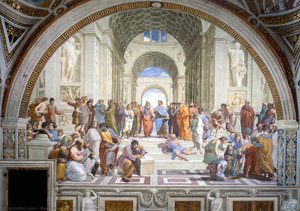
Anton Raphael Mengs faleceu em Roma, em 1779, deixando um legado que se estendeu muito além de seu impressionante corpo de obras. Ele foi mais do que apenas um pintor; foi uma figura central na transição de uma era artística para outra. Embora enraizado na tradição Barroca – evidente em seu uso dramático de luz e sombra e em seu domínio das técnicas ilusionistas – Mengs abraçou corajosamente os princípios emergentes do Neoclassicismo, abrindo caminho para artistas como Jacques-Louis David e Antonio Canova. Sua ênfase nos ideais clássicos, combinada com sua virtuosidade técnica, estabeleceu-o como uma força de liderança na formação da arte do século XVIII. A Escola de Atenas, pintada para o Duque de Northumberland, permanece como um testemunho de sua capacidade de sintetizar o precedente histórico com as sensibilidades artísticas contemporâneas. Além de suas pinturas e afrescos, a influência de Mengs estendeu-se à educação; ele serviu como diretor da Escola de Pintura do Vaticano, nutrindo uma nova geração de artistas imbuídos de princípios clássicos. Ele era uma figura complexa – um católico devoto que também dialogava com o pensamento iluminista, um artista que equilibrava tradição e inovação. Sua vida e obra representam uma intersecção fascinante de habilidade artística, curiosidade intelectual e circunstância histórica, consolidando seu lugar como um verdadeiro pioneiro da arte Neoclássica. Seu impacto ressoa ainda hoje, lembrando-nos do poder duradouro dos ideais clássicos para inspirar e transformar a expressão artística.
Anton Raphael Mengs
1728 - 1779 , República Checa
Dados Rápidos
- Artistic Movement Or Style: Neoclassicism
- Artists Or Movements Influenced By This Artist:
- David
- Canova
- Artists Who Influenced This Artist:
- Raphael
- Winckelmann
- Date Of Birth: 12 Mar. 1728
- Date Of Death: 29 Jun. 1779
- Full Name: Anton Raphael Mengs
- Nationality: German
- Notable Artworks:
- The School of Athens
- Parnassus
- Place Of Birth: Ústí nad Labem, Bohemia
Artigos Relacionados
Os 10 Grandes Mestres do Neoclassicismo: Arte, História e Decoração
Descubra os 10 maiores mestres do Neoclassicismo! Explore a história, técnica e beleza de obras icônicas de David, Ingres e Canova. Encontre reproduções de arte neoclássica para decorar sua casa com elegância em OriginalUniqueArt.com.

Giclée Prints: Archival Quality & Aesthetic Nuances for the Discerning Collector
Explore the world of giclée prints with OriginalUniqueArt. Learn about archival quality, aesthetic nuances & investment potential. Expert guidance for discerning art collectors seeking museum-quality reproductions and lasting value.

The Rococo Aesthetic: Opulence, Rebellion & the Pursuit of Pleasure in 18th-Century Art
Explore the opulent world of Rococo art! Discover its origins, key artists like Watteau & Boucher, and lasting influence on design. Expert insights for collectors & enthusiasts.

Echoes of Time: Exploring the Enduring Appeal & Historical Context of Vintage Art Prints
Explore the captivating world of vintage art prints! Discover their history, collecting tips & enduring appeal. Expert insights on chromolithography and building a legacy collection with OriginalUniqueArt.

Rococó: 10 Obras-Primas que Definiram um Movimento Artístico Elegante | OriginalUniqueArt.com
Descubra as 10 obras-primas do Rococó! Explore a elegância de Fragonard, Boucher e Watteau. A arte do século XVIII ganha vida com cores pastel e detalhes luxuosos. Encontre reproduções de alta qualidade em OriginalUniqueArt.com.