Tamanho do texto

() ·

Uma pintura feita para você, à mão

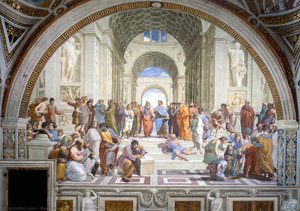
A Escola de Atenas

Reprodução em Óleo Feita à Mão

Óleo sobre tela pintado à mão no tamanho e moldura de sua escolha, feito sob encomenda pelos nossos artistas. ( Alternar para Impressão Alternar para Imagem Digital)

Descrição do Item

Uma obra-prima renascentista que celebra o pensamento clássico! Esta magnífica pintura de Rafael, 'A Escola de Atenas', captura a essência da filosofia e da arte greco romana.

Biografia do Artista

Anton Raphael Mengs (1728-1779): Um pintor alemão que revolucionou a arte neoclássica com obras como *O Parnassos* e *A Escola de Atenas*, influenciado pela filosofia clássica de Winckelmann e considerado um dos maiores artistas da época.

de ·

Capítulo 1

Qual deve ser o tamanho?

Deslize para alterar o tamanho; a imagem à esquerda mostra a moldura em sua largura real. As proporções originais são mantidas.

Tamanho padrão
personalizado
CM
INCH

Escolha entre os nossos tamanhos pré-definidos que respeitam as proporções originais da obra de arte.

largura
altura

Insira a largura e a altura desejadas para se ajustarem à sua moldura ou parede. Como esta obra é pintada à mão, para um tamanho com proporções diferentes, o artista poderá pintar um pouco mais ao redor da imagem ou reduzir ligeiramente a composição — você escolhe. Enviamos uma maquete digital para sua aprovação antes de iniciar a pintura. A imagem exibida nesta página não representa o resultado real — apenas a maquete mostra o resultado final.

Capítulo 2

Como deve chegar?

Escolha as bordas da tela esticada

Escolha sua moldura

Corner sample of the WhiteWrap canvas edge finish, stretched on madeira maciça bars
Branco €1
Corner sample of the BlurSideWrap canvas edge finish, stretched on madeira maciça bars
Bordas esfumaçadas €1
Corner sample of the ExtendedWrap canvas edge finish, stretched on madeira maciça bars
Bordas estendidas €1
Corner sample of the P118B picture frame: poliestireno moldado, 5 cm wide and 3 cm thick
P118B €10
Corner sample of the P118H picture frame: poliestireno moldado, 5 cm wide and 3 cm thick
P118H €10
Corner sample of the P118W picture frame: poliestireno moldado, 5 cm wide and 3 cm thick
P118W €10
Corner sample of the P438Z picture frame: poliestireno moldado, 5.5 cm wide and 3.5 cm thick
P438Z €10
Corner sample of the P508JH picture frame: poliestireno moldado, 7 cm wide and 3.5 cm thick
P508JH €12
Corner sample of the P508YH picture frame: poliestireno moldado, 7 cm wide and 3.5 cm thick
P508YH €12
Corner sample of the P805H picture frame: poliestireno moldado, 5 cm wide and 3.5 cm thick
P805H €10
Corner sample of the P805Z picture frame: poliestireno moldado, 5 cm wide and 3.5 cm thick
P805Z €10
Corner sample of the P919BZ picture frame: poliestireno moldado, 7 cm wide and 3.5 cm thick
P919BZ €10
Corner sample of the P919G picture frame: poliestireno moldado, 7 cm wide and 3.5 cm thick
P919G €10
Corner sample of the P919XJ picture frame: poliestireno moldado, 7 cm wide and 3.5 cm thick
P919XJ €10
Corner sample of the P959ZH picture frame: poliestireno moldado, 5 cm wide and 3 cm thick
P959ZH €10
Corner sample of the P968JZ picture frame: poliestireno moldado, 6 cm wide and 4 cm thick
P968JZ €12
Corner sample of the W106C picture frame: madeira maciça, 5 cm wide and 3 cm thick
W106C €8
Corner sample of the W218G picture frame: madeira maciça, 5 cm wide and 3 cm thick
W218G €10
Corner sample of the W218JH picture frame: madeira maciça, 5 cm wide and 3 cm thick
W218JH €8
Corner sample of the W218Y picture frame: madeira maciça, 5 cm wide and 3 cm thick
W218Y €10
Corner sample of the W307PJ picture frame: madeira maciça, 6 cm wide and 3 cm thick
W307PJ €10
Corner sample of the W316G picture frame: madeira maciça, 6 cm wide and 3 cm thick
W316G €10
Corner sample of the W316PJ picture frame: madeira maciça, 6 cm wide and 3 cm thick
W316PJ €8
Corner sample of the W316Y picture frame: madeira maciça, 6 cm wide and 3 cm thick
W316Y €10
Corner sample of the W398PJ picture frame: madeira maciça, 5 cm wide and 3 cm thick
W398PJ €8
Corner sample of the W4111J picture frame: madeira maciça, 6.5 cm wide and 3.5 cm thick
W4111J €10
Corner sample of the W500HY picture frame: madeira maciça, 7 cm wide and 5 cm thick
W500HY €15
Corner sample of the W500JH picture frame: madeira maciça, 7 cm wide and 5 cm thick
W500JH €15
Corner sample of the W692G picture frame: madeira maciça, 8 cm wide and 4 cm thick
W692G €12
Corner sample of the W849H picture frame: madeira maciça, 5 cm wide and 3 cm thick
W849H €8
Corner sample of the W940BG picture frame: madeira maciça, 7.5 cm wide and 4.5 cm thick
W940BG €15
Corner sample of the W953PJ picture frame: madeira maciça, 6 cm wide and 3.5 cm thick
W953PJ €8
Corner sample of the H24-GOLD picture frame: madeira entalhada com gesso, 10 cm wide and 6 cm thick
H24-GOLD €30
Corner sample of the H24-SILVER picture frame: madeira entalhada com gesso, 10 cm wide and 6 cm thick
H24-SILVER €30
Corner sample of the H36-GOLD picture frame: madeira entalhada com gesso, 15 cm wide and 6.5 cm thick
H36-GOLD €45
Corner sample of the H36-SILVER picture frame: madeira entalhada com gesso, 15 cm wide and 6.5 cm thick
H36-SILVER €45
Prévia da moldura
Com moldura

Moldura: . Dimensões totais com a moldura: .

Capítulo 3

Quem o pinta, e deveria algo mudar?

Exemplos do que pode ser alterado: Substituir o rosto pela foto do cliente; Adicionar um animal de estimação (ex: substituir gato por cachorro); Incluir uma mensagem oculta no fundo; Alterar a paisagem ou elementos do fundo.
Após o pedido, a equipe da OriginalUniqueArt.com enviará um e-mail ao cliente para instruções e fornecerá uma prévia da montagem

Entrega mundial () em 3 a 4 semanas, em vez das 5 semanas padrão. (4 Novembro). Sem comprometer a qualidade.

Capítulo 4

Os retoques finais

Uma placa de identificação, como em um museu?

Detalhes da Placa de Bronze Gravada

This elegant plaque features the artist's name and the title of the artwork, finely engraved for a timeless presentation.

It is made from bronze with a refined, elegant finish. The text is precisely laser-engraved for a sharp and permanent result. Measuring 9x2 cm, the plaque is compact yet easy to read. It's built to be durable and scratch-resistant, offering a professional, museum-quality look. Mounting is simple thanks to the included adhesive backing.

Detalhes da Placa de Acrílico Transparente

The plaque includes essential engraved details such as the artist's name, the title of the artwork, the date it was created, the type of media used-like oil on canvas or watercolor-a brief description of the piece, and a QR code that links to the complete artwork information.

It is crafted from clear acrylic, offering a sleek, modern appearance. The text is UV-engraved in black to ensure strong visual contrast. With a size of 10x15 cm, it ensures optimal readability. It comes equipped with two metal hooks for secure wall mounting. The plaque is designed to be weather-resistant, making it suitable for various environments, and it includes interactive features that work seamlessly with smartphone scanning.

Detalhes da Placa de Acrílico Preto

This elegant plaque includes engraved information such as the artist's name, the title of the artwork, the date it was created, the type of media used (like oil on canvas or watercolor), a short description of the artwork, and a QR code for quick access to more information.

The plaque itself is made from refined black acrylic with a premium finish. The text is laser-engraved in white for high contrast and readability. Its size is 10x15 cm, designed to be easy to read. It comes with two metal hooks for professional mounting. The design is sleek and fits any interior style. It is also weather-resistant and durable, with built-in digital integration for mobile compatibility.

Um verniz protetor?

Para quando você precisa?

Capítulo 5

A sua pintura, conforme encomendada

A Escola de Atenas

Técnica de Reprodução

Tamanho da Reprodução

-

Artista Sênior de Elite

Mais detalhes, refinamento e tempo de produção adicional

-

Moldura para Reprodução

-

-

Para obras de arte ou reproduções com mais de 105 cm (aproximadamente 41 polegadas) em qualquer um dos lados, a moldura será enviada como um kit desmontado. Este método garante uma entrega segura e evita danos durante o transporte.

Montagem profissional necessária — este não é um produto DIY (faça você mesmo).
O kit deve ser montado e a tela esticada por um profissional de molduraria experiente, utilizando cola de madeira (não inclusa), um alicate de esticar tela e grampos para manter as travessas alinhadas enquanto a cola seca. A montagem incorreta ou a tensão desigual da tela podem danificar permanentemente a obra de arte e não estão cobertas pela nossa garantia.

  • Todas as barras de madeira maciça estão incluídas, precisamente cortadas ao tamanho certo.

  • Montado com os parafusos fornecidos, além de cola para madeira para as junções dos cantos, que não está inclusa e deve ser providenciada pelo seu moldurista.

  • São necessárias ferramentas profissionais não incluídas: um alicate de estiramento de tela (esticador) e grampos para manter as ripas alinhadas enquanto a cola seca.

Importante:
As junções dos cantos requerem cola para madeira, as ripas devem ser mantidas com grampos até que a cola esteja completamente seca, e o estiramento da tela na moldura montada requer um alicate de esticar tela. Nenhum destes itens está incluído no kit. Por favor, certifique-se de contar com um profissional de molduraria experiente antes de encomendar este tamanho.

Etiqueta de identificação

-

-

Verniz de Proteção

Verniz brilhante (realça as cores e protege contra a luz e a umidade)

-

Personalizar minha obra

Exemplos de alterações possíveis: Substituir o rosto por uma foto do cliente; Adicionar um animal de estimação (ex.: substituir gato por cachorro); Incluir uma mensagem oculta no fundo; Alterar a paisagem ou os elementos do fundo.

-

Urgente

Entrega mundial () em 3 a 4 semanas, em vez das 5 semanas padrão. (4 Novembro). Sem comprometer a qualidade.

-

Envio Expresso

Entrega mundial para em 5 semanas. (11 Novembro).

Com envio incluído

Preço Total

€ 267

Preço Total € 267

A opção de vidro está disponível apenas para tamanhos inferiores a 110 cm

Incluído em todos os pedidos

  • Envio expresso gratuito para todo o mundo
  • Tela de Linho de Alta Qualidade
  • Seguro de transporte completo
  • Garantia de Reembolso de Impostos Alfandegários
  • Garantia de Fidelidade Cromática
  • Política de Devolução em 100 Dias (Apenas para Defeitos)
  • Garantia de reembolso de 100%
  • Oferta de desconto por quantidade

A Renaissance Masterpiece of Intellectual Pursuit

Immerse yourself in the world of ancient thought with this magnificent fresco, a cornerstone of High Renaissance art and a testament to Raphael’s unparalleled skill. Completed between 1509 and 1511 for Pope Julius II's apartments in the Vatican City, this work isn’t merely a painting; it’s a visual embodiment of the humanist ideals that defined an era.

The Gathering of Great Minds

This iconic composition depicts a grand assembly of philosophers, mathematicians, and scientists from classical antiquity. At its heart stand Plato and Aristotle, the central figures engaged in profound discourse. Plato, believed to be modeled after Leonardo da Vinci, gestures towards the heavens, representing his theory of Forms – the realm of ideal concepts. Conversely, Aristotle points downwards, emphasizing empirical observation and the tangible world. Surrounding them are recognizable figures like Pythagoras, Euclid, Heraclitus (often identified as Michelangelo), and even a self-portrait of Raphael himself, subtly integrated amongst the ancient scholars.

A Symphony in Fresco Technique

Executed with masterful precision using the fresco technique – applying pigment to wet plaster – this artwork showcases Raphael’s technical brilliance. This demanding method required swift execution and an intimate understanding of color blending, resulting in a durable and luminous surface that has captivated viewers for centuries. The architectural setting, inspired by classical Roman structures, is not merely a backdrop but an integral part of the composition, creating a sense of depth and grandeur.

Historical Context & Renaissance Humanism

Born from the heart of the Italian Renaissance, this fresco reflects the renewed interest in classical learning and the celebration of human intellect. The Stanza della Segnatura, where it resides, was intended as a library and a space for intellectual pursuits, making this artwork a fitting tribute to philosophy. It represents a pivotal moment in art history – a departure from medieval symbolism towards a more rational and humanist worldview.

Symbolism & Enduring Legacy

Beyond its historical significance, the work is rich with symbolic meaning. The inclusion of contemporary artists disguised as ancient philosophers speaks to Raphael’s intellectual circle and their shared reverence for classical ideals. The balanced composition, utilizing linear perspective and a subtle pyramidal structure, reinforces the harmony and order inherent in philosophical thought. The overall effect isn’t just visually stunning; it evokes a sense of intellectual curiosity, reverence for knowledge, and the timeless pursuit of truth.

Bringing Renaissance Grandeur to Your Space

A reproduction of this masterpiece is more than just décor; it’s an investment in art history. Its sophisticated palette of muted blues, greens, yellows, and reds complements a variety of interior styles, adding a touch of classical elegance and intellectual depth to any room. Whether you're an avid collector, an interior designer seeking a statement piece, or simply someone who appreciates the beauty of Renaissance art, this fresco offers a captivating glimpse into a world where reason and imagination converged.

Photo Description: --Overall Impression--

The artwork is a large-scale fresco painting depicting a gathering of prominent Greek philosophers and scientists. It exudes an atmosphere of intellectual discourse and classical grandeur. The scene is set within a meticulously rendered architectural space that feels both expansive and contained, given its placement on a vaulted ceiling. The overall impression is one of reverence for knowledge, reason, and the legacy of ancient Greece.

--Visual Components & Elements--

The painting is dominated by figures – approximately fifty in total – arranged in dynamic groupings. These figures are primarily male, dressed in robes and togas characteristic of classical antiquity. They engage in animated conversation, gesture emphatically, read scrolls, or contemplate ideas. Statues of Plato and Aristotle stand prominently at the vanishing point of the architectural space, acting as focal points. The architecture itself is a key component: soaring arches, marble columns, and intricately patterned floors create a sense of depth and order.

--Composition--

The composition is remarkably balanced despite its complexity. It’s organized around a central axis that leads towards Plato and Aristotle, creating a clear visual hierarchy. Figures are arranged in receding planes, utilizing linear perspective to draw the viewer's eye into the scene. The arrangement isn’t rigidly symmetrical; instead, it feels organic and naturalistic, mirroring the flow of conversation and intellectual exchange.

--Color Palette--

The color palette is relatively restrained, relying heavily on muted tones of blues, greens, yellows, reds, and browns. These colors are not overly saturated but rather blended to create a sense of harmony and realism. The use of lighter hues in the foreground and gradually darkening shades towards the background enhances the illusion of depth.

--Lines, Shapes & Textures--

The painting employs both strong linear elements (in the architecture) and softer, more fluid lines to define the figures. The columns, arches, and floor tiles are rendered with precise, geometric lines. In contrast, the drapery of the robes and the contours of the bodies are depicted with flowing, curvilinear lines. Shapes are largely organic – human forms – but are contained within the rigid geometry of the architectural setting.

--Lighting, Perspective & Depth--

The lighting appears to be diffused and natural, emanating from an unseen source outside the frame. It illuminates the scene evenly, creating soft shadows that define form and volume. The artist masterfully employs linear perspective – all lines converge towards a vanishing point behind Plato and Aristotle – to create a convincing illusion of depth. Atmospheric perspective is also used; distant figures appear less distinct and cooler in tone, further enhancing the sense of spatial recession.

--Subject Matter & Symbolic/Emotional Elements--

The subject matter is “The School of Athens,” depicting a gathering of great thinkers from ancient Greece. Plato and Aristotle stand at the center of this intellectual tableau, representing opposing philosophical viewpoints—one emphasizing Forms and the other empirical observation. The inclusion of portraits of Leonardo da Vinci and Michelangelo underscores the artistic spirit of the era.

--Style, Technique & Materials--

The style is High Renaissance, characterized by its emphasis on realism, classical forms, and harmonious composition. Executed with meticulous detail using fresco technique—applying pigment to wet plaster—this artwork showcases Raphael’s unparalleled mastery of color blending and spatial illusion.

--Standout Features--

The most striking feature is the masterful integration of architecture, figures, and perspective. The illusionistic depth created by the fresco is remarkable, considering its placement on a ceiling. The painting’s enduring appeal lies in its ability to capture the essence of humanist thought—a celebration of reason, beauty, and intellectual exploration.

Size: 500 x 770 cm

Date: 1509

Perguntas e Respostas

Que tipo de obra é "A Escola de Atenas"?

No catálogo, "A Escola de Atenas", de Anton Raphael Mengs está registrado como Decoração. A categoria ajuda a encontrar obras semelhantes.

Quais são as dimensões de "A Escola de Atenas", de Anton Raphael Mengs na vida real?

As dimensões registradas de "A Escola de Atenas", de Anton Raphael Mengs são 500 x 770 cm. Reproduções podem ser encomendadas em outros tamanhos, mantendo as mesmas proporções.

Quão clara é a obra "A Escola de Atenas" no geral?

A luminosidade percebida de "A Escola de Atenas", de Anton Raphael Mengs é brilhante. Ela pode ser harmonizada com a iluminação do espaço pretendido.

Saiba mais sobre esta pintura

Alternar para Impressão Alternar para Imagem Digital Compartilhar
Detalhes Guia Adicionar aos favoritos Baixar imagem Semelhantes Ver diaporama Perguntas e Respostas Estatísticas

Em números

  • 1509o ano em que foi pintada
  • 29molduras para escolher
  • tamanhos padrão, em suas próprias proporções
  • 5semanas para pintar e entregar
Anton Raphael Mengs

Anton Raphael Mengs

1728 - 1779, República Checa

Informações rápidas sobre Anton Raphael Mengs

  • Artistic Movement Or Style: Neoclassicism
  • Artists Or Movements Influenced By This Artist:
    • David
    • Canova
  • Artists Who Influenced This Artist:
    • Raphael
    • Winckelmann
  • Date Of Birth: 12 Mar. 1728
  • Date Of Death: 29 Jun. 1779
  • Full Name: Anton Raphael Mengs
  • Nationality: German
  • Notable Artworks:
    • The School of Athens
    • Parnassus
  • Place Of Birth: Ústí nad Labem, Bohemia

Biografia do Artista

Uma Ponte Entre Mundos: A Vida e a Arte de Anton Raphael Mengs

Anton Raphael Mengs emergiu durante um período fascinante da arte europeia, uma época em que os ornamentos rebuscados do Rococó começavam a ceder lugar a uma renovada apreciação pelos ideais clássicos. Nascido em 1728, em Ústí nad Labem, Boêmia – região que hoje integra a República Tcheca – sua jornada artística foi profundamente moldada tanto por sua linhagem quanto pelas correntes intelectuais do Iluminismo. Seu pai, Ismael Mengs, um pintor dinamarquês que encontrou patrocínio na corte de Dresden, reconheceu precocemente o talento excepcional do jovem Anton. Esse reconhecimento levou a uma mudança crucial em 1741: uma mudança para Roma, onde o artista iniciante mergulhou no estudo de obras-primas antigas e nos trabalhos de mestres do Renascimento, como Rafael. Foi essa exposição que marcaria indelévelmente sua sensibilidade estética, instilando nele uma profunda reverência pela forma clássica, clareza e composição – qualidades que se tornariam as marcas registradas de seu estilo maduro. Seus primeiros anos foram dedicados à cópia meticulosa, não apenas como um exercício de técnica, mas como um profundo ato de peregrinação artística, absorvendo a essência do gênio de Rafael.

De Dresden a Madrid: Uma Carreira Entre Cortes

A carreira de Mengs desenrolou-se através de várias cortes europeias proeminentes, cada uma deixando sua marca única em seu desenvolvimento artístico. Em 1749, ele conquistou uma posição prestigiosa como pintor da corte de Frederico Augusto, Eleitor da Saxônia, um papel que lhe proporcionou tanto estabilidade financeira quanto a liberdade de manter uma base em Roma – o epicentro de sua inspiração artística. No entanto, foram seus afrescos que verdadeiramente estabeleceram sua reputação. O Parnasso na Villa Albani, em Roma, concluído por volta de 1761, tornou-se um sucesso instantâneo, louvado por sua composição harmoniosa, figuras elegantes e uma evocação sutil, porém poderosa, da mitologia clássica. Esta obra não era meramente um floreio decorativo; era uma declaração – uma tentativa deliberada de sintetizar a grandeza Barroca com os princípios emergentes do Neoclassicismo. Outros encargos seguiram-se, incluindo o deslumbrante afresco que adorna a cúpula da Igreja de Sant'Eusebio, em Roma, demonstrando seu domínio sobre a decoração monumental e a ilusão espacial. Talvez sua empreitada mais ambiciosa tenha surgido com um convite da corte espanhola em 1761. Ele viajou para Madrid, onde foi encarregado de decorar vários palácios reais, culminando no magnífico teto do Salão de Banquetes do Palácio Real – uma obra considerada um de seus maiores feitos, demonstrando uma habilidade notável de fundir a elegância italiana com a sensibilidade espanhola.

A Conexão Winckelmann: Moldando o Pensamento Neoclássico

A evolução artística de Mengs não foi impulsionada apenas pelo estudo visual; ela estava profundamente entrelaçada com o discurso intelectual. Um ponto de viragem crucial ocorreu com sua estreita amizade e colaboração com Johann Joachim Winckelmann, o historiador da arte pioneiro cujos escritos se tornariam fundamentais para o movimento Neoclássico. Winckelmann defendia um retorno à pureza e simplicidade percebidas na arte grega antiga, advogando por uma estética baseada na razão, ordem e formas idealizadas. Mengs não estava apenas ilustrando as teorias de Winckelmann; ele estava ativamente engajado em moldá-las, traduzindo conceitos abstratos em expressões artísticas tangíveis. Juntos, eles acreditavam que a verdadeira beleza não residia na ornamentação superficial, mas nos princípios subjacentes de harmonia e proporção encontrados na antiguidade clássica. Essa parceria estendeu-se para além das discussões teóricas; manifestou-se nas próprias pinturas de Mengs, que refletiam cada vez mais a ênfase de Winckelmann na nobre simplicidade e na emoção contida. A influência era recíproca: os escritos de Winckelmann forneceram uma estrutura filosófica para os empreendimentos artísticos de Mengs, enquanto a arte de Mengs serviu como prova visual da viabilidade – e da beleza – dos ideais Neoclássicos.

Legado e Influência: Um Pioneiro de Seu Tempo

Anton Raphael Mengs faleceu em Roma, em 1779, deixando um legado que se estendeu muito além de seu impressionante corpo de obras. Ele foi mais do que apenas um pintor; foi uma figura central na transição de uma era artística para outra. Embora enraizado na tradição Barroca – evidente em seu uso dramático de luz e sombra e em seu domínio das técnicas ilusionistas – Mengs abraçou corajosamente os princípios emergentes do Neoclassicismo, abrindo caminho para artistas como Jacques-Louis David e Antonio Canova. Sua ênfase nos ideais clássicos, combinada com sua virtuosidade técnica, estabeleceu-o como uma força de liderança na formação da arte do século XVIII. A Escola de Atenas, pintada para o Duque de Northumberland, permanece como um testemunho de sua capacidade de sintetizar o precedente histórico com as sensibilidades artísticas contemporâneas. Além de suas pinturas e afrescos, a influência de Mengs estendeu-se à educação; ele serviu como diretor da Escola de Pintura do Vaticano, nutrindo uma nova geração de artistas imbuídos de princípios clássicos. Ele era uma figura complexa – um católico devoto que também dialogava com o pensamento iluminista, um artista que equilibrava tradição e inovação. Sua vida e obra representam uma intersecção fascinante de habilidade artística, curiosidade intelectual e circunstância histórica, consolidando seu lugar como um verdadeiro pioneiro da arte Neoclássica. Seu impacto ressoa ainda hoje, lembrando-nos do poder duradouro dos ideais clássicos para inspirar e transformar a expressão artística.

Informações Rápidas

  • Notable elements or techniques: Copie de Rafael
  • Subject or theme: Filosofia clássica
  • Artistic style: Rafaelesco
  • Medium: Óleo sobre tela
  • Artist: Anton Raphael Mengs
  • Title: A Escola de Atenas

Quiz de Arte

Cada pergunta possui apenas uma resposta correta.

Pergunta 1:
¿Qual es o significado histórico principal da obra "A Escola de Atenas"?
Pergunta 2:
¿Quem são os principais personagens retratados na obra?
Pergunta 3:
¿Qual técnica artística foi utilizada para criar a obra?
Pergunta 4:
¿Em que contexto histórico surgiu "A Escola de Atenas"?
Pergunta 5:
¿Por que é considerada uma obra emblemática da arte renascentista?