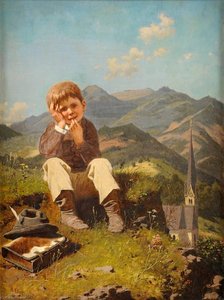
Little Favorite (Anton Windmaier)
Anton Windmaier (1840–1896) criou Little Favorite.

 Visualizar na parede

 Pintura a Óleo Feita à Mão
 Compartilhar
 Compartilhar
 Ficha técnica


 Baixar imagem
 Semelhantes
 Raio X
 Ver diaporama
 Perguntas e Respostas

 Estatísticas
Little Favorite, em resumo
- Título
- Little Favorite
- Artista
- Anton Windmaier (1840–1896)
- Artista nascido em
- Pfarrkirchen, Germany
Imagens em alta resolução de Little Favorite
Anton Windmaier, Little Favorite. Domínio público.
Perguntas sobre Little Favorite respondidas
"Little Favorite", de Anton Windmaier está em domínio público?
"Little Favorite", de Anton Windmaier está em em domínio público — seus direitos autorais expiraram. Este status determina como a imagem da obra pode ser reproduzida.
Quem é o artista por trás de "Little Favorite"?
"Little Favorite" foi criado por Anton Windmaier. As informações nesta página descrevem a obra original de Anton Windmaier.
Qual é a situação dos direitos autorais de "Little Favorite", de Anton Windmaier?
"Little Favorite", de Anton Windmaier está em em domínio público — seus direitos autorais expiraram. O período de direitos autorais conta a partir do falecimento do artista, ocorrido em 1896.
Sobre o artista, Anton Windmaier
1840–1896, Germany
Anton Windmaier
The Soul of a Nation: The Life and Art of Anton Ebert Anton Ebert stands as a pivotal figure in the development of Russian realist painting, a master whose meticulous observation and profound empathy captured the very essence of everyday life in 19th-century Russia. Born in Berlin to Polish heritage, Ebert’s artistic journey was one of remarkable migration, leading him from the bustling, structured streets of Europe to the heartland of Russia. It was here that he found his true calling, spending much of his career documenting the lives of peasants, merchants, and members of the aristocracy with a sensitivity that transcended mere portraiture. His work offers a poignant window into a rapidly changing nation, reflecting both its enduring, ancient traditions and the encroaching, transformative forces of modernity.
 Girl in Folk Costume1879
 Autumn Near Munich1874
 The Little Polka Dancer1879
 The Little Truant1885