Pop Art · 1962
Do It Yourself (Sailboats) (Andy Warhol, 1962)
Andy Warhol (1928–1987) criou Do It Yourself (Sailboats). Data de 1962. Pertence ao movimento Pop Art. É feito em Acrílico sobre tela.
- 1962
- Acrílico sobre tela

 Visualizar na parede

 Pintura a Óleo Feita à Mão
 Compartilhar
 Compartilhar
 Ficha técnica


 Baixar imagem
 Semelhantes
 Raio X
 Ver diaporama
 Perguntas e Respostas

 Estatísticas
Do It Yourself (Sailboats), em resumo
- Título
- Do It Yourself (Sailboats)
- Artista
- Andy Warhol (1928–1987)
- Artista nascido em
- Pittsburgh, Estados Unidos
- Data
- 1962
- Técnica
- Acrílico sobre tela
- Movimento
- Pop Art
- Período
- Modernismo
- Tema
- sailboat, abstraction, color, geometric, repetition, mass production
O que Do It Yourself (Sailboats) retrata?
Do It Yourself (Sailboats): A Pop Art Reflection on Mass Production
Andy Warhol’s *Do It Yourself (Sailboats)*, created in 1962, stands as an emblem of the burgeoning Pop Art movement and its audacious challenge to artistic conventions. More than just a depiction of a sailboat—a familiar motif of leisure and maritime tradition—the artwork delves into profound questions about consumer culture, reproducibility, and the democratization of art itself – themes that would become central to Warhol’s enduring legacy.
Subject & Style: A Familiar Scene, Reimagined Through Geometric Precision
The canvas presents a sailboat against a dynamic sky rendered in bold hues. Warhol deliberately eschews realism, opting instead for simplification and abstraction. The boat's form is reduced to geometric shapes—straight lines defining its hull and sharply angled sails—a stylistic decision that directly opposes the expressive brushstrokes of Abstract Expressionism. This flattening of perspective isn’t merely aesthetic; it symbolizes a rejection of emotional subjectivity in favor of visual impact, mirroring Warhol’s broader critique of artistic seriousness.
Technique & Materials: Pointillistic Texture Amidst Flat Color Planes
Contrary to popular belief, *Do It Yourself (Sailboats)* wasn't executed entirely in silkscreen printing. Warhol experimented with painting techniques—specifically pointillism—to achieve a textured surface and heighten visual energy. Tiny dots of acrylic paint are meticulously applied across the canvas, creating an illusion of depth and vibrancy without resorting to traditional shading methods. This technique reflects Warhol’s fascination with industrial processes and his desire to capture the essence of mass production.
Historical Context: The Dawn of Pop Art – Challenging Artistic Boundaries
1962 marked a pivotal moment for Warhol and the emergence of Pop Art, following his groundbreaking exhibition featuring *Campbell's Soup Cans*. Warhol’s work responded to the prevailing artistic climate—characterized by Abstract Expressionism’s focus on emotion and gesture—by elevating everyday objects to iconic status. The artwork embodies this spirit of rebellion against established norms, anticipating Warhol’s exploration of celebrity culture and advertising imagery.
Symbolism & Emotional Impact: Playful Chaos – An Invitation to Question Perception
*Do It Yourself (Sailboats)*'s title itself is laden with irony. While suggesting accessibility and participation—the DIY ethos of the era—the artwork’s aesthetic embodies a deliberate detachment from emotional engagement. The bright colors and simplified forms initially captivate the eye, yet their lack of depth and subtle repetition provoke contemplation about our relationship to art and the world around us. Warhol's intention was not merely to reproduce a scene but to stimulate dialogue and encourage viewers to reconsider conventional notions of beauty.
- A Statement Piece: *Do It Yourself (Sailboats)* is a bold and iconic work that will instantly elevate any space.
- Versatile Aesthetic: Its vibrant colors and graphic style complement both modern and contemporary interiors.
- Investment Potential: As a significant early work by one of the 20th century’s most influential artists, this piece – or a high-quality reproduction – represents a valuable addition to any art collection.
- Conversation Starter: The artwork's playful yet thought-provoking nature is sure to spark discussion and inspire creativity.
Andy Warhol’s *Do It Yourself (Sailboats)* remains a testament to his genius for transforming the mundane into the extraordinary, cementing its place as a cornerstone of Pop Art history.
Imagens em alta resolução de Do It Yourself (Sailboats)

Protegido por direitos de autor: estes ficheiros são para referência pessoal e não constituem uma licença de republicação.
Andy Warhol, Do It Yourself (Sailboats) (1962).
Perguntas sobre Do It Yourself (Sailboats) respondidas
Em que ano foi criado "Do It Yourself (Sailboats)"?
"Do It Yourself (Sailboats)" data de 1962. A data situa a obra na carreira de Andy Warhol e em sua época.
De que técnica é feita a obra "Do It Yourself (Sailboats)"?
A técnica de "Do It Yourself (Sailboats)", de Andy Warhol é Acrílico sobre tela. As reproduções visam reproduzir a aparência desta técnica.
O que representa "Do It Yourself (Sailboats)"?
Os temas de "Do It Yourself (Sailboats)" são sailboat, abstraction, color, geometric, repetition, mass production, consumer culture, pointillism.
A imagem de "Do It Yourself (Sailboats)", de Andy Warhol pode ser reproduzida livremente?
Quanto aos direitos autorais, "Do It Yourself (Sailboats)" está em ainda protegido por direitos autorais.
A qual artista "Do It Yourself (Sailboats)" é atribuída?
"Do It Yourself (Sailboats)" é atribuída a Andy Warhol.
A qual estilo pertence "Do It Yourself (Sailboats)"?
"Do It Yourself (Sailboats)" é uma obra do Pop Art. O movimento indica a tradição artística da qual a obra faz parte.
A que período da carreira de Andy Warhol pertence "Do It Yourself (Sailboats)"?
"Do It Yourself (Sailboats)" representa o Early Period de Andy Warhol.
Qual era a idade de Andy Warhol ao criar "Do It Yourself (Sailboats)" em 1962?
Quando "Do It Yourself (Sailboats)" foi criada em 1962, Andy Warhol — nascido(a) em 1928 — tinha 34 anos.
Qual é a situação dos direitos autorais de "Do It Yourself (Sailboats)", de Andy Warhol?
"Do It Yourself (Sailboats)", de Andy Warhol está em ainda protegido por direitos autorais. O período de direitos autorais conta a partir do falecimento do artista, ocorrido em 1987.
Sobre o artista, Andy Warhol

1928–1987, Estados Unidos
Andy Warhol
A Infância de Andy Warhol Para compreender a mecânica da imagem moderna, é preciso olhar para trás, para o rigor industrial de Pittsburgh, na Pensilvânia. Andy Warhol nasceu como Andrew Warhola Jr., em 6 de agosto de 1928, em um ambiente de classe trabalhadora que carecia de qualquer pretensão de alta cultura. Ele era o caçula de três filhos, nascido de Andrej Warhola e Julia Zavacky Warhola. Seus pais eram imigrantes da região europeia que hoje é a Eslováquia, uma ascendência que o ancorou em uma realidade americana específica e sem adornos.
Também de Andy Warhol
 Campbell's sopa cans1962
 Diptico de Marilyn1962
 Carro destruído branco 19 vezes, Privado1963
 Marilyn, leo castelli gallery, new york1964
Ensaios sobre Do It Yourself (Sailboats)
 Sailing Through Style: The Evolution from Monet’s Impressionism to Lichtenstein’s Pop ArtTrace the evolution from Monet's light to Lichtenstein's pop art. Explore how maritime styles changed through the ages.
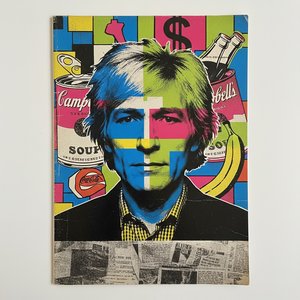 Andy Warhol: Deconstructing Pop Culture & Redefining Artistic ExpressionExplore the revolutionary art of Andy Warhol & the Pop Art movement. Discover his iconic techniques, cultural impact, and investment potent…
 American artworks of the 1960sIconic 1960s American art by Warhol and Lichtenstein defines a decade. Explore museum-quality reproductions on OriginalUniqueArt.com.