School of Paris · 1928
Rita van Leer (André Derain, 1928)
André Derain (1880–1954) criou Rita van Leer. Data de 1928. Pertence ao movimento School of Paris. É feito em Oil On Panel. Mede 41 × 34 cm.
- 1928
- Oil On Panel
- 41 × 34 cm

 Visualizar na parede

 Pintura a Óleo Feita à Mão
 Compartilhar
 Compartilhar
 Ficha técnica


 Baixar imagem
 Semelhantes
 Raio X
 Ver diaporama
 Perguntas e Respostas

 Estatísticas
Rita van Leer, em resumo
- Título
- Rita van Leer
- Artista
- André Derain (1880–1954)
- Artista nascido em
- Chatou, França
- Data
- 1928
- Técnica
- Oil On Panel
- Dimensões
- 41 × 34 cm
- Movimento
- School of Paris
- Período
- Modern
- Tema
- woman, portrait, face, shoulders, gray, black
O que Rita van Leer retrata?
The Portrait of Rita van Leer
In this intimate portrait, André Derain turns his attention to Rita van Leer. Created about 1928, the work moves away from the loud colorism of his earlier years, focusing instead on the quiet presence of the sitter. There is a certain stillness here, a moment captured in a way that prioritizes her character over a mere photographic likeness. She meets the viewer with a directness that feels both personal and somewhat guarded.
André Derain captures the subject with an expressive likeness, favoring the essence of her personality over rigid, academic precision. The portrait focuses on the head and shoulders, stripping away unnecessary distractions to ensure the viewer's attention remains fixed upon her gaze. It is a study of a person rather than a mere likeness, offering a glimpse into a specific, fleeting moment of her life.
Composition and Visual Elements
The composition is centered entirely upon the woman’s face, which occupies the majority of the frame. Presented in a close-up view, the subject's head and shoulders emerge from a dark, minimalist background. This lack of environmental detail ensures that the viewer's attention remains fixed on the sitter. Her head is slightly tilted, a subtle movement that introduces a sense of dynamism to an otherwise still moment.
There is a directness in her gaze, as she looks straight toward the viewer. This connection is established through the careful placement of her features and the use of tonal variations rather than sharp, photographic lines. Light and shadow work together to define the contours of her face, creating a sense of three-dimensionality through the layering of different shades.
Technique and Artistic Style
The work is characteristic of early modern art, leaning into the expressive possibilities of Fauvism and Expressionism. Rather than seeking photographic accuracy, the artist employs a loose and gestural application of paint to capture the sitter. There is a palpable sense of immediacy here, driven by the visible brushstrokes that define the form. This approach prioritizes the emotional essence of the subject over a strictly realistic representation.
One notices how the artist uses short, choppy strokes to build up the features of the face and the contours of the hair. This method creates a textured, almost rugged surface. The use of thick impasto is particularly evident, providing a physical depth that makes the paint feel sculptural. These heavy applications of pigment allow the light to catch the ridges of the brushwork, adding a sense of movement to the portrait.
Materials and Physical Properties
This work is executed in oil paint, applied with a deliberate and textured hand. The artist has worked upon a surface of either canvas or panel, a choice that supports the heavy impasto visible throughout the piece. Such tactile application allows the paint to hold its form, creating a physical presence that catches the light in subtle ways. The dimensions of the work are 41 x 34 cm, a scale that invites a close, intimate inspection of the surface.
The palette is notably restrained, eschewing the riotous color often associated with the artist's earlier years. Instead, we find a monochromatic arrangement of gray, black, and white. These tones are layered to build depth and define the contours of the subject. The interplay of light and shadow is achieved through these varying shades, providing a sense of volume without the need for chromatic intensity. It is a quiet, disciplined approach to the medium.
Imagens em alta resolução de Rita van Leer
André Derain, Rita van Leer (1928). Domínio público.
Perguntas sobre Rita van Leer respondidas
Em que ano foi criada a obra "Rita van Leer", de André Derain?
"Rita van Leer", de André Derain foi criado em 1928.
Qual é a técnica utilizada em "Rita van Leer", de André Derain?
A técnica de "Rita van Leer", de André Derain é Oil On Panel. As reproduções visam reproduzir a aparência desta técnica.
Quais são as dimensões da obra original "Rita van Leer", de André Derain?
As dimensões registradas de "Rita van Leer", de André Derain são 41 x 34 cm. Reproduções podem ser encomendadas em outros tamanhos, mantendo as mesmas proporções.
O que "Rita van Leer", de André Derain retrata?
Os temas de "Rita van Leer" são woman, portrait, face, shoulders, gray, black, white.
"Rita van Leer" está em domínio público?
Informação de direitos autorais para "Rita van Leer", de André Derain: a obra está em em domínio público — seus direitos autorais expiraram. Isso determina se reproduções da imagem podem ser feitas livremente.
Quem criou "Rita van Leer"?
O artista por trás de "Rita van Leer" é André Derain. A obra está catalogada sob o nome de André Derain.
A qual movimento artístico "Rita van Leer", de André Derain pertence?
O movimento associado a "Rita van Leer", de André Derain é School of Paris. Esta classificação situa a obra entre artistas e obras de arte relacionados.
A que período da carreira de André Derain pertence "Rita van Leer"?
"Rita van Leer" representa o Late Period de André Derain.
Qual era a idade de André Derain quando "Rita van Leer" foi criada?
André Derain criou "Rita van Leer" aos 48 anos. O artista nasceu em 1880 e a obra data de 1928.
Sobre o artista, André Derain
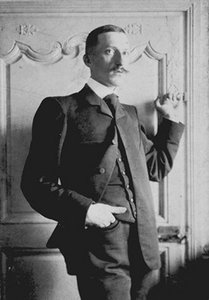
1880–1954, França
André Derain
Juventude, Família e Formação No ano de 1880, André Derain chegou ao mundo em Chatou, uma vila aninhada na região de Yvelines, na França. Seus primeiros anos foram moldados pelas paisagens serenas da Île-de-France, onde uma curiosidade natural pelo que o rodeava começou a criar raízes. Já em 1895, ele havia iniciado seus estudos de forma autodidata, buscando compreender o mundo visual através de seus próprios olhos, em vez de seguir uma instrução formal. Este período de exploração autônoma permitiu que ele desenvolvesse uma forma pessoal de enxergar, antes que o rigor de uma academia pudesse impor sua vontade sobre sua visão artística.
Também de André Derain
 banhistas1907
 London Bridge1906
 Charing Cross from sw1906
 Landscape at L'Estaque1906
Ensaios sobre Rita van Leer
 Fauvism vs German Expressionism: Distinguishing Color and EmotionMaster the differences between Fauvism and German Expressionism through expert analysis. Learn to decode the emotion behind the color today.
 Dutch artworks of the 1860s1860s Dutch masterpieces by Vincent van Gogh, Gerard Bilders, and August Allebé. View the full collection online at OriginalUniqueArt.com.
 The Silent Dialogue: Examining Intimacy and Psychological Depth in Classical PortraitureExplore the psychological depth of classical portraiture through masters like Rembrandt and Vermeer. Discover the power of the gaze today.