

 Visualizar em escala
 Enviar
 Compartilhar
 Ver detalhes
 Guia de Obras do Aluno

 Baixar imagem
 Semelhantes
 Raio X
 Apresentação de slides
 Estatísticas
Untitled
 Charcoal
- WallArt
- Expressionism
 1970
1970- Modern
 29.0 x 23.0 cm
 Museu do Caramulo
 Ver mais
A obra de arte exibida nesta página é protegida por leis de direitos autorais, o que significa que não podemos criar ou vender legalmente uma reprodução idêntica. Esta proteção é aplicada por meio de acordos internacionais, tais como a Convenção de Berna e pelas leis nacionais, incluindo as estabelecidas por Lei de Direitos Autorais dos EUA - Título 17.
Como uma alternativa respeitosa e legal, oferecemos obras de arte personalizadas e pintadas à mão, inspiradas na obra original. Nossos artistas profissionais e experientes estudam cuidadosamente o estilo, a atmosfera e a essência artística da obra original para criar uma peça nova e única que evoque a mesma sensação — permanecendo como uma criação original por direito próprio.
Este método cumpre plenamente as regulamentações de direitos autorais, pois não envolve a cópia ou duplicação da obra protegida. Em vez disso, trata-se de uma reinterpretação criativa — uma nova pintura que é influenciada pela original, mas não idêntica a ela.
Reprodução em Óleo Feita à Mão
Óleo sobre tela pintado à mão no tamanho e moldura de sua escolha, feito sob encomenda pelos nossos artistas. ( Alternar para Impressão Ver Imagem Digital)




































Escolha entre os nossos tamanhos pré-definidos que respeitam as proporções originais da obra de arte.

Digite a largura e a altura de que necessita, para se ajustar à sua moldura ou à sua parede. Esta obra é pintada à mão, por isso, para um tamanho com uma proporção diferente, o artista pode pintar um pouco mais ao redor da imagem ou cortar um pouco — você escolhe. Enviamos-lhe uma maquete digital para aprovação antes de a pintura começar. A imagem exibida nesta página não mostra o resultado real — apenas a maquete mostra.
Após o pedido, a equipa OriginalUniqueArt.com enviará um e-mail ao cliente para solicitar instruções e fornecer uma prévia do esboço.
Entrega mundial () em 3 a 4 semanas, em vez das 5 semanas padrão. (23 Outubro). Sem comprometer a qualidade.

Envio expresso gratuito para todo o mundo

Tela de Linho Premium

Seguro de transporte total

Garantia de Reembolso de Impostos Alfandegários

Garantia de Fidelidade de Cor

Política de Devolução em 100 Dias (Apenas para Defeitos)

Garantia de reembolso de 100%

Desconto para múltiplas unidades
 A opção de vidro está disponível apenas para tamanhos inferiores a 110 cm

Untitled
Técnica de Reprodução
Dimensões da Reprodução
-


Preço Total
€ 264
The Raw Energy of Line and Shadow
In this evocative charcoal drawing from 1970, the Portuguese visionary Ana Hatherly de Sousa invites us into a world where nature is stripped of its serenity and reimagined as a site of profound kinetic energy. The work presents a dense, chaotic field of tall grasses or reeds, yet it transcends mere botanical representation to become an exploration of pure movement. There is no quiet meadow here; instead, the viewer is met with a swirling, turbulent landscape where dark, rhythmic lines dance across the paper in a state of unrestrained motion. The composition lacks a traditional focal point, intentionally guiding the eye on a wandering journey through an intricate network of shadows and light, much like a traveler lost within a thicket of wild growth.
The technique employed by Hatherly is as visceral as the subject matter itself. Utilizing the direct application of charcoal, the artist achieves a palpable sense of texture and physicality that demands attention. The varying thickness of each stroke—some heavy and smudged, others sharp and decisive—creates a dramatic interplay of depth. Through the masterful manipulation of density, light emerges from the darkness; where the charcoal is sparse, the paper breathes, suggesting highlights amidst the gloom, while the concentrated black masses suggest deep, impenetrable shadows. This tactile approach transforms the two-dimensional surface into a three-dimensional experience of grit and grace.
Expressionism and the Spirit of the Unseen
While the subject matter is representational, the soul of the piece is deeply rooted in Expressionism. Hatherly de Sousa, a polymath whose intellect spanned philology, poetry, and film, brings a linguistic sensitivity to her visual marks, treating each line as a word in an unspoken poem of struggle and vitality. The artwork eschews realistic precision in favor of emotional truth, capturing the "wildness" of the natural world through an almost violent application of medium. There is a palpable sense of tension within the frame, a suggestion of the internal struggles found within both nature and the human psyche.
For the discerning collector or interior designer, this piece offers a sophisticated layer of intellectual and aesthetic depth. Its monochromatic palette and abstract qualities make it an incredibly versatile choice for modern, minimalist, or industrial interiors, where it can serve as a powerful anchor of texture and mood. As a high-quality reproduction, it brings the raw, avant-garde spirit of 20th-century Portuguese experimentalism into the contemporary home, offering a window into a moment of pure, unadulterated creative impulse.
Perguntas e Respostas
Qual configuração de impressão é sugerida para "Untitled" de Ana Hatherly De Sousa?
Tamanho Small, orientação Landscape: esta é a configuração de impressão sugerida para "Untitled" de Ana Hatherly De Sousa.
Quando e com quais materiais foi feita a obra "Untitled"?
"Untitled" foi realizada em 1970, em Charcoal.
Qual era a idade de Ana Hatherly De Sousa quando "Untitled" foi criada?
Quando "Untitled" foi criada em 1970, Ana Hatherly De Sousa — nascido(a) em 1929 — tinha 41 anos.
Biografia do Artista
A Life Interwoven: The Multifaceted Art of Ana Hatherly
Ana Hatherly de Sousa (1929-2015) was a singular figure in Portuguese art and culture, defying easy categorization as she moved fluidly between poetry, visual art, filmmaking, academia, and essay writing. Born in Porto, Portugal, her intellectual journey began with a degree in Germanic Philology from the University of Lisbon, followed by doctoral studies in Hispanic Studies at the University of California, Berkeley. This foundation in language and literature would prove crucial to her later explorations of form, meaning, and the very nature of artistic expression. However, Hatherly’s path wasn't one of linear progression; it was a constant questioning and re-evaluation of boundaries, a deliberate blurring of disciplines that positioned her as a pioneer of experimental art in Portugal. She spent years as a professor of human and social sciences at the New University of Lisbon, fostering critical thought and challenging conventional artistic norms within the academic sphere.The Genesis of Experimentation: Poetry and Visual Dialogue
Hatherly emerged during a period of significant political and cultural change in Portugal, and her work often reflected this turbulent context. She is widely recognized as one of the key figures in the Portuguese experimental poetry movement (Po.Ex) beginning in 1959, collaborating with artists like E.M. de Melo e Castro and António Aragão. This group sought to break away from traditional poetic forms, embracing visual elements, typography, and a radical approach to language itself. For Hatherly, this wasn’t simply about aesthetic innovation; it was about challenging the status quo and exploring new ways of communicating meaning in a rapidly changing world. Her early work demonstrates a fascination with concrete poetry, where the physical arrangement of words on the page became as important as their semantic content. This interest evolved into visual poetry, where text and image intertwined to create complex, layered compositions. She often described her process as beginning “with writing,” seeing herself as a writer who ventured into visual art through experimentation with language, but equally acknowledging that painting could be a starting point for literary exploration—a testament to the interconnectedness of all artistic forms in her worldview.Abstract Expressions and Political Undertones
Throughout her career, Hatherly’s visual work gravitated towards abstraction. Her paintings and drawings are characterized by bold lines, stark contrasts, and gestural energy. Pieces like the 1970 charcoal drawing of grasses reveal a turbulent emotionality reminiscent of Expressionism, while later monochrome abstract works from 1997 showcase complex networks of interwoven lines evoking unease and texture—a style often compared to Jackson Pollock’s action painting. However, Hatherly's abstraction was never purely formal; it frequently carried political undertones. Her art served as a vehicle for exploring themes of power, resistance, and social injustice. The series featuring stark black lines on cream backgrounds exemplifies this approach, conveying energy and disruption through raw texture and gestural abstraction. She wasn’t interested in creating decorative objects but rather in provoking thought and challenging viewers to confront uncomfortable truths.A Transdisciplinary Legacy: Film, Teaching & Beyond
Hatherly's artistic output extended far beyond poetry and painting. She ventured into filmmaking, exploring the possibilities of visual narrative and experimental techniques. Her work as an educator was equally significant; she fostered a spirit of critical inquiry at AR.CO in Lisbon and later established the Institute of Portuguese Studies at the Universidade Nova de Lisboa. This commitment to teaching reflects her belief in the importance of artistic education and the power of dialogue. She actively participated in literary associations, co-founding the PEN Club Português and receiving recognition for her book *Rilkeana*. Her vast body of work—spanning art, film, poetry, novels, essays, translations—is deeply multidimensional, defying labels and boundaries.Historical Significance & Enduring Influence
Ana Hatherly’s legacy lies in her unwavering commitment to experimentation and her refusal to be confined by traditional artistic categories. She was a true innovator, pushing the boundaries of Portuguese art and paving the way for future generations of artists. Her work continues to resonate today, inspiring those who seek to challenge conventions and explore new forms of expression. The Google Arts & Culture exhibition dedicated to her work, alongside scholarly analyses from institutions like UC Berkeley and the Taylor Institution Library at Oxford University, demonstrate the enduring relevance of her artistic vision. She remains a pivotal figure in understanding the development of avant-garde art in Portugal and its connection to broader European movements, a testament to her intellectual curiosity, artistic courage, and profound impact on the cultural landscape.
Ana Hatherly De Sousa
1929 - 2015 , Portugal
Informações Rápidas
- Full Name: Ana Hatherly de Sousa
- Nationality: Portuguese
- Date Of Birth: 1929
- Date Of Death: 2015
- Place Of Birth: Porto, Portugal
- Notable Artworks:
- Untitled (1970)
- Untitled (1997)
- From the series
- Of Human Servitude 1997
- Artistic Movement Or Style: Experimental poetry/art
Artigos Relacionados

Mastering the Line: A Comprehensive Expert Guide to Technical Precision and Expressive Depth in Drawing
Elevate your artistic practice with this expert guide to mastering the line. Discover advanced techniques in graphite, charcoal, and contour drawing designed for art students seeking technical precision and expressive depth in their fine art studies.

Goya: As 25 Obras-Primas que Definem um Mestre da Arte Espanhola | OriginalUniqueArt
Descubra as 25 obras-primas de Francisco Goya, o mestre espanhol do Romantismo. Explore retratos icônicos, gravuras impactantes e a história por trás de 'Saturno Devorando seu Filho' e 'A Majas'. Encontre reproduções de arte exclusivas para decorar sua casa com OriginalUniqueArt.com.
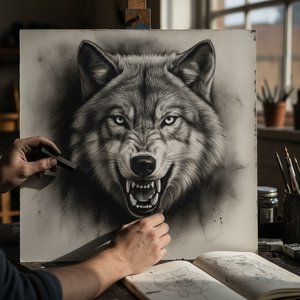
Charcoal Art Mastery: A Visual Journey Through Raw Power, Deep Shadows, and Expressive Texture
Master the raw power of charcoal art. Explore professional techniques in chiaroscuro, texture, and shadow to elevate your sketches from simple lines to high-impact, expressive masterpieces. A visual guide for art students seeking technical precision and emotional depth.

Sobre nós
Descubra a nossa história! Levamos arte de classe mundial à sua vida através de uma seleção especializada, criações personalizadas e prévias gratuitas. Aprovado por particulares e empresas desde 2000.

Mastering Charcoal: The Definitive Expert Guide to Capturing Profound Depth, Texture, and Shadow
Elevate your artistry with this definitive expert guide to mastering charcoal. Designed for art students, learn professional techniques for capturing profound depth, intricate textures, and dramatic shadows through advanced blending and chiaroscuro methods.