

 Visualizar em escala
 Enviar
 Compartilhar
 Ver detalhes
 Guia
Guia

 Baixar imagem
 Semelhantes
 Raio X
 Apresentação de slides
 Estatísticas
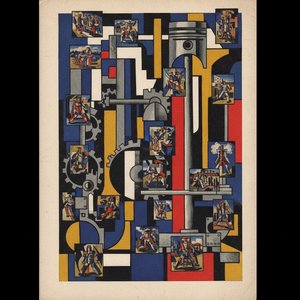
Untitled
 Oil On Canvas
- WallArt
- Cubism
 1913
1913- Modern
 28.0 x 34.0 cm
 Centro de Arte Moderna Gulbenkian
 Ver mais
Reprodução em Óleo Feita à Mão
Óleo sobre tela pintado à mão no tamanho e moldura de sua escolha, feito sob encomenda pelos nossos artistas. ( Alternar para Impressão Ver Imagem Digital)




P118B $10

P118H $10

P118W $10

P438Z $10

P508JH $12

P508YH $12

P805H $10

P805Z $10

P919BZ $10

P919G $10

P919XJ $10

P959ZH $10

P968JZ $12

W106C $8

W218G $10

W218JH $8

W218Y $10

W307PJ $10

W316G $10

W316PJ $8

W316Y $10

W398PJ $8

W4111J $10

W500HY $15

W500JH $15

W692G $12

W849H $8

W940BG $15

W953PJ $8




Escolha entre os nossos tamanhos pré-definidos que respeitam as proporções originais da obra de arte.

Pode inserir as suas próprias dimensões para se adequar a uma moldura ou espaço específico. Se o tamanho selecionado não corresponder às proporções da imagem original, iremos cortar a obra de arte ou estender a pintura com elementos adicionais pintados à mão. Um esboço digital será enviado para sua aprovação antes do início da produção.
Tenha em atenção que a pré-visualização no ecrã não reflete o corte ou extensão real. Apenas o esboço mostrará com precisão a composição final.
Embora tamanhos personalizados estejam disponíveis, recomendamos selecionar uma dimensão da lista predefinida para preservar as proporções originais.
Após o pedido, a equipa OriginalUniqueArt.com enviará um e-mail ao cliente para solicitar instruções e fornecer uma prévia do esboço.
Entrega mundial () em 3 a 4 semanas, em vez das 5 semanas padrão. (20 Setembro). Sem comprometer a qualidade.

Envio expresso gratuito para todo o mundo

Tela de Linho Premium

Seguro de transporte total

Garantia de Reembolso de Impostos Alfandegários

Garantia de Fidelidade de Cor

Política de Devolução em 100 Dias (Apenas para Defeitos)

Garantia de reembolso de 100%

Desconto para múltiplas unidades
 A opção de vidro está disponível apenas para tamanhos inferiores a 110 cm

Untitled
Técnica de Reprodução
Dimensões da Reprodução
-


Preço Total
$ 300
A Symphony of Geometry: The Radiant Vision of Amadeo de Souza-Cardoso
In the early tremors of the twentieth century, as the old world began to fracture under the weight of modernity, a new visual language was being whispered in the studios of Paris and the quiet corners of Portugal. At the heart of this revolution stood Amadeo de Souza-Cardoso, a luminary of Portuguese Modernism whose brief but incandescent career acted as a bridge between tradition and the avant-garde. His 1913 masterpiece, “Untitled,” serves as a breathtaking testament to this era of transition. It is not merely an arrangement of shapes, but a rhythmic dance of form and color that captures the very pulse of a world in motion. To gaze upon this work is to witness the moment where Cubist structure meets Expressionist soul, creating a composition that feels both mathematically precise and emotionally boundless.
The painting’s architecture is built upon a captivating geometric choreography. A dominant central circle acts as the piece's gravitational anchor, embodying a sense of wholeness and spiritual unity. This primary orb is surrounded by a constellation of smaller circles, meticulously placed to generate an intricate, pulsating pattern that draws the eye into a continuous loop of discovery. To disrupt this circular harmony, Souza-Cardoso introduced sharp, angular triangles on the periphery—one anchoring the left and another balancing the right. These triangular interventions create a sophisticated visual tension, a dialogue between the soft, infinite nature of the circle and the aggressive, directional energy of the triangle. For the discerning collector or interior designer, this balance offers a unique versatility; it possesses enough structural rigor to ground a modern space, yet enough fluid movement to breathe life into a minimalist setting.
Technique and the Palette of Emotion
Beyond its formal arrangement, “Untitled” is a masterclass in the expressive potential of oil on canvas. Souza-Cardoso utilized a technique of layering and subtle blending that allows light to seem as though it is emanating from within the pigment itself. The color palette is a bold, evocative choice: deep, nocturnal blues are set against vibrant, fiery reds. These are not merely decorative hues; they represent the duality of the human experience—the calm of contemplation versus the heat of passion. The way these colors interact at the edges of the geometric forms creates a luminous depth, defying the inherent flatness of abstract shapes. This interplay of light and saturated color ensures that the artwork remains visually arresting from every angle, making it an ideal centerpiece for those seeking to evoke a sense of sophisticated drama.
Historically, this work sits at the crossroads of the most influential movements of the 1910s. Having been deeply moved by the radical shifts occurring in Paris, Souza-Cardoso integrated the fragmented perspectives of Cubism with the raw, emotive power of Expressionism. In “Untitled,” we see the artist rejecting the literal representation of the world in favor of a more profound truth: that energy, shape, and color can communicate what words cannot. For anyone looking to curate a collection of high-quality reproductions, this piece offers more than just aesthetic beauty; it offers a connection to the very dawn of modern thought, providing an enduring sense of intellectual and emotional inspiration for any curated environment.
Biografia do Artista
Amadeo de Souza-Cardoso: A Pioneer of Portuguese Modernism
Amadeo de Souza-Cardoso, a name resonating with the vibrant energy of early 20th-century modernism, remains a somewhat enigmatic figure despite his pivotal role in bridging Portuguese art to the international avant-garde. Born on November 14, 1887, in Manhufe, Portugal, his brief but intensely creative life was marked by a restless spirit and an unwavering dedication to artistic innovation. From humble beginnings rooted in the rural landscapes of his homeland, Souza-Cardoso embarked on a journey that would lead him to the heart of Parisian modernism, where he forged connections with some of the most influential artists of his time – Modigliani, Brancusi, Delaunay, and Gris among them. His early education began with architectural studies in Lisbon, but it was the allure of painting, particularly the expressive power of caricature, that truly captivated his imagination and set him on a path toward artistic exploration. This initial foray into art wasn’t merely technical training; it was an awakening to the potential of visual language as a means of commentary and self-expression.- Early Life & Education: Born in Manhufe, Portugal, Amadeo’s upbringing instilled in him a deep appreciation for rural landscapes and a fascination with observation—skills that would prove invaluable throughout his artistic career. His architectural studies provided foundational knowledge but it was caricature that ignited his passion for visual storytelling.
- Parisian Encounters & Artistic Development: In 1906, Souza-Cardoso relocated to Paris, immersing himself in the city’s burgeoning artistic milieu and immediately absorbing the radical ideas reshaping art history. Influenced by Cubism and Futurism, he synthesized these movements with his own distinctive sensibility, creating a style characterized by bold forms, vibrant colors, and dynamic compositions.
- Key Achievements & Exhibitions: Souza-Cardoso’s participation in pivotal exhibitions like the Salon des Indépendants and the groundbreaking 1913 Armory Show cemented his place as a champion of Portuguese modernism and brought his innovative work to an international audience. His paintings, notably *Saut du Lapin* (1911) and *Cabeça* (1913), exemplify this period’s experimentation with perspective and chromatic intensity.
- Cultural Synthesis & Legacy: Souza-Cardoso skillfully blended Portuguese cultural motifs—religious processions, rural landscapes—with modernist techniques, demonstrating a remarkable ability to reconcile seemingly disparate influences. His work continues to inspire contemporary artists and serves as a reminder of the transformative power of artistic innovation.
Style & Technique: A Dialogue Between Tradition and Avant-Garde
Souza-Cardoso’s distinctive style wasn't simply imitation; it was transformation—a deliberate reimagining of established movements to forge something entirely new. He embraced Cubism and Futurism, but he didn’t merely replicate their visual vocabulary. Instead, he analyzed them critically, extracting essential elements while rejecting conventions that felt restrictive. His canvases pulsed with vibrant color palettes—aggressive reds, yellows, blues—and employed dynamic compositions featuring fragmented perspectives and seemingly chaotic arrangements that were meticulously balanced beneath the surface. This approach reflected a profound understanding of perceptual experience and aimed to convey emotion through formal innovation.Notable Works
Among Souza-Cardoso’s most celebrated paintings are *Saut du Lapin* (1911), which showcases his masterful manipulation of perspective and color, and *Cabeça* (1913), a striking portrait that embodies the artist's exploration of form and psychological depth. These pieces stand as testaments to his artistic vision—bold statements against conventional representation. His contribution to Portuguese art history is undeniable, securing his place among the foremost figures of modernism.Recognition & Remembrance
Despite initial obscurity following his untimely death in 1918, Souza-Cardoso’s legacy has experienced a resurgence in recent decades thanks to major retrospectives—one in 1958 and another at the Grand Palais in Paris in 2016—which reintroduced his work to a wider audience. Today, his paintings reside in museums worldwide, including the Plymouth City Museum and Art Gallery, alongside masterpieces by other influential artists. His enduring influence underscores the importance of artistic experimentation and cultural exchange.
Amadeo de Souza-Cardoso
1887 - 1918 , Portugal
Informações Rápidas
- Artistic Movement Or Style: Modernismo Português
- Artists Or Movements Influenced By This Artist:
- Cubismo
- Futurismo
- Artists Who Influenced This Artist:
- Modigliani
- Brancusi
- Delaunay
- Gris
- Date Of Birth: 14 Novembro 1887
- Date Of Death: 25 Outubro 1918
- Full Name: Amadeo de Souza-Cardoso Ferreira
- Nationality: Português
- Notable Artworks:
- Saut du Lapin
- Cabeça
- Place Of Birth: Manhufe, Portugal
Artigos Relacionados
Fernand Léger: As 25 Obras-Primas que Definem um Ícone da Arte Moderna | OriginalUniqueArt
Descubra as 25 obras-primas de Fernand Léger, pioneiro do tubismo e da arte moderna. Explore a história, cores vibrantes e técnicas inovadoras por trás de seus quadros icônicos. Encontre reproduções de alta qualidade para decorar sua casa com estilo em OriginalUniqueArt.com.

Top 10 Obras-Primas do Expressionismo Abstrato: Arte para Decorar e Inspirar | OriginalUniqueArt.com
Descubra as 10 obras-primas do Expressionismo Abstrato com Jackson Pollock, Mark Rothko e mais! Explore a história, técnica e emoção por trás de cada pintura. Encontre reproduções de arte exclusivas para decorar sua casa em OriginalUniqueArt.com.

Abstração Geométrica: 10 Obras-Primas que Moldaram a Arte Moderna | OriginalUniqueArt.com
Descubra as 10 obras-primas da Abstração Geométrica que revolucionaram a arte moderna! Explore Kandinsky, Mondrian e outros artistas icônicos. Encontre reproduções de alta qualidade para decorar sua casa com OriginalUniqueArt.com.

As 10 Obras Mais Famosas em Tons de Azul Ardósia | OriginalUniqueArt.com
Descubra as 10 pinturas mais emblemáticas em tons de azul ardósia! Explore a história, artistas como Monet e Van Gogh, e o significado da cor na arte. Encontre reproduções de alta qualidade para decorar sua casa com OriginalUniqueArt.com.

Kandinsky: As 25 Obras-Primas que Definem o Abstracionismo | OriginalUniqueArt
Descubra as 25 obras-primas de Wassily Kandinsky, pioneiro da arte abstrata! Explore a história, cores e significado por trás de cada pintura. Encontre reproduções de alta qualidade e inspire sua decoração em OriginalUniqueArt.com.


