

 Visualizar na parede
 Compartilhar
 Compartilhar
 Detalhes
 Guia
Guia

 Baixar imagem
 Semelhantes
 Raio X
 Ver diaporama
 Estatísticas
The Emerald


 Ler mais
Reprodução em Óleo Feita à Mão
Óleo sobre tela pintado à mão no tamanho e moldura de sua escolha, feito sob encomenda pelos nossos artistas. ( Alternar para Impressão Alternar para Imagem Digital)




P118B €10

P118H €10

P118W €10

P438Z €10

P508JH €12

P508YH €12

P805H €10

P805Z €10

P919BZ €10

P919G €10

P919XJ €10

P959ZH €10

P968JZ €12

W106C €8

W218G €10

W218JH €8

W218Y €10

W307PJ €10

W316G €10

W316PJ €8

W316Y €10

W398PJ €8

W4111J €10

W500HY €15

W500JH €15

W692G €12

W849H €8

W940BG €15

W953PJ €8




Escolha entre os nossos tamanhos pré-definidos que respeitam as proporções originais da obra de arte.

Insira a largura e a altura desejadas para se ajustarem à sua moldura ou parede. Como esta obra é pintada à mão, para um tamanho com proporções diferentes, o artista poderá pintar um pouco mais ao redor da imagem ou reduzir ligeiramente a composição — você escolhe. Enviamos uma maquete digital para sua aprovação antes de iniciar a pintura. A imagem exibida nesta página não representa o resultado real — apenas a maquete mostra o resultado final.
Após o pedido, a equipa OriginalUniqueArt.com enviará um e-mail ao cliente para solicitar instruções e fornecer uma prévia do esboço.
Entrega mundial () em 3 a 4 semanas, em vez das 5 semanas padrão. (25 Outubro). Sem comprometer a qualidade.

Envio expresso gratuito para todo o mundo

Tela de Linho de Alta Qualidade

Seguro de transporte completo

Garantia de Reembolso de Impostos Alfandegários

Garantia de Fidelidade Cromática

Política de Devolução em 100 Dias (Apenas para Defeitos)

Garantia de reembolso de 100%

Oferta de desconto por quantidade
 A opção de vidro está disponível apenas para tamanhos inferiores a 110 cm

The Emerald
Técnica de Reprodução
Tamanho da Reprodução
-


Preço Total
€ 263
The Emerald: A Window into Alphonse Mucha's Art Nouveau World
Alphonse Mucha’s “The Emerald” is more than just a beautiful image; it’s a meticulously crafted portal to the heart of Art Nouveau, a movement that redefined aesthetics at the turn of the 20th century. This poster design, brimming with flowing lines, organic forms, and a profound sense of luxury, exemplifies Mucha's mastery of decorative art and his ability to capture the spirit of a burgeoning era. The piece immediately draws the eye with its vibrant color palette – warm browns, golds, and oranges punctuated by the arresting red-orange beak of the fantastical bird – creating an atmosphere of opulent serenity.
At its core, “The Emerald” is a study in controlled beauty. Mucha’s meticulous attention to detail is evident in every aspect of the composition. The woman, rendered with a delicate grace characteristic of Mucha's style, leans against a stylized bird – a creature simultaneously familiar and otherworldly – while lilies and leafy plants cascade downwards, anchoring the design and reinforcing its connection to nature, a key theme within Art Nouveau. The circular frame isn’t merely decorative; it elevates the entire scene, imbuing it with a sense of completeness and timeless elegance, hallmarks of Mucha's approach.
Decoding the Symbolism
Beyond its purely aesthetic qualities, “The Emerald” is rich in symbolic meaning. The woman herself embodies idealized feminine beauty – a recurring motif in Mucha’s work – but she transcends simple portraiture. Her pose and the surrounding elements suggest an embodiment of nature's grace and fertility. The bird, often interpreted as a symbol of transformation or exotic allure, adds a layer of mystery to the scene. The lilies, traditionally associated with purity and renewal, further enhance this sense of ethereal beauty. Together, these elements create a harmonious whole that speaks to themes of luxury, elegance, and perhaps even a touch of hidden sensuality – emotions Mucha skillfully evoked through his art.
The Art of Lithography
“The Emerald”’s remarkable detail is the result of Mucha's masterful use of lithography, a printing technique that allowed for incredibly fine linework and subtle color gradations. As a skilled lithographer himself, Mucha meticulously crafted each element of the design using stone or metal plates, applying ink with precision to achieve the desired effects. The process demanded patience and skill, resulting in an image that retains the textural qualities of paint – the draping fabric, the voluminous hair, the delicate petals of the flowers – despite being a poster reproduction. The smooth, polished appearance of the bird’s beak further demonstrates Mucha's attention to detail and his understanding of how different materials could be rendered effectively.
A Legacy of Art Nouveau
Created around 1900, “The Emerald” stands as a quintessential example of Alphonse Mucha’s contribution to the Art Nouveau movement. His work, alongside that of artists like Gustav Klimt and Aubrey Beardsley, helped shape the visual landscape of Europe at the turn of the century. Today, reproductions like this one allow us to appreciate not only Mucha's artistic talent but also the enduring appeal of his vision – a vision that celebrates beauty, nature, and the power of decorative art to transport us to another time and place.
Perguntas e Respostas
Como posso visualizar uma reprodução de "The Emerald", de Alphonse Mucha?
A página de Pré-visualização de "The Emerald" permite visualizar a obra de arte antes de fazer o pedido.
Qual cor predomina na composição de "The Emerald", de Alphonse Mucha?
A cor que mais se destaca em "The Emerald" é Rosy Brown (#cba868). A cor dominante é útil ao combinar uma obra de arte com um ambiente interno.
Quais temas aparecem em "The Emerald", de Alphonse Mucha?
Os temas de "The Emerald" são woman, floral, art nouveau, alphonse mucha, decorative, elegant, mystical.
Biografia do Artista
Early Life and Artistic Beginnings
Alphonse Maria Mucha, nascido em 24 de julho de 1860, na pitoresca cidade de Ivančice, na Morávia (hoje parte da República Tcheca), foi um artista cuja jornada artística começou com uma paixão precoce pela pintura. Desde a infância, demonstrou um talento inegável para o desenho e a cor, habilidades que lhe renderam um lugar de destaque no coro da Catedral de São Pedro em Brno, sua cidade natal. Aos 12 anos, ingressou na escola secundária local, mas sua inclinação para as artes logo se mostrou incompatível com os métodos tradicionais de ensino, levando à sua expulsão. Apesar dessa interrupção formal, a determinação de Mucha em seguir seu caminho artístico permaneceu inabalável.
Um evento crucial em sua trajetória foi a visita a uma igreja local onde admirou um afresco em estilo barroco tcheco. A beleza e o impacto da obra despertaram nele um profundo interesse pela arte, e ele decidiu que seu destino era se tornar um artista profissional. Após um breve período trabalhando como pintor decorativo em Viena, Mucha encontrou-se em Paris, a capital artística da época, onde iniciou seus estudos na Academia Julian e na Académie Colarossi, absorvendo as técnicas e influências do movimento Art Nouveau.
The Rise of a Style: Art Nouveau and Sarah Bernhardt
Paris se tornou o palco para a ascensão meteórica de Mucha. Sua habilidade em capturar a beleza feminina e sua sensibilidade estética rapidamente chamaram a atenção da comunidade artística e comercial. Em 1894, uma oportunidade inesperada surgiu quando foi contratado para criar um pôster para a peça Gismonda, estrelada pela lendária atriz Sarah Bernhardt no Théâtre de la Renaissance. Este pôster, com suas cores vibrantes, linhas sinuosas e figuras femininas idealizadas, se tornou um sucesso instantâneo, catapultando Mucha ao reconhecimento nacional e internacional.
A colaboração com Bernhardt durou seis anos, durante os quais Mucha projetou cartazes para diversas produções da atriz. Sua reputação cresceu exponencialmente, e ele passou a ser considerado o principal designer de pôsteres do estilo Art Nouveau. A demanda por seus trabalhos aumentou significativamente, impulsionando sua carreira e consolidando seu lugar na história da arte.
The Slav Epic: A Monumental Undertaking
Em 1912, Mucha recebeu um importante patrocínio de Charles Richard Crane, um industrial americano filiado ao movimento nacionalista eslavo. Com o apoio financeiro de Crane, Mucha embarcou em um projeto ambicioso e de longo prazo: a criação da Épopée Slave (Slav Epic), uma série de 20 grandes pinturas que retratavam a história e a cultura dos povos eslavos. Este ciclo de obras, que se estendeu por quase duas décadas, é considerado sua obra-prima e um testemunho de seu talento e visão artística.
A Épopée Slave é uma representação épica da história eslava, combinando elementos tradicionais com a estética Art Nouveau. As pinturas são ricamente detalhadas, cheias de simbolismo e expressivas, e refletem o interesse de Mucha pela identidade cultural de seu país de origem. A conclusão do projeto em 1930 marcou um momento significativo na carreira de Mucha e deixou um legado duradouro na arte tcheca.
Legacy and Influence
Alphonse Mucha faleceu em 14 de julho de 1939, em Praga, deixando para trás um corpo de trabalho impressionante que continua a inspirar artistas e designers até hoje. Seu estilo Art Nouveau, caracterizado por linhas fluidas, formas orgânicas e uma forte ênfase na beleza feminina, influenciou gerações de artistas e designers, tanto na Europa quanto nos Estados Unidos. Sua obra é admirada por sua elegância, sofisticação e capacidade de evocar emoção e sensibilidade.
Além de suas contribuições artísticas, Mucha também desempenhou um papel importante na promoção da cultura tcheca no exterior. Seus cartazes, pôsteres e ilustrações ajudaram a divulgar a arte e o folclore tchecos em todo o mundo, contribuindo para a construção da identidade nacional do país. Sua vida e obra são um exemplo de talento artístico, paixão pela cultura e compromisso com a beleza.

Alphonse Mucha
1860 - 1939 , República Tcheca
Dados Rápidos
- Artistic Movement Or Style: Art Nouveau
- Artists Or Movements Influenced By This Artist: ['Propreta']
- Artists Who Influenced This Artist:
- Renoir
- Moreau
- Date Of Birth: 15 Jul 1860
- Date Of Death: 14 Jul 1939
- Full Name: Alphonse Maria Mucha
- Nationality: Tcheco
- Notable Artworks:
- Uprising Slavo
- Salon Cent
- Filhas de Tespio
- Ribambelle Gobelins
- Campones
- Place Of Birth: Brno, República Tcheca
Artigos Relacionados
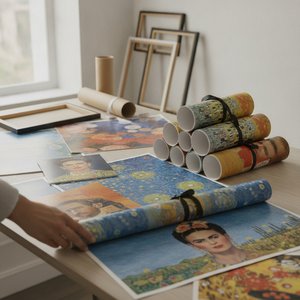
OriginalUniqueArt.com F.A.Q.: Premium Art Poster Prints – Vivid Colors & Versatile Sizing
Discover OriginalUniqueArt.com's premium art poster prints. Featuring 12-color archival pigments for vivid color fidelity and versatile sizing for bespoke decor. Expertly crafted museum-quality reproductions designed for discerning collectors and professional decorators.