Comprar pintura feita à mão
 Ler mais







































 Para obras de arte ou reproduções com mais de 105 cm (aproximadamente 41 polegadas) em qualquer um dos lados, a moldura será enviada como um kit desmontado. Este método garante uma entrega segura e evita danos durante o transporte.


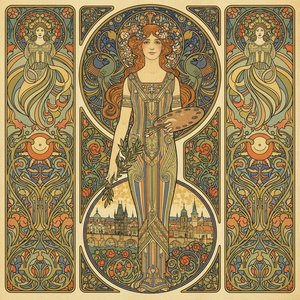
The Lily: A Study in Alphonse Mucha's Art Nouveau
This exquisite reproduction captures the very essence of Alphonse Mucha’s iconic Art Nouveau style – a world of flowing lines, delicate ornamentation, and an idealized vision of feminine beauty. “Lily” isn’t merely a depiction of a flower; it’s a carefully constructed tableau designed to evoke a sense of serenity, grace, and timeless elegance. Mucha's work during this period was deeply influenced by the decorative arts movement, seeking to elevate everyday objects into works of art through meticulous detail and harmonious composition.
The central figure, draped in a luminous white gown, embodies the core tenets of Art Nouveau. Her pose is deliberately languid, mirroring the natural curves found throughout the lilies themselves. The use of warm, golden hues – yellows, golds, and creams – creates a halo-like effect around her head and shoulders, drawing the viewer’s eye to this focal point while simultaneously immersing them in the artwork's dreamlike atmosphere. Mucha frequently employed this technique of luminous halos to imbue his subjects with an ethereal quality, elevating them beyond simple representation.
Color & Composition: Harmony and Movement
The color palette is deliberately restrained yet profoundly effective. The stark white of the lilies provides a crucial counterpoint to the rich warmth of the background, creating visual tension and depth. Subtle greens within the foliage add another layer of complexity, grounding the composition while still maintaining its overall sense of fluidity. Much like the Impressionists before him, Mucha was keenly aware of how color could be used to create mood and atmosphere – in this case, a feeling of tranquil beauty.
The vertical orientation of the artwork is crucial to its impact. It emphasizes the elongated form of the woman and the cascading arrangement of lilies, creating a sense of movement and drawing the eye upwards. The composition follows a clear axis, guiding the viewer’s gaze through the intricate details of the floral design. This deliberate structuring reflects Mucha's meticulous approach to his work – a hallmark of his artistic practice.
Technique & Symbolism: Lithography & Pure Form
Likely created using color lithography, “Lily” exemplifies Mucha’s mastery of this technique. The process involved meticulously transferring ink from stone plates onto paper, allowing for the creation of multiple identical prints with subtle variations in tone and texture. This method was particularly well-suited to the decorative style he favored, enabling him to achieve a level of detail and richness that would have been difficult to attain through traditional painting.
The lilies themselves are laden with symbolic meaning – traditionally representing purity, innocence, rebirth, and devotion. Combined with the idealized figure, they create a powerful visual statement about beauty, grace, and spiritual aspiration. Mucha’s work frequently explored themes of mythology and folklore, often incorporating natural motifs to convey deeper meanings. This particular piece is a testament to his ability to seamlessly blend artistic skill with profound symbolism.
Perguntas e Respostas
Qual é a cor predominante em "Lily"?
Um tom Ochre to Sepia percorre "Lily", de Alfons Maria Mucha.
"Lily" é uma das obras mais populares de Alfons Maria Mucha?
O nível de popularidade registrado para "Lily", de Alfons Maria Mucha é Recognized.
Como é descrita a paleta de "Lily", de Alfons Maria Mucha?
A paleta de "Lily", de Alfons Maria Mucha é descrita como Pastels. Trata-se de uma descrição concisa das cores da obra.
 Visualizar na parede

 Compartilhar
 Compartilhar
 Detalhes
 Guia


 Baixar imagem
 Semelhantes
 Raio X
 Ver diaporama
 Perguntas e Respostas
 Estatísticas