
 Visualizar na parede
 Compartilhar
 Compartilhar
 Detalhes
 Guia
Guia

 Baixar imagem
 Semelhantes
 Raio X
 Ver diaporama
 Perguntas e Respostas
 Estatísticas
Hilly Landscape


 Ler mais
Giclée / Impressão de Arte
Impressão giclée ou em tela de qualidade de museu, com produção rápida e opções flexíveis de acabamento. ( Comprar pintura feita à mão Alternar para Imagem Digital)




P118B €10

P118H €10

P118W €10

P438Z €10

P508JH €12

P508YH €12

P805H €10

P805Z €10

P919BZ €10

P919G €10

P919XJ €10

P959ZH €10

P968JZ €12

W106C €8

W218G €10

W218JH €8

W218Y €10

W307PJ €10

W316G €10

W316PJ €8

W316Y €10

W398PJ €8

W4111J €10

W500HY €15

W500JH €15

W692G €12

W849H €8

W940BG €15

W953PJ €8




Escolha entre os nossos tamanhos pré-definidos que respeitam as proporções originais da obra de arte.

Insira a largura e a altura desejadas para se ajustarem à sua moldura ou parede. Uma impressão pode ser apenas cortada, nunca ampliada além da imagem original; portanto, um tamanho com proporções diferentes resultará na perda de parte da imagem. Enviamos uma maquete digital para sua aprovação antes de realizarmos a impressão. A imagem exibida nesta página não mostra o corte real — apenas a maquete o faz.
Entrega mundial () em 2 semanas, em vez das 4/5 semanas padrão. (6 Novembro)

Envio expresso gratuito para todo o mundo

Tela de Linho de Alta Qualidade

Seguro de transporte completo

Garantia de Reembolso de Impostos Alfandegários

Garantia de Fidelidade Cromática

Política de Devolução em 100 Dias (Apenas para Defeitos)

Garantia de reembolso de 100%

Oferta de desconto por quantidade
 A opção de vidro está disponível apenas para tamanhos inferiores a 110 cm

Hilly Landscape
Giclée / Impressão de Arte
Tamanho da Reprodução
-


Preço Total
€ 72
A Pastoral Reverie: Alphonse Legros’s “Hilly Landscape”
Alphonse Legros's "Hilly Landscape," painted in 1876, isn’t merely a depiction of a rural scene; it’s a carefully constructed meditation on light, atmosphere, and the quiet beauty of the English countryside. This evocative work, now housed within the Victoria and Albert Museum’s collection, offers a glimpse into the artist's evolving style—a synthesis of Realist observation with a subtle Impressionistic sensibility—and speaks volumes about his time as an expatriate in London. Legros, having moved from France to England in 1863, found himself immersed in a landscape that both mirrored and subtly diverged from his native French vistas, leading him to develop a unique perspective on the English pastoral.
The painting immediately draws the eye with its harmonious blend of greens and blues. The rolling hills, rendered with loose, confident brushstrokes, are bathed in a soft, diffused light—a characteristic of Legros’s approach that suggests an outdoor setting, painted *en plein air*. Notice how he avoids sharp outlines or dramatic contrasts; instead, he employs subtle gradations of color to create a sense of depth and atmospheric perspective. The distant spire of Hampstead church provides a grounding element, anchoring the scene within a recognizable location while simultaneously contributing to the overall feeling of serene distance.
The Influence of Realism and Impressionism
Legros’s artistic journey is defined by his engagement with two significant movements: Realism and Impressionism. Initially trained in traditional academic styles, he was profoundly influenced by Gustave Courbet's rejection of idealized representation and his commitment to depicting the world as it truly appeared. This influence is evident in Legros’s meticulous observation of natural details—the texture of the grass, the subtle variations in the foliage—and his avoidance of overtly sentimental or romanticized imagery. However, he also embraced the Impressionists' focus on capturing fleeting moments and the subjective experience of light and color. The loose brushwork and emphasis on atmospheric effects demonstrate this dual influence, creating a painting that is both grounded in observation and imbued with a sense of immediacy.
Furthermore, Legros’s background as a house decorator and wall-painter—a profession demanding an understanding of materials and spatial relationships—contributed to his ability to create convincing landscapes. He wasn't simply sketching from memory; he was translating three-dimensional space onto a two-dimensional surface with remarkable skill. The composition itself is carefully balanced, guiding the viewer’s eye through the scene and establishing a sense of harmonious unity.
Symbolism and Emotional Resonance
Beyond its technical merits, “Hilly Landscape” resonates with a quiet emotional depth. It evokes a feeling of tranquility and contemplation—a welcome respite from the bustle of urban life. The painting’s muted palette and soft light contribute to this sense of serenity, while the distant church spire suggests a connection to faith and tradition. The scene feels timeless, inviting the viewer to lose themselves in the simple pleasures of nature.
Interestingly, Legros's work often reflected his personal experiences as an expatriate artist. The English countryside, with its rolling hills and picturesque villages, became a source of inspiration for him, offering a contrast to the landscapes of his native France. “Hilly Landscape” can be interpreted as a celebration of this new environment—a testament to the beauty and charm he discovered in England.
A Legacy of British Art
Alphonse Legros’s contribution to British art extends beyond this single painting. He played a pivotal role in establishing etching as a respected medium, teaching at the Slade School of Fine Art and fostering a new generation of artists. His influence can be seen in the work of his students, including Jessie Mothersole and Elinor Hallé, who went on to become prominent figures in the British art world. “Hilly Landscape” stands as a testament to Legros’s artistic versatility and enduring legacy—a beautiful example of a painter who seamlessly blended Realist observation with Impressionistic techniques to create works that continue to captivate viewers today.
Perguntas e Respostas
Por quais outros nomes ou pseudônimos Alphonse Legros é conhecido?
Outros nomes registrados para Alphonse Legros, criador de "Hilly Landscape", incluem Alphonse Légros, Alphons Légros.
Quem é o autor de "Hilly Landscape" e a qual movimento pertence?
"Hilly Landscape" foi criada por Alphonse Legros no estilo Contemporary Realism. O artista e o movimento identificam a tradição da obra.
Em que ano foi criado "Hilly Landscape", de Alphonse Legros?
"Hilly Landscape", de Alphonse Legros foi criado em 1876.
Biografia do Artista
Alphonse Legros (1837–1911): Bridging Realism and British Artistic Spirit
- Early Life and Training:
- Realism's Embrace and Parisian Influences:
- The Etching Revival and London Calling:
- A Multifaceted Artist: Painting, Sculpture, and Medals:
- Legacy and Enduring Significance:
Early Life and Training
Alphonse Legros’s journey began in Dijon, France, a city steeped in artistic tradition. Born in 1837 to a modest family—his father an accountant—Legros’s formative years were marked by exposure to the rural landscapes surrounding Véronnes, experiences that would profoundly shape his artistic vision. From a young age, he demonstrated an innate fascination with observation and detail, qualities nurtured by his apprenticeship under Maître Nicolardo, a house painter who instilled in him a practical understanding of materials and form. This grounding contrasted sharply with the burgeoning intellectual currents of his time, yet it provided the bedrock for his subsequent artistic explorations.Realism's Embrace and Parisian Influences
Legros’s arrival in Paris in 1851 coincided with a pivotal moment in French art history—the ascendance of Realism led by Gustave Courbet. Recognizing the movement’s commitment to depicting everyday life with unflinching honesty, Legros enrolled at Horace Lecoq de Boisbaudran's drawing school alongside fellow artists like Auguste Rodin and Jules Dalou. These formative years exposed him to a diverse range of artistic ideas and techniques, fostering his stylistic evolution. Notably, he studied under Jean-Charles Cazin, whose influence would contribute to the artist’s distinctive approach to portraying human figures.The Etching Revival and London Calling
Inspired by James McNeill Whistler's encouragement, Legros relocated to England in 1863, embarking on a transformative chapter that cemented his place as a champion of British etching. Recognizing the potential for capturing subtle tonal nuances—a skill honed through self-taught experimentation—he established himself as a respected teacher at South Kensington School of Art and later became Slade Professor at University College London. His dedication to draughtsmanship and meticulous observation resonated deeply with students, shaping generations of artists in the art of etching.A Multifaceted Artist: Painting, Sculpture, and Medals
Beyond his renown as an etcher, Legros possessed remarkable versatility across various mediums. His paintings frequently depicted scenes from religious devotion—interior church views capturing the quiet intensity of faith—characterized by restrained palettes and meticulous detail. Similarly, his sculptural work demonstrated a commitment to realism and emotional depth. Furthermore, he excelled in medal-making, producing pieces celebrated for their craftsmanship and artistic merit.Legacy and Enduring Significance
Alphonse Legros passed away in Watford in 1911, leaving behind an indelible mark on the history of British art. His influence extended beyond his teaching role at Slade School; he championed traditional artistic values—the importance of draftsmanship, careful observation, and technical skill—while simultaneously embracing new ideas and techniques. Today, Legros’s paintings and etchings reside in prominent museums across Europe and America, ensuring that his artistic vision continues to inspire audiences worldwide. He stands as a testament to the enduring power of Realist aesthetics—a quiet contemplation of human experience conveyed with unwavering precision and emotional resonance.
Alphonse Legros
1837 - 1911 , França
Dados Rápidos
- Artistic Movement Or Style: Realismo
- Artists Who Influenced This Artist:
- Gustave Courbet
- Charles-Antoine Cambon
- Date Of Birth: 8 Maio 1837
- Date Of Death: 8 Dezembro 1911
- Full Name: Alphonse Legros
- Nationality: Francês
- Notable Artworks:
- L'Angelus
- Ex Voto
- Place Of Birth: Dijon, França
Artigos Relacionados
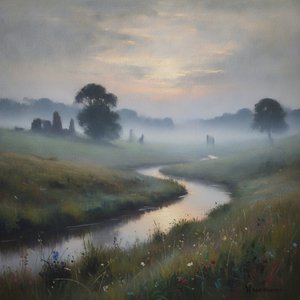
Capturing the Mist: The Timeless Beauty of British Landscape Impressionism
Explore the ethereal beauty of British Landscape Impressionism. Discover how masters captured light and mist through plein air techniques, offering a profound connection to the English countryside's timeless, atmospheric soul.

Romantic Realism's Finest: 10 Masterpieces for Your Home | OriginalUniqueArt
Explore 10 defining masterpieces of Romantic Realism! Discover Courbet, Millet & Daumier's powerful paintings—capturing emotion and social realities. Find museum-quality reproductions for your home at OriginalUniqueArt.com.

Os 10 Mestres da Paisagem Romântica: Arte para Inspirar a Sua Casa
Descubra os 10 quadros mais emblemáticos da Paisagem Romântica! Explore a história de Turner, Friedrich e outros mestres. Encontre reproduções de arte exclusivas para inspirar sua decoração em OriginalUniqueArt.com.

Evocations of Place: A Historical Journey Through Landscape Art
Explore the rich history of landscape art with OriginalUniqueArt. Discover renowned artists, movements like Impressionism & Romanticism, and expert guidance for collecting timeless pieces. Find your perfect serene escape today!

John Constable: As 25 Obras-Primas que Definem o Mestre da Paisagem Inglesa | OriginalUniqueArt
Descubra as 25 obras-primas de John Constable, o mestre da paisagem inglesa! Explore a arte romântica, cores vibrantes e histórias fascinantes por trás de 'Hay Wain' e outras pinturas icônicas. Encontre reproduções de alta qualidade para decorar sua casa com OriginalUniqueArt.com.