

 Compartilhar
 Compartilhar
 Detalhes
 Guia
Guia

 Baixar imagem
 Semelhantes
 Ver diaporama
 Estatísticas
Mappa
 Textile
- Poverty Arte
Arte Povera
 Modern
 217.0 x 163.0 cm
 MAXXI Museu Nacional de Artes do Século XXI
 Ler mais
A obra de arte exibida nesta página é protegida por leis de direitos autorais, o que significa que não podemos criar ou vender legalmente uma reprodução idêntica. Esta proteção é aplicada por meio de acordos internacionais, tais como a Convenção de Berna e pelas leis nacionais, incluindo as estabelecidas por Lei de Direitos Autorais dos EUA - Título 17.
Este método cumpre plenamente as regulamentações de direitos autorais, pois não envolve a cópia ou duplicação da obra protegida. Em vez disso, trata-se de uma reinterpretação criativa — uma nova pintura que é influenciada pela original, mas não idêntica a ela.
Giclée / Impressão de Arte
Impressão giclée ou em tela de qualidade de museu, com produção rápida e opções flexíveis de acabamento. ( Comprar pintura feita à mão Alternar para Imagem Digital)




































Escolha entre os nossos tamanhos pré-definidos que respeitam as proporções originais da obra de arte.

Insira a largura e a altura desejadas para se ajustarem à sua moldura ou parede. Uma impressão pode ser apenas cortada, nunca ampliada além da imagem original; portanto, um tamanho com proporções diferentes resultará na perda de parte da imagem. Enviamos uma maquete digital para sua aprovação antes de realizarmos a impressão. A imagem exibida nesta página não mostra o corte real — apenas a maquete o faz.
Entrega mundial () em 2 semanas, em vez das 4/5 semanas padrão. (25 Outubro)

Envio expresso gratuito para todo o mundo

Tela de Linho de Alta Qualidade

Seguro de transporte completo

Garantia de Reembolso de Impostos Alfandegários

Garantia de Fidelidade Cromática

Política de Devolução em 100 Dias (Apenas para Defeitos)

Garantia de reembolso de 100%

Oferta de desconto por quantidade
 A opção de vidro está disponível apenas para tamanhos inferiores a 110 cm

Mappa
Giclée / Impressão de Arte
Tamanho da Reprodução
-


Preço Total
€ 70
Mappa: A Geopolitical Tapestry of Power and Time
- Subject: Alighiero Boetti’s “Mappa” is far more than a decorative textile; it's a meticulously crafted cartographic representation of the world as understood at the dawn of the 1970s. The artwork functions as a complex geopolitical map, visually encoding the distribution of global power through the strategic placement and color coding of nations’ flags. It’s a poignant commentary on humanity’s attempts to impose order upon the natural world, and a meditation on the vastness of time relative to human endeavor.
- Style & Technique: The tapestry exemplifies Boetti's embrace of *Arte Povera*, an Italian art movement that championed the use of ordinary, readily available materials – in this case, meticulously embroidered textiles – to challenge traditional notions of artistic value and representation. Each flag is painstakingly stitched by Afghan embroiderers, a deliberate choice that highlights the collaborative nature of the artwork and elevates the craft itself to a profound statement about global interconnectedness. The technique relies on precise needlework, creating a textured surface that invites close examination and reveals the labor involved in its creation.
Historical Context & Conceptual Framework
Created in Kabul around 1970, “Mappa” emerged from a specific historical moment – a period of intense geopolitical tension between the United States and the Soviet Union. The stark division of the world into two opposing blocs is immediately apparent: North America and Eurasia are rendered in bold reds and whites, symbolizing the ideological and military dominance of these superpowers. This deliberate color coding isn’t merely aesthetic; it's a powerful visual metaphor for the Cold War’s defining characteristic – a world fractured along political lines. The artwork subtly yet powerfully conveys the sense that humanity was caught within a system of imposed boundaries, reflecting Boetti’s broader philosophical concerns with the artificiality of human constructs.
Symbolism & Narrative Layers
- Continental Divisions: The segmentation of the globe into continents – North America, South America, Europe, Asia, Africa, and Oceania – is a fundamental element of the work’s design. Each continent is treated as a distinct entity, further emphasized by the individual flags representing its constituent nations.
- Color as Code: The strategic use of color—red for dominant powers, white for others—is not arbitrary. It represents a complex system of encoding geopolitical information, inviting viewers to interpret the map’s meaning beyond a simple geographical representation.
- Time and Scale: Beyond its immediate political commentary, “Mappa” also engages with profound questions about time. The sheer scale of the tapestry juxtaposed against the relatively brief span of human history serves as a powerful reminder of our place within the vastness of geological time.
Emotional Impact & Collector’s Value
“Mappa” is more than just a reproduction; it's an investment in a piece of art history and a testament to Alighiero Boetti’s unique vision. The artwork evokes a sense of both awe and unease, prompting reflection on the complexities of global politics, the fragility of peace, and the enduring power of human ambition. Its intricate detail and symbolic richness make it a captivating subject for collectors and interior designers seeking to infuse their spaces with intellectual depth and artistic significance. The hand-painted reproduction faithfully captures the original’s nuanced beauty and powerful message, ensuring that this seminal work by Alighiero Boetti remains accessible and relevant for generations to come.
Perguntas e Respostas
A que fase da trajetória de Alighiero E Boetti "Mappa" pertence?
"Mappa" representa o Mature Period de Alighiero E Boetti.
Qual é a luminância de "Mappa", de Alighiero E Boetti?
As cores de "Mappa" apresentam uma luminância Bright Balance.
Por quais outros nomes ou pseudônimos Alighiero E Boetti é conhecido?
Outros nomes registrados para Alighiero E Boetti, criador de "Mappa", incluem Alighiero Boetti.
Biografia do Artista
Alighiero e Boetti: Life and Art
Early Life and Influences
Alighiero Fabrizio Boetti, known as Alighiero e Boetti, was born in Turin, Italy, in 1940. His parents were Corrado Boetti, a lawyer, and Adelina Marchisio, a violinist. He initially pursued studies at the business school of the University of Turin but soon abandoned them to dedicate himself to art.- Early theoretical interests included philosophy, alchemy, and esoterics.
- He admired authors like Hermann Hesse and painter Paul Klee.
- Boetti also showed a continuing interest in mathematics and music throughout his life.
Artistic Development & Arte Povera
In 1962, Boetti moved to Paris where he met art critic Annemarie Sauzeau, whom he married in 1964 and with whom he had two children. Working in Turin during the early 1960s alongside artists like Luciano Fabro, Mario Merz, Giulio Paolini, and Michelangelo Pistoletto, Boetti became a key figure in the Arte Povera movement.- Arte Povera emphasized using humble materials and techniques to challenge traditional art values.
- Boetti experimented with unconventional materials like plaster, masonite, plexiglass, and light fixtures.
- His first solo show was in 1967 at the Turin gallery of Christian Stein.
Key Themes & Artistic Strategies
Boetti’s work is characterized by several recurring themes:- Twinning: This concept led him to add ‘e’ (and) between his names, exploring duality and self-identity.
- Chance & Order: He often incorporated elements of chance into his work alongside structured systems like grids and maps.
- Non-Western Cultures: Extensive travels to Guatemala, Ethiopia, Sudan, Afghanistan, and Pakistan deeply influenced his art.
Major Works & Achievements
- Mappa (1971-1994): A series of embroidered maps of the world, created with the help of Afghan artisans.
- Lampada annuale (Yearly Lamp) (1966): A light bulb in a mirrored box that randomly illuminates for eleven seconds each year.
- Tavola pitagorica (Pythagorean Table): Explores mathematical permutations and visual patterns.
- Lavori postali (Postal Works) (1969-70): Series of letters sent to prominent figures in the art world, often returned undelivered due to imaginary addresses.
Historical Significance & Legacy
Alighiero e Boetti’s work challenged conventional notions of authorship and artistic control. His exploration of chance, order, and cultural exchange continues to resonate with contemporary artists. He died in Rome in 1994 at the age of 53 from a brain tumor. Boetti's legacy lies in his innovative approach to conceptual art and his ability to blend intellectual rigor with aesthetic beauty. His work remains highly influential, exhibited globally, and continues to inspire new generations of artists and thinkers.
Alighiero E Boetti
1940 - 1994
Dados Rápidos
- Name: Alighiero e Boetti
- Movement: Arte Povera, Conceptual Art
- Birth_Date: 1940
- Death_Date: 1994
- Birth_Place: Turin, Italy
- Nationality: Italian
- Date Of Birth: 1940
- Date Of Death: 1994
- Influenced_By:
- Wols
- Lucio Fontana
- Hermann Hesse
- Paul Klee
- Notable_Works: Mappa, Tavola pitagorica, Lampada annuale
Artigos Relacionados

Suzuki Harunobu: Pioneering Ukiyo-e & the Refinement of Edo Period Printmaking
Discover the revolutionary world of Suzuki Harunobu, a pioneer of ukiyo-e printmaking. Explore his exquisite nishiki-e techniques, diverse subjects & lasting impact on Japanese art history. Learn more at OriginalUniqueArt.

Floating World: The Captivating Art and Legacy of Japanese Ukiyo-e
Explore the profound beauty of Japanese Ukiyo-e. Discover the history, masters like Hokusai, and the enduring legacy of the 'Floating World' through an expert art-historical lens.

Katsushika Hokusai: As 25 Obras-Primas que Definem um Mestre da Arte Japonesa
Descubra as 25 obras-primas de Katsushika Hokusai, o mestre do ukiyo-e! Explore a história por trás de 'A Grande Onda' e outras gravuras japonesas icônicas. Encontre reproduções de arte exclusivas para decorar sua casa com elegância em OriginalUniqueArt.com.
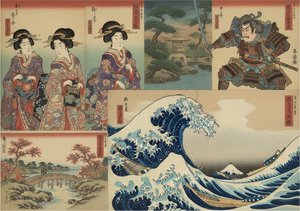
Ukiyo-e: Exploring Japan's Floating World & Enduring Artistic Legacy
Explore the captivating world of Ukiyo-e – Japan's iconic woodblock prints! Discover masters like Hokusai & Hiroshige, learn about Edo period culture, and find expert art collecting guidance at OriginalUniqueArt.

Floating World Wonders: A Definitive Guide to the Captivating Beauty of Ukiyo-e Art
Embark on a visual journey through the ephemeral beauty of Ukiyo-e. Discover the masters of the floating world, from dynamic warriors to Kabuki legends, and explore the profound cultural legacy of Japanese woodblock printing in this expert guide for art enthusiasts.