Encomendar pintura Comprar imagem em alta resolução
 Enviar
 Compartilhar
 Detalhes da obra
 Adicionar aos favoritos

 Baixar
 Semelhantes
 Raio X
 Slideshow
Hand


 Ver mais
Giclê / Impressão de Arte
Impressão giclée ou em tela de qualidade de museu, com produção rápida e opções flexíveis de acabamento.




P118B $10

P118H $10

P118W $10

P438Z $10

P508JH $12

P508YH $12

P805H $10

P805Z $10

P919BZ $10

P919G $10

P919XJ $10

P959ZH $10

P968JZ $12

W106C $8

W218G $10

W218JH $8

W218Y $10

W307PJ $10

W316G $10

W316PJ $8

W316Y $10

W398PJ $8

W4111J $10

W500HY $15

W500JH $15

W692G $12

W849H $8

W940BG $15

W953PJ $8




Escolha entre os nossos tamanhos pré-definidos que respeitam as proporções originais da obra de arte.

Você pode inserir suas próprias dimensões para se ajustar a uma moldura ou espaço específico. Se o tamanho selecionado não corresponder às proporções da imagem original, iremos recortar a obra de arte ou estender a imagem com uma borda espelhada ou preenchimento sólido. Um mockup digital será enviado para sua aprovação antes do início da produção.
Por favor, observe que a visualização na tela não reflete o recorte ou a extensão real. Apenas o mockup mostrará com precisão a composição final.
Embora tamanhos personalizados estejam disponíveis, recomendamos selecionar uma dimensão da lista predefinida para preservar as proporções originais.
Entrega mundial () em 2 semanas, em vez das 4/5 semanas padrão. (23 Julho)

Envio Expresso Gratuito para todo o Mundo

Tela de Linho Premium

Seguro de envio completo

Garantia de Reembolso de Impostos Alfandegários

Garantia de Fidelidade de Cores

Política de Devolução de 60 Dias (Apenas para Defeitos)

Garantia de 100% de Reembolso

Desconto para múltiplas unidades
 A opção de vidro está disponível apenas para tamanhos inferiores a 110 cm

Hand
Giclê / Impressão de Arte
Dimensões da Reprodução
-


Preço Total Final
-
Descrição da Obra
A Study in Precision: Albrecht Dürer’s ‘Hand’ – A Renaissance Anatomical Masterpiece
Albrecht Dürer's “Hand,” executed in 1528, transcends the simple depiction of a human appendage; it is a profound meditation on proportion, knowledge, and the very essence of observation. This remarkable woodcut, now housed within the Albrecht-Dürer-Haus in Nuremberg, stands as a testament to Dürer’s meticulous approach to art and his deep engagement with both scientific inquiry and artistic expression. More than just an anatomical study, it embodies the spirit of the Northern Renaissance – a period characterized by a renewed interest in classical ideals intertwined with burgeoning advancements in mathematics and perspective.
The image itself is strikingly austere: a single, open hand rests against a stark white background, rendered entirely in meticulously executed black ink. The hand’s form is presented with an almost clinical precision, yet it possesses a remarkable vitality. Dürer doesn't shy away from the imperfections of human anatomy – the slight wrinkles, the subtle variations in finger length – instead, he embraces them as integral to conveying the subject’s inherent complexity. The composition is anchored by a single-point perspective, drawing the viewer’s eye along a central axis towards the hand and its intricate details. This deliberate arrangement reinforces the sense of order and control that Dürer sought to achieve.
Technical Mastery: The Art of the Woodcut
Dürer's mastery of the woodcut medium is immediately apparent in “Hand.” He employed a technique known as ‘kraftwerk’ – a process involving multiple layers of carefully carved lines and washes, creating subtle tonal variations within the black ink. This allowed him to achieve a level of detail and shading previously unseen in woodcuts, pushing the boundaries of what was considered possible with this traditional printmaking method. The precision of each line is breathtaking; one can almost feel the artist’s hand guiding the sharp blade through the block. The subtle gradations of tone – achieved through careful layering and manipulation of the ink – imbue the image with a remarkable sense of volume and depth, transforming a flat surface into a convincing representation of three-dimensional form.
Furthermore, Dürer’s use of ‘bitter burn,’ a technique involving the application of acid to the woodblock before printing, created a slightly roughened texture that added another layer of visual interest. This subtle irregularity contrasts beautifully with the overall smoothness and precision of the image, highlighting the delicate balance between control and spontaneity that characterized Dürer’s artistic practice.
Symbolism and Scientific Inquiry
Beyond its technical brilliance, “Hand” is laden with symbolic meaning. The hand itself represents skill, labor, and human agency – a tangible manifestation of our capacity for creation and interaction with the world. The detailed labeling of each finger, accompanied by numerical annotations referencing proportions, speaks to Dürer’s deep engagement with scientific principles and his desire to understand the underlying structure of the human body. This wasn't merely an artistic exercise; it was a rigorous investigation into the mathematical relationships that govern form and proportion.
Drawing on the knowledge of Renaissance anatomists like Leonardo da Vinci, Dürer sought to capture not just the outward appearance of the hand but also its internal structure – its bones, muscles, and tendons. The image can be interpreted as a visual treatise on human anatomy, reflecting the humanist ideals that were shaping intellectual life during the 16th century. It’s a window into a world where art and science converged, driven by a shared pursuit of knowledge and understanding.
A Legacy of Precision: Reproduction and Inspiration
“Hand” remains an enduring symbol of Renaissance artistry and scientific inquiry. Its meticulous detail, striking composition, and profound symbolism continue to captivate viewers centuries after its creation. Today, high-quality reproductions offer a remarkable opportunity to experience the beauty and intellectual depth of this masterpiece firsthand. Whether adorning a study or gracing a gallery wall, Dürer’s “Hand” serves as a constant reminder of the power of observation, the pursuit of knowledge, and the enduring legacy of one of history's greatest artists.
Biografia do Artista
A Life Forged in Nuremberg: The Early Years and Apprenticeship
Albrecht Dürer, um nome sinônimo da arte renascentista alemã, emergiu da vibrante cidade artesanal de Nuremberg em 1471. Seu pai, Albrecht Dürer o Velho, era um renomado ourives que havia imigrado da Hungria, trazendo consigo uma linhagem enraizada na habilidade manual. Foi nesse ambiente – o cheiro de metal e a precisão meticulosa do trabalho artesanal – que as primeiras inclinações artísticas de jovem Albrecht tomaram forma. Embora seu pai visse um caminho semelhante para ele, inicialmente designando-o para o comércio familiar, logo ficou evidente que Albrecht possuía um talento excepcional para desenhar. Aos treze anos, ele passou para o ateliê de Michael Wolgemut, o principal artista de Nuremberg na época. Isso não foi apenas treinamento técnico; foi imersão em um mundo de manuscritos iluminados, painéis pintados e – crucialmente – a emergente arte da ilustração em madeira. O volume massivo de trabalho produzido pelo ateliê de Wolgemut, incluindo as extensas ilustrações para o *Crônica de Nuremberg*, forneceu a Dürer uma base incomparável em design, composição e na mecânica da criação de imagens. Um notável autorretrato em ponto de prata de 1484, criado quando ele tinha apenas adolescentes, serve como evidência impressionante de seu talento precoce – um testemunho de uma identidade artística emergente já se formando.A Influência Italiana e a Maturação Artística
A ambição de Dürer ia muito além dos limites de Nuremberg. Impulsionado por uma curiosidade insaciável e um desejo de dominar a arte da pintura, ele embarcou em sua primeira viagem à Itália em 1494. Isso não foi apenas uma viagem turística; foi uma peregrinação ao coração do Renascimento. Ele encontrou obras de mestres como Rafael, Giovanni Bellini e Leonardo da Vinci – artistas que estavam redefinindo as possibilidades da forma, da perspectiva e da expressão humana. O impacto dessa exposição foi profundo. Dürer absorveu os motivos clássicos, a harmonia composicional e as sutis técnicas de sfumato que caracterizavam a arte italiana, mas nunca abandonou sua sensibilidade do Norte Europeu para a precisão meticulosa e a profundidade simbólica. Uma segunda peregrinação à Itália entre 1505 e 1507 permitiu-lhe refinar ainda mais essas influências, estudando as ruínas romanas antigas e aprofundando sua compreensão da anatomia e da proporção. Essa síntese de tradições norteuropeias e idealismo italiano tornou-se a marca registrada do estilo artístico único de Dürer.Dominando os Meios: Pintura, Gravura e Xilogravura
Dürer era mestre em múltiplos meios, cada um oferecendo-lhe diferentes vias para a expressão criativa. Suas pinturas, embora em menor número do que suas gravuras, demonstram um domínio notável da tinta a óleo e uma capacidade de capturar tanto a semelhança física quanto a profundidade psicológica. Obras como *A Ceia do Pálio* revelam uma paleta vibrante influenciada pelo colorido veneziano. No entanto, no reino da gravura – particularmente a gravura em água-forte e xilogravura – Dürer revolucionou a prática artística, elevando essas técnicas de meros métodos reprodutivos a formas de arte independentes, capazes de transmitir narrativas complexas e emoções profundas. A série *O Apocalipse* (1498), uma coleção de quatorze xilogravuras ilustrando o Livro do Apocalipse, demonstrou seu domínio desse meio, apesar das limitações inerentes. Gravuras posteriores como *Melancolia I* (1514) e *São Jerônimo em seu Estúdio* (1514) são testemunhos de sua habilidade incomparável – composições intrincadas cheias de significado simbólico e executadas com precisão impressionante. Ele não apenas representou a realidade; ele imbuiu-a com camadas de significado intelectual e espiritual.Um Teórico e Inovador: O Legado de Albrecht Dürer
Dürer não era apenas um artista; ele era um estudioso, teórico e inovador que buscava entender os princípios subjacentes à criação artística. Acreditava na base matemática da arte e dedicou-se a estabelecer uma abordagem científica para a representação. Seus tratados sobre geometria, proporção e anatomia humana – mais notavelmente *Quatro Livros sobre Proporção Humana* (1528) – foram pioneiros em sua época, demonstrando seu compromisso com a observação rigorosa e a análise racional. Esses escritos não eram apenas exercícios acadêmicos; eles tinham como objetivo elevar o status dos artistas de meros artesãos a praticantes intelectuais. O legado de Dürer se estende muito além de suas obras individuais. Ele conectou as tradições norteuropeias com os ideais do Renascimento italiano, introduzindo motivos clássicos na arte do Norte, ao mesmo tempo em que mantinha seu caráter distinto. Suas contribuições teóricas ajudaram a estabelecer um novo quadro para a prática artística, inspirando gerações de artistas com sua habilidade técnica, espírito inovador e visão profunda. Ele permanece, até hoje, uma das figuras mais importantes da história da arte ocidental.Influências e Impacto Duradouro
- Michael Wolgemut: O primeiro mentor de Dürer, fornecendo habilidades básicas em desenho, pintura e ilustração em madeira.
- Leonardo da Vinci: Inspirou a exploração de Dürer da anatomia, perspectiva e sfumato – o suave mesclado de tons.
- Rafael: Influenciou a harmonia composicional e as formas idealizadas de Dürer.
- Giovanni Bellini: Contribuiu para a compreensão de Dürer do colorido veneziano e das tradições da pintura italiana.
A influência de Dürer ressoa através dos séculos de história da arte. Sua precisão meticulosa, seu uso inovador da gravura e seus escritos teóricos continuam a inspirar artistas e estudiosos até hoje. Ele demonstrou que a arte poderia ser tanto tecnicamente magistral quanto intelectualmente rigorosa – um legado que continua a moldar o cenário artístico de hoje.
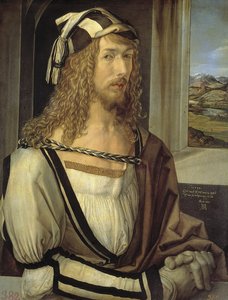
Albrecht Dürer
1471 - 1528 , Alemanha
Informações Rápidas
- Artistic Movement Or Style: Renascimento Norteuropeu
- Artists Or Movements Influenced By This Artist:
- Michael Wolgemut
- Renascimento Italiano
- Artists Who Influenced This Artist:
- Leonardo da Vinci
- Rafael
- Giovanni Bellini
- Date Of Birth: 21 maio 1471
- Date Of Death: 6 abr 1528
- Full Name: Albrecht Dürer
- Nationality: Alemão
- Notable Artworks:
- Apocalipse
- Melancolia I
- São Jerônimo
- Place Of Birth: Nuremberg, Alemanha
Artigos Relacionados

Albrecht Dürer: A Renaissance Master's Legacy of Innovation and Self-Portraiture
Explore the life & art of Albrecht Dürer, a pivotal German Renaissance master. Discover his groundbreaking printmaking techniques, iconic self-portraits, and lasting influence on Western art history. A deep dive into innovation & symbolism.
Albrecht Altdorfer: Innovation, Spirituality & the Northern Renaissance Landscape
Explore the groundbreaking art of Albrecht Altdorfer, a pioneer of the Northern Renaissance's Danube School. Discover his innovative landscapes, spiritual symbolism & lasting influence on German painting.
Portrayals of Power: Aristocratic Status & Visual Representation in European Art (16th-19th Centuries)
Explore the fascinating history of aristocratic status depicted through European art (16th-19th centuries). Discover how artists reflected—and shaped—societal hierarchies. Expert insights for discerning collectors.
Renaissance Visions: Exploring Themes & Techniques in 16th-Century Painting
Explore the captivating world of Renaissance painting! Discover key themes, masterful techniques & iconic artworks from Leonardo da Vinci to Raphael. Learn about Humanism's influence and the stylish departure of Mannerism.
Renaissance Visions: Exploring Artistic Innovation & Cultural Shifts in 16th Century Art
Explore the artistic revolution of the 16th-century Renaissance! Discover humanist ideals, groundbreaking techniques & iconic masterpieces by Raphael, Michelangelo & more. A deep dive into art history.