

 Visualizar em escala
 Enviar
 Compartilhar
 Ver detalhes
 Guia de Obras do Aluno

 Baixar imagem
 Semelhantes
 Raio X
 Apresentação de slides
 Estatísticas
Queen Bianca
 Acrylic On Canvas
- WallArt
- Albert Edelfelt, Queen Bianca
 1877
1877- Renaissance
 75.0 x 96.0 cm
 Ateneum Art Museum
 Ver mais
Reprodução em Óleo Feita à Mão
Óleo sobre tela pintado à mão no tamanho e moldura de sua escolha, feito sob encomenda pelos nossos artistas. ( Alternar para Impressão Ver Imagem Digital)




P118B €10

P118H €10

P118W €10

P438Z €10

P508JH €12

P508YH €12

P805H €10

P805Z €10

P919BZ €10

P919G €10

P919XJ €10

P959ZH €10

P968JZ €12

W106C €8

W218G €10

W218JH €8

W218Y €10

W307PJ €10

W316G €10

W316PJ €8

W316Y €10

W398PJ €8

W4111J €10

W500HY €15

W500JH €15

W692G €12

W849H €8

W940BG €15

W953PJ €8




Escolha entre os nossos tamanhos pré-definidos que respeitam as proporções originais da obra de arte.

Digite a largura e a altura de que necessita, para se ajustar à sua moldura ou à sua parede. Esta obra é pintada à mão, por isso, para um tamanho com uma proporção diferente, o artista pode pintar um pouco mais ao redor da imagem ou cortar um pouco — você escolhe. Enviamos-lhe uma maquete digital para aprovação antes de a pintura começar. A imagem exibida nesta página não mostra o resultado real — apenas a maquete mostra.
Após o pedido, a equipa OriginalUniqueArt.com enviará um e-mail ao cliente para solicitar instruções e fornecer uma prévia do esboço.
Entrega mundial () em 3 a 4 semanas, em vez das 5 semanas padrão. (20 Outubro). Sem comprometer a qualidade.

Envio expresso gratuito para todo o mundo

Tela de Linho Premium

Seguro de transporte total

Garantia de Reembolso de Impostos Alfandegários

Garantia de Fidelidade de Cor

Política de Devolução em 100 Dias (Apenas para Defeitos)

Garantia de reembolso de 100%

Desconto para múltiplas unidades
 A opção de vidro está disponível apenas para tamanhos inferiores a 110 cm

Queen Bianca
Técnica de Reprodução
Dimensões da Reprodução
-


Preço Total
€ 262
The Enigmatic Majesty of Queen Bianca
Albert Edelfelt’s “Queen Bianca,” painted in 1877, isn't merely a portrait; it’s a carefully constructed tableau of Victorian ideals and nascent Finnish national identity. The painting captures a woman radiating quiet authority and profound tenderness – a figure both regal and intimately maternal. At first glance, the scene presents a domestic intimacy: a woman, identified as Queen Bianca (a reference to the Shakespearean character), cradles her child in a gesture of unwavering devotion. However, beneath this surface serenity lies a complex layering of symbolism and historical context, reflecting Edelfelt’s ambition to elevate Finnish art onto an international stage.
The composition itself is meticulously balanced. The woman, rendered with a subtle realism that eschews the overly idealized depictions common in court portraits, occupies the central space, her gaze direct yet gentle. Her attire – a flowing white gown and delicate jewelry – speaks to her status while simultaneously conveying an understated elegance. Crucially, she’s not posed dramatically; instead, she appears caught in a moment of quiet contemplation, suggesting a deeper narrative beyond simple motherhood. The child, nestled securely within her arms, mirrors her composure, hinting at a lineage of strength and grace. To the right, a richly upholstered couch provides a sense of domestic comfort, while a chair positioned near the left edge subtly introduces an element of formality, anchoring the scene within a refined setting.
A Painter’s Journey: Edelfelt's Artistic Evolution
Albert Edelfelt’s artistic trajectory is inextricably linked to his evolving understanding of Finnish identity. Born in Porvoo, Finland, in 1854, he initially trained in Antwerp and Paris, immersing himself in the traditions of historical painting – a genre favored by the academies of those eras. However, it was his time in France that exposed him to the burgeoning Impressionist movement, influencing his approach to light, color, and brushwork. Returning to Finland, Edelfelt skillfully blended these diverse influences, creating a style characterized by its naturalism, emotional depth, and meticulous attention to detail. “Queen Bianca” exemplifies this synthesis; it’s both rooted in academic training and infused with the spirit of modern artistic experimentation.
The painting's creation coincided with a period of significant social and political change in Finland. The country was transitioning from Russian rule towards independence, and artists like Edelfelt sought to capture the essence of Finnish culture and values. “Queen Bianca” can be interpreted as an allegory for the nation itself – a symbol of strength, resilience, and maternal care. The woman’s dignified bearing reflects the aspirations of a newly independent Finland, while her tender embrace embodies the enduring values of family and community.
Technique and Material: A Study in Detail
Edelfelt's mastery lies not only in his composition but also in his technical execution. He employed a layering technique, building up the image through numerous thin glazes of oil paint, creating a luminous surface that captures subtle shifts in light and shadow. The brushwork is remarkably delicate, particularly evident in the rendering of the woman’s gown and the child's clothing – each fabric texture meticulously depicted with remarkable precision. The use of color is restrained yet evocative; soft blues, greens, and creams dominate the palette, creating a sense of serenity and warmth.
Notably, Edelfelt utilized a technique known as *alla prima*, working directly onto the canvas without extensive underpainting. This approach allowed him to capture the immediacy of the moment and imbue the painting with a palpable sense of emotion. The subtle variations in tone and color – particularly in the shadows cast by the furniture – contribute significantly to the painting’s atmospheric depth and realism. The choice of canvas, likely linen, further enhanced the richness and texture of the work.
Symbolism and Emotional Resonance
Beyond its technical merits, “Queen Bianca” is rich in symbolic meaning. The child represents not only lineage but also the future – a symbol of hope and continuity for Finland. The woman’s gaze, direct and unwavering, conveys a sense of quiet confidence and authority. She isn't merely a mother; she embodies strength, wisdom, and resilience. The setting itself—a comfortable yet refined room—suggests a stable and secure environment, reflecting the values that Edelfelt sought to promote through his art.
Ultimately, “Queen Bianca” is a powerful meditation on motherhood, national identity, and the enduring human spirit. It’s a painting that invites contemplation, prompting viewers to consider the complex interplay of tradition and modernity, strength and tenderness, and the timeless beauty of family bonds. Reproductions of this iconic work offer a captivating glimpse into Edelfelt's artistic vision and provide a poignant reminder of Finland’s rich cultural heritage.
Perguntas e Respostas
Por que o status de direitos autorais de "Queen Bianca" é como é?
O status de direitos autorais de "Queen Bianca" - em domínio público - seus direitos autorais expiraram - decorre do falecimento do artista em 1905.
"Queen Bianca" é mais claro ou mais escuro no geral?
"Queen Bianca" possui deep_shadow de brilho geral, e sua luminância é Soft Shadow.
De que forma o estilo de "Queen Bianca" se relaciona com a época de seu criador?
Em "Queen Bianca" de Albert Edelfelt, o movimento Albert Edelfelt, Queen Bianca encontra a era Século XIX.
Biografia do Artista
early life and education
Albert Gustaf Aristides Edelfelt, a luminary of Finnish art, was born on July 21, 1854, in Porvoo, Finland—a city steeped in Swedish heritage. His parents, Carl Albert Edelfelt, a distinguished diplomat, and Alexandra Edelfelt (née Brandt), possessed an unwavering devotion to the arts themselves. From a young age, Albert exhibited an innate fascination with painting, propelling him toward formal studies at the Drawing School of the Finnish Art Society in 1869. This formative experience instilled within him a profound appreciation for observation and meticulous craftsmanship—qualities that would characterize his artistic endeavors throughout his life.artistic journey
Edelfelt’s artistic trajectory unfolded across several prestigious institutions, each contributing to his burgeoning skillset: Antwerp Academy of Art (1873-74), where he immersed himself in the grandeur of history painting, honing his technique under Jean-Léon Gérôme's watchful eye. Subsequently, École nationale des beaux-arts in Paris (1874-78) solidified his artistic vision, guided by Gérôme’s unwavering commitment to realism and compositional mastery. A brief foray into Saint Petersburg (1881-82) exposed him to the vibrant currents of Russian art, broadening his horizons and enriching his understanding of diverse aesthetic traditions.rise to prominence and notable works
Edelfelt's ascent to artistic renown commenced with a resounding victory at the Paris Universal Exposition of 1889—a triumph underscored by a gold medal awarded for his exceptional talent. Among his most celebrated creations stand portraits imbued with palpable emotion and psychological depth, notably “Portrait of Louis Pasteur,” which garnered him the Legion of Honor in recognition of its artistic merit. Furthermore, “Young Woman in Her Boudoir” captures the delicate beauty of femininity with remarkable sensitivity—a testament to Edelfelt’s ability to convey nuanced emotions through subtle brushstrokes. Landscapes rendered with breathtaking precision and evocative atmosphere, such as “Under the Birches,” exemplify his mastery of capturing the essence of Finnish nature—works that resonate powerfully with viewers today.legacy and impact
Albert Edelfelt stands as a cornerstone of Finnish realism, profoundly influencing subsequent generations of artists. His unwavering dedication to portraying life truthfully served as an inspiration for luminaries like Akseli Gallen-Kallela and Gunnar Berndtson, who achieved international acclaim in Paris under his mentorship—a legacy that continues to shape the artistic landscape of Finland. Edelfelt’s canvases reside within esteemed museums worldwide, including Ateneum Museum in Helsinki, where they serve as enduring symbols of Finnish cultural heritage. To commemorate his 150th birth anniversary, a €100 Albert Edelfelt commemorative coin was issued—a tangible expression of gratitude for his indelible contribution to the realm of art. key artworks and museum collections: discover more:
Albert Edelfelt
1854 - 1905 , Finlândia
Informações Rápidas
- Artistic Movement Or Style: Realist
- Artists Or Movements Influenced By This Artist:
- Akseli Gallen-Kallela
- Gunnar Berndtson
- Artists Who Influenced This Artist: ['Jean-Léon Gérôme']
- Date Of Birth: Jul 21, 1854
- Date Of Death: Aug 18, 1905
- Full Name: Albert Gustaf Aristides Edelfelt
- Nationality: Finnish
- Notable Artworks:
- Portrait of Louis Pasteur
- Young woman in her boudoir
- Under the birches
- Place Of Birth: Porvoo, Finland
Artigos Relacionados

Akseli Gallen-Kallela: Shaping Finnish Identity Through National Romanticism & Symbolism
Explore the captivating world of Akseli Gallen-Kallela, Finland's iconic National Romantic painter. Discover his symbolic landscapes, Kalevala illustrations & lasting impact on Finnish identity. Expert analysis & high-quality reproductions at OriginalUniqueArt.

Albert Goodwin: Capturing Victorian Light & Atmosphere – A Study in Landscape Painting
Explore the captivating landscapes of Albert Goodwin (1845-1932), a celebrated Victorian watercolourist influenced by Turner & Ruskin. Discover his techniques, prolific collection, and lasting legacy in British art history.
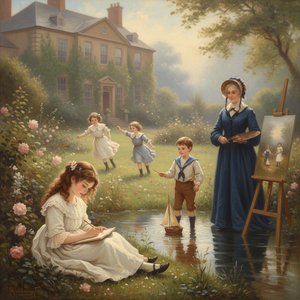
James Sant: Capturing Victorian Childhood & the Evolving Landscape of British Genre Painting
Explore the life & art of James Sant (1820-1916), renowned Victorian portraitist to Queen Victoria. Discover his captivating depictions of childhood, landscapes, and aristocratic society. Learn about his legacy & find fine art reproductions.
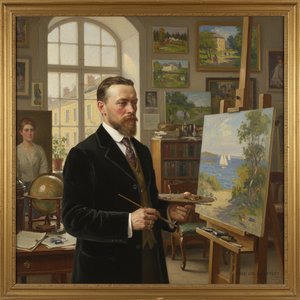
Albert Edelfelt: A Pioneer of Finnish Realism & International Impressionist Circles
Explore the life & work of Albert Edelfelt, a pioneering Finnish Realist painter who bridged Impressionism & national identity. Discover his masterpieces and lasting influence on art history.

The Refined Aesthetic of Victorian Illustration: A Study in Narrative & Technique
Explore the captivating world of Victorian illustration! Discover Pre-Raphaelite influences, key artists like Rossetti & Stephens, and the era's rich narrative detail. A deep dive for art enthusiasts.
