

 Visualizar na parede
 Compartilhar
 Compartilhar
 Detalhes
 Guia
Guia

 Baixar imagem
 Semelhantes
 Raio X
 Ver diaporama
 Estatísticas
Jean-Baptiste Pasteur


 Ler mais
Giclée / Impressão de Arte
Impressão giclée ou em tela de qualidade de museu, com produção rápida e opções flexíveis de acabamento. ( Comprar pintura feita à mão Alternar para Imagem Digital)




P118B €10

P118H €10

P118W €10

P438Z €10

P508JH €12

P508YH €12

P805H €10

P805Z €10

P919BZ €10

P919G €10

P919XJ €10

P959ZH €10

P968JZ €12

W106C €8

W218G €10

W218JH €8

W218Y €10

W307PJ €10

W316G €10

W316PJ €8

W316Y €10

W398PJ €8

W4111J €10

W500HY €15

W500JH €15

W692G €12

W849H €8

W940BG €15

W953PJ €8




Escolha entre os nossos tamanhos pré-definidos que respeitam as proporções originais da obra de arte.

Insira a largura e a altura desejadas para se ajustarem à sua moldura ou parede. Uma impressão pode ser apenas cortada, nunca ampliada além da imagem original; portanto, um tamanho com proporções diferentes resultará na perda de parte da imagem. Enviamos uma maquete digital para sua aprovação antes de realizarmos a impressão. A imagem exibida nesta página não mostra o corte real — apenas a maquete o faz.
Entrega mundial () em 2 semanas, em vez das 4/5 semanas padrão. (26 Outubro)

Envio expresso gratuito para todo o mundo

Tela de Linho de Alta Qualidade

Seguro de transporte completo

Garantia de Reembolso de Impostos Alfandegários

Garantia de Fidelidade Cromática

Política de Devolução em 100 Dias (Apenas para Defeitos)

Garantia de reembolso de 100%

Oferta de desconto por quantidade
 A opção de vidro está disponível apenas para tamanhos inferiores a 110 cm

Jean-Baptiste Pasteur
Giclée / Impressão de Arte
Tamanho da Reprodução
-


Preço Total
€ 70
A Portrait of Genius: Albert Edelfelt’s Vision of Louis Pasteur
The painting of Louis Pasteur by Albert Edelfelt stands as an emblem of scientific achievement and humanist compassion—a testament to the transformative power of art when allied with intellectual curiosity. Completed in 1881, it transcends mere representation; instead, Edelfelt captured not just Pasteur’s physical likeness but also his profound dedication to unraveling the mysteries of life and combating disease. This remarkable artwork resides within the Musée d’Orsay in Paris, offering visitors a chance to contemplate its enduring legacy.The Artist's Approach: Collaboration and Observation
Albert Edelfelt wasn’t merely commissioned to depict Pasteur; he actively participated in shaping the portrait’s narrative. Driven by an unwavering belief in the importance of scientific inquiry, Edelfelt meticulously documented Pasteur’s laboratory environment—a deliberate decision that underscored his commitment to portraying Pasteur as a man deeply engaged with his craft. As evidenced by Edelfelt's correspondence with his mother, he undertook extensive preparatory sketches and studies, capturing Pasteur’s posture and facial expressions with painstaking accuracy. These detailed observations informed the artist’s vision, resulting in an image imbued with palpable sincerity and intellectual depth.Style and Technique: Impressionistic Realism
Edelfelt’s style exemplifies a harmonious blend of impressionistic realism—a hallmark of his era—characterized by luminous brushstrokes and subtle tonal gradations. He skillfully employed oil paints on canvas to achieve a velvety texture that conveys both the solidity of Pasteur's physique and the ethereal quality of scientific contemplation. The artist’s masterful use of light creates an atmosphere of quiet intensity, drawing viewers into Pasteur’s world and emphasizing his serene gaze—a symbol of unwavering resolve and intellectual perseverance. Edelfelt’s technique reflects a broader artistic movement that sought to capture fleeting moments of experience while maintaining fidelity to observed reality.Historical Context: Science and Art in Belle Époque Paris
The painting emerged during the Belle Époque, a period marked by unprecedented optimism and cultural flourishing in Paris—a time when science and art intertwined to celebrate human progress. Pasteur’s groundbreaking discoveries in microbiology revolutionized medicine and challenged prevailing scientific dogma, establishing him as a beacon of intellectual brilliance. Edelfelt recognized this significance, elevating Pasteur's portrait to the status of an icon—a visual embodiment of the virtues prized by the Parisian intelligentsia. The artwork served as a powerful affirmation of the humanist spirit that permeated Belle Époque society.Symbolism: Calm Reflection and Intellectual Integrity
Beyond its technical prowess, Edelfelt’s portrait resonates with symbolic meaning. Pasteur's seated posture exudes composure and thoughtfulness—a deliberate gesture conveying his unwavering dedication to scientific pursuits. His clasped hands symbolize both physical strength and mental focus—representing the artist’s conviction that intellectual integrity is paramount to achieving profound understanding. The inclusion of a simple chair underscores the importance of solitude and contemplation—essential conditions for fostering creativity and pursuing knowledge with earnestness.Emotional Impact: A Legacy of Inspiration
The painting continues to inspire admiration for its ability to convey both scientific rigor and human compassion. It serves as a poignant reminder that intellectual curiosity can coexist harmoniously with empathy—a message particularly relevant in our contemporary world. Edelfelt’s portrait transcends mere depiction; it embodies the spirit of inquiry and perseverance—qualities celebrated throughout history as catalysts for transformative change. Its enduring presence within the Musée d’Orsay ensures that Louis Pasteur's image—and Albert Edelfelt’s masterful artistic vision—will continue to captivate audiences for generations to come.Perguntas e Respostas
Posso visualizar "Jean-Baptiste Pasteur", de Albert Edelfelt antes de fazer o pedido?
Para visualizar uma reprodução de "Jean-Baptiste Pasteur", de Albert Edelfelt, acesse a página de Pré-visualização da obra.
As cores de "Jean-Baptiste Pasteur", de Albert Edelfelt são saturadas ou suaves?
As cores de "Jean-Baptiste Pasteur", de Albert Edelfelt possuem uma saturação Subtle Color. A saturação descreve o quão vívidas ou suaves são as cores.
Quem criou "Jean-Baptiste Pasteur" e quando?
"Jean-Baptiste Pasteur" foi criado por Albert Edelfelt em 1881.
Biografia do Artista
early life and education
Albert Gustaf Aristides Edelfelt, a luminary of Finnish art, was born on July 21, 1854, in Porvoo, Finland—a city steeped in Swedish heritage. His parents, Carl Albert Edelfelt, a distinguished diplomat, and Alexandra Edelfelt (née Brandt), possessed an unwavering devotion to the arts themselves. From a young age, Albert exhibited an innate fascination with painting, propelling him toward formal studies at the Drawing School of the Finnish Art Society in 1869. This formative experience instilled within him a profound appreciation for observation and meticulous craftsmanship—qualities that would characterize his artistic endeavors throughout his life.artistic journey
Edelfelt’s artistic trajectory unfolded across several prestigious institutions, each contributing to his burgeoning skillset: Antwerp Academy of Art (1873-74), where he immersed himself in the grandeur of history painting, honing his technique under Jean-Léon Gérôme's watchful eye. Subsequently, École nationale des beaux-arts in Paris (1874-78) solidified his artistic vision, guided by Gérôme’s unwavering commitment to realism and compositional mastery. A brief foray into Saint Petersburg (1881-82) exposed him to the vibrant currents of Russian art, broadening his horizons and enriching his understanding of diverse aesthetic traditions.rise to prominence and notable works
Edelfelt's ascent to artistic renown commenced with a resounding victory at the Paris Universal Exposition of 1889—a triumph underscored by a gold medal awarded for his exceptional talent. Among his most celebrated creations stand portraits imbued with palpable emotion and psychological depth, notably “Portrait of Louis Pasteur,” which garnered him the Legion of Honor in recognition of its artistic merit. Furthermore, “Young Woman in Her Boudoir” captures the delicate beauty of femininity with remarkable sensitivity—a testament to Edelfelt’s ability to convey nuanced emotions through subtle brushstrokes. Landscapes rendered with breathtaking precision and evocative atmosphere, such as “Under the Birches,” exemplify his mastery of capturing the essence of Finnish nature—works that resonate powerfully with viewers today.legacy and impact
Albert Edelfelt stands as a cornerstone of Finnish realism, profoundly influencing subsequent generations of artists. His unwavering dedication to portraying life truthfully served as an inspiration for luminaries like Akseli Gallen-Kallela and Gunnar Berndtson, who achieved international acclaim in Paris under his mentorship—a legacy that continues to shape the artistic landscape of Finland. Edelfelt’s canvases reside within esteemed museums worldwide, including Ateneum Museum in Helsinki, where they serve as enduring symbols of Finnish cultural heritage. To commemorate his 150th birth anniversary, a €100 Albert Edelfelt commemorative coin was issued—a tangible expression of gratitude for his indelible contribution to the realm of art. key artworks and museum collections: discover more:
Albert Edelfelt
1854 - 1905 , Finlândia
Dados Rápidos
- Artistic Movement Or Style: Realist
- Artists Or Movements Influenced By This Artist:
- Akseli Gallen-Kallela
- Gunnar Berndtson
- Artists Who Influenced This Artist: ['Jean-Léon Gérôme']
- Date Of Birth: Jul 21, 1854
- Date Of Death: Aug 18, 1905
- Full Name: Albert Gustaf Aristides Edelfelt
- Nationality: Finnish
- Notable Artworks:
- Portrait of Louis Pasteur
- Young woman in her boudoir
- Under the birches
- Place Of Birth: Porvoo, Finland
Artigos Relacionados
The Enduring Legacy of French Art: Movements, Masters & Cultural Impact
Explore the rich history of French art, from the Salon to Impressionism & beyond. Discover iconic masters, key movements, and expert guidance for collecting timeless masterpieces. OriginalUniqueArt.

Charles-André van Loo: A Study in Rococo Portraiture & the French Court's Artistic Dynamics
Explore the elegant world of Charles-André van Loo, a master of Rococo portraiture at the French court. Discover his life, techniques, and enduring influence on 18th-century art. Hand-painted reproductions available.
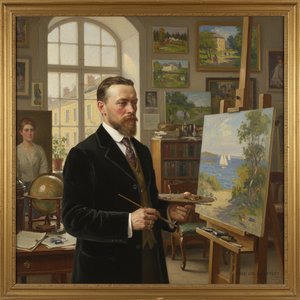
Albert Edelfelt: A Pioneer of Finnish Realism & International Impressionist Circles
Explore the life & work of Albert Edelfelt, a pioneering Finnish Realist painter who bridged Impressionism & national identity. Discover his masterpieces and lasting influence on art history.

Anne-Louis Girodet: Bridging Neoclassicism & Romanticism with Emotional Truth
Explore the captivating world of Anne-Louis Girodet, a pivotal figure bridging Neoclassicism & Romanticism. Discover his masterpieces and unique artistic vision with OriginalUniqueArt.

Os 10 Ícones do Impressionismo para Inspirar sua Decoração | OriginalUniqueArt
Descubra os 10 quadros impressionistas mais icônicos de Monet, Renoir e Degas! Explore a história, cores vibrantes e técnicas revolucionárias do Impressionismo. Encontre reproduções de arte exclusivas para inspirar sua decoração em OriginalUniqueArt.com.
