

 Visualizar em escala
 Enviar
 Compartilhar
 Ver detalhes
 Guia de Obras do Aluno

 Baixar imagem
 Semelhantes
 Raio X
 Apresentação de slides
 Estatísticas
Western Landscape

 Ver mais
Giclée / Impressão de Arte
Impressão giclée ou em tela de qualidade de museu, com produção rápida e opções flexíveis de acabamento. ( Encomendar reprodução pintada à mão Ver Imagem Digital)




P118B €10

P118H €10

P118W €10

P438Z €10

P508JH €12

P508YH €12

P805H €10

P805Z €10

P919BZ €10

P919G €10

P919XJ €10

P959ZH €10

P968JZ €12

W106C €8

W218G €10

W218JH €8

W218Y €10

W307PJ €10

W316G €10

W316PJ €8

W316Y €10

W398PJ €8

W4111J €10

W500HY €15

W500JH €15

W692G €12

W849H €8

W940BG €15

W953PJ €8




Escolha entre os nossos tamanhos pré-definidos que respeitam as proporções originais da obra de arte.

Digite a largura e a altura de que necessita, para se ajustar à sua moldura ou à sua parede. Uma impressão só pode ser cortada, nunca ampliada além da imagem original, pelo que um tamanho com uma proporção diferente perderá parte da imagem. Enviamos-lhe uma maquete digital para aprovação antes de imprimirmos qualquer coisa. A imagem apresentada nesta página não mostra o corte real — apenas a maquete o faz.
Entrega mundial () em 2 semanas, em vez das 4/5 semanas padrão. (24 Outubro)

Envio expresso gratuito para todo o mundo

Tela de Linho Premium

Seguro de transporte total

Garantia de Reembolso de Impostos Alfandegários

Garantia de Fidelidade de Cor

Política de Devolução em 100 Dias (Apenas para Defeitos)

Garantia de reembolso de 100%

Desconto para múltiplas unidades
 A opção de vidro está disponível apenas para tamanhos inferiores a 110 cm

Western Landscape
Giclée / Impressão de Arte
Dimensões da Reprodução
-


Preço Total
€ 70
A Majestic Vision of the American West
This captivating landscape painting by Albert Bierstadt embodies the spirit of 19th-century America’s westward expansion and its romanticized view of the frontier. The scene unfolds across a vast expanse of plains, dramatically framed by towering mountains that pierce the sky. Scattered figures – small in scale yet present – suggest human interaction with this immense natural world, hinting at exploration, settlement, or simply quiet contemplation. Bierstadt masterfully captures the grandeur and untamed beauty of the western landscape, inviting viewers to share in a sense of awe and wonder.Hudson River School Luminosity
Bierstadt was a leading figure in the Hudson River School, an American art movement celebrated for its realistic yet romantic depictions of natural scenery. This painting exemplifies the school’s signature style: meticulous detail combined with dramatic lighting effects – known as luminism. Notice how Bierstadt uses light not merely to illuminate, but to imbue the scene with a spiritual quality. The clouds are rendered with an almost ethereal glow, and sunlight seems to radiate from within the landscape itself. This technique elevates the painting beyond a simple representation of nature; it becomes a celebration of its sublime power and beauty. His technique involved building up layers of paint to create depth and texture, often utilizing glazing techniques for luminous effects.Symbolism & Historical Context
Beyond its aesthetic appeal, this artwork carries significant historical weight. Created during a period of rapid westward expansion in the United States, it reflects both the optimism and the complexities of Manifest Destiny – the belief that American settlers were destined to expand across the continent. The painting’s grandeur served to inspire settlement and investment in the West, while simultaneously presenting an idealized vision that often overlooked the displacement of Native American populations. The inclusion of figures, though small, subtly acknowledges human presence within this vast wilderness, hinting at both opportunity and potential conflict. Bierstadt's paintings were instrumental in shaping public perception of the West, fostering a sense of national pride and encouraging further exploration.Emotional Resonance & Interior Design
This painting evokes feelings of tranquility, awe, and reverence for nature. Its expansive scale and dramatic composition create an immersive experience, drawing viewers into the heart of the American landscape. For interior design, a reproduction of this artwork would serve as a stunning focal point in a variety of settings – from grand living rooms to sophisticated studies. The warm tones and luminous quality complement both traditional and contemporary décor styles, adding a touch of timeless elegance and inspiring contemplation.- Ideal for spaces seeking a sense of grandeur.
- Complements neutral color palettes with its rich earth tones.
- Adds a historical depth and artistic sophistication to any room.
Perguntas e Respostas
Por quais outros nomes Albert Bierstadt é conhecido(a)?
Albert Bierstadt também é conhecido como Henry Bierstadt, Edward Bierstadt, Charles Bierstadt.
"Western Landscape" está livre de direitos autorais?
Quanto aos direitos autorais, "Western Landscape" está em em domínio público - seus direitos autorais expiraram.
Qual é a luminosidade de "Western Landscape" de Albert Bierstadt?
As cores de "Western Landscape" apresentam uma luminância Gentle Luminance.
Biografia do Artista
A Pioneer of the American West: The Life and Art of Albert Bierstadt
Albert Bierstadt’s story is deeply intertwined with the formation of America itself, a narrative beginning in Prussia in 1830 and culminating in his death in New York City in 1902. His family's emigration to New Bedford, Massachusetts, when he was just one year old, planted the seeds for a lifelong fascination with the landscapes that would define his artistic legacy. Initially self-taught, sketching with crayons as a youth, Bierstadt recognized the need for formal training and embarked on studies in Düsseldorf, Germany, in 1853. This European grounding proved crucial, providing him with technical mastery—a meticulous attention to detail and a sophisticated understanding of light and atmosphere—that he would later apply to his depictions of the American wilderness. It wasn’t merely replication that Bierstadt sought; it was an emotional resonance, a way to convey the sublime power and beauty of nature.Capturing the Majesty: The Hudson River School and Beyond
Upon his return to the United States in 1857, Bierstadt quickly became associated with the Hudson River School, a group of artists dedicated to portraying the American landscape with both accuracy and romantic idealism. While sharing their reverence for nature, Bierstadt soon distinguished himself through his ambitious scale and dramatic compositions. He wasn’t content to simply paint pretty pictures; he aimed to create immersive experiences that transported viewers to the heart of the wilderness. His breakthrough came in 1858 with a Swiss landscape exhibited at the National Academy of Design, earning him immediate acclaim and honorary membership. However, it was his subsequent expeditions westward—first with land surveyor Frederick W. Lander in 1859, then with author Fitz Hugh Ludlow in 1863 to Yosemite Valley—that truly ignited his artistic vision. These journeys weren’t just about observation; they were about immersion, allowing Bierstadt to absorb the grandeur of the Rocky Mountains, the vastness of the plains, and the awe-inspiring scale of canyons and waterfalls. He meticulously documented these scenes, translating them onto canvas with a remarkable ability to capture both the physical reality and the emotional impact of the wilderness.The Painter of Empires: Shaping Perceptions of the West
Bierstadt’s paintings weren't simply landscapes; they were statements about national identity and Manifest Destiny. His canvases—often enormous in size—depicted the American West not as a harsh, untamed frontier, but as a land of promise, abundance, and divine beauty. The Rocky Mountains, Lander’s Peak, completed in 1863 and purchased for an astonishing $25,000 (equivalent to nearly $400,000 today), exemplifies this approach. The painting isn't a precise topographical rendering; it’s a carefully constructed vision of idealized grandeur, bathed in golden light and imbued with a sense of spiritual significance. This ability to evoke emotion, to inspire awe, made Bierstadt immensely popular during his lifetime. He wasn’t just an artist; he was a cultural ambassador, shaping how Americans—and the world—perceived the West. His work fueled westward expansion by presenting it as a noble and divinely ordained undertaking. The dramatic lighting, the towering peaks, and the suggestion of human figures (often dwarfed by the scale of nature) all contributed to this powerful message.Influences and Techniques
Bierstadt’s artistic style was shaped by several key influences. His early training in Düsseldorf instilled in him a meticulous attention to detail and a mastery of traditional oil painting techniques. He admired the work of German landscape painters like Caspar David Friedrich, whose emphasis on sublime landscapes and emotional resonance resonated with Bierstadt's own vision. Returning to America, he incorporated elements of the Hudson River School’s focus on American scenery while developing his distinctive style. His use of light was particularly noteworthy—he employed a technique known as *luminism*, creating luminous effects through careful layering of paint and strategic placement of highlights. He also drew inspiration from photographs, which were becoming increasingly available in the mid-19th century, using them to accurately depict details such as rock formations and vegetation.Legacy and Influence: A Lasting Impression
While Bierstadt’s popularity waned somewhat in the late 19th century as artistic tastes shifted towards Impressionism and photography gained prominence, his influence on American landscape painting remains undeniable. He demonstrated the power of large-scale canvases to create immersive experiences, a technique later adopted by many artists. His meticulous attention to detail and masterful use of light continue to inspire painters today. Beyond his technical achievements, Bierstadt’s work serves as a valuable historical document, offering insights into the evolving perceptions of the American West during a period of rapid change and expansion. He captured a moment in time—a vision of pristine wilderness before it was irrevocably altered by human intervention. His paintings are not just beautiful images; they are windows into a pivotal era in American history, reminding us of both the promise and the cost of westward expansion. His legacy endures, ensuring that his breathtaking landscapes will continue to captivate and inspire generations to come.
Albert Bierstadt
1830 - 1902 , Alemanha
Informações Rápidas
- Artistic Movement Or Style: Escola do Rio Hudson
- Artists Or Movements Influenced By This Artist: ['Hudson River School']
- Artists Who Influenced This Artist: ['Düsseldorf']
- Date Of Birth: 7 jan 1830
- Date Of Death: 18 fev 1902
- Full Name: Albert Bierstadt
- Nationality: Alemão-Americano
- Notable Artworks:
- Paisagem Ocidental
- Cena Costeira
- Place Of Birth: Solingen, Alemanha
Artigos Relacionados
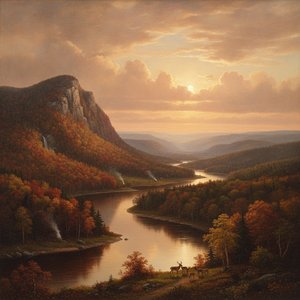
The Hudson River School: A Definitive Guide to America's Romantic Landscape Tradition
Explore the profound legacy of the Hudson River School. Discover how masters like Thomas Cole captured the American sublime through Romanticism and Luminism. A definitive guide for art historians and collectors seeking to understand America's wild beauty.
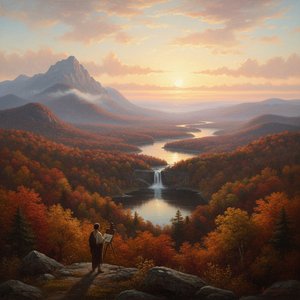
The Sublime Landscape: Exploring the Hudson River School Movement
Explore the captivating world of the Hudson River School! Discover the history, artists, and defining characteristics of this iconic American art movement. Learn about Romanticism's influence & find inspiration for your collection.
As 10 Obras-Primas que Definiram a Escola do Rio Hudson | Arte e Decoração de Luxo
Descubra as 10 obras-primas da Escola do Rio Hudson! Explore a beleza das paisagens americanas de Thomas Cole, Frederic Church e outros mestres. Encontre reproduções de arte exclusivas para decorar sua casa com elegância em OriginalUniqueArt.com.
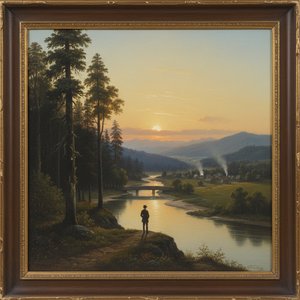
Robert Spencer: Luminism, Narrative & the American Landscape Tradition
Explore the captivating world of Luminism & the Hudson River School with our expert analysis. Discover the history, artists, and enduring beauty of 19th-century American landscape painting. Find museum-quality reproductions at OriginalUniqueArt.

Albert Bierstadt: Luminosity, Landscape & the American Ideal
Explore the breathtaking landscapes of Albert Bierstadt, master of the American West & a leading figure in the Hudson River School. Discover his luminous style and iconic paintings – a timeless investment for art lovers.


