

 Visualizar na parede
 Compartilhar
 Compartilhar
 Detalhes
 Guia
Guia

 Baixar imagem
 Semelhantes
 Raio X
 Ver diaporama
 Estatísticas
Liberators and the Liberated


 Ler mais
A obra de arte exibida nesta página é protegida por leis de direitos autorais, o que significa que não podemos criar ou vender legalmente uma reprodução idêntica. Esta proteção é aplicada por meio de acordos internacionais, tais como a Convenção de Berna e pelas leis nacionais, incluindo as estabelecidas por Lei de Direitos Autorais dos EUA - Título 17.
Este método cumpre plenamente as regulamentações de direitos autorais, pois não envolve a cópia ou duplicação da obra protegida. Em vez disso, trata-se de uma reinterpretação criativa — uma nova pintura que é influenciada pela original, mas não idêntica a ela.
Giclée / Impressão de Arte
Impressão giclée ou em tela de qualidade de museu, com produção rápida e opções flexíveis de acabamento. ( Comprar pintura feita à mão Alternar para Imagem Digital)




































Escolha entre os nossos tamanhos pré-definidos que respeitam as proporções originais da obra de arte.

Insira a largura e a altura desejadas para se ajustarem à sua moldura ou parede. Uma impressão pode ser apenas cortada, nunca ampliada além da imagem original; portanto, um tamanho com proporções diferentes resultará na perda de parte da imagem. Enviamos uma maquete digital para sua aprovação antes de realizarmos a impressão. A imagem exibida nesta página não mostra o corte real — apenas a maquete o faz.
Entrega mundial () em 2 semanas, em vez das 4/5 semanas padrão. (27 Outubro)

Envio expresso gratuito para todo o mundo

Tela de Linho de Alta Qualidade

Seguro de transporte completo

Garantia de Reembolso de Impostos Alfandegários

Garantia de Fidelidade Cromática

Política de Devolução em 100 Dias (Apenas para Defeitos)

Garantia de reembolso de 100%

Oferta de desconto por quantidade
 A opção de vidro está disponível apenas para tamanhos inferiores a 110 cm

Liberators and the Liberated
Giclée / Impressão de Arte
Tamanho da Reprodução
-


Preço Total
€ 70
Perguntas e Respostas
Onde posso comprar reproduções pintadas à mão de "Liberators and the Liberated", de Alan Moore?
"Liberators and the Liberated" está disponível como uma reprodução a óleo pintada à mão sobre tela de linho. O pedido pode ser feito em sua página de Reprodução Pintada à Mão, com escolha de tamanhos.
Como "Liberators and the Liberated" se integra aos temas e ao estilo de Alan Moore?
"Liberators and the Liberated" compartilha com as outras obras de Alan Moore o seu estilo Documentary Photography e os temas recorrentes: wwii trauma & memory, documentary realism's starkness, moral reckoning, aftermath, humanity's darkest hour, refugee experience captured, post-war disillusionment, moore's war record visuals.
"Liberators and the Liberated", de Alan Moore é uma obra de arte clara ou escura?
No geral, "Liberators and the Liberated" é registrado como balanced. A luminosidade percebida descreve o quão clara ou escura a obra parece ser.
Biografia do Artista
A Life Beyond Panels: The World of Alan Moore
Born in Northampton, England, in 1953, Alan Moore emerged not merely as a comic book writer, but as a literary architect reshaping the very foundations of sequential art. His journey began amidst the burgeoning British underground fanzine culture of the late 1970s—a crucible where independent thought and experimental storytelling flourished. This early immersion fostered a spirit of rebellion against convention, an insistence on narrative complexity that would become his hallmark. Before captivating global audiences, Moore honed his craft through self-published works and contributions to magazines like 2000 AD and Warrior, quickly establishing a distinctive voice—one that dared to ask difficult questions and challenge established norms. He wasn’t simply telling stories; he was building worlds imbued with philosophical depth and social commentary.Deconstructing the Superhero: A Revolution in Comics
Moore's arrival at DC Comics marked a watershed moment, not only for his career but for the industry itself. He became, as noted, “the first comics writer living in Britain to do prominent work in America,” injecting fresh perspectives into established characters and forging entirely new concepts. His reimagining of Swamp Thing was transformative—elevating the horror character from monster-of-the-week fare to a poignant exploration of ecological awareness and existentialism. Batman: The Killing Joke, though controversial for its dark portrayal of the Joker, remains a chillingly insightful examination of madness and the fragile line between sanity and chaos. But it was Watchmen that truly cemented his legacy. Published in 1986-87 with artist Dave Gibbons, Watchmen wasn’t just a superhero story; it was a deconstruction of the entire genre—a complex meditation on power, morality, Cold War anxieties, and the very nature of heroism. The narrative's intricate structure, coupled with its morally ambiguous characters, forced readers to confront uncomfortable truths about themselves and the world around them. This wasn’t escapism; it was a mirror reflecting society’s flaws. His work on Superman – ‘Whatever Happened to the Man of Tomorrow?’ provided a definitive, poignant conclusion to that era of the character, showcasing his mastery of narrative closure.Independent Visions: From Hell and Beyond
As the 1980s drew to a close, Moore deliberately distanced himself from mainstream comics, seeking greater creative control over his work. This period saw him embark on ambitious independent projects that pushed the boundaries of the medium even further. From Hell, a meticulously researched and hauntingly illustrated exploration of the Jack the Ripper murders, stands as a testament to his dedication to detail and historical accuracy. It wasn’t simply a crime story; it was a sprawling investigation into Victorian society, occultism, and the dark underbelly of urban life. Simultaneously, he ventured into prose with Voice of the Fire, an experimental novel blending fantasy, mythology, and social commentary—a work that further demonstrated his versatility as a storyteller. These projects weren’t about commercial success; they were about artistic freedom and the pursuit of challenging narratives.Occult Influences and Lasting Impact
Moore's creative landscape is richly informed by diverse influences, ranging from classic literature and philosophy to magic and counterculture movements. A deep fascination with occultism and ceremonial magic permeates much of his work, particularly Promethea—an ambitious series exploring the nature of consciousness and the power of belief. His anarchist political beliefs also frequently inform his narratives, challenging authority and advocating for individual liberty. He draws inspiration from literary giants, often referencing and reimagining classic characters and themes within his own unique framework. This synthesis of diverse influences results in a body of work that is both intellectually stimulating and emotionally resonant. Despite expressing reservations about adaptations of his works—seeing them as inherently compromised translations—several of his creations have found their way to the big screen, including From Hell, The League of Extraordinary Gentlemen, V for Vendetta, and Watchmen. Alan Moore’s impact on comics and popular culture is undeniable; he elevated the medium to a respected art form, pioneered innovative narrative techniques, and inspired countless writers and artists across various disciplines. He continues to be a visionary force in contemporary literature, relentlessly pushing boundaries and challenging audiences with his thought-provoking work.
Alan Moore
1953 - , United Kingdom
Dados Rápidos
- Full Name: Alan Moore
- Nationality: British
- Date Of Birth: 1953
- Place Of Birth: Northampton, United Kingdom
- Notable Artworks:
- Watchmen
- V for Vendetta
- Swamp Thing
- From Hell
- The Killing Joke
- Artistic Movement Or Style: Comic book writing
- Artists Who Influenced This Artist:
- Leo Baxendale
- Robert Crumb
- Will Eisner
- Artists Or Movements Influenced By This Artist: ['Comic book writers']
Artigos Relacionados
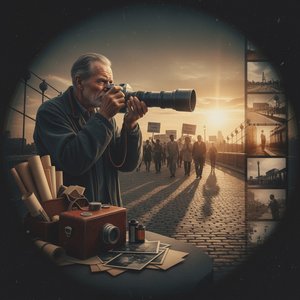
Witnessing History Through Lens & Light: Documentary Photography's Enduring Legacy
Explore the powerful history of documentary photography – from its origins to contemporary masters like Gordon Parks & W. Eugene Smith. Discover how this art form shapes our understanding of society and witness pivotal moments in time.

Monochrome Visions: Exploring the Aesthetic & Historical Significance of Black & White Photography
Explore the rich history & artistic power of black and white photography. From early techniques to iconic masters like Ansel Adams, discover why monochrome continues to captivate art lovers today. Expert insights for collectors.

Pictorialism: A Search for Artistic Photography's Soul – Aesthetics, Techniques & Legacy
Explore the captivating world of Pictorialism – a pivotal movement that transformed photography into fine art. Discover key artists like Stieglitz & Käsebier, techniques, and collecting tips from experts.

Beyond the Lens: Photography's Enduring Influence on Modern & Contemporary Art
Explore photography's pivotal role in shaping modern & contemporary art. Discover key movements, influential artists like Stieglitz, and expert collecting advice from OriginalUniqueArt.

Os 10 Ícones da Fotografia Documental que Transformaram a Arte | OriginalUniqueArt
Descubra os 10 ícones da fotografia documental que moldaram a arte moderna. Explore as histórias por trás de obras-primas em preto e branco, artistas renomados e movimentos artísticos. Encontre reproduções de alta qualidade para decorar sua casa em OriginalUniqueArt.com.