
() ·
A painting made for you, by hand
Reprodução em Óleo Feita à Mão
Óleo sobre tela pintado à mão no tamanho e moldura de sua escolha, feito sob encomenda pelos nossos artistas. ( Alternar para Impressão Alternar para Imagem Digital)
Descrição do Item
Experience the dramatic narrative of Susanna and the Elders by Aert van Ortkens (1520), a masterpiece of early Netherlandish art; discover this timeless scene today.
Biografia do Artista
Discover Aert van Ortkens (1490-1536), a Dutch painter known for dramatic biblical scenes like 'Susanna & the Elders.' Explore his Flemish style at Museum Smidt Van Gelder.
 Ler mais
from ·
Chapter 1
How large should it be?
Slide to change the size; the picture on the left shows the frame at its real width. The proportions of the original are kept.
Escolha entre os nossos tamanhos pré-definidos que respeitam as proporções originais da obra de arte.

Insira a largura e a altura desejadas para se ajustarem à sua moldura ou parede. Como esta obra é pintada à mão, para um tamanho com proporções diferentes, o artista poderá pintar um pouco mais ao redor da imagem ou reduzir ligeiramente a composição — você escolhe. Enviamos uma maquete digital para sua aprovação antes de iniciar a pintura. A imagem exibida nesta página não representa o resultado real — apenas a maquete mostra o resultado final.
Chapter 2
How should it arrive?
Choose the edges of the stretched canvas
Choose your frame

White €1

Blurside €1

Extended €1

P118B €10

P118H €10

P118W €10

P438Z €10

P508JH €12

P508YH €12

P805H €10

P805Z €10

P919BZ €10

P919G €10

P919XJ €10

P959ZH €10

P968JZ €12

W106C €8

W218G €10

W218JH €8

W218Y €10

W307PJ €10

W316G €10

W316PJ €8

W316Y €10

W398PJ €8

W4111J €10

W500HY €15

W500JH €15

W692G €12

W849H €8

W940BG €15

W953PJ €8

H24-GOLD €30

H24-SILVER €30

H36-GOLD €45

H36-SILVER €45
Com moldura
Moulding: . Overall size with the frame: .
Chapter 3
Who paints it, and should anything change?
After order, OriginalUniqueArt.com team will email client for instructions and provide a mockup preview
Entrega mundial () em 3 a 4 semanas, em vez das 5 semanas padrão. (30 Outubro). Sem comprometer a qualidade.
Chapter 4
The finishing touches
A nameplate, as in a museum?
Detalhes da Placa de Bronze Gravada
This elegant plaque features the artist's name and the title of the artwork, finely engraved for a timeless presentation.
It is made from bronze with a refined, elegant finish. The text is precisely laser-engraved for a sharp and permanent result. Measuring 9x2 cm, the plaque is compact yet easy to read. It's built to be durable and scratch-resistant, offering a professional, museum-quality look. Mounting is simple thanks to the included adhesive backing.
Detalhes da Placa de Acrílico Transparente
The plaque includes essential engraved details such as the artist's name, the title of the artwork, the date it was created, the type of media used-like oil on canvas or watercolor-a brief description of the piece, and a QR code that links to the complete artwork information.
It is crafted from clear acrylic, offering a sleek, modern appearance. The text is UV-engraved in black to ensure strong visual contrast. With a size of 10x15 cm, it ensures optimal readability. It comes equipped with two metal hooks for secure wall mounting. The plaque is designed to be weather-resistant, making it suitable for various environments, and it includes interactive features that work seamlessly with smartphone scanning.
Detalhes da Placa de Acrílico Preto
This elegant plaque includes engraved information such as the artist's name, the title of the artwork, the date it was created, the type of media used (like oil on canvas or watercolor), a short description of the artwork, and a QR code for quick access to more information.
The plaque itself is made from refined black acrylic with a premium finish. The text is laser-engraved in white for high contrast and readability. Its size is 10x15 cm, designed to be easy to read. It comes with two metal hooks for professional mounting. The design is sleek and fits any interior style. It is also weather-resistant and durable, with built-in digital integration for mobile compatibility.
A protective varnish?
When do you need it?
Chapter 5
Your painting, as you ordered it

Susanna and the Elders
Técnica de Reprodução
Tamanho da Reprodução
-

Artista Sênior de Elite
Mais detalhes, refinamento e tempo de produção adicional
-

Moldura para Reprodução
-
-
Para obras de arte ou reproduções com mais de 105 cm (aproximadamente 41 polegadas) em qualquer um dos lados, a moldura será enviada como um kit desmontado. Este método garante uma entrega segura e evita danos durante o transporte.
Montagem profissional necessária — este não é um produto DIY (faça você mesmo).
O kit deve ser montado e a tela esticada por um profissional de molduraria experiente, utilizando cola de madeira (não inclusa), um alicate de esticar tela e grampos para manter as travessas alinhadas enquanto a cola seca. A montagem incorreta ou a tensão desigual da tela podem danificar permanentemente a obra de arte e não estão cobertas pela nossa garantia.
 Para obras de arte ou reproduções com mais de 105 cm (aproximadamente 41 polegadas) em qualquer um dos lados, a moldura será enviada como um kit desmontado. Este método garante uma entrega segura e evita danos durante o transporte.
Todas as barras de madeira maciça estão incluídas, precisamente cortadas ao tamanho certo.
Montado com os parafusos fornecidos, além de cola para madeira para as junções dos cantos, que não está inclusa e deve ser providenciada pelo seu moldurista.
São necessárias ferramentas profissionais não incluídas: um alicate de estiramento de tela (esticador) e grampos para manter as ripas alinhadas enquanto a cola seca.
Importante:
As junções dos cantos requerem cola para madeira, as ripas devem ser mantidas com grampos até que a cola esteja completamente seca, e o estiramento da tela na moldura montada requer um alicate de esticar tela. Nenhum destes itens está incluído no kit. Por favor, certifique-se de contar com um profissional de molduraria experiente antes de encomendar este tamanho.

Etiqueta de identificação
-
-

Verniz de Proteção
Verniz brilhante (realça as cores e protege contra a luz e a umidade)
-

Personalizar minha obra
Exemplos de alterações possíveis: Substituir o rosto por uma foto do cliente; Adicionar um animal de estimação (ex.: substituir gato por cachorro); Incluir uma mensagem oculta no fundo; Alterar a paisagem ou os elementos do fundo.
-

Urgente
Entrega mundial () em 3 a 4 semanas, em vez das 5 semanas padrão. (30 Outubro). Sem comprometer a qualidade.
-
Envio Expresso
Entrega mundial para em 5 semanas. (6 Novembro).
Com envio incluído
Preço Total
€ 265
A opção de vidro está disponível apenas para tamanhos inferiores a 110 cm
Included with every order
- Envio expresso gratuito para todo o mundo
- Tela de Linho de Alta Qualidade
- Seguro de transporte completo
- Garantia de Reembolso de Impostos Alfandegários
- Garantia de Fidelidade Cromática
- Política de Devolução em 100 Dias (Apenas para Defeitos)
- Garantia de reembolso de 100%
- Oferta de desconto por quantidade


 Visualizar na parede
 Compartilhar
 Compartilhar
 Detalhes
 Guia
Guia

 Baixar imagem
 Semelhantes
 Raio X
 Ver diaporama
 Q&A
Q&A Estatísticas
In numbers
- 1520the year it was painted
- 29frames to choose from
- standard sizes, in its own proportions
- 5weeks to paint and deliver it
About the original
 Oil On Canvas
- WallArt
- Early Netherlandish
 1520
1520 24.0 x 24.0 cm
 Museu Metropolitano de Arte

Aert Van Ortkens
1490 - 1536, Netherlands
Quick facts about Aert Van Ortkens
- Artistic Movement Or Style: Flemish, Early Netherlandish
- Artists Or Movements Influenced By This Artist: ['Arnoult de Nimègue']
- Artists Who Influenced This Artist: ['Jan van Eyck']
- Date Of Birth: 1490
- Date Of Death: 1536
- Full Name: Aert van Ortkens
- Nationality: Dutch
- Notable Artworks:
- Susanna & the Elders
- Arnold of Nijmegen
- Place Of Birth: Netherlands
Biografia do Artista
Aert van Ortkens: A Dramatic Voice in the Early Netherlandish Tradition
The name Aert van Ortkens, though perhaps less immediately recognizable than his contemporaries like Jan van Scorel or Geertgen tot Sint Jans, represents a significant and compelling figure within the landscape of 16th-century Dutch painting. Born around 1490 in Nijmegen, Netherlands, Van Ortkens emerged during a period of artistic transition, bridging the late medieval tradition with the burgeoning influence of Renaissance humanism. His relatively short life – he died in 1536 – belies a concentrated body of work characterized by intense emotionality, dramatic narrative, and a distinctly Flemish sensibility. While biographical details remain scarce, piecing together his career reveals an artist deeply engaged with religious themes and skilled in conveying complex psychological states through expressive figures and carefully constructed compositions. He is known under several variations of his name – Aert Of Nijmegen, Aert Van Hort, Arnoud Van Nijmegen, Arnt Van Ort Van Nijmegen, to name a few – reflecting the common practice of the time for artists to be identified by their place of origin or workshop affiliations.Early Life and Artistic Formation
Van Ortkens’s early training remains largely undocumented, but it is reasonable to assume he began his artistic journey within the established workshops of Nijmegen. The city itself was a thriving center for religious life and art production, providing fertile ground for an aspiring painter. It's likely that he absorbed the stylistic conventions prevalent in the region – a meticulous attention to detail, rich color palettes, and a focus on realistic depictions of figures and textures. However, his work suggests more than just local influence; a clear debt to early Netherlandish masters like Rogier van der Weyden and Hugo van der Goes is evident. These artists’ emphasis on emotional realism and their ability to imbue religious scenes with profound human drama undoubtedly shaped Van Ortkens's developing style. The impact of the Antwerp school, particularly the work of painters active there in the early 16th century, also appears to have played a role, as he later became associated with that city.A Style Defined by Narrative Intensity
Van Ortkens’s paintings are immediately striking for their dramatic intensity and psychological depth. He specialized in biblical scenes, often choosing subjects laden with moral or emotional weight. His most celebrated work, Susanna & the Elders, exemplifies his artistic strengths. The composition is dynamic, focusing on the moment of Susanna's distress as she is spied upon by the two lecherous elders. Van Ortkens masterfully conveys her vulnerability and fear through expressive gestures, carefully rendered facial expressions, and a palpable sense of claustrophobia within the garden setting. This isn’t merely a depiction of an event; it’s an exploration of temptation, judgment, and the power dynamics between men and women. His use of light and shadow further enhances the emotional impact, highlighting key figures and creating a theatrical atmosphere. Other notable works include depictions of The Last Judgment, scenes from the life of Christ, and various representations of saints.Antwerp and Later Years
Around 1520, Van Ortkens moved to Antwerp, then one of the most important artistic centers in Northern Europe. His association with this city marked a turning point in his career. He became a member of the Guild of Saint Luke in 1523, solidifying his position as a professional artist. While in Antwerp, he continued to produce altarpieces and devotional panels, catering to the growing demand for religious art among the wealthy merchant class. His style evolved during this period, becoming more refined and incorporating elements of Italian Renaissance painting that were beginning to circulate in Northern Europe. However, he never fully abandoned his distinctly Flemish roots, maintaining a focus on emotional realism and meticulous detail. The influence of artists like Quentin Matsys, active in Antwerp at the same time, is also discernible in his later works.Legacy and Historical Significance
Despite not achieving widespread fame during his lifetime, Aert van Ortkens left behind a compelling body of work that continues to resonate with viewers today. His paintings offer valuable insights into the religious beliefs and artistic sensibilities of the early 16th century Netherlands. He stands as an important link between the late medieval tradition and the emerging Renaissance style, demonstrating a unique ability to blend emotional intensity with technical skill. Today, his works are held in prominent museum collections, including the Museum Smidt Van Gelder, where they provide a glimpse into the dramatic world of Early Netherlandish painting. His contribution lies not in groundbreaking innovation but in the powerful and moving expression of established themes – a testament to his mastery of narrative and psychological portraiture within the context of his time.- Born: c. 1490, Nijmegen, Netherlands
- Died: 1536
- Known for: Dramatic biblical scenes, particularly 'Susanna & the Elders'
- Style: Flemish painting, Early Netherlandish, influenced by Rogier van der Weyden and Hugo van der Goes.
- Guild Membership: Guild of Saint Luke, Antwerp (1523)
Artigos Relacionados

The Enduring Legacy of Oil on Canvas: Technique, History & Aesthetic Impact
Explore the rich history & techniques of oil painting – from Renaissance masters to Impressionism. Discover pigments, layering methods, and why this timeless medium endures. Expert insights for artists & art enthusiasts.

The Enduring Power of Painting: A Historical & Contemporary Exploration of Form and Emotion
Explore the rich history & enduring techniques of oil painting with OriginalUniqueArt. Discover masterpieces, learn about art collecting, and find authentic handmade reproductions crafted by skilled artists.

Oil on Canvas: A Historical & Technical Exploration of a Timeless Artistic Medium
Explore the rich history & enduring techniques of oil painting on canvas. Discover the science behind its longevity, conservation practices, and contemporary relevance. Expert insights for art enthusiasts.
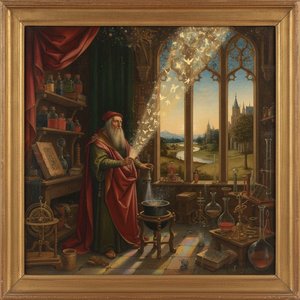
The Alchemy of Light: Discovering the Luminous Realism of Early Netherlandish Masters
Embark on a journey through the Northern Renaissance. Discover how Early Netherlandish masters revolutionized art through oil innovation, luminous realism, and profound symbolic depth. Explore the breathtaking technical brilliance of the Flemish masters.