
 Visualizar na parede
 Compartilhar
 Compartilhar
 Detalhes
 Guia
Guia

 Baixar imagem
 Semelhantes
 Raio X
 Ver diaporama
 Perguntas e Respostas
 Estatísticas
ADAM ET EVE


 Ler mais
Giclée / Impressão de Arte
Impressão giclée ou em tela de qualidade de museu, com produção rápida e opções flexíveis de acabamento. ( Comprar pintura feita à mão Alternar para Imagem Digital)




P118B €10

P118H €10

P118W €10

P438Z €10

P508JH €12

P508YH €12

P805H €10

P805Z €10

P919BZ €10

P919G €10

P919XJ €10

P959ZH €10

P968JZ €12

W106C €8

W218G €10

W218JH €8

W218Y €10

W307PJ €10

W316G €10

W316PJ €8

W316Y €10

W398PJ €8

W4111J €10

W500HY €15

W500JH €15

W692G €12

W849H €8

W940BG €15

W953PJ €8




Escolha entre os nossos tamanhos pré-definidos que respeitam as proporções originais da obra de arte.

Insira a largura e a altura desejadas para se ajustarem à sua moldura ou parede. Uma impressão pode ser apenas cortada, nunca ampliada além da imagem original; portanto, um tamanho com proporções diferentes resultará na perda de parte da imagem. Enviamos uma maquete digital para sua aprovação antes de realizarmos a impressão. A imagem exibida nesta página não mostra o corte real — apenas a maquete o faz.
Entrega mundial () em 2 semanas, em vez das 4/5 semanas padrão. (8 Novembro)

Envio expresso gratuito para todo o mundo

Tela de Linho de Alta Qualidade

Seguro de transporte completo

Garantia de Reembolso de Impostos Alfandegários

Garantia de Fidelidade Cromática

Política de Devolução em 100 Dias (Apenas para Defeitos)

Garantia de reembolso de 100%

Oferta de desconto por quantidade
 A opção de vidro está disponível apenas para tamanhos inferiores a 110 cm

ADAM ET EVE
Giclée / Impressão de Arte
Tamanho da Reprodução
-


Preço Total
€ 72
A Moment Frozen in Paradise: Adriaen van der Werff’s “Adam et Eve”
Adriaen van der Werff's "Adam et Eve" is more than just a depiction of the biblical narrative; it’s a meticulously crafted tableau of human emotion, classical beauty, and profound symbolism. Painted in the late 17th century during the height of Dutch Baroque artistry, this work transcends its religious subject matter to offer a timeless meditation on temptation, innocence lost, and the enduring complexities of the human condition. Van der Werff’s skill lies not merely in his technical mastery – evident in the astonishing detail of the figures and the lush landscape – but also in his ability to imbue the scene with an almost palpable sense of drama and psychological depth.
Composition and Setting: An Eden Reimagined
The composition immediately draws the viewer into a carefully orchestrated world. The central figures, Adam and Eve, are positioned within a vibrant, idealized landscape – a reimagining of the Garden of Eden that speaks to the era’s fascination with classical antiquity. Dense foliage frames the scene, creating an immediate sense of enclosure, suggesting both the beauty and the potential danger of this enclosed paradise. Note the strategic use of overlapping elements; distant trees recede into atmospheric perspective, subtly hinting at the vastness beyond, while foreground details are rendered with exquisite clarity. The placement of Adam and Eve – their bodies angled towards each other in a dynamic yet graceful pose – establishes an intimate connection, emphasizing the pivotal moment of their encounter.
Color, Light, and Texture: Baroque Realism at its Finest
Van der Werff’s palette is dominated by earthy tones—rich browns, deep greens, and ochres—evoking the natural world. These grounded hues are skillfully contrasted with subtle accents of red in the foliage and the bird perched on Adam's arm, a deliberate choice that immediately draws attention to these key elements and subtly foreshadows the introduction of temptation. The lighting is remarkably diffused, creating a soft, almost ethereal glow that illuminates the figures and landscape without harsh shadows. This gentle illumination contributes significantly to the painting’s harmonious atmosphere, reinforcing the sense of idyllic serenity before the fall. The artist's meticulous attention to texture – from the smooth skin of the figures to the rough bark of the trees – adds a remarkable level of realism and tactile engagement.
Symbolism and Narrative: The Weight of Choice
"Adam et Eve" is laden with symbolic weight. Of course, the central narrative—the story of Adam and Eve’s transgression—is immediately apparent. Eve's gesture, holding the apple aloft, represents temptation and knowledge, while her gaze directed towards Adam underscores the pivotal role she plays in initiating humanity’s fall from grace. Adam’s outstretched arm suggests a potential offering or even a warning, highlighting the inherent duality of choice within this narrative. Beyond the biblical story, however, the painting speaks to broader themes of innocence, desire, and the consequences of disobedience. The bird, often associated with divine messengers, adds another layer of complexity, perhaps hinting at the judgment that will follow their actions. Considering Van der Werff’s brother, Pieter van der Werff's work, particularly his depictions of historical figures, reveals a shared interest in portraying human emotion and narrative depth – qualities powerfully evident here.
This reproduction captures the essence of Van der Werff’s masterpiece, offering an exceptional opportunity to bring this iconic image into your home or office. Its rich colors, intricate details, and profound symbolism will undoubtedly spark conversation and serve as a timeless reminder of humanity's enduring relationship with temptation, beauty, and the consequences of our choices.
Perguntas e Respostas
Qual é a luminância de "ADAM ET EVE", de Adriaen Van Der Werff?
A luminância registrada para "ADAM ET EVE", de Adriaen Van Der Werff é Dark.
O que "ADAM ET EVE", de Adriaen Van Der Werff retrata?
Os temas presentes em "ADAM ET EVE", de Adriaen Van Der Werff incluem adam and eve, temptation, eden, biblical, creation, fall, serenity. Juntos, eles sintetizam o assunto da obra.
Qual é a tonalidade predominante que percorre "ADAM ET EVE", de Adriaen Van Der Werff?
"ADAM ET EVE" inclina-se para um tom Ochre to Sepia.
Biografia do Artista
O Mestre da Graça Meticulosa: A Vida de Adriaen van der Werff
Na grandiosa tapeçaria da Era de Ouro Holandesa, poucos fios brilham com tanta polida luminosidade quanto a obra de Adriaen van der Werff. Nascido em Haia, em 1659, Van der Werff emergiu de uma linhagem de talento artístico, sendo filho de um pintor, o que lhe proporcionou uma introdução precoce e íntima às nuances da luz e da forma. Seus anos formativos foram moldados pela rigorosa tutela de Eglon van der Neer, um mestre do figurino e dos drapeados cuja influência ainda é visível nas texturas de seda requintadas que definem as composições tardias de Van der Werff. Este treinamento inicial instilou nele uma devoção à precisão, transformando seu pincel em um instrumento capaz de capturar as transições mais delicadas da pele e do tecido.
À medida que sua carreira progredia, Van der Werff foi além da mera proficiência técnica para alcançar um nível de profundidade psicológica que cativou a aristocracia europeia. Ao lado de seu irmão e pupilo, Pieter van der Werff, ele estabeleceu um estúdio formidável em Roterdã. Sua ascensão na comunidade artística foi marcada por sua liderança na Guilda de São Lucas, um cargo de imenso prestígio que lhe permitiu comandar a atenção dos patronos mais influentes da época. Sua obra tornou-se uma ponte entre o realismo robusto dos mestres holandeses anteriores e as sensibilidades refinadas e elegantes do movimento Rococo em ascensão.
Uma Sinfonia de Luz e Mito
A verdadeira magia da obra de Van der Werff reside em sua habilidade de dar vida às narrativas mitológicas e bíblicas da antiguidade. Ele não apenas ilustrava histórias; ele as encenava com uma intensidade dramática que utilizava o chiaroscuro para evocar emoções profundas. Em obras como 'Ló e suas Filhas', pode-se testemunhar o jogo magistral de luz e sombra, onde cada lampejo de luz de vela serve para aumentar a tensão e o peso simbólico da cena. Suas telas frequentemente servem como janelas para um mundo de elegância clássica, onde a forma humana é representada com uma perfeição de porcelana que parece ao mesmo tempo etérea e tangivelmente presente.
Seu repertório técnico era notavelmente diverso, permitindo-lhe navegar entre diferentes modos de retratística e pintura narrativa:
- Grandeza Mitológica: Suas representações de deuses e heróis frequentemente utilizavam composições monumentais para transmitir poder e graça.
- Retratística Íntima: Em obras como seu 'Autorretrato', ele demonstrou uma honestidade inabalável, capturando a confiança e o caráter do sujeito através de detalhes meticulosos.
- Gênero e Agrupamentos: Peças como 'Crianças Brincando diante de um Grupo de Hércules' exibem sua habilidade de misturar a ternura doméstica com a presença imponente da escultura clássica, criando uma narrativa em camadas onde a inocência encontra a antiguidade.
Legado e Significância Histórica
O alcance de Adriaen van der Werff estendeu-se muito além das fronteiras dos Países Baixos. Sua reputação como um "pintor de belas artes" rendeu-lhe o patrocínio dos mais altos escalões da realeza europeia, incluindo Johann Wilhelm, o Eleitor Palatino, e a ilustre Anna Maria Luisa de' Medici. O comissionamento de obras monumentais para a corte florentina permanece como um testemunho de seu status como uma figura internacional da era Barroca. Sua capacidade de satisfazer os gostos sofisticados da família Medici solidificou seu legado como um artista que conseguia unir a precisão do Norte com a elegância do Sul.
Em última análise, a importância de Van der Werff reside em seu papel como uma figura de transição. Ele pegou os elementos fundamentais do realismo holandês — a obsessão pela textura, luz e verdade — e os elevou para uma linguagem refinada e cortesã que influenciaria a trajetória da arte do século XVIII. Embora a era dos grandes Mestres Holandeses eventualmente desse lugar a novos movimentos, o mundo luminoso e polido criado por Van der Werff permanece como um monumento duradouro aos ápices da arte barroca.

Adriaen Van Der Werff
1659 - 1722 , Países Baixos
Dados Rápidos
- Artistic Movement Or Style: Barroco
- Artists Or Movements Influenced By This Artist: ['Mestres Holandeses']
- Artists Who Influenced This Artist: ['Eglon van der Neer']
- Date Of Birth: Haia, Países Baixos (1659)
- Date Of Death: 1722
- Full Name: Adriaen van der Werff
- Nationality: Holandesa
- Notable Artworks:
- SAINTE MADELEINE MEDITANT DANS LA SOLITUDE
- ADAM ET EVE
- SARAH PRESENTE AGAR A ABRAHAM
- Place Of Birth: Haia
Artigos Relacionados

Rembrandt van Rijn: As 25 Obras-Primas que Definem um Mestre da Luz e Sombra | OriginalUniqueArt
Descubra as 25 obras-primas de Rembrandt van Rijn, o mestre da luz e sombra! Explore a história por trás de 'A Ronda Noturna', seus auto-retratos e muito mais. Encontre reproduções de arte exclusivas para decorar sua casa com OriginalUniqueArt.com.

Hugo van der Goes: Devotion, Innovation & the Psychological Depth of Early Netherlandish Painting
Explore the revolutionary art of Hugo van der Goes – a master of Early Netherlandish painting renowned for his dramatic realism, psychological depth & profound influence on Renaissance artists. Discover his iconic works and lasting legacy.

Os 10 Mestres da Pintura Primitiva Flamenga que Moldaram a Arte
Descubra os 10 quadros que revolucionaram a Pintura Primitiva Flamenga! Explore Jan van Eyck, Rogier van der Weyden e outros mestres renascentistas. Encontre reproduções de alta qualidade para decorar sua casa com arte atemporal em OriginalUniqueArt.com.
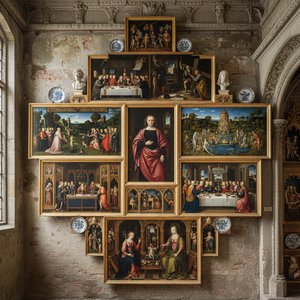
Renascimento Primitivo Flamenco: 10 Obras-Primas Essenciais para Decorar com Arte
Descubra as 10 obras-primas do Renascimento Primitivo Flamenco! Explore a arte de Jan van Eyck, Robert Campin e outros mestres. Reproduções de alta qualidade para decorar sua casa com beleza e história. Explore a coleção completa em OriginalUniqueArt.com

Rogier van der Weyden: Emotion, Innovation & the Early Netherlandish Renaissance
Explore the revolutionary art of Rogier van der Weyden, a pivotal figure of the Early Netherlandish Renaissance. Discover his emotional realism, innovative compositions, and lasting impact on painting history.


