- Início

- Reprodução de Pintura a Óleo
- Adriaen Hanneman
- John Evelyn

 Comprar impressão Comprar imagem em alta resolução
 Enviar
 Compartilhar
 Detalhes da obra
 Adicionar aos favoritos

 Baixar
 Semelhantes
 Raio X
 Slideshow
John Evelyn

 Ver mais
Reprodução em Óleo Feita à Mão
Óleo sobre tela pintado à mão no seu tamanho e moldura, feito sob encomenda pelos nossos artistas.




































Escolha entre os nossos tamanhos pré-definidos que respeitam as proporções originais da obra de arte.

Pode inserir as suas próprias dimensões para se adequar a uma moldura ou espaço específico. Se o tamanho selecionado não corresponder às proporções da imagem original, iremos cortar a obra de arte ou estender a pintura com elementos adicionais pintados à mão. Um esboço digital será enviado para sua aprovação antes do início da produção.
Tenha em atenção que a pré-visualização no ecrã não reflete o corte ou extensão real. Apenas o esboço mostrará com precisão a composição final.
Embora tamanhos personalizados estejam disponíveis, recomendamos selecionar uma dimensão da lista predefinida para preservar as proporções originais.
Após o pedido, a equipa OriginalUniqueArt.com enviará um e-mail ao cliente para solicitar instruções e fornecer uma prévia do esboço.
Entrega Mundial () em 3 a 4 semanas, em vez das 5 semanas padrão. (21 Julho). Sem comprometer a qualidade.

Envio Expresso Gratuito para todo o Mundo

Tela de Linho Premium

Seguro de envio completo

Garantia de Reembolso de Impostos Alfandegários

Garantia de Fidelidade de Cores

Política de Devolução de 60 Dias (Apenas para Defeitos)

Garantia de 100% de Reembolso

Desconto para múltiplas unidades
 A opção de vidro está disponível apenas para tamanhos inferiores a 110 cm

John Evelyn
Técnica de Reprodução
Dimensões da Reprodução
-


Preço Total Final
-
Biografia do Artista
Early Life and Artistic Foundations
Adriaen Hanneman emerged onto the vibrant Dutch Golden Age art scene around 1603, born into a prosperous Catholic family in The Hague—a city renowned for its artistic patronage and burgeoning mercantile activity. This familial background subtly shaped his trajectory, imbuing him with a sense of stability and access to resources that would prove invaluable throughout his career. From a remarkably young age, Adriaen demonstrated an innate aptitude for artistry; he began his formal training in 1619 under the tutelage of Jan Antonisz. van Ravesteyn the Younger—a highly respected Hague portraitist whose established style served as a crucial foundation for the young artist’s development. Van Ravesteyn instilled within Hanneman a meticulous, sculptural approach to rendering form – a characteristic that would become immediately apparent in his early works and remain a defining element of his artistic signature. This initial period wasn't merely about acquiring technical proficiency; it was an immersive experience in absorbing the established conventions of Dutch portraiture—learning not just how to accurately depict likenesses but also, crucially, how to convey social standing, character, and the subtle nuances of individual personality. The crispness and clarity evident in Van Ravesteyn’s work provided Hanneman with a solid base upon which he would later build his own distinctive artistic voice, one characterized by elegance, restraint, and an uncanny ability to capture the essence of his subjects.The English Interlude: Embracing the Van Dyck Influence
A pivotal moment in Adriaen Hanneman’s artistic journey arrived in 1626 when he embarked on a significant relocation—a move that would profoundly alter the course of his career and expose him to an entirely new artistic landscape. He traveled to England, establishing himself within its vibrant courtly circles for approximately sixteen years. This period proved transformative, placing him at the very heart of a dynamic artistic environment undergoing rapid evolution. The arrival of Anthony van Dyck in London in 1632 as court painter to Charles I exerted an immediate and profound influence on Hanneman’s style—a testament to the power of artistic exchange across national boundaries. Van Dyck's distinctive compositions, characterized by their dynamism, masterful use of brushwork, and rich, opulent color palettes, captivated the young artist, who may even have had the opportunity to work within Van Dyck’s studio – a formative experience that undoubtedly shaped his aesthetic sensibilities. Beyond Van Dyck, Hanneman also encountered other prominent artists residing in London at the time, including Cornelis Janssens van Ceulen and Daniel Mytens, further broadening his artistic horizons and exposing him to diverse approaches to portraiture. Crucially, he secured significant patronage from Constantijn Huygens—a powerful figure within the English court who actively championed Hanneman’s career, facilitating introductions to influential circles and securing commissions that propelled him into the ranks of the most sought-after portraitists in England. This period wasn't simply a matter of imitation; it was an immersion in a sophisticated courtly culture – a world of elaborate rituals, intricate social dynamics, and unparalleled artistic patronage—that would ultimately define his future artistic endeavors.Return to The Hague and Artistic Maturity
Around 1638, Adriaen Hanneman made a decisive return to his native The Hague, marking a turning point in both his personal life and his professional career. This relocation was accompanied by a significant personal development—he married Maria van Ravesteyn, the daughter of his former teacher, Jan Antonisz. van Ravesteyn – a union that solidified his family’s legacy within the artistic community and provided him with a stable domestic foundation. In 1645, he formally joined the Guild of St. Luke in The Hague—a prestigious institution that affirmed his status as a recognized professional artist. Furthermore, Hanneman actively participated in the Confrerie Pictura – an influential artists’ society dedicated to fostering collaboration and innovation within the Dutch art world. This involvement underscored his commitment to engaging with fellow artists and pushing the boundaries of artistic expression. Back on Dutch soil, Hanneman continued to specialize in portraiture—a genre he honed through years of experience both in England and The Hague. He skillfully blended the lessons learned from Van Dyck’s elegant style with a growing sense of distinctly Dutch artistic identity, catering to the burgeoning demand for portraits among the wealthy nobility and influential figures within the Republic. His subjects included prominent members of the Dutch court, as well as exiled English nobles seeking refuge in The Hague following the tumultuous events of the English Civil War – demonstrating his rising reputation and access to a diverse range of patrons.Legacy and Lasting Impact
Adriaen Hanneman’s later years were marked by both professional success and personal challenges. He faced financial difficulties, a common plight for artists during the “Rampjaar” (Disaster Year) of 1672—a period of widespread war and economic hardship that gripped the Dutch Republic. Despite these hardships, his artistic legacy endured, leaving behind a collection of remarkable portraits that continue to be admired for their elegance, technical skill, and insightful portrayal of human character. Notable among his works are striking depictions of John Evelyn, Charles II, Henry, Duke of Gloucester (now housed in the National Gallery of Art, Washington D.C.), and William III, Prince of Orange – each a testament to Hanneman’s ability to capture both the physical likenesses and social status of his subjects. His influence extended beyond his own creations, impacting other painters such as Govert Flinck, demonstrating his significant contribution to Dutch portraiture during the Golden Age. Adriaen Hanneman's capacity to synthesize Flemish elegance with Dutch realism cemented his place as a key figure in 17th-century art—a painter who not only documented his era but also helped define its aesthetic ideals. He remains an artist whose work continues to resonate with viewers today, offering a glimpse into the lives and personalities of those who shaped the history of the Netherlands and beyond.
Adriaen Hanneman
1603 - 1671 , Holanda
Informações Rápidas
- Artistic Movement Or Style: Barroco, Retrato
- Artists Or Movements Influenced By This Artist:
- Van Dyck
- Holanda
- Artists Who Influenced This Artist:
- Govert Flinck
- Van Ravesteyn
- Date Of Birth: c. 1603
- Date Of Death: 1671
- Full Name: Adriaen Hanneman
- Nationality: Holandês
- Notable Artworks:
- John Evelyn
- Carlos II
- Guilherme III
- Place Of Birth: The Hague, Holanda
Artigos Relacionados
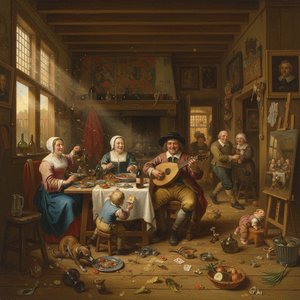
Jan Steen: A Master of Dutch Genre Painting & the Golden Age
Explore the life & art of Jan Steen, a leading Dutch Golden Age painter renowned for his humorous genre scenes & insightful social commentary. Discover his techniques, legacy, and collecting tips.
Genre Painting: A Window into Daily Life & Societal Values of the Dutch Golden Age
Explore the captivating world of Dutch Golden Age genre painting! Discover realistic depictions of daily life, masterful artists like Ostade & Metsu, and hidden symbolism. Learn about this influential art movement with OriginalUniqueArt.

Rembrandt van Rijn: A Life Illuminated – Innovation, Emotion, and the Dutch Golden Age
Explore the life & art of Rembrandt van Rijn, a Dutch Golden Age master. Discover his innovative techniques, iconic paintings like 'The Night Watch', and enduring legacy. Expert insights for collectors & enthusiasts.

Frans Hals I: Innovation, Intimacy & the Dutch Golden Age Portrait
Explore the revolutionary portraiture of Frans Hals I, a master of the Dutch Golden Age. Discover his innovative techniques, captivating character studies & lasting impact on art history. Learn more at OriginalUniqueArt.

Willem van de Velde the Elder: Master of Maritime Painting & Chronicler of the Dutch Golden Age
Discover the captivating maritime paintings of Willem van de Velde the Elder, a master chronicler of the Dutch Golden Age. Explore his unparalleled realism and lasting influence on naval art history.

