
() ·
Uma pintura feita para você, à mão
Reprodução em Óleo Feita à Mão
Óleo sobre tela pintado à mão no tamanho e moldura de sua escolha, feito sob encomenda pelos nossos artistas. ( Alternar para Impressão Alternar para Imagem Digital)
Biografia do Artista
Discover adolphe terris, a talented artist from OriginalUniqueArt known for captivating artworks inspired by Marseille. Explore his unique style, themes, and artistic legacy in the world of fine art.
 Ler mais
de ·
Capítulo 1
Qual deve ser o tamanho?
Deslize para alterar o tamanho; a imagem à esquerda mostra a moldura em sua largura real. As proporções originais são mantidas.
Escolha entre os nossos tamanhos pré-definidos que respeitam as proporções originais da obra de arte.

Insira a largura e a altura desejadas para se ajustarem à sua moldura ou parede. Como esta obra é pintada à mão, para um tamanho com proporções diferentes, o artista poderá pintar um pouco mais ao redor da imagem ou reduzir ligeiramente a composição — você escolhe. Enviamos uma maquete digital para sua aprovação antes de iniciar a pintura. A imagem exibida nesta página não representa o resultado real — apenas a maquete mostra o resultado final.
Capítulo 2
Como deve chegar?
Escolha as bordas da tela esticada
Escolha sua moldura

Branco €1

Bordas esfumaçadas €1

Bordas estendidas €1

P118B €10

P118H €10

P118W €10

P438Z €10

P508JH €12

P508YH €12

P805H €10

P805Z €10

P919BZ €10

P919G €10

P919XJ €10

P959ZH €10

P968JZ €12

W106C €8

W218G €10

W218JH €8

W218Y €10

W307PJ €10

W316G €10

W316PJ €8

W316Y €10

W398PJ €8

W4111J €10

W500HY €15

W500JH €15

W692G €12

W849H €8

W940BG €15

W953PJ €8

H24-GOLD €30

H24-SILVER €30

H36-GOLD €45

H36-SILVER €45
Com moldura
Moldura: . Dimensões totais com a moldura: .
Capítulo 3
Quem o pinta, e deveria algo mudar?
Após o pedido, a equipe da OriginalUniqueArt.com enviará um e-mail ao cliente para instruções e fornecerá uma prévia da montagem
Entrega mundial () em 3 a 4 semanas, em vez das 5 semanas padrão. (16 Novembro). Sem comprometer a qualidade.
Capítulo 4
Os retoques finais
Uma placa de identificação, como em um museu?
Detalhes da Placa de Bronze Gravada
This elegant plaque features the artist's name and the title of the artwork, finely engraved for a timeless presentation.
It is made from bronze with a refined, elegant finish. The text is precisely laser-engraved for a sharp and permanent result. Measuring 9x2 cm, the plaque is compact yet easy to read. It's built to be durable and scratch-resistant, offering a professional, museum-quality look. Mounting is simple thanks to the included adhesive backing.
Detalhes da Placa de Acrílico Transparente
The plaque includes essential engraved details such as the artist's name, the title of the artwork, the date it was created, the type of media used-like oil on canvas or watercolor-a brief description of the piece, and a QR code that links to the complete artwork information.
It is crafted from clear acrylic, offering a sleek, modern appearance. The text is UV-engraved in black to ensure strong visual contrast. With a size of 10x15 cm, it ensures optimal readability. It comes equipped with two metal hooks for secure wall mounting. The plaque is designed to be weather-resistant, making it suitable for various environments, and it includes interactive features that work seamlessly with smartphone scanning.
Detalhes da Placa de Acrílico Preto
This elegant plaque includes engraved information such as the artist's name, the title of the artwork, the date it was created, the type of media used (like oil on canvas or watercolor), a short description of the artwork, and a QR code for quick access to more information.
The plaque itself is made from refined black acrylic with a premium finish. The text is laser-engraved in white for high contrast and readability. Its size is 10x15 cm, designed to be easy to read. It comes with two metal hooks for professional mounting. The design is sleek and fits any interior style. It is also weather-resistant and durable, with built-in digital integration for mobile compatibility.
Um verniz protetor?
Para quando você precisa?
Capítulo 5
A sua pintura, conforme encomendada

Marseille
Técnica de Reprodução
Tamanho da Reprodução
-

Artista Sênior de Elite
Mais detalhes, refinamento e tempo de produção adicional
-

Moldura para Reprodução
-
-
Para obras de arte ou reproduções com mais de 105 cm (aproximadamente 41 polegadas) em qualquer um dos lados, a moldura será enviada como um kit desmontado. Este método garante uma entrega segura e evita danos durante o transporte.
Montagem profissional necessária — este não é um produto DIY (faça você mesmo).
O kit deve ser montado e a tela esticada por um profissional de molduraria experiente, utilizando cola de madeira (não inclusa), um alicate de esticar tela e grampos para manter as travessas alinhadas enquanto a cola seca. A montagem incorreta ou a tensão desigual da tela podem danificar permanentemente a obra de arte e não estão cobertas pela nossa garantia.
 Para obras de arte ou reproduções com mais de 105 cm (aproximadamente 41 polegadas) em qualquer um dos lados, a moldura será enviada como um kit desmontado. Este método garante uma entrega segura e evita danos durante o transporte.
Todas as barras de madeira maciça estão incluídas, precisamente cortadas ao tamanho certo.
Montado com os parafusos fornecidos, além de cola para madeira para as junções dos cantos, que não está inclusa e deve ser providenciada pelo seu moldurista.
São necessárias ferramentas profissionais não incluídas: um alicate de estiramento de tela (esticador) e grampos para manter as ripas alinhadas enquanto a cola seca.
Importante:
As junções dos cantos requerem cola para madeira, as ripas devem ser mantidas com grampos até que a cola esteja completamente seca, e o estiramento da tela na moldura montada requer um alicate de esticar tela. Nenhum destes itens está incluído no kit. Por favor, certifique-se de contar com um profissional de molduraria experiente antes de encomendar este tamanho.

Etiqueta de identificação
-
-

Verniz de Proteção
Verniz brilhante (realça as cores e protege contra a luz e a umidade)
-

Personalizar minha obra
Exemplos de alterações possíveis: Substituir o rosto por uma foto do cliente; Adicionar um animal de estimação (ex.: substituir gato por cachorro); Incluir uma mensagem oculta no fundo; Alterar a paisagem ou os elementos do fundo.
-

Urgente
Entrega mundial () em 3 a 4 semanas, em vez das 5 semanas padrão. (16 Novembro). Sem comprometer a qualidade.
-
Envio Expresso
Entrega mundial para em 5 semanas. (23 Novembro).
Com envio incluído
Preço Total
€ 267
A opção de vidro está disponível apenas para tamanhos inferiores a 110 cm
Incluído em todos os pedidos
- Envio expresso gratuito para todo o mundo
- Tela de Linho de Alta Qualidade
- Seguro de transporte completo
- Garantia de Reembolso de Impostos Alfandegários
- Garantia de Fidelidade Cromática
- Política de Devolução em 100 Dias (Apenas para Defeitos)
- Garantia de reembolso de 100%
- Oferta de desconto por quantidade


 Visualizar na parede
 Compartilhar
 Compartilhar
 Detalhes
 Guia
Guia

 Baixar imagem
 Semelhantes
 Raio X
 Ver diaporama
 Perguntas e Respostas
 Estatísticas
Em números
- 29molduras para escolher
- tamanhos padrão, em suas próprias proporções
- 5semanas para pintar e entregar
Sobre o original
Esta obra está protegida por direitos autorais
A obra de arte exibida nesta página é protegida por leis de direitos autorais, o que significa que não podemos criar ou vender legalmente uma reprodução idêntica. Esta proteção é aplicada por meio de acordos internacionais, tais como a Convenção de Berna e pelas leis nacionais, incluindo as estabelecidas por Lei de Direitos Autorais dos EUA - Título 17.
Como uma alternativa respeitosa e legal, oferecemos obras de arte personalizadas e pintadas à mão, inspiradas na obra original. Nossos artistas profissionais e experientes estudam cuidadosamente o estilo, a atmosfera e a essência artística da obra original para criar uma peça nova e única que evoque a mesma sensação — permanecendo como uma criação original por direito próprio.
Este método cumpre plenamente as regulamentações de direitos autorais, pois não envolve a cópia ou duplicação da obra protegida. Em vez disso, trata-se de uma reinterpretação criativa — uma nova pintura que é influenciada pela original, mas não idêntica a ela.

Informações rápidas sobre Adolphe Terris
- Artistic Movement Or Style: Photographic Impressionism
- Artists Or Movements Influenced By This Artist: ['Photographic Impressionism']
- Artists Who Influenced This Artist: ['Charles Marville']
- Date Of Death: 1900
- Full Name: Adolphe Terris
- Nationality: French
- Notable Artworks:
- Rue des Grands Carmes, Vue prise de la Rue Ste. Marthe, Marseille
- Grands Travaux de Marseille, vue des chantiers prise du milieu de la Rue de Monbrion
- Piercing of the Rue Impériale
- Place Of Birth: Aix-en-Provence, France
Biografia do Artista
The Lens of a Changing Era
Born in the sun-drenched landscape of Aix-en-Provence in 1820, Adolphe Terris emerged as a pivotal figure in the history of nineteenth-century photography. While many of his contemporaries focused on the static portraits of the elite, Terris turned his gaze toward the breathing, evolving pulse of the urban environment. His life and work became inextricably linked to the transformation of Marseille during the Belle Époque, a period marked by rapid industrialization and profound architectural shifts. Through his meticulous lens, he did not merely record the passage of time; he captured the very soul of a city in flux, documenting the transition from historic bastions to modern thoroughfares with an artist's eye for composition and atmosphere.
Terris’s approach to the photographic medium was deeply informed by his rigorous early education in mathematics and natural sciences. This scientific foundation provided him with the technical precision necessary to master the demanding wet collodion process, a method that required immense skill and immediate execution. However, it was his artistic training at the École Supérieure des Beaux-Arts in Paris that truly elevated his work from mere documentation to fine art. Under the influence of the Romantic and Impressionist movements, and notably mentored by the legendary Eugène Delacroix, Terris learned to perceive light, shadow, and tonal gradation as expressive tools. This unique synthesis of scientific accuracy and painterly sensibility allowed him to imbue his silver prints with a palpable sense of drama and movement.
A Monumental Documentation of Marseille
The true legacy of Adolphe Terris lies in his ambitious, large-scale project to survey the changing face of Marseille. Commissioned by municipal authorities and the prefectural administration, he undertook a systematic recording of the city's streets, public spaces, and monumental construction sites. This was a period of immense upheaval; the creation of new boulevards, such as the Boulevard de l'Empereur, necessitated the demolition of ancient neighborhoods and the displacement of thousands. Terris stood amidst the rubble and the rising ironwork, capturing the grit of construction alongside the grandeur of new engineering feats.
His work serves as a vital historical archive, preserving the memory of structures that no longer exist. Whether documenting the Percée du Fort St. Nicolas or the bustling activity of the Rue Impériale, his images offer a window into the industrial spirit of the age. His photographic style often mirrored the groundbreaking urban surveys being conducted by Charles Marville in Paris, positioning Terris as one of France’s most significant urban chroniclers. Through his work, we see the tension between the old world and the new—the heavy stone of historical forts juxtaposed against the sleek, modern lines of emerging industrial infrastructure.
Artistic Legacy and Historical Significance
The significance of Adolphe Terris extends far beyond the borders of Marseille. His ability to find beauty in the chaotic process of urban renewal has earned his work a permanent place in the world's most prestigious institutions, including The Metropolitan Museum of Art, MoMA, and the National Gallery of Art. These collections highlight not only his technical mastery of the albumen silver print but also his role in shaping the visual language of modern photography.
To study the work of Terris is to witness the birth of the modern city through a lens of profound respect for both progress and heritage. His photographs remain evocative and haunting, reminding us that every great architectural achievement is built upon layers of history and human endeavor. He remains a master of the atmospheric landscape, an artist who understood that to document a city is to capture its very heartbeat.
Artigos Relacionados
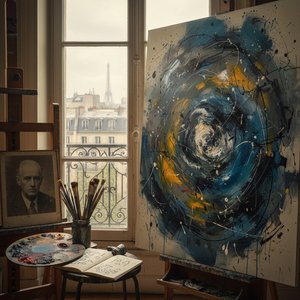
Antoine Blanchard (Marcel Masson): Parisian Abstraction & the Legacy of Automatism
Explore the captivating world of Antoine Blanchard (Marcel Masson) and his nostalgic Parisian scenes. Discover his artistic influences, unique style, and the challenges of authentication. Expert insights & art appraisal information.

Unveiling the Mystery: The Top 25 Surrealist Masterpieces by René Magritte
Explore 25 iconic René Magritte masterpieces of Surrealism. Discover museum-quality art on OriginalUniqueArt.com.

25 Masterpieces by Amedeo Modigliani: The Soul of Modern Portraiture
Immerse yourself in the haunting beauty of Amedeo Modigliani. Explore 25 iconic masterpieces, from his soulful portraits to expressive nudes. Find inspiration for your collection with museum-quality art reproductions and curated decor ideas. Discover all masterpieces on OriginalUniqueArt.com.

25 Masterpieces by Édouard Manet: The Rebel Who Redefined Modern Art
Journey through the rebellious soul of French Impressionism with our curated list of Édouard Manet's top 25 masterpieces. From iconic scandals to modern Parisian scenes, explore the stories behind these timeless works and find museum-quality art reproductions. Discover all on OriginalUniqueArt.com.