

 Visualizar em escala
 Enviar
 Compartilhar
 Ver detalhes
 Guia de Obras do Aluno

 Baixar imagem
 Semelhantes
 Raio X
 Apresentação de slides
 Estatísticas
Pavilion
 Oil On Canvas
- WallArt
- Bengal School of Art
 23.0 x 16.0 cm
 Victoria Memorial Hall
 Ver mais
Reprodução em Óleo Feita à Mão
Óleo sobre tela pintado à mão no tamanho e moldura de sua escolha, feito sob encomenda pelos nossos artistas. ( Alternar para Impressão Ver Imagem Digital)




P118B €10

P118H €10

P118W €10

P438Z €10

P508JH €12

P508YH €12

P805H €10

P805Z €10

P919BZ €10

P919G €10

P919XJ €10

P959ZH €10

P968JZ €12

W106C €8

W218G €10

W218JH €8

W218Y €10

W307PJ €10

W316G €10

W316PJ €8

W316Y €10

W398PJ €8

W4111J €10

W500HY €15

W500JH €15

W692G €12

W849H €8

W940BG €15

W953PJ €8




Escolha entre os nossos tamanhos pré-definidos que respeitam as proporções originais da obra de arte.

Digite a largura e a altura de que necessita, para se ajustar à sua moldura ou à sua parede. Esta obra é pintada à mão, por isso, para um tamanho com uma proporção diferente, o artista pode pintar um pouco mais ao redor da imagem ou cortar um pouco — você escolhe. Enviamos-lhe uma maquete digital para aprovação antes de a pintura começar. A imagem exibida nesta página não mostra o resultado real — apenas a maquete mostra.
Após o pedido, a equipa OriginalUniqueArt.com enviará um e-mail ao cliente para solicitar instruções e fornecer uma prévia do esboço.
Entrega mundial () em 3 a 4 semanas, em vez das 5 semanas padrão. (25 Outubro). Sem comprometer a qualidade.

Envio expresso gratuito para todo o mundo

Tela de Linho Premium

Seguro de transporte total

Garantia de Reembolso de Impostos Alfandegários

Garantia de Fidelidade de Cor

Política de Devolução em 100 Dias (Apenas para Defeitos)

Garantia de reembolso de 100%

Desconto para múltiplas unidades
 A opção de vidro está disponível apenas para tamanhos inferiores a 110 cm

Pavilion
Técnica de Reprodução
Dimensões da Reprodução
-


Preço Total
€ 263
Abanindranath Tagore’s “Pavilion”: A Bridge Between East and West
The artwork presented here, Abanindranath Tagore's "Pavilion," isn’t merely a depiction of a building; it’s a carefully constructed visual poem, a pivotal moment in the history of Indian art. Painted in 1907, during a period of intense nationalistic fervor and artistic experimentation, this work represents Tagore’s audacious attempt to synthesize traditional Indian aesthetics with Western influences – a strategy that fundamentally reshaped the landscape of modern Indian painting. It's a piece brimming with symbolism, inviting viewers to contemplate themes of spirituality, identity, and the evolving relationship between tradition and modernity.
Tagore, deeply influenced by the Japanese aesthetic—particularly its emphasis on calligraphy and flattened perspective—and inspired by the Mughal and Rajput miniature traditions, sought to create an art form that resonated with Indian sensibilities. He deliberately rejected the academic realism prevalent in Western art schools, which he viewed as cold and devoid of spiritual depth. Instead, he drew upon the rich visual vocabulary of ancient India – its vibrant colors, stylized forms, and symbolic imagery—and infused it with a distinctly modern sensibility. “Pavilion” exemplifies this approach perfectly; it’s not a photographic representation but rather an evocative interpretation, prioritizing mood and feeling over strict adherence to reality.
A Symphony of Color and Symbolism
The painting immediately captivates the eye with its rich palette—a deliberate departure from the muted tones favored by Western artists. Deep blues and greens dominate the composition, evoking a sense of tranquility and spirituality, while bursts of crimson, gold, and saffron inject vibrancy and energy. These colors aren’t simply decorative; they carry profound symbolic weight. Blue represents the heavens and spiritual realms, red signifies passion and life force, and gold embodies divinity and enlightenment. The use of these hues is deeply rooted in Hindu iconography and reflects Tagore's desire to reconnect with India’s ancient spiritual heritage.
The pavilion itself—a structure reminiscent of Mughal palaces but imbued with a distinctly Indian character—is rendered with a flattened perspective, echoing the style of Japanese woodblock prints. The arched doorway, framed by intricate floral motifs and stylized clouds, serves as a focal point, drawing the viewer’s eye into the heart of the composition. Notice the deliberate simplification of forms – a hallmark of both Mughal and Japanese art—which contributes to the painting's serene and contemplative atmosphere. The figures depicted within the pavilion are not realistically rendered but rather presented as stylized silhouettes, further emphasizing the work’s symbolic nature.
Historical Context and Artistic Significance
“Pavilion” was created during a crucial period in Indian history—the early 20th century—a time marked by growing nationalist sentiment and a desire to reclaim India's cultural identity after centuries of colonial rule. Tagore’s art played a significant role in this movement, providing a visual language for expressing Indian values and traditions. He founded the Bengal School of Art, which championed a distinctly Indian style of painting that drew inspiration from both ancient and contemporary sources. This school challenged the dominance of Western artistic styles and paved the way for a new generation of Indian artists.
Tagore’s work wasn't without its critics. Some accused him of diluting traditional Indian art by incorporating Western elements, while others praised his innovative approach to blending Eastern and Western aesthetics. However, “Pavilion” remains a testament to Tagore’s artistic vision—a bold and ambitious attempt to create an art form that was both deeply rooted in India's cultural heritage and open to new influences. It stands as a pivotal work in the development of modern Indian painting, demonstrating the power of art to shape national identity and express complex ideas.
A Timeless Masterpiece for Your Space
Reproduced on high-quality canvas or paper, Abanindranath Tagore’s “Pavilion” offers a captivating glimpse into India's rich artistic heritage. Its serene composition, vibrant colors, and evocative symbolism make it an ideal addition to any home or office space. Whether you are drawn to its spiritual depth, its historical significance, or simply its aesthetic beauty, this artwork is sure to inspire contemplation and add a touch of timeless elegance to your surroundings. Consider commissioning a hand-painted reproduction from OriginalUniqueArt.com for a truly authentic experience.
Perguntas e Respostas
As cores de "Pavilion" de Abanindranath Tagore são saturadas ou suaves?
"Pavilion" de Abanindranath Tagore é registrado com uma saturação de Balanced Soft.
Está disponível um download para "Pavilion"?
Um download está disponível para "Pavilion": a página de Baixar da obra oferece download de imagem digital em alta resolução.
Qual é a técnica e as dimensões de "Pavilion" de Abanindranath Tagore?
A obra original "Pavilion" de Abanindranath Tagore é um trabalho em Oil On Canvas com dimensões de 23 x 16 cm. A técnica e o tamanho descrevem o objeto original.
Biografia do Artista
Primeiros Anos e Origens
- Nascimento: 7 de maio de 1861, Joransanko, Calcutá, Índia Britânica
- Falecimento: 5 de dezembro de 1951
- Família: Membro da distinta família Tagore; sobrinho de Rabindranath Tagore. Seu avô era Girindranath Tagore, e seu pai era Gunendranath Tagore.
- Educação: Estudou no Sanskrit College, Kolkata, na década de 1880 e, posteriormente, frequentou a Calcutta School of Art.
Desenvolvimento Artístico e Influências
- Formação Inicial: Aprendeu técnicas de pastel com O. Ghilardi e pintura a óleo com Charles Palmer na Calcutta School of Art.
- Estilos Mughal e Rajput: Buscou modernizar estes estilos, rejeitando os modelos de arte ocidental.
- Valores Swadeshi: Incorporou os valores Swadeshi em sua arte, promovendo as tradições indianas.
- Esteticismo de Whistler: Influenciado pelos princípios estéticos de Whistler.
- Influência Japonesa: Mais tarde, incorporou as tradições caligráficas chinesas e japonesas ao seu estilo após conhecer os artistas Tikan e Hesida.
Principais Obras e Contribuições Artísticas
- Rohini II: Uma obra notável que demonstra sua habilidade artística.
- Passing of Shajahan: Outra pintura significativa que reflete seu estilo.
- Season Flower in a Vase: Demonstra seu domínio de técnica e temática.
- Série As Mil e Uma Noites (1930): Considerada um de seus maiores feitos, utilizando as histórias das Mil e Uma Noites para explorar a Calcutá colonial.
- Bharat Mata: Uma pintura significativa que simboliza a Mãe Índia.
- Fundador da Escola de Arte de Bengala: Desempenhou um papel fundamental na formação da pintura indiana moderna e na promoção da arte nacionalista.
- Sociedade Indiana de Arte Oriental (1907): Fundou esta sociedade para promover as formas tradicionais de arte indiana.
Legado e Significância Histórica
- Pioneiro da Pintura Indiana Moderna: Reconhecido como uma figura chave no desenvolvimento da arte indiana moderna.
- Influência em Artistas Posteriores: Mentor de artistas notáveis como Nandalal Bose, Asit Halder, Kshitindranath Majumdar e Jamini Roy.
- Renascimento das Formas de Arte Tradicionais: Defendeu o retorno às técnicas e estilos tradicionais indianos.
- Impacto na Literatura Infantil Bengali: Escreveu livros infantis influentes como Rajkahini, Budo Angla, Nalak e Khirer Putul.
- Tesouros Artísticos Nacionais: Suas obras são consideradas Tesouros Artísticos Nacionais.

Abanindranath Tagore
1871 - 1951 , Índia
Informações Rápidas
- Artistic Movement Or Style: Escola de Arte de Bengala
- Artists Or Movements Influenced By This Artist:
- Nandalal Bose
- Kshitindranath Majumdar
- Jamini Roy
- Artists Who Influenced This Artist:
- Whistler
- artistas Mogóis
- artistas Rajput
- Date Of Birth: 7 de maio de 1871
- Date Of Death: 5 de dezembro de 1951
- Full Name: Abanindranath Tagore
- Nationality: Indiano
- Notable Artworks:
- Rohini II
- Passing of Shajahan
- Season Flower in a Vase
- Place Of Birth: Jorasanko, Índia
Artigos Relacionados

Raja Ravi Varma: Bridging Tradition & Modernity in 19th-Century Indian Art
Explore the life & art of Raja Ravi Varma, a pioneer who fused European techniques with Indian iconography. Discover his iconic paintings, lasting legacy, and influence on modern Indian art at OriginalUniqueArt.
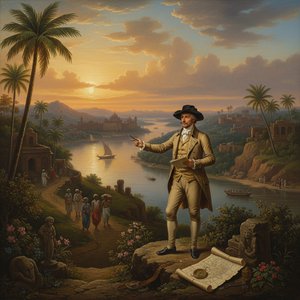
Thomas Daniell: Navigating Light, Landscape & Cultural Exchange in Early 19th-Century India
Explore the captivating landscapes of Thomas Daniell, a pioneering artist who documented India's beauty in the 19th century. Discover his 'Oriental Scenery,' aquatint technique & lasting legacy. Hand-painted reproductions available at OriginalUniqueArt.
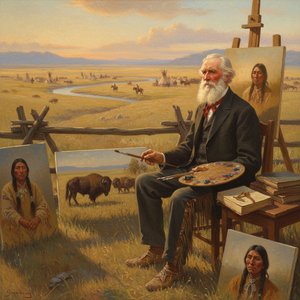
Joseph Henry Sharp: Capturing the Spirit of the Plains – Life, Art & Legacy
Explore the life & art of Joseph Henry Sharp, a founding member of the Taos Society of Artists renowned for his realistic depictions of Native American culture and Western landscapes. Discover his legacy with OriginalUniqueArt.
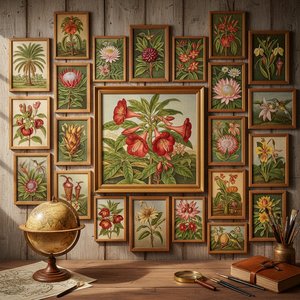
Marianne North: As 25 Obras-Primas da Pintora Botânica e Exploradora
Descubra as 25 obras-primas de Marianne North, a pintora botânica vitoriana que viajou o mundo! Explore paisagens tropicais vibrantes e flores exóticas em quadros únicos. Encontre reproduções de arte exclusivas para decorar sua casa com elegância em OriginalUniqueArt.com.
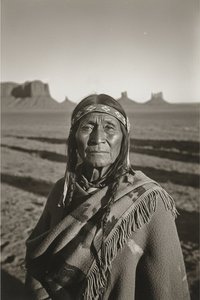
Shadow Catcher: Edward S. Curtis & the Ethnographic Portraiture of a Vanishing West
Explore the life & work of Edward S. Curtis, the 'Shadow Catcher,' and his groundbreaking photographic documentation of Native American cultures. Discover iconic images from *The North American Indian* and a critical look at his lasting legacy.
