

 Visualizar em escala
 Enviar
 Compartilhar
 Ver detalhes

 Baixar
 Semelhantes
 Raio X
 Apresentação de slides
Khagen Babu


 Ver mais
Reprodução em Óleo Feita à Mão
Óleo sobre tela pintado à mão no seu tamanho e moldura, feito sob encomenda pelos nossos artistas. ( Encomendar impressão Comprar imagem em alta resolução)




P118B $10

P118H $10

P118W $10

P438Z $10

P508JH $12

P508YH $12

P805H $10

P805Z $10

P919BZ $10

P919G $10

P919XJ $10

P959ZH $10

P968JZ $12

W106C $8

W218G $10

W218JH $8

W218Y $10

W307PJ $10

W316G $10

W316PJ $8

W316Y $10

W398PJ $8

W4111J $10

W500HY $15

W500JH $15

W692G $12

W849H $8

W940BG $15

W953PJ $8




Escolha entre os nossos tamanhos pré-definidos que respeitam as proporções originais da obra de arte.

Pode inserir as suas próprias dimensões para se adequar a uma moldura ou espaço específico. Se o tamanho selecionado não corresponder às proporções da imagem original, iremos cortar a obra de arte ou estender a pintura com elementos adicionais pintados à mão. Um esboço digital será enviado para sua aprovação antes do início da produção.
Tenha em atenção que a pré-visualização no ecrã não reflete o corte ou extensão real. Apenas o esboço mostrará com precisão a composição final.
Embora tamanhos personalizados estejam disponíveis, recomendamos selecionar uma dimensão da lista predefinida para preservar as proporções originais.
Após o pedido, a equipa OriginalUniqueArt.com enviará um e-mail ao cliente para solicitar instruções e fornecer uma prévia do esboço.
Entrega mundial () em 3 a 4 semanas, em vez das 5 semanas padrão. (21 Agosto). Sem comprometer a qualidade.

Envio Expresso Gratuito para todo o Mundo

Tela de Linho Premium

Seguro de transporte total

Garantia de Reembolso de Impostos Alfandegários

Garantia de Fidelidade de Cor

Política de Devolução de 60 Dias (Apenas para Defeitos)

Garantia de reembolso de 100%

Desconto para múltiplas unidades
 A opção de vidro está disponível apenas para tamanhos inferiores a 110 cm

Khagen Babu
Técnica de Reprodução
Dimensões da Reprodução
-


Preço Total
$ 300
Descrição da Obra
A Portrait of Quiet Contemplation: Khagen Babu by Abanindranath Tagore
Abanindranath Tagore’s “Khagen Babu” is more than just a portrait; it's a carefully constructed meditation on Indian identity and the burgeoning movement towards a distinctly modern, yet deeply rooted, artistic expression. Painted in 1907, during a pivotal moment in India’s cultural awakening, this black-and-white photograph – meticulously reproduced as a fine art print – captures a sense of dignified introspection within a man identified simply as “Khagen Babu.” The image, originally intended for the Indian Society of Oriental Art's exhibition, immediately draws the viewer into a world where traditional Indian aesthetics are subtly interwoven with Western artistic sensibilities.
The subject himself is rendered with a remarkable restraint. His face, framed by a neatly trimmed mustache and a thoughtful gaze directed towards the camera, exudes an air of quiet contemplation. Tagore’s masterful use of light and shadow creates a subtle depth, emphasizing the lines of his face and hinting at a lifetime of experience. The background, a simple green expanse – reminiscent of traditional Indian gardens – provides a serene backdrop that allows the subject to command the entire composition. It's a deliberate choice, grounding the portrait firmly within an Indian context while simultaneously inviting a universal connection.
The Bengal School and its Hybrid Style
“Khagen Babu” is a quintessential example of the Bengal School of Art, founded by Tagore himself. This revolutionary movement sought to break away from the dominant Western artistic trends that had infiltrated India during the colonial period. Instead, it drew inspiration from ancient Indian art forms – particularly Mughal and Rajput miniature paintings – alongside elements of Japanese aesthetics, notably in its use of composition and color palettes. Tagore’s approach was not simply a revival; he skillfully blended these influences to create something entirely new: a distinctly ‘Indian’ modernism.
Notice the deliberate simplification of forms, reminiscent of traditional Indian painting styles. The brushstrokes are visible, lending a sense of immediacy and intimacy to the portrait. The use of monochrome – a conscious rejection of vibrant Western color schemes – further emphasizes the spiritual and contemplative nature of the subject. This stylistic choice was deeply symbolic, aligning with the Swadeshi movement’s emphasis on self-reliance and rejecting foreign influences.
Symbolism and the Essence of Indian Identity
Beyond its formal qualities, “Khagen Babu” is rich in symbolism. The man's posture – upright and dignified – reflects a sense of honor and tradition. The subtle details, such as the folds of his garment and the arrangement of his hands, are imbued with meaning within the context of Indian culture. Tagore’s intention was to capture not just a likeness but also an essence—a representation of the soul of India itself.
The photograph's composition echoes traditional Indian temple murals, further reinforcing this connection to national identity. The subject is presented as a figure of authority and wisdom, embodying the values of self-sufficiency, spirituality, and cultural pride that were central to the Swadeshi movement. It’s a powerful statement about reclaiming artistic agency within a nation grappling with its own history and future.
A Timeless Masterpiece for Your Space
Reproduced as a high-quality print, “Khagen Babu” offers a captivating glimpse into a pivotal moment in Indian art history. Its serene beauty and profound symbolism make it an ideal addition to any collection or interior space. Whether you’re an art enthusiast, a collector seeking unique pieces, or simply someone who appreciates the power of visual storytelling, this portrait invites contemplation and celebrates the enduring legacy of Abanindranath Tagore.
The original dimensions of 25 x 17 cm make it suitable for a variety of settings, from smaller studies to larger wall displays. Its timeless appeal ensures that “Khagen Babu” will continue to resonate with viewers for generations to come.
Biografia do Artista
Primeiros Anos e Origens
- Nascimento: 7 de maio de 1861, Joransanko, Calcutá, Índia Britânica
- Falecimento: 5 de dezembro de 1951
- Família: Membro da distinta família Tagore; sobrinho de Rabindranath Tagore. Seu avô era Girindranath Tagore, e seu pai era Gunendranath Tagore.
- Educação: Estudou no Sanskrit College, Kolkata, na década de 1880 e, posteriormente, frequentou a Calcutta School of Art.
Desenvolvimento Artístico e Influências
- Formação Inicial: Aprendeu técnicas de pastel com O. Ghilardi e pintura a óleo com Charles Palmer na Calcutta School of Art.
- Estilos Mughal e Rajput: Buscou modernizar estes estilos, rejeitando os modelos de arte ocidental.
- Valores Swadeshi: Incorporou os valores Swadeshi em sua arte, promovendo as tradições indianas.
- Esteticismo de Whistler: Influenciado pelos princípios estéticos de Whistler.
- Influência Japonesa: Mais tarde, incorporou as tradições caligráficas chinesas e japonesas ao seu estilo após conhecer os artistas Tikan e Hesida.
Principais Obras e Contribuições Artísticas
- Rohini II: Uma obra notável que demonstra sua habilidade artística.
- Passing of Shajahan: Outra pintura significativa que reflete seu estilo.
- Season Flower in a Vase: Demonstra seu domínio de técnica e temática.
- Série As Mil e Uma Noites (1930): Considerada um de seus maiores feitos, utilizando as histórias das Mil e Uma Noites para explorar a Calcutá colonial.
- Bharat Mata: Uma pintura significativa que simboliza a Mãe Índia.
- Fundador da Escola de Arte de Bengala: Desempenhou um papel fundamental na formação da pintura indiana moderna e na promoção da arte nacionalista.
- Sociedade Indiana de Arte Oriental (1907): Fundou esta sociedade para promover as formas tradicionais de arte indiana.
Legado e Significância Histórica
- Pioneiro da Pintura Indiana Moderna: Reconhecido como uma figura chave no desenvolvimento da arte indiana moderna.
- Influência em Artistas Posteriores: Mentor de artistas notáveis como Nandalal Bose, Asit Halder, Kshitindranath Majumdar e Jamini Roy.
- Renascimento das Formas de Arte Tradicionais: Defendeu o retorno às técnicas e estilos tradicionais indianos.
- Impacto na Literatura Infantil Bengali: Escreveu livros infantis influentes como Rajkahini, Budo Angla, Nalak e Khirer Putul.
- Tesouros Artísticos Nacionais: Suas obras são consideradas Tesouros Artísticos Nacionais.

Abanindranath Tagore
1871 - 1951 , Índia
Informações Rápidas
- Artistic Movement Or Style: Escola de Arte de Bengala
- Artists Or Movements Influenced By This Artist:
- Nandalal Bose
- Kshitindranath Majumdar
- Jamini Roy
- Artists Who Influenced This Artist:
- Whistler
- artistas Mogóis
- artistas Rajput
- Date Of Birth: 7 de maio de 1871
- Date Of Death: 5 de dezembro de 1951
- Full Name: Abanindranath Tagore
- Nationality: Indiano
- Notable Artworks:
- Rohini II
- Passing of Shajahan
- Season Flower in a Vase
- Place Of Birth: Jorasanko, Índia
Artigos Relacionados

Raja Ravi Varma: Bridging Tradition & Modernity in 19th-Century Indian Art
Explore the life & art of Raja Ravi Varma, a pioneer who fused European techniques with Indian iconography. Discover his iconic paintings, lasting legacy, and influence on modern Indian art at OriginalUniqueArt.

The Alluring Gaze: Orientalism in 19th-Century Art – Representation, Reception & Construction of the 'Orient'
Explore the complex history of Orientalism in 19th-century art. Discover how Western artists depicted the 'Orient,' its cultural impact, and Edward Said's critical analysis. A deep dive for art lovers & historians.

Panoramic Visions of Empire: The Daniells’ Artistic Collaboration & Legacy
Explore the captivating 'Oriental Scenery' by Thomas & William Daniell. Discover their pioneering aquatint prints of India, imperial context, artistic collaboration, and lasting legacy. A deep dive for history lovers.
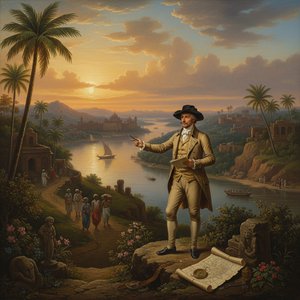
Thomas Daniell: Navigating Light, Landscape & Cultural Exchange in Early 19th-Century India
Explore the captivating landscapes of Thomas Daniell, a pioneering artist who documented India's beauty in the 19th century. Discover his 'Oriental Scenery,' aquatint technique & lasting legacy. Hand-painted reproductions available at OriginalUniqueArt.

The Allure of the Exotic: Orientalism in 19th-Century Art
Explore the captivating world of 19th-century Orientalist art! Discover iconic painters like Gérôme & Benjamin-Constant, key themes, and collecting insights. Expert analysis at OriginalUniqueArt.


