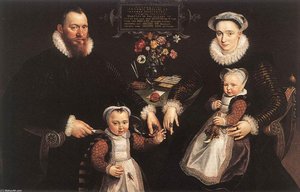
Retrato de Maerten De Vos

Pinturas de Maerten De Vos: As 82 mais famosas, sob o olhar de uma galeria

Atualizado em Novembro 2026 · classificado pela nossa pontuação de popularidade (pesquisas, visitas e pedidos de cada obra) · 85 obras de Maerten De Vos em nosso catálogo

Em resumo

Aos olhos da galeria, a pintura mais famosa de Maerten De Vos é Allegory of the Seven Liberal Arts (1590). Nativity (1577) e The Rapture of Europe (1590) completam o trio que todos reconhecem. Dos 85 trabalhos de Maerten De Vos em nosso catálogo, a galeria apresenta abaixo as 82 obras mais famosas, cada uma original, com seu ano, seu museu e o que a torna única.

1532 – 1603, Antuérpia Mannerism Mais obras: Royal Museum of Fine Arts Antwerp

As 10 principais pinturas de Maerten De Vos na galeria

1
Allegory of the Seven Liberal Arts (1590) de Maerten De Vos

Allegory of the Seven Liberal Arts

1590 · Oil On Panel

The Allegory of the Seven Liberal Arts is an oil on panel painting by Maerten De Vos. Created in 1590, this work offers a structured look at the fundamental pillars of Renaissance education. De Vos, a significant figure in the Southern Netherlands, brings a specific clarity to this assembly of figures. The scale of the piece is substantial, measuring 147 x 200 cm.

2
Nativity (1577) de Maerten De Vos

Nativity

In this 1577 composition, we find ourselves drawn into a sacred space where the atmosphere is heavy with reverence. The scene centers on the intimate moment of the Nativity, focusing on Mary as she cradles the infant Jesus. She is surrounded by a gathering of figures, at least twelve in total, including Joseph and various onlookers who have come to witness the event. The setting, which carries the architectural weight…

3
The Rapture of Europe (1590) de Maerten De Vos

The Rapture of Europe

1590 · Oil On Panel · Museu de Belas Artes de Bilbao, Bilbau

The Rapture of Europe emerges from the brush of Maerten De Vos as a profound mythological painting. This work, also known by the title The Rape of Europa, captures a moment of profound transformation and movement. It exists as a vivid window into the legends of antiquity, where the boundaries between the divine and the mortal blur under a heavy, dramatic sky.

4
The Resurrection of Christ (1564) de Maerten De Vos

The Resurrection of Christ

1564 · Oil · National Gallery of Ireland, Dublin

Maerten De Vos, born in Antwerp, Belgium, in 1532, produced The Resurrection of Christ around 1564. A significant figure in the transition from the High Renaissance to Mannerism, De Vos was a member of the Guild of Saint Luke in Antwerp. His career spanned the religious and political shifts of the Southern Netherlands until his death in 1603.

5
Scene of the legend of S. Benedict (building of a church) (1557) de Maerten De Vos

Scene of the legend of S. Benedict (building of a church)

1557 · Oil

This Renaissance-era oil painting, dating to 1557, presents a complex and multi-layered religious narrative. The composition utilizes a deep landscape perspective to establish a sense of vastness, guiding the viewer's eye from the immediate foreground toward a distant horizon. In the foreground on the left, a central figure, likely Saint Benedict, is depicted in a white robe, gesturing toward a partially constructed stone building or church. Surrounding this structure, several…

6
Christ on the Cross (1567) de Maerten De Vos

Christ on the Cross

1567 · Oil On Panel · Bavarian State Painting Collections, Munique

In this religious work, Christ on the Cross, Maerten De Vos presents a profound scene of the Crucifixion of Jesus Christ. Created about 1567, the painting captures a moment of intense spiritual gravity. The central figure of Christ is positioned on the cross, flanked by the two thieves, a traditional arrangement that anchors the biblical narrative. This composition focuses the viewer's attention on the central event of the Passion through…

7
Raising of Lazarus (1570) de Maerten De Vos

Raising of Lazarus

1570 · Oil On Canvas · Bavarian State Painting Collections, Munique

In the Raising of Lazarus, Maerten De Vos captures a moment of profound divine intervention. The scene unfolds around the miraculous event where Jesus calls Lazarus forth from the tomb. This biblical miracle, depicted in this work from about 1570, pulses with the tension of life returning to a body once claimed by death. The air feels heavy with the weight of the supernatural as the command of Christ meets…

8
The death of Adonis (1575) de Maerten De Vos

The death of Adonis

1575 · Oil On Canvas · Musee des Beaux-Arts, Blois

In 1575, Maerten De Vos captures a moment of profound tragedy in his work, The death of Adonis. The scene freezes the exact instant of a mythological catastrophe, where the mortal hunter Adonis meets his end. A heavy sense of loss hangs over the landscape as the life drains from his pale form. The air feels thick with the weight of this sudden, violent transition from life to stillness.

9
Gathering of manna (1570) de Maerten De Vos

Gathering of manna

1570 · Oil · Bavarian State Painting Collections, Munique

In this large-scale oil painting, Gathering of manna by Maerten De Vos, the artist presents a densely packed scene that demands close observation. The composition is organized through a multi-layered landscape, creating a sense of immense scale. In the foreground, the space is occupied by women and children focused on the task of collecting food. This immediate layer of activity leads the eye toward a distant horizon where hazy mountains…

10
Incredulity of Saint Thomas (1574) de Maerten De Vos

Incredulity of Saint Thomas

1574 · Oil · Royal Museum of Fine Arts Antwerp, Antuérpia

Maerten De Vos captures the biblical moment of physical verification of Christ's resurrection in Incredulity of Saint Thomas. Created about 1574, the work centers on the tension between human doubt and divine revelation. The scene focuses on the precise instant when Thomas reaches toward the wounds of the resurrected Christ to confirm the truth of the event.

Pinturas de Maerten De Vos, classificadas de 11 a 82

11Saint Stephen (1574) de Maerten De VosSaint Stephen1574 · Royal Museum of Fine Arts Antwerp 12The Beheading of Saint John-Baptist (1574) de Maerten De VosThe Beheading of Saint John-Baptist1574 · Royal Museum of Fine Arts Antwerp 13Saint Thomas the Apostle (1574) de Maerten De VosSaint Thomas the Apostle1574 · Royal Museum of Fine Arts Antwerp 14The Baptism of Christ (1574) de Maerten De VosThe Baptism of Christ1574 · Royal Museum of Fine Arts Antwerp 15The Soldiers Fighting over Christ's Cloak (1575) de Maerten De VosThe Soldiers Fighting over Christ's Cloak1575 · Statens Museum For Kunst 16The Adoration of the Kings (1575) de Maerten De VosThe Adoration of the Kings1575 · Statens Museum For Kunst 17the Annunciation (1578) de Maerten De Vosthe Annunciation1578 18The Parable of the Labourers in the Vineyard (1575) de Maerten De VosThe Parable of the Labourers in the Vineyard1575 · Nationalmuseum 19Portrait of Antonius Anselmus, His Wife and Their Children (1577) de Maerten De VosPortrait of Antonius Anselmus, His Wife and Their Children1577 · Musées Royaux des Beaux-Arts 20Saint Luke Appearing at the Curch of Our Lady in Tripoli (1588) de Maerten De VosSaint Luke Appearing at the Curch of Our Lady in Tripoli1588 · Royal Museum of Fine Arts Antwerp 21Saint Didacus Brings the Stillborn Girl to Life (1591) de Maerten De VosSaint Didacus Brings the Stillborn Girl to Life1591 · Royal Museum of Fine Arts Antwerp 22Saint Didacus Finds a Miraculous Meal (1591) de Maerten De VosSaint Didacus Finds a Miraculous Meal1591 · Royal Museum of Fine Arts Antwerp 23Saint Didacus of Alcalà at Prayers (1591) de Maerten De VosSaint Didacus of Alcalà at Prayers1591 · Royal Museum of Fine Arts Antwerp 24The Life of Saint Didacus of Alcalá (1590) de Maerten De VosThe Life of Saint Didacus of Alcalá1590 · Royal Museum of Fine Arts Antwerp 25The Nativity (1588) de Maerten De VosThe Nativity1588 · Royal Museum of Fine Arts Antwerp 26Saint Georges delivering Saint Margaret (1590) de Maerten De VosSaint Georges delivering Saint Margaret1590 · Royal Museum of Fine Arts Antwerp 27Saint Georges delivering Saint Margaret (1590) de Maerten De VosSaint Georges delivering Saint Margaret1590 · Royal Museum of Fine Arts Antwerp 28The Emperor Constantine erecting a church dedicated to Saint George (1590) de Maerten De VosThe Emperor Constantine erecting a church dedicated to Saint George1590 · Royal Museum of Fine Arts Antwerp 29Baptism of the King of Silene (1590) de Maerten De VosBaptism of the King of Silene1590 · Royal Museum of Fine Arts Antwerp 30Christ Triumphant (1590) de Maerten De VosChrist Triumphant1590 · Royal Museum of Fine Arts Antwerp 31Henry IV of Castile and his daughter find healing at the tomb of Saint Didacus (1595) de Maerten De VosHenry IV of Castile and his daughter find healing at the tomb of Saint Didacus1595 · Royal Museum of Fine Arts Antwerp 32Adoration of the Kings (1599) de Maerten De VosAdoration of the Kings1599 · Musée des Beaux-Arts de Valenciennes 33The Temptations of Antony Abbot of Egypt (1594) de Maerten De VosThe Temptations of Antony Abbot of Egypt1594 · Royal Museum of Fine Arts Antwerp 34Abraham in Hebron (1602) de Maerten De VosAbraham in Hebron1602 · Royal Museum of Fine Arts Antwerp 35The Burial of Sarah (1602) de Maerten De VosThe Burial of Sarah1602 · Royal Museum of Fine Arts Antwerp 36The Widow's Offering (1602) de Maerten De VosThe Widow's Offering1602 · Royal Museum of Fine Arts Antwerp 37The Temple Tax (1602) de Maerten De VosThe Temple Tax1602 · Royal Museum of Fine Arts Antwerp 38Then give to Caesar what is Caesar's (1602) de Maerten De VosThen give to Caesar what is Caesar's1602 · Royal Museum of Fine Arts Antwerp 39Crucifixion (1600) de Maerten De VosCrucifixion1600 · Royal Museum of Fine Arts Antwerp 40The Tribunal of the Brabant Mint in Antwerp (1594) de Maerten De VosThe Tribunal of the Brabant Mint in Antwerp1594 · Rockox House 41The Marriage at Cana (1596) de Maerten De VosThe Marriage at Cana1596 · Onze 42Saint Luke Appears in the Church of Our Lady of Tripoli (1620) de Maerten De VosSaint Luke Appears in the Church of Our Lady of Tripoli1620 · Royal Museum of Fine Arts Antwerp 43Riverlandscape with cattle herders (1616) de Maerten De VosRiverlandscape with cattle herders1616 · Museu do Prado 44Mountain Landscape with a Castle (Christ on the Road to Emmaus) (1616) de Maerten De VosMountain Landscape with a Castle (Christ on the Road to Emmaus)1616 · Nationalmuseum 45Landscape with a Farm (1627) de Maerten De VosLandscape with a Farm1627 · Museu Hermitage 46Moses Showing the Tablets of the Law to the Israelites, with Portraits of Members of the Panhuys Family, their Relatives and Friends (1575) de Maerten De VosMoses Showing the Tablets of the Law to the Israelites, with Portraits of Members of the Panhuys Family, their Relatives and Friends1575 · Mauritshuis 47Portrait of Antonius Anselmus at the Age of Forty-Six, with a Spaniel (1571) de Maerten De VosPortrait of Antonius Anselmus at the Age of Forty-Six, with a Spaniel1571 · Museu de Israel 48The Ephesians burn the exorcists' books in public Acts 19:19) (1568) de Maerten De VosThe Ephesians burn the exorcists' books in public Acts 19:19)1568 · Museus Reais de Belas Artes da Bélgica 49Portrait of an unicorn (1572) de Maerten De VosPortrait of an unicorn1572 · Staatliches Museum Schwerin 50Portrait of an Old Woman (1569) de Maerten De VosPortrait of an Old Woman1569 · National Gallery of Art 51St Paul Bitten by a Viper on the Island of Malta (1567) de Maerten De VosSt Paul Bitten by a Viper on the Island of Malta1567 · Museu do Louvre 52Saint Luke Giving three Pilgrims Alms (1588) de Maerten De VosSaint Luke Giving three Pilgrims Alms1588 · Royal Museum of Fine Arts Antwerp 53Allegory of the Choleric Temperament (1583) de Maerten De VosAllegory of the Choleric Temperament1583 · Cantor Arts Center at Stanford University 54The Temptation of St Antony (1591) de Maerten De VosThe Temptation of St Antony1591 · Koninklijk Museum voor Schone Kunsten 55The Family of St Anne (detail) (1585) de Maerten De VosThe Family of St Anne (detail)1585 · Museum voor Schone Kunsten 56The Family of Saint Anne (1585) de Maerten De VosThe Family of Saint Anne1585 · Museum of Fine Arts Ghent (MSK) 57Scene from the Life of the Virgin (1600) de Maerten De VosScene from the Life of the Virgin1600 · Catedral de Nossa Senhora de Tournai 58The Emperor's Toil (1601) de Maerten De VosThe Emperor's Toil1601 · Royal Museum of Fine Arts Antwerp 59Landscape with a Lake (1616) de Maerten De VosLandscape with a Lake1616 · Museu Hermitage 60Mining Operations along a River (1620) de Maerten De VosMining Operations along a River1620 · Walters Art Museum 61Landscape with travellers (1616) de Maerten De VosLandscape with travellers1616 · Museum der bildenden Künste 62Landscape with Satyrs (1626) de Maerten De VosLandscape with Satyrs1626 · National Gallery 63Landscape with Windmill and Wayside Chapel (1628) de Maerten De VosLandscape with Windmill and Wayside Chapel1628 · Harvard Art Museums 64The Last Supper de Maerten De VosThe Last SupperThe National Museum of Western Art 65St Luke Painting the Virgin Mary (1602) de Maerten De VosSt Luke Painting the Virgin Mary1602 · Koninklijk Museum voor Schone Kunsten 66Triumph of David de Maerten De VosTriumph of DavidMusée des Beaux-Arts 67The air de Maerten De VosThe airMuseu do Prado 68The earth de Maerten De VosThe earthMuseu do Prado 69Landscape with Pan and Syrinx, after Paul Bril de Maerten De VosLandscape with Pan and Syrinx, after Paul BrilFitzwilliam Museum 70Dijon St Benigne cathedral, The Annunciation by Martin de Vos de Maerten De VosDijon St Benigne cathedral, The Annunciation by Martin de Vos 71Saint Didacus Helps with a Difficult Birth de Maerten De VosSaint Didacus Helps with a Difficult BirthRoyal Museum of Fine Arts Antwerp 72The Spanish Crown Prince Don Carlos Heals After Touching the Corpse of Saint Didacus de Maerten De VosThe Spanish Crown Prince Don Carlos Heals After Touching the Corpse of Saint DidacusRoyal Museum of Fine Arts Antwerp 73Death of Saint Didacus de Maerten De VosDeath of Saint DidacusRoyal Museum of Fine Arts Antwerp 74Saint Didacus Heals the Sick de Maerten De VosSaint Didacus Heals the SickRoyal Museum of Fine Arts Antwerp 75Saint Didacus Saves a Boy From the Oven de Maerten De VosSaint Didacus Saves a Boy From the OvenRoyal Museum of Fine Arts Antwerp 76The Story of Saint Didacus of Alcalà de Maerten De VosThe Story of Saint Didacus of AlcalàRoyal Museum of Fine Arts Antwerp 77Saint Francis of Assisi and Saint Didacus of Alcalá de Maerten De VosSaint Francis of Assisi and Saint Didacus of AlcaláRoyal Museum of Fine Arts Antwerp 78Portrait of Gillis Hooftman, Shipowner, and his Wife Margaretha van Nispen (Gilles van Eichelenberg, called Hoffman), Maerten de Vos, 1570 (1570) de Maerten De VosPortrait of Gillis Hooftman, Shipowner, and his Wife Margaretha van Nispen (Gilles van Eichelenberg, called Hoffman), Maerten de Vos, 15701570 · Rijksmuseum 79Return from the Flight to Egypt de Maerten De VosReturn from the Flight to Egypt 80Feeling de Maerten De VosFeelingHammer Museum 81Altarpiece of the Guild of the Old Arbalest (1590) de Maerten De VosAltarpiece of the Guild of the Old Arbalest1590 · Royal Museum of Fine Arts Antwerp 82Saint George and the dragon (1590) de Maerten De VosSaint George and the dragon1590

Pinturas famosas de Maerten De Vos, período por período

Os temas que cativaram o olhar de Maerten De Vos

Os quatro temas que mais se repetem nestas obras originais, cada um com o seu melhor exemplo.

Os museus que guardam os originais de Maerten De Vos

Os 8 museus que detêm a maioria das pinturas desta página.

Museus Cidade Obras de Maerten De Vos Pinturas desta lista
Royal Museum of Fine Arts Antwerp, AntuérpiaRoyal Museum of Fine Arts Antwerp Antuérpia 35 Incredulity of Saint Thomas, Saint Stephen, The Beheading of Saint John-Baptist
Bavarian State Painting Collections, MuniqueBavarian State Painting Collections Munique 3 Christ on the Cross, Raising of Lazarus, Gathering of manna
Museu do Prado, MadridMuseu do Prado Madrid 3 Riverlandscape with cattle herders, The air, The earth
Statens Museum For Kunst, CopenhagueStatens Museum For Kunst Copenhague 2 The Soldiers Fighting over Christ's Cloak, The Adoration of the Kings
Nationalmuseum, EstocolmoNationalmuseum Estocolmo 2 The Parable of the Labourers in the Vineyard, Mountain Landscape with a Castle (Christ on the Road to Emmaus)
Museu Hermitage, São PetersburgoMuseu Hermitage São Petersburgo 2 Landscape with a Farm, Landscape with a Lake
Koninklijk Museum voor Schone Kunsten, AntuérpiaKoninklijk Museum voor Schone Kunsten Antuérpia 2 The Temptation of St Antony, St Luke Painting the Virgin Mary
Catedral de Nossa Senhora (Onze-Lieve Vrouwekathedraal), AntuérpiaCatedral de Nossa Senhora (Onze-Lieve Vrouwekathedraal) Antuérpia 1 Nativity

Maerten De Vos, uma pintura emblemática por década

Obras por década

Escolha uma década para ver a obra original que a define.

Pinturas de Maerten De Vos: a galeria responde

Qual pintura de Maerten De Vos é a mais famosa de todas?Revelar a resposta

Allegory of the Seven Liberal Arts (1590). Nativity (1577) e The Rapture of Europe (1590) vêm a seguir.

Qual era a idade de Maerten De Vos ao concluir Allegory of the Seven Liberal Arts?Revelar a resposta

58 anos: Allegory of the Seven Liberal Arts data de 1590, e Maerten De Vos nasceu em 1532.

Quais são as 10 principais pinturas de Maerten De Vos?Revelar a resposta

Allegory of the Seven Liberal Arts, Nativity, The Rapture of Europe, The Resurrection of Christ, Scene of the legend of S. Benedict (building of a church), Christ on the Cross, Raising of Lazarus, The death of Adonis, Gathering of manna e Incredulity of Saint Thomas. O ranking acima apresenta o ano e o museu de cada uma.

Quantas obras Maerten De Vos criou?Revelar a resposta

Nosso catálogo contém 85 obras de Maerten De Vos, datadas de 1557 a 1602.

Onde estão expostos os originais mais famosos de Maerten De Vos?Revelar a resposta

Principalmente em Royal Museum of Fine Arts Antwerp (Antuérpia), Bavarian State Painting Collections (Munique) e Museu do Prado (Madrid). A tabela de museus acima lista todos eles.

Quando é que Maerten De Vos criou as suas pinturas mais famosas?Revelar a resposta

Em 1590s: 19 das 82 obras nesta página foram feitas então, sendo Allegory of the Seven Liberal Arts delas.

Quais são as obras mais famosas de Maerten De Vos no início e no fim de sua carreira?Revelar a resposta

Nesta página, a mais antiga é Scene of the legend of S. Benedict (building of a church) (1557) e a mais recente é Abraham in Hebron (1602).

Quais temas Maerten De Vos mais explorou?Revelar a resposta

People (17), Man (16) e Drapery (16), entre as 82 obras nesta página.

Em qual técnica Maerten De Vos mais trabalhou?Revelar a resposta

Oil, para 29 das 82 obras nesta página.

Com qual movimento Maerten De Vos está associado(a)?Revelar a resposta

Mannerism, a julgar pelos originais nesta página.

Quais obras originais de Maerten De Vos o Royal Museum of Fine Arts Antwerp possui?Revelar a resposta

Incredulity of Saint Thomas, Saint Stephen e The Beheading of Saint John-Baptist: o Royal Museum of Fine Arts Antwerp, Antuérpia detém 35 das obras desta página.

Maerten De Vos: o artista

Maerten De Vos: Um Mestre do Maneirismo e do Retrato

Maerten De Vos, nascido em Antuérpia por volta de 1530 e falecido na mesma cidade em 1607, destaca-se como uma figura fundamental que serviu de ponte entre o Alto Renascimento e o florescente estilo Maneirista. Sua vida desenrolou-se durante um período de imenso fermento artístico nos Países Baixos Meridionais, uma região que enfrentava profundas convulsões religiosas e mudanças políticas sob o domínio espanhol. De Vos não era meramente um pintor; ele era um produto de seu tempo, refletindo as ansiedades, as aspirações e as sensibilidades estéticas em constante evolução dentro de suas obras meticulosamente elaboradas. Vindo de uma linhagem estabelecida de artistas — seu pai, Pieter de Vos, também era pintor — ele teve um contato precoce com as técnicas e tradições do ofício. Essa base familiar revelou-se crucial na moldagem de seu desenvolvimento artístico inicial, embora ele tenha logo trilhado seu próprio e distinto caminho.

Formação Inicial e Influências

A formação formal de Maerten De Vos permanece envolta em certo mistério, mas acredita-se amplamente que ele tenha sido aprendiz de Pieter Bruegel, o Velho, uma figura monumental da pintura do Renascimento Nórdico. A influência de Bruegel é claramente perceptível nas primeiras paisagens e cenas de gênero de Maerten De Vos, caracterizadas por uma observação detalhada da vida cotidiana e um subtil subjacente de comentário social. No entanto, o artista rapidamente transcendeu o realismo rústico de seu mentor, sentindo-se atraído pela elegância mais refinada e pelas composições sofisticadas favorecidas pelo Maneirismo italiano. Ele absorveu essas influências através de gravuras e estampas que circulavam amplamente em Antuérpia, particularmente aquelas que retratavam obras de artistas como Parmigianino e Bronzino. Essa fascinação pelo estilo italianizante marcou um ponto de viragem em sua carreira artística, levando-o a abraçar figuras alongadas, poses graciosas e um elevado sentido de artificio. Sua obra inicial também revela o impacto de Jan van Scorel, outro artista que trouxe influências italianas para o Norte da Europa.

Um Retratista Prolífico e Pintor Histórico

De Vos estabeleceu-se rapidamente como um retratista altamente requisitado pela crescente classe mercantil de Antuérpia. Ele possuía uma habilidade excepcional de capturar não apenas a semelhança física de seus modelos, mas também sua posição social, personalidade e vida interior. Seus retratos são renomados pelo detalhamento meticuloso — desde as texturas intrincadas das vestimentas até as nuances sutis das expressões faciais — e por uma profundidade psicológica notável. Além da retratística, De Vos destacou-se como um pintor histórico, abordando temas ambiciosos extraídos da mitologia clássica, narrativas bíblicas e eventos contemporâneos. Em 1558, tornou-se um membro de destaque da Guilda de São Lucas, consolidando ainda mais sua posição na comunidade artística de Antuérpia. Suas composições de grande escala frequentemente apresentavam inúmeras figuras organizadas em agrupamentos complexos, demonstrando seu domínio da perspectiva e da organização espacial. Um aspecto fundamental de suas pinturas históricas era a sua dimensão alegórica; ele frequentemente as imbuía de mensagens morais ou políticas, profundamente relevantes para os tempos turbulentos em que viveu.

Estilo e Técnica

O estilo de Maerten De Vos é definido por uma elegância refinada, um detalhamento meticuloso e um jogo sutil entre a cor e a luz. Ele empregava uma técnica sofisticada de camadas de verniz que criava um efeito luminoso, realçando a riqueza de sua paleta cromática. Suas figuras são tipicamente alongadas e graciosas, refletindo a influência do Maneirismo italiano, mas retêm uma sensibilidade distintamente nortenha em sua representação realista e na atenção ao caráter individual de cada sujeito. Ele era particularmente habilidoso ao retratar tecidos e texturas luxuosas, demonstrando sua virtuosidade técnica e apelando ao gosto de seus ricos patronos. As composições de Maerten De Vos são frequentemente complexas e dinâmicas, apresentando inúmeras figuras organizadas em agrupamentos cuidadosamente orquestrados que conduzem o olhar do espectador através da cena. Ele também demonstrou uma compreensão profunda do simbolismo, incorporando significados ocultos em suas pinturas que adicionavam camadas de interpretação. Seu uso da alegoria era particularmente proeminente em suas obras históricas, onde frequentemente utilizava motivos clássicos e referências bíblicas para transmitir mensagens morais ou políticas.

Legado e Significado Histórico

A influência de Maerten De Vos estendeu-se muito além das fronteiras de Antuérpia, impactando artistas por toda a Europa do Norte. Sua oficina produziu um vasto número de pinturas que foram amplamente disseminadas através de redes comerciais, contribuindo decisivamente para a propagação do estilo Maneirista. Além de sua maestria na pintura, ele foi um talentoso gravador, concebendo inúmeras gravuras e águas-fortes que ampliaram ainda mais seu alcance artístico.
  • Seus retratos oferecem visões inestimáveis sobre a vida e os costumes sociais da Antuérpia do século XVI.
  • Ele desempenhou um papel crucial na transição entre o Alto Renascimento e o Maneirismo na Europa do Norte.
  • As pinturas alegóricas de De Vos proporcionam um olhar fascinante sobre as ansiedades políticas e religiosas de sua época.
Embora tenha sido, em certos momentos, eclipsado por alguns de seus contemporâneos mais célebres, De Vos é hoje reconhecido como um mestre do retrato maneirista e da pintura histórica. Suas obras continuam a cativar o espectador com sua elegância refinada, detalhes meticulosos e uma sutil profundidade psicológica, consolidando seu lugar como uma figura significativa na história da arte do Renascimento do Norte. Ele representa uma intersecção fascinante de tradições artísticas, fundindo o realismo de Bruegel com a sofisticação do Maneirismo italiano para criar uma linguagem visual única e perene.