Retrato de J. C. Dahl

As 100 Pinturas Mais Famosas de J. C. Dahl, uma Seleção da Galeria

Atualizado em Novembro 2026 · classificado pela nossa pontuação de popularidade (pesquisas, visitas e pedidos de cada obra) · 503 obras de J. C. Dahl em nosso catálogo

Em resumo

De todas as obras originais deixadas por J. C. Dahl, a mais famosa é Alpine Landscape (1821), da coleção do Germanisches Nationalmuseum, em Nuremberg. Logo atrás vêm Norwegian Mountain Landscape with Waterfall (1821) e Eruption of the Volcano Vesuvius (1821). Nosso catálogo contém 503 obras de J. C. Dahl; a galeria preservou as 100 que o mundo mais admira, cada uma exibida com sua data, seu museu e sua história.

1788 – 1857, Bergen Romanticism Mais obras: KODE Art museums and composer homes

As 10 principais pinturas de J. C. Dahl: a escolha da galeria

1
Alpine Landscape (1821) de J. C. Dahl

Alpine Landscape

1821 · Oil On Canvas · Germanisches Nationalmuseum, Nuremberg

Johan Christian Dahl's "Alpine Landscape," painted in 1821, isn’t merely a depiction of a mountain scene; it’s a profound meditation on nature’s power and humanity’s place within its vastness. This seminal work, deeply rooted in the Romantic movement, transcends simple landscape painting to become a powerful expression of emotion and a testament to Dahl's mastery of capturing the spirit of Norway. The painting immediately draws the viewer into a dramatic…

2
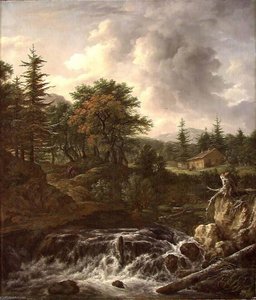
Norwegian Mountain Landscape with Waterfall (1821) de J. C. Dahl

Norwegian Mountain Landscape with Waterfall

1821 · Oil On Canvas · Thorvaldsen Museum, Copenhaga

Johan Christian Clausen Dahl’s “Norwegian Mountain Landscape with Waterfall,” painted in 1821, isn’t merely a depiction of a Norwegian vista; it’s an embodiment of the Romantic spirit itself. This oil on canvas masterpiece, currently residing within the hallowed halls of the Thorvaldsen Museum in Copenhagen, transports the viewer to a realm where nature reigns supreme, and the sublime is palpable. Dahl, recognized as Norway's first great romantic painter and the…

3
Eruption of the Volcano Vesuvius (1821) de J. C. Dahl

Eruption of the Volcano Vesuvius

1821 · Oil On Canvas · Galeria Nacional da Dinamarca, Copenhague

In the annals of Norwegian Romanticism, few works command the senses as profoundly as Johan Christian Dahl’s “Eruption of the Volcano Vesuvius.” Completed in 1821, this monumental oil on canvas is far more than a mere geological record; it is a breathtaking window into the 19th-century soul, capturing that precise, heart-stopping moment where terror meets transcendence. As the viewer approaches this masterpiece, they are immediately swept into a landscape of…

4
Untitled (AQZAMU) (1830) de J. C. Dahl

Untitled (AQZAMU)

1830 · Acrylic On Canvas · Thorvaldsen Museum, Copenhaga

A Vision of the Sea – Unveiling Dahl’s “Untitled (AQZAMU)” Johan Christian Claussen Dahl, a name synonymous with the dawn of Norwegian Romanticism, gifted us with an extraordinary ability to capture not just landscapes but the very soul of his nation. “Untitled (AQZAMU),” painted in 1830, is a prime example of this profound connection – a breathtaking oil on canvas that transcends mere representation and plunges directly into the heart…

5
English Elbe and the Neustadt bank in Dresden in the evening light Deutsch Elbe und Neustädter Ufer in Dresden im Abendlicht Русский Эльба и банк Нойштадт в Дрездене в вечернем свете (1837) de J. C. Dahl

English Elbe and the Neustadt bank in Dresden in the evening light Deutsch Elbe und Neustädter Ufer in Dresden im Abendlicht Русский Эльба и банк Нойштадт в Дрездене в вечернем свете

1837 · Oil On Canvas · Hamburger Kunsthalle, Hamburgo

We are looking at English Elbe and the Neustadt bank in Dresden in the evening light Deutsch Elbe und Neustädter Ufer in Dresden im Abendlicht Русский Эльба и банк Нойштадт в Дрездене в вечернем свете, a work created by Johan Christian Dahl. This piece was painted in 1837, capturing a specific moment of transition as the day recedes. The artist, Johan Christian Dahl, was a central figure in the Romanticism…

6
Eruption of the Vesuvius (1823) de J. C. Dahl

Eruption of the Vesuvius

The Eruption of the Vesuvius is an oil on canvas painting created by Johan Christian Clausen Dahl in 1823. This artwork depicts the eruption of Mount Vesuvius, capturing the moment ash and smoke billow into the sky to create an ominous atmosphere. The scene illustrates the chaos and destruction caused by the volcanic eruption, with ash covering the landscape and smoke filling the sky.

7
The Frankenkirche, Dresden (1840) de J. C. Dahl

The Frankenkirche, Dresden

1840

The composition centers on the Frankenkirche in Dresden, captured in a monochrome palette. A large, vertical steeple dominates the center of the frame, rising against a dark sky. The moonlight originates from above, casting a bright, circular glow that illuminates the edges of the church structure and the surrounding atmosphere. Two clocks are positioned on the side of the building, one located near the top of the structure and another…

8
Dresden at Night (1845) de J. C. Dahl

Dresden at Night

1845 · Oil On Panel

Dresden at Night is an oil on cardboard work executed in 1845 by Johan Christian Dahl. This piece offers a quiet glimpse into the nocturnal atmosphere of the city, captured during a period when the artist was deeply established within the German Romantic movement. The work is a small-scale study, a detail that lends it a certain intimacy, as if we are observing a private moment of reflection caught in…

9
View from a Window at Quisisana (1820) de J. C. Dahl

View from a Window at Quisisana

1820 · Oil On Canvas · KODE Art museums and composer homes, Bergen

The scene unfolds through the title View from a Window at Quisisana, a work that captures a specific, quiet moment in 1820. The artist, Johan Christian Dahl, looks out from a vantage point that feels immediate and lived-in. This is not a distant, detached observation, but a view felt from the very edge of a terrace. The brushwork holds the light of a particular afternoon, anchoring the viewer to a…

10
Mother and Child by the Sea (1830) de J. C. Dahl

Mother and Child by the Sea

1830 · Oil On Canvas · Metropolitan Museum of Art, Nova York

The salt spray and the quiet tension of the shoreline find their form in Mother and Child by the Sea, an oil on canvas created by the artist Johan Christian Dahl in 1830. This intimate scene captures a moment of profound connection amidst the vastness of the coast. The figures on the shore are not mere silhouettes; Johan Christian Dahl identified them specifically as the wife and child of a…

A seleção de J. C. Dahl continua, de 11 a 100

11Norwegian Bjørk med storm Birch Tree in a Storm (1849) de J. C. DahlNorwegian Bjørk med storm Birch Tree in a Storm1849 12Crucifixion of Christ with Saints and the prince bishop Ulrich IV von Liechtenstein (1504) de J. C. DahlCrucifixion of Christ with Saints and the prince bishop Ulrich IV von Liechtenstein1504 · Museo Diocesano Tridentino 13View of Naerodalen (1847) de J. C. DahlView of Naerodalen1847 14Norwegian Vill skogegn Mountainous landscape with waterfall (1812) de J. C. DahlNorwegian Vill skogegn Mountainous landscape with waterfall1812 · National Museum of Art, Architecture and Design 15View from Tutein`s House towards the Sound near Copenhagen (1813) de J. C. DahlView from Tutein`s House towards the Sound near Copenhagen1813 · The Museum of National History at Frederiksborg Castle 16View from Tutein`s House towards the Lakes in Copenhagen (1813) de J. C. DahlView from Tutein`s House towards the Lakes in Copenhagen1813 · The Museum of National History at Frederiksborg Castle 17Bergen seen from Kronstad (1810) de J. C. DahlBergen seen from Kronstad1810 · KODE Art museums and composer homes 18Copy of an Italian Landscape by Jan Both (1813) de J. C. DahlCopy of an Italian Landscape by Jan Both1813 · KODE Art museums and composer homes 19Portrait Study of an Old Man (1813) de J. C. DahlPortrait Study of an Old Man1813 · KODE Art museums and composer homes 20Norwegian mountain landscape with waterfall (1821) de J. C. DahlNorwegian mountain landscape with waterfall1821 · Thorvaldsen Museum 21Italian Peasant Woman (1821) de J. C. DahlItalian Peasant Woman1821 · KODE Art museums and composer homes 22Italian fisherman (1821) de J. C. DahlItalian fisherman1821 · KODE Art museums and composer homes 23Portrait of a Monk (1815) de J. C. DahlPortrait of a Monk1815 · KODE Art museums and composer homes 24Two Men in a Rowing Boat (1820) de J. C. DahlTwo Men in a Rowing Boat1820 · KODE Art museums and composer homes 25Portrait of a Man (1815) de J. C. DahlPortrait of a Man1815 · National Museum of Art, Architecture and Design 26Boy on a Donkey (1820) de J. C. DahlBoy on a Donkey1820 · National Museum of Art, Architecture and Design 27Princess Caroline Amalie of Denmark (1820) de J. C. DahlPrincess Caroline Amalie of Denmark1820 · National Museum of Art, Architecture and Design 28Boat in southern rocky bay (1821) de J. C. DahlBoat in southern rocky bay1821 29Coast near Castellammare in the morning mist (1822) de J. C. DahlCoast near Castellammare in the morning mist1822 · Art Collections Chemnitz 30Portrait of Amalie von Bassewitz (1830) de J. C. DahlPortrait of Amalie von Bassewitz1830 31Woman and Child on a River Bank (1823) de J. C. DahlWoman and Child on a River Bank1823 · National Museum of Art, Architecture and Design 32Studies of Female Costumes from Luster in Sogn (1826) de J. C. DahlStudies of Female Costumes from Luster in Sogn1826 · National Museum of Art, Architecture and Design 33The Polish General Karol Kniacziewicz (1825) de J. C. DahlThe Polish General Karol Kniacziewicz1825 · National Museum of Art, Architecture and Design 34Danish coast by moonlight (1828) de J. C. DahlDanish coast by moonlight1828 · Kurpfälzisches Museum 35Partie in Dresden (view over the fields near Dresden) (1830) de J. C. DahlPartie in Dresden (view over the fields near Dresden)1830 36View from Vaekero near Christiania (1827) de J. C. DahlView from Vaekero near Christiania1827 · National Gallery of Art 37Stedje in Sogn (1836) de J. C. DahlStedje in Sogn1836 · KODE Art museums and composer homes 38Morning after a Stormy Night (1819) de J. C. DahlMorning after a Stormy Night1819 · Neue Pinakothek 39Winter Landscape near Vordingborg, Denmark (1829) de J. C. DahlWinter Landscape near Vordingborg, Denmark1829 · Galeria Nacional da Dinamarca 40Larvik, Vestfold county, Norway (1848) de J. C. DahlLarvik, Vestfold county, Norway1848 41Forest Fire (1846) de J. C. DahlForest Fire1846 42Untitled (AQZAM2) (1817) de J. C. DahlUntitled (AQZAM2)1817 · Statens Museum For Kunst 43Waterfall in Norway (1852) de J. C. DahlWaterfall in Norway1852 · Alte Nationalgalerie 44View of Øylo Farm, Valdres (1846) de J. C. DahlView of Øylo Farm, Valdres1846 45Moonlight over the sea (1820) de J. C. DahlMoonlight over the sea1820 · Statens Museum For Kunst 46Landscape in Evening Light de J. C. DahlLandscape in Evening Light 47Gorge in the Sächsische Schweiz (1820) de J. C. DahlGorge in the Sächsische Schweiz1820 · Bavarian State Painting Collections 48Rocks in the Plauenscher Grund (1819) de J. C. DahlRocks in the Plauenscher Grund1819 · Kunsthaus Zürich 49Maridalen (1852) de J. C. DahlMaridalen1852 · Galerie Neue Meister 50Evening on a Rocky Shore. View from Monte Sant'Angelo (1824) de J. C. DahlEvening on a Rocky Shore. View from Monte Sant'Angelo1824 · Statens Museum For Kunst 51Northern Landscape (1822) de J. C. DahlNorthern Landscape1822 · Hamburger Kunsthalle 52Landskab fra Pedersborg nær Sorø. Pedersborg Kirke (1832) de J. C. DahlLandskab fra Pedersborg nær Sorø. Pedersborg Kirke1832 · Ny Carlsberg Glyptotek 53Shipwreck on the Norwegian Coast (1831) de J. C. DahlShipwreck on the Norwegian Coast1831 · Hamburger Kunsthalle 54Tyrolean Landscape with a Shepherd (1824) de J. C. DahlTyrolean Landscape with a Shepherd1824 · National Gallery Prague 55Morning after a Stormy Night (1819) de J. C. DahlMorning after a Stormy Night1819 · Neue Pinakothek 56An Oak. View of the Garden at Wörlitz near Dessau (1838) de J. C. DahlAn Oak. View of the Garden at Wörlitz near Dessau1838 · Statens Museum For Kunst 57Norwegian Landscape (1822) de J. C. DahlNorwegian Landscape1822 · Nationalmuseum 58Plantain. Study (1830) de J. C. DahlPlantain. Study1830 · Nationalmuseum 59The Lower Falls of the Labrofoss (1827) de J. C. DahlThe Lower Falls of the Labrofoss1827 60Der Ausbruch des Vesuv im Dezember 1820 (1826) de J. C. DahlDer Ausbruch des Vesuv im Dezember 18201826 · Städel Museum 61The Eruption of Vesuvius (1821) de J. C. DahlThe Eruption of Vesuvius1821 · Statens Museum For Kunst 62Shipwrech de J. C. DahlShipwrechArt Museum Riga Bourse 63Ships in the Lærdalsfiord (1800) de J. C. DahlShips in the Lærdalsfiord1800 · KODE Art museums and composer homes 64A Forester`s Cottage (1800) de J. C. DahlA Forester`s Cottage1800 · Nivaagaards Malerisamling 65Store Kongens Mølle on Schacks Bastion (1810) de J. C. DahlStore Kongens Mølle on Schacks Bastion1810 66Nordic Landscape with a Thatched Cottage (1814) de J. C. DahlNordic Landscape with a Thatched Cottage1814 67Norwegian Landscape (1814) de J. C. DahlNorwegian Landscape1814 · KODE Art museums and composer homes 68Southern Landscape with a Stone Bridge (1814) de J. C. DahlSouthern Landscape with a Stone Bridge1814 · KODE Art museums and composer homes 69From Møllendal (1812) de J. C. DahlFrom Møllendal1812 · KODE Art museums and composer homes 70The Entrance to Bergen (1810) de J. C. DahlThe Entrance to Bergen1810 · Kunsthaus Zürich 71View of Engen in Bergen (1809) de J. C. DahlView of Engen in Bergen1809 · KODE Art museums and composer homes 72Landscape (1806) de J. C. DahlLandscape1806 · KODE Art museums and composer homes 73Rådhusalmenningen in Bergen (1806) de J. C. DahlRådhusalmenningen in Bergen1806 · KODE Art museums and composer homes 74View of Engen in Bergen (1806) de J. C. DahlView of Engen in Bergen1806 · KODE Art museums and composer homes 75View of Engen in Bergen (1806) de J. C. DahlView of Engen in Bergen1806 · KODE Art museums and composer homes 76The Naval Battle at Alvøen (1808) de J. C. DahlThe Naval Battle at Alvøen1808 · KODE Art museums and composer homes 77Nordic Landscape with a dead Tree (1814) de J. C. DahlNordic Landscape with a dead Tree1814 · National Museum of Art, Architecture and Design 78Coastal Landscape with Rocks (1813) de J. C. DahlCoastal Landscape with Rocks1813 · National Museum of Art, Architecture and Design 79Copy of Landscape by M. Hobbema (1812) de J. C. DahlCopy of Landscape by M. Hobbema1812 · National Museum of Art, Architecture and Design 80Copy of Landscape by M. Hobbema (Nasjonalmuseet, NG.M.00708) (1812) de J. C. DahlCopy of Landscape by M. Hobbema (Nasjonalmuseet, NG.M.00708)1812 · National Museum of Art, Architecture and Design 81Nordic Landscape with a Waterfall (1812) de J. C. DahlNordic Landscape with a Waterfall1812 · National Museum of Art, Architecture and Design 82Nordic Landscape with a Wooden Bridge (1813) de J. C. DahlNordic Landscape with a Wooden Bridge1813 · National Museum of Art, Architecture and Design 83The Naval Battle at Alvøen (1808) de J. C. DahlThe Naval Battle at Alvøen1808 · KODE Art museums and composer homes 84View of Vesterbro, Seen from Enighedsværn (1810) de J. C. DahlView of Vesterbro, Seen from Enighedsværn1810 · Trondheim Kunstmuseum 85Forest Scene near Engelholm (1814) de J. C. DahlForest Scene near Engelholm1814 · National Museum of Art, Architecture and Design 86Mountainous landscape with waterfall, after Jacob van Ruisdael (1813) de J. C. DahlMountainous landscape with waterfall, after Jacob van Ruisdael1813 · National Museum of Art, Architecture and Design 87Bergen Seen from Møllendal (1809) de J. C. DahlBergen Seen from Møllendal1809 · KODE Art museums and composer homes 88View of Bergen Harbour (1806) de J. C. DahlView of Bergen Harbour1806 · KODE Art museums and composer homes 89The ruined church at Avaldsnes on Karmøy (1813) de J. C. DahlThe ruined church at Avaldsnes on Karmøy1813 · National Museum of Art, Architecture and Design 90Study of a Beech at Engelholm in Zealand (1814) de J. C. DahlStudy of a Beech at Engelholm in Zealand1814 · Statens Museum For Kunst 91Landscape with a Big Tree (1814) de J. C. DahlLandscape with a Big Tree1814 · Statens Museum For Kunst 92The Morning, copy after Jan Vermeer van Haarlem (1811) de J. C. DahlThe Morning, copy after Jan Vermeer van Haarlem1811 93Bergen viewed from Kronstad (1810) de J. C. DahlBergen viewed from Kronstad1810 94Frederiksborg Castle (1814) de J. C. DahlFrederiksborg Castle1814 · National Museum of Art, Architecture and Design 95Norwegian Den Esrum sjøen i måneskinn Lake Esrom by Moonlight (1814) de J. C. DahlNorwegian Den Esrum sjøen i måneskinn Lake Esrom by Moonlight1814 96Norsk landskap, Rogna vannfall (1812) de J. C. DahlNorsk landskap, Rogna vannfall1812 97Cloud study (1820) de J. C. DahlCloud study1820 · KODE Art museums and composer homes 98Landscape with a Windmill (1817) de J. C. DahlLandscape with a Windmill1817 · KODE Art museums and composer homes 99Mountain landscape with waterfall, castle and traveler on horseback in front of a hut (1816) de J. C. DahlMountain landscape with waterfall, castle and traveler on horseback in front of a hut1816 100View of the Elbe from Coselschen Garten near Dresden (1822) de J. C. DahlView of the Elbe from Coselschen Garten near Dresden1822 · Kunsthaus Zürich

Pinturas famosas de J. C. Dahl, período por período

Os temas que cativaram o olhar de J. C. Dahl

Os quatro temas que mais se repetem nestas obras originais, cada um com o seu melhor exemplo.

Os museus que guardam os originais de J. C. Dahl

Os 8 museus que detêm a maioria das pinturas desta página.

Museus Cidade Obras de J. C. Dahl Pinturas desta lista
KODE Art museums and composer homes Bergen 133 View from a Window at Quisisana, Bergen seen from Kronstad, Copy of an Italian Landscape by Jan Both
National Museum of Art, Architecture and Design, OsloNational Museum of Art, Architecture and Design Oslo 139 Eruption of the Vesuvius, Norwegian Vill skogegn Mountainous landscape with waterfall, Portrait of a Man
Statens Museum For Kunst, CopenhagueStatens Museum For Kunst Copenhague 30 Untitled (AQZAM2), Moonlight over the sea, Evening on a Rocky Shore. View from Monte Sant'Angelo
Thorvaldsen Museum, CopenhagaThorvaldsen Museum Copenhaga 14 Norwegian Mountain Landscape with Waterfall, Untitled (AQZAMU), Norwegian mountain landscape with waterfall
Hamburger Kunsthalle, HamburgoHamburger Kunsthalle Hamburgo 10 English Elbe and the Neustadt bank in Dresden in the evening light Deutsch Elbe und Neustädter Ufer in Dresden im Abendlicht Русский Эльба и банк Нойштадт в Дрездене в вечернем свете, Northern Landscape, Shipwreck on the Norwegian Coast
Kunsthaus Zürich, ZuriqueKunsthaus Zürich Zurique 7 Rocks in the Plauenscher Grund, The Entrance to Bergen, View of the Elbe from Coselschen Garten near Dresden
Nationalmuseum, EstocolmoNationalmuseum Estocolmo 7 Norwegian Landscape, Plantain. Study
Neue Pinakothek, MuniqueNeue Pinakothek Munique 4 Morning after a Stormy Night, Morning after a Stormy Night

J. C. Dahl década a década: a obra original que define cada uma

Obras por década

Escolha uma década para ver a obra original que a define.

Perguntas de colecionadores sobre as pinturas de J. C. Dahl

Por qual obra J. C. Dahl é mais conhecido(a)?Revelar a resposta

Alpine Landscape (1821), Germanisches Nationalmuseum, Nuremberg. Norwegian Mountain Landscape with Waterfall (1821) e Eruption of the Volcano Vesuvius (1821) vêm a seguir.

Qual era a idade de J. C. Dahl quando Alpine Landscape foi feita?Revelar a resposta

33 anos: Alpine Landscape data de 1821, e J. C. Dahl nasceu em 1788.

Quais são as dez pinturas mais famosas de J. C. Dahl?Revelar a resposta

Alpine Landscape, Norwegian Mountain Landscape with Waterfall, Eruption of the Volcano Vesuvius, Untitled (AQZAMU), English Elbe and the Neustadt bank in Dresden in the evening light Deutsch Elbe und Neustädter Ufer in Dresden im Abendlicht Русский Эльба и банк Нойштадт в Дрездене в вечернем свете, Eruption of the Vesuvius, The Frankenkirche, Dresden, Dresden at Night, View from a Window at Quisisana e Mother and Child by the Sea. O ranking acima apresenta o ano e o museu de cada uma.

Quantas pinturas J. C. Dahl deixou?Revelar a resposta

Nosso catálogo contém 503 obras de J. C. Dahl, datadas de 1800 a 1852.

Em quais museus estão expostas as obras-primas de J. C. Dahl?Revelar a resposta

Principalmente em KODE Art museums and composer homes (Bergen), National Museum of Art, Architecture and Design (Oslo) e Statens Museum For Kunst (Copenhague). A tabela de museus acima lista todos eles.

Em que anos J. C. Dahl pintou as suas obras mais famosas?Revelar a resposta

Em 1810s: 37 das 100 obras nesta página foram feitas então, sendo Norwegian Vill skogegn Mountainous landscape with waterfall delas.

Quais são as primeiras e as últimas obras originais famosas de J. C. Dahl?Revelar a resposta

Nesta página, a mais antiga é Ships in the Lærdalsfiord (1800) e a mais recente é Waterfall in Norway (1852).

Quais temas J. C. Dahl escolheu com mais frequência?Revelar a resposta

Sky (17), Landscape (15) e Trees (13), entre as 100 obras nesta página.

Qual técnica J. C. Dahl mais utilizou?Revelar a resposta

Oil On Canvas, para 41 das 100 obras nesta página.

A qual movimento artístico pertence J. C. Dahl?Revelar a resposta

Romanticism, a julgar pelos originais nesta página.

Quais obras de J. C. Dahl estão expostas no KODE Art museums and composer homes?Revelar a resposta

View from a Window at Quisisana, Bergen seen from Kronstad e Copy of an Italian Landscape by Jan Both: o KODE Art museums and composer homes, Bergen detém 24 das obras desta página.

J. C. Dahl: vida e obra

Juventude e Formação Artística

Johan Christian Claussen Dahl emergiu de um contexto muito distante da elite acadêmica. Nascido em 24 de fevereiro de 1788, em Bergen, na Noruega, suas origens estavam enraizadas nas realidades práticas de uma comunidade pesqueira; seu pai trabalhava como um modesto pescador. Este ambiente primordial proporcionou uma conexão direta e sem adornos com a costa robusta da Noruega, algo que viria a definir sua linguagem visual. Em sua juventude, ele não gozou do luxo de uma educação formal e estruturada, um fato que mais tarde encararia com certa amargura. Em vez disso, seu caminho foi moldado por aprendizados precoces e pelo reconhecimento de seu talento precoce por mentores locais.

Seu desenvolvimento formal começou de fato entre 1803 e 1809, quando estudou sob a tutela de Johan Georg Müller. Este período foi menos focado em teorias refinadas e mais voltado para o trabalho árduo de pintar cenários teatrais e retratos. Tal labor prático, embora talvez pouco glamoroso, fundamentou sua técnica na realidade física da luz e da sombra. Por volta de 1811, Dahl havia transcendido a oficina local para ingressar na Academia de Copenhague. Sob a instrução de C. A. Lorentzen, ele começou a transitar de um talento provincial para um praticante disciplinado da paisagem. Esta mudança para Copenhague foi o catalisador essencial que deslocou seu foco da mera representação para os estudos atmosféricos mais complexos que viriam a caracterizar sua carreira.

Os Anos Formativos em Copenhague

O período de Dahl na Real Academia de Belas Artes de Copenhague foi o verdadeiro cadinho de seu desenvolvimento técnico. Ele ingressou na academia como discípulo de C. A. Lorentzen, um pintor cujo trabalho carecia de distinção, mas que lhe proporcionou o ponto de entrada institucional necessário. Este período foi menos sobre a instrução específica de seu mentor e mais sobre o acesso que ela lhe permitia. A coleção real dinamarquesa ofereceu um elo direto com o passado, permitindo-lhe estudar obras consagradas que moldariam sua compreensão de composição e escala.

A influência mais decisiva durante esses anos não foi encontrada nas salas de aula, mas nos esboços e pinturas produzidos por Eckersberg. O contato com a abordagem de Eckersberg foi essencial para a formação artística de Dahl. Tal exposição deslocou seu foco para a necessidade da observação plein-air. Esse afastamento de cenas puramente acadêmicas e idealizadas em direção a um engajamento direto com o ambiente físico definiu sua trajetória. Ele aprendeu a priorizar a imediatismo da paisagem em detrimento das convenções rígidas da academia.

Vida Profissional em Dresden

A mudança de Johan Christian Claussen Dahl para Dresden, na década de 1820, deslocou o seu foco da periferia da arte europeia para o seu centro acadêmico. Ele não apenas habitou a cidade; ele tornou-se uma figura constante de sua vida institucional. De 1824 até a sua morte, ocupou a cátedra de professor sênior na Academia de Dresden. Este cargo conferiu-lhe uma influência direta sobre uma geração de pintores alemães. Sua presença na cidade era tão consolidada que ele chegou a dividir a casa com Caspar David Friedrich. Essa proximidade colocou-o no coração do movimento Romântico, mesmo enquanto sua própria obra permanecia profundamente ligada às especificidades da paisagem norueguesa.

Seu período em Dresden foi marcado por um compromisso inabalável com a observação direta da natureza. Enquanto muitos de seus contemporâneos inclinavam-se para a abstração ou para um simbolismo denso, Dahl utilizou seu prestígio acadêmico para promover uma abordagem mais fundamentada e topográfica do sublime. Ele baseava-se em esboços plein-air para informar suas composições de grande escala, garantindo que suas representações do Norte permanecessem fisicamente precisas, em vez de puramente imaginativas. Sua produção deste período demonstra uma precisão técnica que lhe rendeu reconhecimento internacional ainda em vida.

Técnica e Estilo Artístico

A abordagem de Johan Christian Claussen Dahl em relação à tela estava profundamente enraizada na realidade imediata da paisagem, distanciando-se das construções idealizadas de estúdio. Seu método baseava-se fortemente no uso de esboços plein-air, uma prática que ancorava sua obra na observação direta. Esse compromisso com a verdade física da natureza permitiu que ele transcendesse a mera imitação. Dahl absorveu influências técnicas significativas dos mestres da paisagem holandesa, Jacob v. Ruisdael e Albert v. Everdingen, adotando o foco deles no mundo natural, mas aplicando um rigor observacional mais direto. Seu estilo está firmemente ancorado no movimento Romântico, priorizando o impacto visceral do clima e da luz em detrimento de uma perfeição acadêmica rígida.

A textura física de suas pinturas revela uma clara preferência pelo dinamismo. Ele utilizava um impasto rico, empregando pinceladas espessas para construir a textura da superfície e transmitir movimento. Essa qualidade tátil trabalha em conjunto com seu uso sofisticado de gradações tonais. Ao gerenciar cuidadosamente o jogo entre luz e sombra, ele capturou a atmosfera mutável das paisagens norueguesa e alemã. Esse controle técnico garantia que o clima — fosse uma tempestade ou um súbito desabrochar de luz — permanecesse como um componente central e ativo da composição, em vez de um mero cenário estático.

Obras Notáveis e Temas

A produção de Johan Christian Claussen Dahl gravita em torno da tensão constante entre a permanência geológica e a violência imediata do clima. Em 1819, ele criou German Morgen nach einer Sturmnacht, uma obra que captura o rescaldo de uma tempestade através de um mar turbulento e ondas que se chocam com força. Esse foco no poder bruto da natureza não é uma mera escolha estilística, mas um componente central de sua linguagem visual. Frequentemente, ele utilizava um impasto rico, empregando pinceladas espessas para construir textura e transmitir o dinamismo físico dos elementos. Tal técnica permitia que ele transcendesse a simples representação, capturando, em vez disso, o impacto visceral do vento e da água sobre a paisagem.

Sua habilidade de traduzir a rusticidade de sua terra natal em uma composição estruturada é evidente em Norwegian Mountain Landscape with Waterfall (1821). Aqui, o tema central é a escala monumental do terreno, enfatizando o peso da pedra e o movimento incessante da água. Esse interesse pelos aspectos dramáticos do mundo natural persistiu por seus anos tardios. Em 1849, ele pintou Birch Tree in a Storm, uma obra que utiliza a luta de uma única árvore para espelhar as forças caóticas e amplas do ambiente. Mesmo suas cenas mais tranquilas possuem um certo peso; Copenhagen Harbor by Moonlight, pintada por volta de 1846, demonstra seu domínio sobre as gradações tonais e o jogo entre luz e sombra.

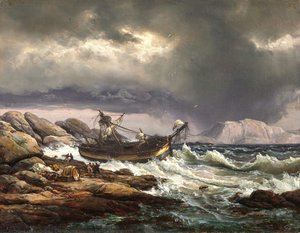
O elemento humano em sua obra serve, muitas vezes, para destacar a magnitude do ambiente, em vez de dominá-lo. Isso é mais perceptível em Shipwreck on the Norwegian Coast (1832), onde o mar é um cenário de luta e a paisagem permanece como a força primária. Seus temas raramente são estáticos; eles são definidos pela imediatismo da experiência, desde a súbita intensidade de uma tempestade até a presença lenta e pesada de uma cordilheira.

Legado e Impacto Cultural

A influência de Johan Christian Claussen Dahl é mensurada pela solidez das estruturas institucionais que ele ajudou a erguer. Ele foi uma força primordial por trás da fundação da Galeria Nacional Norueguesa em Oslo e da Sociedade de Artes em Oslo. Tais iniciativas não foram meros esforços administrativos; foram os alicerces práticos para uma cena artística nacional. Ao estabelecer essas instituições, ele garantiu que a identidade visual da Noruega tivesse um lar físico e permanente. Seu trabalho foi fundamental para deslocar o foco da arte norueguesa do retrato em direção à paisagem, iniciando, de forma eficaz, a "era de ouro" da pintura norueguesa.

Ele é frequentemente identificado como o pai da pintura de paisagem norueguesa. Este título foi conquistado através de sua habilidade em elevar o gênero de uma ocupação secundária para um pilar central da expressão nacional. Sua presença na cena artística europeia, particularmente através de sua longa permanência em Dresden, permitiu-lhe construir uma ponte entre a temática nórdica e o Romantismo internacional. Ele não se limitou a pintar cenários; ele forneceu a linguagem visual para uma nação que buscava definir a si mesma através de sua topografia indomável.

  • Shipwreck on the Norwegian Coast (1832)
  • Norwegian Mountain Landscape with Waterfall (1821)
  • German Morgen nach einer Sturmnacht (1819)
  • Alpine Landscape (1821)

Onde Contemplar Suas Obras Hoje

Para encontrar a realidade física da visão de paisagem de Johan Christian Claussen Dahl, é necessário recorrer às grandes instituições do Norte da Europa. Sua presença na esfera pública permanece significativa, ancorada por coleções na Noruega, Dinamarca e Alemanha. Esse acervo oferece o testemunho necessário de sua habilidade em traduzir a aspereza do Norte em uma linguagem visual formal e profunda.

Em Copenhague, o Statens Museum For Kunst mantém Fredericksborg Castle, uma obra que destaca seu domínio sobre a integração arquitetônica dentro de uma paisagem. Próximo dali, o Thorvaldsen Museum abriga a Norwegian Mountain Landscape with Waterfall, uma peça que captura o caráter geológico específico de sua terra natal. Essas coleções dinamarquesas oferecem um elo direto com a era em que sua reputação começou a se consolidar além das fronteiras.

O peso de seu legado também é sentido na Galeria Nacional da Noruega, que detém a obra Shipwreck on the Norwegian Coast. Este trabalho permanece como parte central da coleção norueguesa, representando a interseção dramática entre o mar e a tempestade. Na Alemanha, a Hamburger Kunsthalle preserva Norwegian Tordenvær i nærheten av Dresden, uma peça que reflete sua longa conexão com a cena artística de Dresden. Tais locais garantem que sua abordagem técnica da luz e da atmosfera permaneça acessível àqueles que estudam o desenvolvimento da pintura de paisagem do século XIX.

  • Galeria Nacional da Noruega, Oslo
  • Statens Museum For Kunst, Copenhague
  • Museu Thorvaldsen, Copenhague
  • Hamburger Kunsthalle, Hamburgo