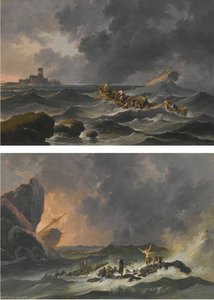
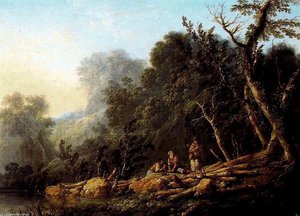
Retrato de Jean-Baptiste Pillement

Pinturas de Jean-Baptiste Pillement: As 53 mais famosas, sob o olhar de uma galeria

Atualizado em Novembro 2026 · classificado pela nossa pontuação de popularidade (pesquisas, visitas e pedidos de cada obra) · 54 obras de Jean-Baptiste Pillement em nosso catálogo

Em resumo

Aos olhos da galeria, a pintura mais famosa de Jean-Baptiste Pillement é Les lavandières. Landscape with Travelers and a Ruin (1750) e Chinoiserie (1767) completam o trio que todos reconhecem. Dos 54 trabalhos de Jean-Baptiste Pillement em nosso catálogo, a galeria apresenta abaixo as 53 obras mais famosas, cada uma original, com seu ano, seu museu e o que a torna única.
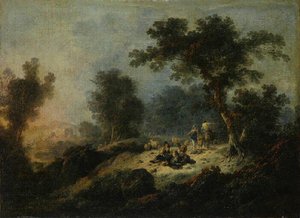
1728 – 1808, Lyon Rococo Mais obras: Petit Palais

As 10 principais pinturas de Jean-Baptiste Pillement na galeria

1
Les lavandières de Jean-Baptiste Pillement

Les lavandières

Oil On Canvas

Les lavandières, also known as Landscape with Washerwomen, is a landscape painting by Jean-Baptiste Pillement. This oil on canvas work dates to 1792. It belongs to the genre of landscape painting, focusing on a natural setting involving rural labor.

2
Landscape with Travelers and a Ruin (1750) de Jean-Baptiste Pillement

Landscape with Travelers and a Ruin

1750 · Oil · Fine Arts Museums of San Francisco, São Francisco

The scene unfolds within Landscape with Travelers and a Ruin, a work that captures a quiet moment of passage through a rugged terrain. Jean-Baptiste Pillement invites the viewer into this pastoral setting, where the scale of nature begins to dwarf the small figures navigating the rocky path. The composition centers on the interaction between these travelers and the weathered stone remains of an ancient structure, creating a sense of stillness…

3
Chinoiserie (1767) de Jean-Baptiste Pillement

Chinoiserie

1767 · Painting · Petit Palais, Paris

In this large-scale work titled Chinoiserie, Jean-Baptiste Pillement presents a highly decorative vision that functions as a wall painting or wallpaper design. Created about 1767, the piece captures a specific moment in the eighteenth century when the French aristocracy sought an escape into idealized, exotic landscapes. The composition invites the viewer into a curated garden space, where the boundaries between the interior and the natural world feel intentionally blurred.

4
Chinoiserie (1767) de Jean-Baptiste Pillement

Chinoiserie

1767 · Oil On Canvas · Petit Palais, Paris

A curtain of flowering vines and slender trees frames a secret garden. The scene is a theatrical vignette, a stage set for a quiet afternoon of leisure. Figures dressed in the high fashion of the 18th century gather upon a raised, rocky platform. They move through a landscape of pale blues and muted greens, their clothing providing small sparks of red and yellow against the soft foliage. The air feels…

5
Fisherman pulling networks (Return from the catch). (1769) de Jean-Baptiste Pillement

Fisherman pulling networks (Return from the catch).

1769 · Oil On Canvas · Museu Nacional de Varsóvia, Varsóvia

In this 1769 oil painting, we find ourselves at the edge of a rugged coast during the soft, diffused light of dawn or dusk. The scene focuses on the rhythmic, physical labor of fishermen as they pull their heavy nets from the water. A massive, towering rock formation dominates the right side of the composition, its textured surface rendered in earthy ochres and tans. This geological giant provides a sense…

6
A Shipwreck in a Storm (1782) de Jean-Baptiste Pillement

A Shipwreck in a Storm

1782 · Watercolor · Metropolitan Museum of Art, Nova York

A Shipwreck in a Storm by Jean-Baptiste Pillement captures a violent maritime disaster. The scene centers on a large vessel in the process of breaking apart, its structure yielding to the overwhelming power of a tempest. Amidst the churning chaos, several figures cling to the jagged rocks of a rugged coastline. Their presence emphasizes the human struggle against the relentless forces of nature. This work, created about 1782, focuses on…

7
Landscape with Washerwomen and Peasants (1790) de Jean-Baptiste Pillement

Landscape with Washerwomen and Peasants

1790 · Oil On Canvas · National Gallery of Ireland, Dublin

In this 1790 oil on canvas, we find ourselves drawn into a rugged, mountainous scene where the rhythms of daily life unfold near a cascading river. The composition is framed by dark, craggy cliffs that act as a natural vignette, guiding the eye toward a central, atmospheric vista. An arched wooden footbridge spans the upper reaches of the frame, connecting the rocky heights, while a tall tower watches over a…

8
Rustic Landscape with Aqueduct and Figures (1794) de Jean-Baptiste Pillement

Rustic Landscape with Aqueduct and Figures

1794 · Oil On Panel · Cooper Hewitt, Smithsonian Design Museum, New York City

The scene unfolds within Rustic Landscape with Aqueduct and Figures, a work that invites the eye into a quiet, pastoral moment. Jean-Baptiste Pillement, an artist born in Lyon, France, in 1728, captures a world where nature and human presence exist in a delicate, rhythmic balance. The painting, dated about 1794, presents a vision of the countryside that feels both lived-in and dreamlike, as if the viewer has stumbled upon a…

9
Landscape with Washerwomen (detail) (1792) de Jean-Baptiste Pillement

Landscape with Washerwomen (detail)

1792 · Oil On Canvas

Landscape with Washerwomen (detail) is an oil on canvas painting by Jean-Baptiste Pillement. Created in 1792, this work belongs to the genre of landscape painting. It captures a specific moment of domestic activity within a natural setting. The scene focuses on rural labor, where human presence meets the movement of the earth.

10
Waterfall Landscape in Portugal de Jean-Baptiste Pillement

Waterfall Landscape in Portugal

Oil On Canvas

Waterfall Landscape in Portugal is an oil on canvas painting by Jean-Baptiste Pillement. This work captures a serene scene set within a Portuguese landscape, where the movement of water defines the topography. The composition focuses on a waterfall that anchors the natural setting, providing a sense of depth and quietude to the environment.

Pinturas de Jean-Baptiste Pillement, classificadas de 11 a 53

11PAYSAGE AVEC TROUPEAU de Jean-Baptiste PillementPAYSAGE AVEC TROUPEAUMuseu do Louvre 12Landscape. (1750) de Jean-Baptiste PillementLandscape.1750 · Museu Nacional de Belas Artes de Cuba 13A Wreck at the Rocky Seaside (1750) de Jean-Baptiste PillementA Wreck at the Rocky Seaside1750 · Tokyo Fuji Art Museum 14River landscape with a mill and shepherds (1748) de Jean-Baptiste PillementRiver landscape with a mill and shepherds1748 15Voyages du Roy au Chateau de Choisy (1751) de Jean-Baptiste PillementVoyages du Roy au Chateau de Choisy1751 · Château de Versailles 16Landscape with Aqua Julia in Rome. (1765) de Jean-Baptiste PillementLandscape with Aqua Julia in Rome.1765 · Museu Nacional de Varsóvia 17Market Scene in an Imaginary Oriental Port (1764) de Jean-Baptiste PillementMarket Scene in an Imaginary Oriental Port1764 · J. Paul Getty Museum 18Temple of Minerva Medica in Rome (1765) de Jean-Baptiste PillementTemple of Minerva Medica in Rome1765 · Museu Nacional de Varsóvia 19Decorative Panel with Animal Subjects (1767) de Jean-Baptiste PillementDecorative Panel with Animal Subjects1767 · Petit Palais 20Decorative Panel with Animal Subjects (1767) de Jean-Baptiste PillementDecorative Panel with Animal Subjects1767 · Petit Palais 21View of the coast with fishing boats (Trip to catch) (1769) de Jean-Baptiste PillementView of the coast with fishing boats (Trip to catch)1769 · Museu Nacional de Varsóvia 22Title page, Plate 1 from (1775) de Jean-Baptiste PillementTitle page, Plate 1 from1775 23Title page, Plate 1, from (1775) de Jean-Baptiste PillementTitle page, Plate 1, from1775 24Animated Landscape (1785) de Jean-Baptiste PillementAnimated Landscape1785 · Musée Carnavalet 25Vue des jardins de Benfica (1785) de Jean-Baptiste PillementVue des jardins de Benfica1785 26Landscape with Muleteers and Peasants (1790) de Jean-Baptiste PillementLandscape with Muleteers and Peasants1790 · National Gallery of Ireland 27Landscape with Rustic Figures (1794) de Jean-Baptiste PillementLandscape with Rustic Figures1794 · Cooper Hewitt, Smithsonian Design Museum 28Winter (1792) de Jean-Baptiste PillementWinter1792 29Autumn (1792) de Jean-Baptiste PillementAutumn1792 30Landscape with Washerwomen (1792) de Jean-Baptiste PillementLandscape with Washerwomen1792 · Musée des Beaux-Arts de Bordeaux 31Mountainous Landscape (1780) de Jean-Baptiste PillementMountainous Landscape1780 · Wallraf-Richartz-Museum 32Print, jean pillement (1755) de Jean-Baptiste PillementPrint, jean pillement (1755) 33Naufrage de Jean-Baptiste PillementNaufrage 34Paysage de Jean-Baptiste PillementPaysage 35PAYSAGE AU PONT, PECHEUR ET BERGER de Jean-Baptiste PillementPAYSAGE AU PONT, PECHEUR ET BERGER 36PAYSAGE A LA CASCADE, BERGER de Jean-Baptiste PillementPAYSAGE A LA CASCADE, BERGER 37Paysage au pont, pêcheur et lavandière de Jean-Baptiste PillementPaysage au pont, pêcheur et lavandière 38Muletiers italiens de Jean-Baptiste PillementMuletiers italiensMuseum Voor Moderne Kunst 39PAYSAGE A LA CASCADE, PECHEURS de Jean-Baptiste PillementPAYSAGE A LA CASCADE, PECHEURS 40Chinois pêchant à la ligne de Jean-Baptiste PillementChinois pêchant à la ligneMusée National Magnin 41Untitled (AQQNCU) (1794) de Jean-Baptiste PillementUntitled (AQQNCU)1794 42Exotic market-place de Jean-Baptiste PillementExotic market-place 43Paysageavec troupeau de Jean-Baptiste PillementPaysageavec troupeau 44A decorative plate, french rococo art de Jean-Baptiste PillementA decorative plate, french rococo art 45Untitled (AQQNCN) de Jean-Baptiste PillementUntitled (AQQNCN) 46Les chèvres de Jean-Baptiste PillementLes chèvres 47Two shipwreck scenes de Jean-Baptiste PillementTwo shipwreck scenes 48River Landscape de Jean-Baptiste PillementRiver Landscape 49Pastoral Landscape with Shepherds de Jean-Baptiste PillementPastoral Landscape with Shepherds 50Landscape de Jean-Baptiste PillementLandscape 51Shipwrecked Sailors Coming Ashore de Jean-Baptiste PillementShipwrecked Sailors Coming AshoreMuseu do Prado 52A River landscape with a ruined tower and fishermen with their nets in the foreground de Jean-Baptiste PillementA River landscape with a ruined tower and fishermen with their nets in the foreground 53Landscape de Jean-Baptiste PillementLandscapeMuseu do Prado

Pinturas famosas de Jean-Baptiste Pillement, período por período

Os temas que cativaram o olhar de Jean-Baptiste Pillement

Os quatro temas que mais se repetem nestas obras originais, cada um com o seu melhor exemplo.

Os museus que guardam os originais de Jean-Baptiste Pillement

Os 8 museus que detêm a maioria das pinturas desta página.

Museus Cidade Obras de Jean-Baptiste Pillement Pinturas desta lista
Petit Palais, ParisPetit Palais Paris 4 Chinoiserie, Chinoiserie, Decorative Panel with Animal Subjects
Museu Nacional de Varsóvia, VarsóviaMuseu Nacional de Varsóvia Varsóvia 4 Fisherman pulling networks (Return from the catch)., Landscape with Aqua Julia in Rome., Temple of Minerva Medica in Rome
National Gallery of Ireland, DublinNational Gallery of Ireland Dublin 2 Landscape with Washerwomen and Peasants, Landscape with Muleteers and Peasants
Cooper Hewitt, Smithsonian Design Museum, New York CityCooper Hewitt, Smithsonian Design Museum New York City 2 Rustic Landscape with Aqueduct and Figures, Landscape with Rustic Figures
Museu do Prado, MadridMuseu do Prado Madrid 2 Shipwrecked Sailors Coming Ashore, Landscape
Fine Arts Museums of San Francisco, São FranciscoFine Arts Museums of San Francisco São Francisco 1 Landscape with Travelers and a Ruin
Metropolitan Museum of Art, Nova YorkMetropolitan Museum of Art Nova York 1 A Shipwreck in a Storm
Museu do Louvre, ParisMuseu do Louvre Paris 1 PAYSAGE AVEC TROUPEAU

Jean-Baptiste Pillement, uma pintura emblemática por década

Obras por década

Escolha uma década para ver a obra original que a define.

Pinturas de Jean-Baptiste Pillement: a galeria responde

Qual pintura de Jean-Baptiste Pillement é a mais famosa de todas?Revelar a resposta

Les lavandières. Landscape with Travelers and a Ruin (1750) e Chinoiserie (1767) vêm a seguir.

Quais são as 10 principais pinturas de Jean-Baptiste Pillement?Revelar a resposta

Les lavandières, Landscape with Travelers and a Ruin, Chinoiserie, Chinoiserie, Fisherman pulling networks (Return from the catch)., A Shipwreck in a Storm, Landscape with Washerwomen and Peasants, Rustic Landscape with Aqueduct and Figures, Landscape with Washerwomen (detail) e Waterfall Landscape in Portugal. O ranking acima apresenta o ano e o museu de cada uma.

Quantas obras Jean-Baptiste Pillement criou?Revelar a resposta

Nosso catálogo contém 54 obras de Jean-Baptiste Pillement, datadas de 1748 a 1794.

Onde estão expostos os originais mais famosos de Jean-Baptiste Pillement?Revelar a resposta

Principalmente em Petit Palais (Paris), Museu Nacional de Varsóvia (Varsóvia) e National Gallery of Ireland (Dublin). A tabela de museus acima lista todos eles.

Quando é que Jean-Baptiste Pillement criou as suas pinturas mais famosas?Revelar a resposta

Em 1760s: 9 das 53 obras nesta página foram feitas então, sendo Chinoiserie delas.

Quais são as obras mais famosas de Jean-Baptiste Pillement no início e no fim de sua carreira?Revelar a resposta

Nesta página, a mais antiga é River landscape with a mill and shepherds (1748) e a mais recente é Rustic Landscape with Aqueduct and Figures (1794).

Quais temas Jean-Baptiste Pillement mais explorou?Revelar a resposta

Landscape (11), Figures (6) e Rocks (5), entre as 53 obras nesta página.

Em qual técnica Jean-Baptiste Pillement mais trabalhou?Revelar a resposta

Oil On Canvas, para 8 das 53 obras nesta página.

Com qual movimento Jean-Baptiste Pillement está associado(a)?Revelar a resposta

Rococo, a julgar pelos originais nesta página.

Quais obras originais de Jean-Baptiste Pillement o Petit Palais possui?Revelar a resposta

Chinoiserie, Chinoiserie e Decorative Panel with Animal Subjects: o Petit Palais, Paris detém 4 das obras desta página.

Jean-Baptiste Pillement: o artista

Os Reinos Encantados de Jean-Baptiste Pillement

No crepúsculo dourado do século XVIII, poucos artistas possuíam a habilidade de transportar o espectador para um mundo tão onírico e exótico quanto Jean-Baptiste Pillement. Nascido em Nîmes, em 1728, Pillement emergiu não apenas como um pintor, mas como um mestre da atmosfera, entrelaçando a delicada elegância do estilo Rococó com uma profunda fascinação pelo distante e pelo desconhecido. Embora seus primeiros anos permaneçam parcialmente velados pelas névoas da história, sua ascensão na hierarquia artística francesa foi nada menos que meteórica. Através de seu treinamento meticuloso sob o estimado Jean-Baptiste Huet, ele dominou as sutis nuances da aquarela, um meio que lhe permitiu capturar a luz efêmera e os pigmentos vibrantes necessários para dar vida às suas visões fantásticas.

A obra de Pillement serve como uma janela para os movimentos Chinoiserie e Exotisme que cativaram a aristocracia francesa. Ao contrário dos tradicionalistas de sua era, que buscavam consolo em ruínas romanas clássicas ou retratos históricos sombrios, Pillement olhava para o horizonte. Suas viagens pela Itália e seu profundo envolvimento com motivos persas permitiram-lhe construir paisagens que pareciam simultaneamente exuberantes e de outro mundo. Em suas mãos, o mundo natural era reimaginado; palmeiras imponentes, rios serpentinos e aves de plumagem brilhante tornaram-se os protagonistas de um drama silencioso e belo. Esse domínio do exótico tornou-o uma figura indispensável nas cortes de Luís XV e Maria Antonieta, pois sua arte proporcionava uma fuga tão necessária para um reino de pura e absoluta imaginação.

Técnica, Influência e o Espírito Rococó

O brilho da técnica de Pillement reside em sua capacidade de equilibrar a precisão com um brilho suave e etéreo. Ele utilizava uma delicada técnica de sfumato — uma mistura magistral de tons através de camadas meticulosas — que conferia às suas paisagens uma qualidade quase translúcida. Essa abordagem permitia-lhe evocar a profundidade atmosférica de mestres como Claude Lorrain, mas ele infundia esses fundamentos clássicos com uma energia singularmente caprichosa. Suas composições nunca eram estáticas; elas pulsavam com uma vitalidade rítmica, frequentemente caracterizada por:

  • Detalhe Botânico Intrincado: Um foco profundo na flora que parecia tanto inspirada cientificamente quanto miticamente intensificada.
  • Vibratilidade Cromática: O uso de cores ousadas e saturadas para representar a exuberância dos ambientes tropicais e orientais.
  • Fluidez Decorativa: Uma habilidade de unir a pintura de belas artes ao design decorativo, tornando seu trabalho igualmente em casa em uma tela ou como parte de um opulento mural de interior.

Sua evolução estilística foi profundamente moldada pelas explorações de artistas como Nicolas Pocock e Gaspar Pérégrine Rigaud. Ao absorver as abordagens deles em relação à paisagem e à luz, Pillement foi capaz de refinar uma estética de assinatura que parecia tanto fundamentada na tradição europeia quanto selvagemente aventureira. Sua influência estendeu-se muito além da tela, pois seus designs permearam o próprio tecido das artes decorativas francesas, influenciando desde padrões de papel de parede até motivos de porcelana.

Um Legado Duradouro na História da Arte

A importância histórica de Jean-Baptiste Pillement não pode ser subestimada, particularmente no que diz respeito ao seu papel na definição da linguagem visual do luxo do final do século XVIII. Seus prestigiados encargos, mais notavelmente os deslumbrantes murais que adornam o Château de Fontainebleau e o Petit Trianon, permanecem como testemunhos de seu status como um favorito da realeza francesa. Essas obras não eram meramente decorações; eram ambientes imersivos que ajudaram a definir a identidade estética de uma era.

À medida que o mundo da arte transitava da exuberância lúdica do Rococó para a disciplina mais estruturada do Neoclassicismo, a obra de Pillement permaneceu como uma ponte preciosa entre esses dois mundos. Ele deixou um legado de maravilhamento, lembrando às gerações futuras que a arte possui o poder único de transcender fronteiras geográficas e transportar o espírito humano para terras de infinita beleza e mistério. Hoje, seu nome permanece sinônimo do requinte, do exótico e do eterno charme do Rococó francês.