Portret William Holman Hunt

100 najsłynniejszych obrazów artysty William Holman Hunt – wybór z galerii

Aktualizacja: Listopad 2026 · ranking według naszego wskaźnika popularności (liczba wyszukiwań, wizyt i zamówień dla każdego dzieła) · 126 dzieł William Holman Hunt w naszym katalogu

W skrócie

Z wszystkich oryginałów pozostawionych przez William Holman Hunt, najsłynniejszym jest W H Światłość świata. Tuż za nimi znajdują się Przebudzenie Sumienia oraz Kozioł ofiarny (1854). Nasz katalog zawiera 126 dzieł autorstwa William Holman Hunt; galeria zachowała 100 najbardziej podziwianych na świecie prac, z których każda została przedstawiona wraz z datą powstania, informacją o muzeum oraz jej historią.

1827 – 1910, Londyn Pre-rafaelici Najwięcej dzieł: Birmingham Museum and Art Gallery

10 najlepszych obrazów artysty William Holman Hunt: wybór galerii

1
W H Światłość świata autorstwa William Holman Hunt

W H Światłość świata

Obraz olejny na płótnie

W H Światłość świata to arcydzieło autorstwa Williama Holmana Hunta, ukończone w 1851 roku. Kompozycja ogniskuje się wokół postaci Jezusa, który trzyma płonącą latarnię, by rozproszyć otaczający go mrok. Ta scena religijna czerpie swoją tematyczną podstawę z biblijnych fragmentów Ewangelii według św. Jana (8:12) oraz Apokalipsji (3:20).

2
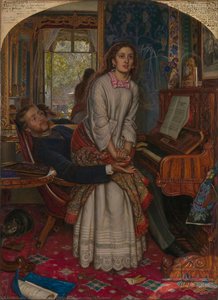
Przebudzenie Sumienia autorstwa William Holman Hunt

Przebudzenie Sumienia

Obraz olejny na płótnie

Dzieło Williama Holmana Hunta Przebudzenie Sumienia (1853) to znacznie więcej niż tylko przedstawienie życia domowego; to potężnie sugestywna narracja zamrożona w czasie. Obraz ten odsłania kluczowy moment – świt uświadomienia sobie prawdy przez kobietę, uwięzioną między oczekiwaniami społecznymi a osobistym wykroczeniem, podczas gdy ona doświadcza drżenia budzącego się sumienia.

3
Kozioł ofiarny (1854) autorstwa William Holman Hunt

Kozioł ofiarny

1854 · Obraz olejny na płótnie · Lady Lever Art Gallery, Liverpool

W tym dziele, zatytułowanym Kozioł ofiarny, artysta William Holman Hunt zwraca swoją uwagę na głęboką narrację biblijną. Obraz powstały w latach 1854–1856 czerpie swoją tematykę z Księgi Kapłanów. Przedstawia on pojedynczą, pełną ciężaru chwilę izolacji, skupiając się na zwierzęciu, które niesie na sobie ciężar grzechów wspólnoty, wyruszając na pustkowia.

4
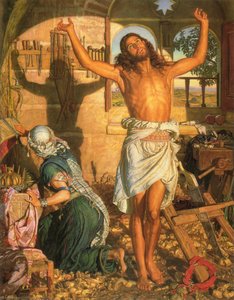
Cień śmierci autorstwa William Holman Hunt

Cień śmierci

Farba olejna · Manchester Art Gallery, Manchester

W obrazie Cień śmierci, William Holman Hunt prezentuje głębokie ujęcie ofiary Chrystusa. Płótno ukazuje Jezusa na krzyżu, z ramionami rozpostartymi w geście ogromnego cierpienia. Jego ciało zwisające z drewna oddaje fizyczną rzeczywistość wielkiego bólu, a cała ta chwila została oddana z taką bezpośredniością, która podkreśla ciężar tego wydarzenia.

5
Hodowany Pasztor (1851) autorstwa William Holman Hunt

Hodowany Pasztor

1851 · Obraz olejny na płótnie · Manchester Art Gallery, Manchester

Zanurz się w urzekającym świecie „Hodowanego Pasterza” autorstwa Williama Holmana Hunta, pociągającego dzieła, które stanowi kwintesencję oddania Bractwa Prerafaelitów naturze i symbolicznej głębi. To arcydzieło z 1851 roku zaprasza widzów do sielankowej scenerii, tętniącej misternymi detalami, żywymi kolorami i wielowarstwową narracją.

6
Światłość świata (1851) autorstwa William Holman Hunt

Światłość świata

1851 · Obraz olejny na płótnie · Keble College, Oxford

Dzieło Williama Holmana Hunta pt. „Światłość świata”, ukończone w 1851 roku, to coś więcej niż tylko obraz; to głęboka, angażująca medytacja nad wiarą i odkupieniem. To olejne arcydzieło na płótnie o wymiarach 59 x 125 cm, znajdujące się obecnie w Keble College w Oksfordzie, natychmiast wciąga widza w scenę przepełnioną głębokim spokojem i duchowym znaczeniem. Hunt, artysta o głębokiej pobożności, pragnął uchwycić nie tylko wizualną reprezentację, ale samo ucieleśnienie swoich…

7
Fanny Waugh Hunt (1868) autorstwa William Holman Hunt

Fanny Waugh Hunt

1868 · Acrylic On Canvas · Toledo Museum of Art, Toledo

The Lady of Shalott: A Vision of Faith and Fate William Holman Hunt’s “The Lady of Shalott,” completed in 1905, stands as arguably the Pre-Raphaelite Brotherhood's most ambitious undertaking—a monumental canvas that transcends mere depiction to embody a profound meditation on faith, duty, and the inescapable pull of time. More than just a visual representation of Tennyson’s iconic poem, it is an immersive experience designed to transport the viewer into…

8
The Shadow of Death autorstwa William Holman Hunt

The Shadow of Death

Oil On Canvas · Manchester Art Gallery, Manchester

William Holman Hunt’s “The Shadow of Death,” completed in 1873 during his second pilgrimage to the Holy Land, is not merely a depiction of Christ's crucifixion; it’s a profound meditation on mortality, faith, and the human condition. This monumental oil painting, measuring an impressive 214.2 cm x 168.2 cm, resides within the hallowed halls of the Manchester Art Gallery, inviting viewers into a scene brimming with symbolic weight and emotional…

9
The Lady of Shalott (1889) autorstwa William Holman Hunt

The Lady of Shalott

1889 · Oil On Canvas · Manchester Art Gallery, Manchester

To gaze upon William Holman Hunt’s “The Lady of Shalott” is to step across the threshold into a realm suspended between myth and melancholy. This evocative oil on canvas, a cornerstone of the Pre-Raphaelite movement, transcends mere visual representation to become an embodiment of artistic fate. The painting captures the profound tension between a sheltered, solitary existence and the inevitable, often tragic, confrontation with the outside world. Through his meticulous…

10
The Risen Christ with the Two Marys in the Garden of Joseph of Arimathea (1897) autorstwa William Holman Hunt

The Risen Christ with the Two Marys in the Garden of Joseph of Arimathea

1897 · Oil On Canvas · Art Gallery of South Australia, Adelaide

William Holman Hunt’s “The Risen Christ with the Two Marys in the Garden of Joseph of Arimathea,” completed in 1897, is more than a painting; it's a meticulously crafted meditation on faith, grief, and the profound mystery of resurrection. This monumental oil-on-canvas work, currently residing at the Art Gallery of South Australia in Adelaide, stands as a cornerstone of the Pre-Raphaelite Brotherhood’s artistic vision – a movement dedicated to rejecting…

Kontynuacja zestawienia William Holman Hunt, od 11 do 100

11The Awakening Conscience (1853) autorstwa William Holman HuntThe Awakening Conscience1853 · Tate Britain 12The Light of the World (1853) autorstwa William Holman HuntThe Light of the World1853 · Keble College 13Design for a Monk Succoured by a Christian (2000) autorstwa William Holman HuntDesign for a Monk Succoured by a Christian2000 14The flight of Madeline and Porphyro during the drunkenness attending the revelry (The Eve of St. Agnes) (1857) autorstwa William Holman HuntThe flight of Madeline and Porphyro during the drunkenness attending the revelry (The Eve of St. Agnes)1857 · Walker Art Gallery 15The Scapegoat (1854) autorstwa William Holman HuntThe Scapegoat1854 · Lady Lever Art Gallery 16Isabella and the Pot of Basil (1868) autorstwa William Holman HuntIsabella and the Pot of Basil1868 · Laing Art Gallery 17Mary Walker Waugh (1868) autorstwa William Holman HuntMary Walker Waugh1868 · Cleveland Museum of Art 18Past And Present (1868) autorstwa William Holman HuntPast And Present1868 19The Ship (1875) autorstwa William Holman HuntThe Ship1875 20My Son Cyril (1877) autorstwa William Holman HuntMy Son Cyril1877 21The Triumph of the Innocents (1886) autorstwa William Holman HuntThe Triumph of the Innocents1886 · Harvard Art Museums 22The Eve of St. Agnes: The Flight of Madeleine and Porphyro during the Drunkenness attending the Revelry (1848) autorstwa William Holman HuntThe Eve of St. Agnes: The Flight of Madeleine and Porphyro during the Drunkenness attending the Revelry1848 23The Dead Sea from Siloam (1855) autorstwa William Holman HuntThe Dead Sea from Siloam1855 24The Triumph of the Innocents (1887) autorstwa William Holman HuntThe Triumph of the Innocents1887 · Walker Art Gallery 25Study of a bloodhound (1848) autorstwa William Holman HuntStudy of a bloodhound1848 · Art Gallery of New South Wales 26Portrait of William Pink (1842) autorstwa William Holman HuntPortrait of William Pink1842 27Cornfield at Ewell (1849) autorstwa William Holman HuntCornfield at Ewell1849 28The Scapegoat (1854) autorstwa William Holman HuntThe Scapegoat1854 · Manchester Art Gallery 29Portrait of Dante Gabriel Rossetti (1853) autorstwa William Holman HuntPortrait of Dante Gabriel Rossetti1853 · Birmingham Museum and Art Gallery 30The Sphinx at Gizeh (1854) autorstwa William Holman HuntThe Sphinx at Gizeh1854 31Valentine Rescuing Silvia from Proteus (1851) autorstwa William Holman HuntValentine Rescuing Silvia from Proteus1851 32Our English Coasts (1852) autorstwa William Holman HuntOur English Coasts1852 33The Dead Sea from Siloam (1857) autorstwa William Holman HuntThe Dead Sea from Siloam1857 · Birmingham Museum and Art Gallery 34The Schoolgirl's Hymn (1859) autorstwa William Holman HuntThe Schoolgirl's Hymn1859 35Portrait of Fanny Holman Hunt (1868) autorstwa William Holman HuntPortrait of Fanny Holman Hunt1868 · Toledo Museum of Art 36The Birthday (A Portrait Of The Artist's Wife, Edith) (1868) autorstwa William Holman HuntThe Birthday (A Portrait Of The Artist's Wife, Edith)1868 37The Ponte Vecchio, Florence (1867) autorstwa William Holman HuntThe Ponte Vecchio, Florence1867 38Lady Fairbairn with her Children (1864) autorstwa William Holman HuntLady Fairbairn with her Children1864 39Self-Portrait (1875) autorstwa William Holman HuntSelf-Portrait1875 40The Festival of St. Swithin or The Dovecote (1875) autorstwa William Holman HuntThe Festival of St. Swithin or The Dovecote1875 41The Apple Harvest, Valley of The Rhine, Ragaz (1885) autorstwa William Holman HuntThe Apple Harvest, Valley of The Rhine, Ragaz1885 · Birmingham Museum and Art Gallery 42Cornfield at Ewell (1849) autorstwa William Holman HuntCornfield at Ewell1849 43May Morning on Magdalen College Tower, Oxford (1891) autorstwa William Holman HuntMay Morning on Magdalen College Tower, Oxford1891 44The Importunate Neighbour (1895) autorstwa William Holman HuntThe Importunate Neighbour1895 · National Gallery of Victoria 45Claudio and Isabella (1850) autorstwa William Holman HuntClaudio and Isabella1850 · Tate Gallery 46John Key autorstwa William Holman HuntJohn Key 47John Hunt autorstwa William Holman HuntJohn Hunt 48The Beloved autorstwa William Holman HuntThe BelovedRoyal Collection 49The Ballad of Oriana autorstwa William Holman HuntThe Ballad of Oriana 50The Lady of Shalott (study) autorstwa William Holman HuntThe Lady of Shalott (study) 51The Artist autorstwa William Holman HuntThe ArtistBirmingham Museum of Art 52Stephen lushington autorstwa William Holman HuntStephen lushingtonNational Portrait Gallery 53Quakers Meeting autorstwa William Holman HuntQuakers Meeting 54The Woman Taken in Adultery autorstwa William Holman HuntThe Woman Taken in Adultery 55Cyril benoni holman hunt autorstwa William Holman HuntCyril benoni holman huntFitzwilliam Museum 56May Morning on Magdalen Tower (1888) autorstwa William Holman HuntMay Morning on Magdalen Tower1888 · Lady Lever Art Gallery 57A Study for Oriana (2000) autorstwa William Holman HuntA Study for Oriana2000 58The Ballad of Oriana (2000) autorstwa William Holman HuntThe Ballad of Oriana2000 59Sunset in the Val d’Arno (2000) autorstwa William Holman HuntSunset in the Val d’Arno2000 60Portrait of Henry Wentworth Monk (1858) autorstwa William Holman HuntPortrait of Henry Wentworth Monk1858 61Self Portrait (1845) autorstwa William Holman HuntSelf Portrait1845 · Birmingham Museum and Art Gallery 62The Lost Child autorstwa William Holman HuntThe Lost Child 63The Ponte Vecchio autorstwa William Holman HuntThe Ponte Vecchio 64Risen Lord appearing to Mary Magdalene autorstwa William Holman HuntRisen Lord appearing to Mary Magdalene 65Robert Braithwaite Martineau autorstwa William Holman HuntRobert Braithwaite Martineau 66The Ship autorstwa William Holman HuntThe Ship 67John david jenkins autorstwa William Holman HuntJohn david jenkins 68The Abundance of Egypt autorstwa William Holman HuntThe Abundance of Egypt 69F. g. stephens autorstwa William Holman HuntF. g. stephens 70The Eve of Saint Agnes autorstwa William Holman HuntThe Eve of Saint Agnes 71On English Coasts autorstwa William Holman HuntOn English Coasts 72Afterglow in Egypt autorstwa William Holman HuntAfterglow in Egypt 73The Afterglow in Egypt autorstwa William Holman HuntThe Afterglow in Egypt 74Study for 'The Eve of Saint Agnes' autorstwa William Holman HuntStudy for 'The Eve of Saint Agnes' 75The Children's Holiday autorstwa William Holman HuntThe Children's Holiday 76The Scapegoat autorstwa William Holman HuntThe Scapegoat 77The Thames at Chelsea, Evening autorstwa William Holman HuntThe Thames at Chelsea, EveningFitzwilliam Museum 78British artist William Holman Hunt autorstwa William Holman HuntBritish artist William Holman Hunt 79A Summer Landscape autorstwa William Holman HuntA Summer Landscape 80Plain of Esdraelon from the Heights above Nazareth autorstwa William Holman HuntPlain of Esdraelon from the Heights above Nazareth 81John Ruskin's dead chick autorstwa William Holman HuntJohn Ruskin's dead chick 82Little Nell and Her Grandfather autorstwa William Holman HuntLittle Nell and Her Grandfather 83Sir richard owen autorstwa William Holman HuntSir richard owen 84Morning autorstwa William Holman HuntMorning 85The haunted manor autorstwa William Holman HuntThe haunted manor 86Nazareth autorstwa William Holman HuntNazareth 87Harold rathbone autorstwa William Holman HuntHarold rathbone 88Self-portrait at the Age of - (14) autorstwa William Holman HuntSelf-portrait at the Age of - (14) 89The Festival of St Swithin (The Dovecot) autorstwa William Holman HuntThe Festival of St Swithin (The Dovecot) 90London Bridge on the Night of the Marriage of the Prince and Princess of Wales autorstwa William Holman HuntLondon Bridge on the Night of the Marriage of the Prince and Princess of Wales 91A Bloodhound autorstwa William Holman HuntA Bloodhound 92May Morning on Magdalen College Tower, Oxford, Ancient Annual Ceremony autorstwa William Holman HuntMay Morning on Magdalen College Tower, Oxford, Ancient Annual CeremonyBirmingham Museum and Art Gallery 93Study of a Head autorstwa William Holman HuntStudy of a Head 94Study of Firelight autorstwa William Holman HuntStudy of Firelight 95Henry Clark's Mother-in-Law, Mrs Davies, and Four of His Children in the Drawing Room of His Home autorstwa William Holman HuntHenry Clark's Mother-in-Law, Mrs Davies, and Four of His Children in the Drawing Room of His Home 96Amaryllis autorstwa William Holman HuntAmaryllis 97London Bridge on the Night of the Wedding of the Prince and Princess of Wales autorstwa William Holman HuntLondon Bridge on the Night of the Wedding of the Prince and Princess of Wales 98The Lady of Shalott autorstwa William Holman HuntThe Lady of Shalott 99The Sphinx autorstwa William Holman HuntThe Sphinx 100A Converted British Family Sheltering a Christian Missionary autorstwa William Holman HuntA Converted British Family Sheltering a Christian Missionary

Słynne obrazy William Holman Hunt epoka po epoce

Tematy, które przyciągnęły wzrok William Holman Hunt

Cztery motywy najczęściej powracające w tych oryginałach, z których każdy doczekał się swojego najdoskonalszego przykładu.

Muzea przechowujące oryginały William Holman Hunt

8 muzeów, w których znajduje się najwięcej obrazów z tej strony.

Muzea Miasto Dzieła artysty William Holman Hunt Obrazy z tej listy
Birmingham Museum and Art Gallery, BirminghamBirmingham Museum and Art Gallery Birmingham 7 Portrait of Dante Gabriel Rossetti, The Dead Sea from Siloam, The Apple Harvest, Valley of The Rhine, Ragaz
Manchester Art Gallery, ManchesterManchester Art Gallery Manchester 6 Cień śmierci, Hodowany Pasztor, The Shadow of Death
Lady Lever Art Gallery, LiverpoolLady Lever Art Gallery Liverpool 2 Kozioł ofiarny, May Morning on Magdalen Tower
Keble College, OxfordKeble College Oxford 2 Światłość świata, The Light of the World
Toledo Museum of Art, ToledoToledo Museum of Art Toledo 2 Fanny Waugh Hunt, Portrait of Fanny Holman Hunt
Walker Art Gallery, LiverpoolWalker Art Gallery Liverpool 2 The flight of Madeline and Porphyro during the drunkenness attending the revelry (The Eve of St. Agnes), The Triumph of the Innocents
Fitzwilliam MuseumFitzwilliam Museum 2 Cyril benoni holman hunt, The Thames at Chelsea, Evening
Tate Britain, LondynTate Britain Londyn 3 The Awakening Conscience

William Holman Hunt dekada po dekadzie: oryginały definiujące każdy okres

Dzieła według dekad

Wybierz dekadę, aby zobaczyć dzieło, które ją definiuje.

Pytania kolekcjonerów o obrazy William Holman Hunt

Z jakiego dzieła najbardziej znany jest William Holman Hunt?Odkryj odpowiedź

W H Światłość świata. Następne są Przebudzenie Sumienia oraz Kozioł ofiarny (1854).

Jakie są dziesięć najsłynniejszych obrazów, których autorem jest William Holman Hunt?Odkryj odpowiedź

W H Światłość świata, Przebudzenie Sumienia, Kozioł ofiarny, Cień śmierci, Hodowany Pasztor, Światłość świata, Fanny Waugh Hunt, The Shadow of Death, The Lady of Shalott i The Risen Christ with the Two Marys in the Garden of Joseph of Arimathea. Powyższy ranking zawiera rok powstania oraz muzeum dla każdego z nich.

Ile obrazów pozostawił po sobie William Holman Hunt?Odkryj odpowiedź

Nasz katalog zawiera 126 dzieł artysty William Holman Hunt, datowanych od 1842 do 1897.

W których muzeach znajdują się arcydzieła William Holman Hunt?Odkryj odpowiedź

W większości znajdują się w Birmingham Museum and Art Gallery (Birmingham), Manchester Art Gallery (Manchester) i Lady Lever Art Gallery (Liverpool). Powyższa tabela muzeów zawiera ich pełną listę.

W których latach William Holman Hunt namalował swoje najsłynniejsze dzieła?Odkryj odpowiedź

W 1850s: 17 z 100 dzieł na tej stronie powstało w tym czasie, w tym Kozioł ofiarny.

Jakie są pierwsze i ostatnie słynne oryginały William Holman Hunt?Odkryj odpowiedź

Na tej stronie najwcześniejszy to Portrait of William Pink (1842), a najpóźniejszy The Risen Christ with the Two Marys in the Garden of Joseph of Arimathea (1897).

Jakie tematy William Holman Hunt wybierał najczęściej?Odkryj odpowiedź

Portraits (8), Women (8) i Victorian era (6), w ramach 100 dzieł na tej stronie.

Której techniki William Holman Hunt używał najczęściej?Odkryj odpowiedź

Oil On Canvas, dla 16 z 100 dzieł na tej stronie.

Do jakiego nurtu artystycznego należy William Holman Hunt?Odkryj odpowiedź

Pre-rafaelici, sądząc po oryginałach na tej stronie.

Które dzieła William Holman Hunt znajdują się w Birmingham Museum and Art Gallery?Odkryj odpowiedź

Portrait of Dante Gabriel Rossetti, The Dead Sea from Siloam i The Apple Harvest, Valley of The Rhine, Ragaz: Birmingham Museum and Art Gallery, Birmingham posiada 5 dzieł widocznych na tej stronie.

William Holman Hunt: życie i twórczość

A Life Devoted to Vision

William Holman Hunt, born in Cheapside, London on April 2, 1827, was more than simply a painter; he was a philosophical and spiritual seeker who translated his deepest convictions onto canvas. His early life, though rooted in the bustling commercial world of his father’s warehouse business, held within it an artistic inclination that would ultimately defy expectations. Initially destined for a career mirroring his father's, Hunt found solace and purpose in art, beginning with surreptitious sketching and later, after some struggle, formal training at the Royal Academy Schools. This period of apprenticeship, however, proved restrictive. He yearned for an artistic expression that transcended prevailing academic conventions—a desire that would soon propel him toward revolutionary change. He felt stifled by what he perceived as the artificiality of contemporary art and sought a return to the sincerity and detail found in pre-Renaissance masters, a sentiment central to the formation of the Pre-Raphaelite Brotherhood. Hunt’s journey wasn't merely about aesthetics; it was a quest for truth, morality, and spiritual resonance within the realm of visual representation.

The Genesis of a Revolutionary Brotherhood

In 1848, alongside Dante Gabriel Rossetti and John Everett Millais, Hunt established the Pre-Raphaelite Brotherhood (PRB). This collective wasn’t just an artistic movement; it was a rebellion against what they saw as the decline of art since Raphael. The PRB advocated for a return to meticulous detail, vibrant colors, and sincere subject matter characteristic of early Italian painting—before the perceived artificiality of High Renaissance ideals took hold. Hunt's commitment to this philosophy remained unwavering throughout his career. Early works like *The Hireling Shepherd*, painted in 1851, exemplify this dedication. The painting’s painstaking realism – from the texture of the sheep’s wool to each individual blade of grass – was revolutionary for its time. It wasn't merely a depiction of rural life; it was an attempt to convey moral and symbolic meaning through precise observation of nature. *The Awakening Conscience*, also from this period, further solidified Hunt’s reputation for intensely naturalistic scenes imbued with psychological depth and moral weight. These paintings weren’t just visually striking; they were statements about the artist's belief in art as a vehicle for truth and spiritual awakening. The Brotherhood sought to challenge the established norms of artistic production, rejecting what they perceived as formulaic academic painting in favor of a more direct and honest engagement with the world around them.

A Pilgrimage of Faith and Symbolic Depth

Hunt’s artistic journey took an extraordinary turn with his travels to the Holy Land in the 1850s and 60s. Driven by a desire for historical and topographical accuracy, he embarked on a pilgrimage to Palestine and Syria, meticulously documenting landscapes, costumes, and customs. This dedication to authenticity profoundly influenced his later works, imbuing them with an unparalleled sense of realism and spiritual resonance. *The Shadow of Death*, painted during this period, stands as a powerful example. The painting depicts the scene of Christ’s sacrifice in a way that was both visually arresting and deeply symbolic, reflecting Hunt's profound religious convictions. He sought to capture not just the physical reality of the event but also its spiritual significance, drawing upon biblical accounts and medieval iconography. His meticulous research extended beyond mere observation; he studied ancient texts, consulted with scholars, and even learned Arabic in order to gain a deeper understanding of the historical context. This pilgrimage wasn’t simply an artistic endeavor; it was a deeply personal quest for faith and knowledge.

The Iconography of Salvation: *The Light of the World*

Perhaps Hunt's most famous and influential work, *The Light of the World* (1853), encapsulates this synthesis of faith and artistic skill. The image of Christ knocking at a door, offering salvation to those who open their hearts, became immensely popular and remains one of the most recognizable religious paintings of the Victorian era. Hunt’s meticulous attention to detail—from the folds of the beggar's robe to the flickering light emanating from the doorway—created an intensely realistic and emotionally resonant scene. The painting was initially met with mixed reactions; some critics praised its technical brilliance, while others dismissed it as overly sentimental or morbid. However, *The Light of the World* quickly gained widespread recognition thanks to a series of engravings that disseminated the image throughout Britain and America. It became a symbol of Victorian morality and spiritual aspiration, reflecting the era’s anxieties about sin, redemption, and the promise of salvation. The painting's enduring appeal lies in its ability to evoke a profound sense of empathy and invite viewers to contemplate their own relationship with faith and morality.

Enduring Legacy and Later Years

Despite facing failing eyesight in his later years – a devastating blow for a painter so dedicated to detail – Hunt continued to create art, often relying on the assistance of his assistant, Edward Robert Hughes. He published an autobiography in 1905, offering invaluable insights into his artistic philosophy and personal life. His dedication was recognized with appointment to the Order of Merit by King Edward VII that same year. Hunt’s personal life was marked by both joy and sorrow; he married twice, first to Fanny Waugh, who served as a model for several of his works, and later to her sister Edith, after navigating legal complexities surrounding British laws regarding marriage to a deceased wife's sibling. He passed away on September 7, 1910, and was honored with burial in St Paul’s Cathedral—a testament to his significant contribution to British art and culture. William Holman Hunt’s legacy extends far beyond the beauty of his paintings. He revolutionized Victorian art by championing realism, symbolism, and spiritual depth, leaving an indelible mark on generations of artists and viewers alike. His works continue to inspire awe and contemplation, reminding us of the power of art to illuminate the human condition and explore the mysteries of faith.

Key Influences & Themes

  • Influences: John Ruskin’s writings on art and morality; Early Italian Renaissance painting (pre-Raphaelite); Biblical texts and medieval allegory.
  • Major Themes: Religious faith, moral awakening, the beauty of nature, social commentary, symbolism. Hunt consistently explored themes of redemption, sacrifice, and the search for spiritual truth in his work.
  • Key Dates: April 2, 1827: Born in Cheapside, London; 1851-1853: Painted *The Light of the World*; September 7, 1910: Passed away and buried in St Paul’s Cathedral, London.