Portret William Aikman

65 najsłynniejszych obrazów artysty William Aikman, każdy niepowtarzalny

Aktualizacja: Listopad 2026 · ranking według naszego wskaźnika popularności (liczba wyszukiwań, wizyt i zamówień dla każdego dzieła) · 73 dzieł William Aikman w naszym katalogu

W skrócie

John Campbell, Second Duke of Argyll and Duke of Greenwich (1680-1743) (1709) to obraz autorstwa William Aikman, który przyciąga najwięcej spojrzeń; oryginał znajduje się w Royal Collection, Londyn. Następnie wzrok kieruje się na Anne Dalrymple, Lady Steuart, d. 1736 (1710) i James Gibbs (1682-1754) holding a Plan of St Mary le Strand, London (1713). Spośród 73 dzieł William Aikman w naszym katalogu, tych 65 jest najbardziej znanych – każde z nich to unikatowy oryginał, przedstawiony wraz z rokiem powstania, muzeum oraz powodem, dla którego przetrwało próbę czasu.

1682 – 1731, Aberdeenshire Neoclassicism Najwięcej dzieł: Scottish National Portrait Gallery

10 najlepszych obrazów autorstwa William Aikman według oka galerii

1
John Campbell, Second Duke of Argyll and Duke of Greenwich (1680-1743) (1709) autorstwa William Aikman

John Campbell, Second Duke of Argyll and Duke of Greenwich (1680-1743)

1709 · Oil On Canvas · Royal Collection, Londyn

The subject of this oil on canvas is John Campbell, Second Duke of Argyll and Duke of Greenwich. He is depicted in a vertical, three-quarter length pose, positioned slightly off-center against a background of heavy dark drapery and a distant, hazy landscape. The sitter wears a deep crimson coat accented by metallic silver and gold details, paired with a bright blue sash. His posture is upright, conveying a sense of…

2
Anne Dalrymple, Lady Steuart, d. 1736 (1710) autorstwa William Aikman

Anne Dalrymple, Lady Steuart, d. 1736

1710 · Oil On Canvas · Scottish National Portrait Gallery, Edynburg

This three-quarter length portrait presents Anne Dalrymple, Lady Steuart, d. 1736, captured by the hand of William Aikman. Painted about 1710, the work fixes the subject in a moment of quietude. She exists within a space of soft light and deep shadow, her presence defined by the stillness of her posture. The artist, William Aikman, focuses on the steady gaze of the sitter, anchoring the composition with her steady, pale…

3
James Gibbs (1682-1754) holding a Plan of St Mary le Strand, London (1713) autorstwa William Aikman

James Gibbs (1682-1754) holding a Plan of St Mary le Strand, London

1713 · Oil On Canvas · Wimpole Hall

The air in the studio feels heavy and still as the light catches the fine, white powder of a meticulously styled wig. We find ourselves in the presence of an older man, his gaze fixed forward with a quiet, steady intensity that suggests a mind preoccupied with geometry and stone. He sits in a three-quarter pose, his dark brown coat absorbing the shadows of the room, while a crisp white…

4
Archibald Campbell, Earl of Ilay, later 3rd Duke of Argyll (1682-1761) (1715) autorstwa William Aikman

Archibald Campbell, Earl of Ilay, later 3rd Duke of Argyll (1682-1761)

1715 · Oil On Canvas · Royal Collection, Londyn

Archibald Campbell, Earl of Ilay, later 3rd Duke of Argyll, occupies the space with a commanding stillness that demands immediate recognition. He stands in a vertical three-quarter length pose, his figure cutting a sharp silhouette against a dark, muted background of umber and black. A single light source from the upper left sweeps across the scene, catching the pale sheen of his wig and the luminous texture of his skin.…

5
Patie Birnie, the Fiddler of Kinghorn (1721) autorstwa William Aikman

Patie Birnie, the Fiddler of Kinghorn

1721 · Oil On Canvas · Scottish National Portrait Gallery, Edynburg

The air feels heavy with the scent of aged wood and wool as Patie Birnie, the Fiddler of Kinghorn, meets our gaze. He sits in a three-quarter pose, his body angled slightly away while his eyes lock onto ours with a warmth that suggests a shared joke or a song just about to begin. A gentle smile creases his weathered face, softening the deep lines carved by years of laughter…

6
Sir Thomas Saunders Sebright, 4th Bt (1692-1736) or Mr Crawley (1730) autorstwa William Aikman

Sir Thomas Saunders Sebright, 4th Bt (1692-1736) or Mr Crawley

1730 · Oil On Canvas · Blickling Hall

A single figure occupies the center of this vertical landscape, a man caught in a moment of poised stillness. He wears a grey frock coat, its surface punctuated by the hard glint of silver buttons. Beneath the coat, a blue tunic reveals a pattern of brown damask braid, a subtle detail against the pale skin of his neck. A white cravat is knotted precisely, leading the eye upward to a…

7
An Unfinished Study of the Head of James Thomson (1725) autorstwa William Aikman

An Unfinished Study of the Head of James Thomson

1725 · Oil · Yale Center for British Art, New Haven

In this unfinished oil study, the young man James Thomson emerges from a haze of muted tones. William Aikman captures a fleeting moment of quietude, freezing the subject in a three-quarter view as he gazes toward the right. The portrait feels immediate, as if the artist has just stepped back to observe the play of light across a face that is still being brought into being. It is a glimpse…

8
Henry Kelsall (1692–1762) (1729) autorstwa William Aikman

Henry Kelsall (1692–1762)

1729 · Oil On Canvas · National Trust, Norwich

In this 1729 portrait, we encounter Henry Kelsall, a man whose presence commands the space he occupies. He is depicted in a full-length pose, standing with a quiet authority that suggests a life of significant social standing. The composition is traditional, placing him centrally against a backdrop that hints at a stately interior. A heavy red curtain drapes to one side, providing a deep, saturated contrast to the cool tones…

9
Sir Robert Walpole (1676–1745), 1st Earl of Orford, KG (1730) autorstwa William Aikman

Sir Robert Walpole (1676–1745), 1st Earl of Orford, KG

1730 · Oil On Canvas · National Trust, Norwich

This oil on canvas portrait, dating to 1730, depicts Sir Robert Walpole, 1st Earl of Orford, KG. The subject is presented in a three-quarter pose, facing slightly to the left, and occupies most of the frame. He is dressed in elaborate robes that signify wealth, power, and rank. The composition is centered, with the figure set against a dark and indistinct background that serves to highlight the subject. The lighting…

10
Dorothy Boyle (1699–1758), Countess of Burlington (1728) autorstwa William Aikman

Dorothy Boyle (1699–1758), Countess of Burlington

1728 · Oil On Canvas

In this 1728 oil on canvas, we encounter Dorothy Boyle, Countess of Burlington, presented in a formal, waist-up portrait. She gazes toward the viewer with a composure that suggests a life lived within the highest circles of British nobility. The composition is intimate, utilizing an oval frame to focus our attention entirely upon her figure against a muted, neutral brown background. There is a quietude in her expression, a seriousness…

Słynne obrazy artysty William Aikman, od 11 do 65

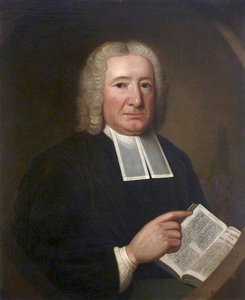
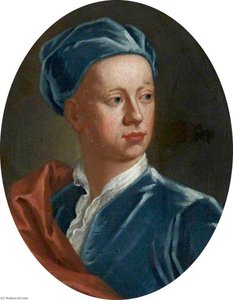
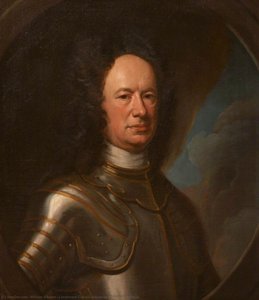
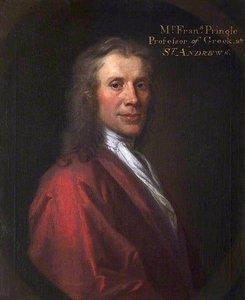
11Caroline of Brandenburg Ansbach (1683–1737), and Her Son Prince William Augustus (1721–1765), Duke of Cumberland (1730) autorstwa William AikmanCaroline of Brandenburg Ansbach (1683–1737), and Her Son Prince William Augustus (1721–1765), Duke of Cumberland1730 · National Trust 12James Hadow autorstwa William AikmanJames HadowUniversity of St Andrews 13George Alexander (1704) autorstwa William AikmanGeorge Alexander1704 14Robert Geddes, FRCSEd (1709) (1709) autorstwa William AikmanRobert Geddes, FRCSEd (1709)1709 · The Royal College of Surgeons of Edinburgh 15John Lauder (c.1680–1737), FRCSEd (1709) (1700) autorstwa William AikmanJohn Lauder (c.1680–1737), FRCSEd (1709)1700 · The Royal College of Surgeons of Edinburgh 16Robert Clerk (1664–1720), FRCSEd (1689) (1700) autorstwa William AikmanRobert Clerk (1664–1720), FRCSEd (1689)1700 · The Royal College of Surgeons of Edinburgh 17John Gay, Poet and Dramatist (1720) autorstwa William AikmanJohn Gay, Poet and Dramatist1720 18James Thomson, Poet (1720) autorstwa William AikmanJames Thomson, Poet1720 19John Campbell, 2nd Duke of Argyll and Greenwich, Soldier and Statesman (1720) autorstwa William AikmanJohn Campbell, 2nd Duke of Argyll and Greenwich, Soldier and Statesman1720 20James Thomson (1700–1748), Poet (1720) autorstwa William AikmanJames Thomson (1700–1748), Poet1720 · Scottish National Portrait Gallery 21Allan Ramsay (1684–1758), Poet (1722) autorstwa William AikmanAllan Ramsay (1684–1758), Poet1722 · Scottish National Portrait Gallery 22John Gay (1685–1732), Poet and Dramatist (1720) autorstwa William AikmanJohn Gay (1685–1732), Poet and Dramatist1720 · Scottish National Portrait Gallery 23John McGill (d.1735), FRCSEd (1710) (1711) autorstwa William AikmanJohn McGill (d.1735), FRCSEd (1710)1711 · The Royal College of Surgeons of Edinburgh 24Sir Patrick Hume (1641–1724), 1st Earl of Marchmont, Statesman (1720) autorstwa William AikmanSir Patrick Hume (1641–1724), 1st Earl of Marchmont, Statesman1720 · Muzeum Narodowe w Warszawie 25William Aikman (1682–1731), Artist, Self Portrait (1711) autorstwa William AikmanWilliam Aikman (1682–1731), Artist, Self Portrait1711 · Scottish National Portrait Gallery 26John Campbell (1680–1743), 2nd Duke of Argyll and Greenwich, Soldier and Statesman (1720) autorstwa William AikmanJohn Campbell (1680–1743), 2nd Duke of Argyll and Greenwich, Soldier and Statesman1720 · Scottish National Portrait Gallery 27John Monro (1670–1740), FRCSEd (1703) (1715) autorstwa William AikmanJohn Monro (1670–1740), FRCSEd (1703)1715 · The Royal College of Surgeons of Edinburgh 28Lieutenant Colonel Alexander Campbell of Finab (1715) autorstwa William AikmanLieutenant Colonel Alexander Campbell of Finab1715 · The Black Watch Castle - Museum 29Field Marshal Sir Robert Rich (1685–1768), 4th Bt (1729) autorstwa William AikmanField Marshal Sir Robert Rich (1685–1768), 4th Bt1729 · National Trust 30Francis Pringle, Professor of Greek at St Andrews (1723) autorstwa William AikmanFrancis Pringle, Professor of Greek at St Andrews1723 · University of St Andrews 31Sir Thomas Saunders Sebright (1692–1736), 4th Bt (or 'Mr Crawley') (1730) autorstwa William AikmanSir Thomas Saunders Sebright (1692–1736), 4th Bt (or 'Mr Crawley')1730 · National Trust 32Colonel Harbord Harbord (1675 –1742) (Harbord Cropley) (1732) autorstwa William AikmanColonel Harbord Harbord (1675 –1742) (Harbord Cropley)1732 · National Trust 33Sir John Cope (1690–1760) (1730) autorstwa William AikmanSir John Cope (1690–1760)1730 · National Trust 34Edmund Prideaux (1693–1745) (detail) (1730) autorstwa William AikmanEdmund Prideaux (1693–1745) (detail)1730 · National Trust 35Sir William Harbord (1696 –1770), MP, KB (1729) autorstwa William AikmanSir William Harbord (1696 –1770), MP, KB1729 · National Trust 36Thomas Coke (1697–1759), 1st Earl of Leicester (1731) autorstwa William AikmanThomas Coke (1697–1759), 1st Earl of Leicester1731 · National Trust 37Sir William Leman (d.1741), 2nd Bt of Northaw, Hertfordshire (1729) autorstwa William AikmanSir William Leman (d.1741), 2nd Bt of Northaw, Hertfordshire1729 · National Trust 38William Kent (1725) autorstwa William AikmanWilliam Kent1725 · National Portrait Gallery 39Sir Charles Blois (1657–1738), 1st Bt, MP for Ipswich and Dunwich (1725) autorstwa William AikmanSir Charles Blois (1657–1738), 1st Bt, MP for Ipswich and Dunwich1725 40John Hay, 4th Marquess of Tweeddale, Lord Justice General for Scotland (1728) autorstwa William AikmanJohn Hay, 4th Marquess of Tweeddale, Lord Justice General for Scotland1728 41Sir Gilbert Elliot (1693–1766), 1st Lord Minto (1726) autorstwa William AikmanSir Gilbert Elliot (1693–1766), 1st Lord Minto1726 · Scottish National Portrait Gallery 42Sir Henry Harpur (1708–1748), 5th Bt (1728) autorstwa William AikmanSir Henry Harpur (1708–1748), 5th Bt1728 · National Trust 43Mary Savile (1700–1751), Countess of Thanet (1728) autorstwa William AikmanMary Savile (1700–1751), Countess of Thanet1728 44John St John (1702–1748), 2nd Viscount St John (1742) autorstwa William AikmanJohn St John (1702–1748), 2nd Viscount St John1742 · Lydiard House 45Adam Cockburn, Lord Ormiston, 1656 - 1735. Lord Justice-Clerk autorstwa William AikmanAdam Cockburn, Lord Ormiston, 1656 - 1735. Lord Justice-ClerkScottish National Portrait Gallery 46Sir James Steuart, 1st Baronet, of Goodtrees and Coltness, 1681 - 1727 autorstwa William AikmanSir James Steuart, 1st Baronet, of Goodtrees and Coltness, 1681 - 1727Scottish National Portrait Gallery 47John Dalrymple (1673–1747), 2nd Earl of Stair or John Campbell (1680–1743), Duke of Argyll and Greenwich autorstwa William AikmanJohn Dalrymple (1673–1747), 2nd Earl of Stair or John Campbell (1680–1743), Duke of Argyll and Greenwich 48Lady Anne Maxwell autorstwa William AikmanLady Anne Maxwell 49John Erskine, 14th of Dun, Son of Lord Dun, Aged 10 autorstwa William AikmanJohn Erskine, 14th of Dun, Son of Lord Dun, Aged 10 50Landscape with a River autorstwa William AikmanLandscape with a River 51Katherine Erskine, Daughter of Sir Charles Erskine of Alva, Wife of Patrick Campbell of Monzie autorstwa William AikmanKatherine Erskine, Daughter of Sir Charles Erskine of Alva, Wife of Patrick Campbell of Monzie 52Elizabeth Graham of Airth autorstwa William AikmanElizabeth Graham of AirthThe National Trust For Scotland 53John Erskine (1712–1787), 14th of Dun, Son of Lord Dun, Aged 10 autorstwa William AikmanJohn Erskine (1712–1787), 14th of Dun, Son of Lord Dun, Aged 10National Trust of Scotland 54Self Portrait autorstwa William AikmanSelf PortraitScottish National Gallery 55Elizabeth Ogilvy, Countess of Lauderdale autorstwa William AikmanElizabeth Ogilvy, Countess of Lauderdale 56John Lumsden of Blanearn autorstwa William AikmanJohn Lumsden of BlanearnThe National Trust For Scotland 57Charles Maitland (1688–1744), 6th Earl of Lauderdale autorstwa William AikmanCharles Maitland (1688–1744), 6th Earl of Lauderdale 58Rachel Graham, Wife of John Lumsden of Blanearn autorstwa William AikmanRachel Graham, Wife of John Lumsden of BlanearnThe National Trust For Scotland 59David Erskine (1672–1758), 13th of Dun, in the Robes of the Court of Session autorstwa William AikmanDavid Erskine (1672–1758), 13th of Dun, in the Robes of the Court of SessionNational Trust of Scotland 60Anne Erskine (1709–1735), Daughter of Lord Dun and Wife Successively of James, 9th Earl of Airlie and Sir Alexander Macdonald autorstwa William AikmanAnne Erskine (1709–1735), Daughter of Lord Dun and Wife Successively of James, 9th Earl of Airlie and Sir Alexander MacdonaldNational Trust of Scotland 61George Watson (1654–1723) autorstwa William AikmanGeorge Watson (1654–1723)The Merchant's Hall 62Walter Scott, 'Beardie' (1679–1729), Great Grandfather of Sir Walter Scott autorstwa William AikmanWalter Scott, 'Beardie' (1679–1729), Great Grandfather of Sir Walter ScottAbbotsford House 63Susanna Kennedy (1689–1780), Countess of Eglinton, Third Wife of the 9th Earl of Eglinton, Patroness of Letters autorstwa William AikmanSusanna Kennedy (1689–1780), Countess of Eglinton, Third Wife of the 9th Earl of Eglinton, Patroness of LettersScottish National Portrait Gallery 64Sir James Campbell of Lawers and Rowallan (1667–1745), Soldier autorstwa William AikmanSir James Campbell of Lawers and Rowallan (1667–1745), SoldierScottish National Portrait Gallery 65John Campbell, 2nd Duke of Argyll and Duke of Greenwich (1725) autorstwa William AikmanJohn Campbell, 2nd Duke of Argyll and Duke of Greenwich1725 · National Portrait Gallery

Słynne obrazy William Aikman epoka po epoce

Tematy, które przyciągnęły wzrok William Aikman

Cztery motywy najczęściej powracające w tych oryginałach, z których każdy doczekał się swojego najdoskonalszego przykładu.

Muzea przechowujące oryginały William Aikman

8 muzeów, w których znajduje się najwięcej obrazów z tej strony.

Muzea Miasto Dzieła artysty William Aikman Obrazy z tej listy
Scottish National Portrait Gallery, EdynburgScottish National Portrait Gallery Edynburg 12 Anne Dalrymple, Lady Steuart, d. 1736, Patie Birnie, the Fiddler of Kinghorn, James Thomson (1700–1748), Poet
National Trust, NorwichNational Trust Norwich 10 Henry Kelsall (1692–1762), Sir Robert Walpole (1676–1745), 1st Earl of Orford, KG, Field Marshal Sir Robert Rich (1685–1768), 4th Bt
The Royal College of Surgeons of Edinburgh, EdynburgThe Royal College of Surgeons of Edinburgh Edynburg 5 Robert Geddes, FRCSEd (1709), John Lauder (c.1680–1737), FRCSEd (1709), Robert Clerk (1664–1720), FRCSEd (1689)
The National Trust For Scotland, EdynburgThe National Trust For Scotland Edynburg 3 Elizabeth Graham of Airth, John Lumsden of Blanearn, Rachel Graham, Wife of John Lumsden of Blanearn
National Trust of Scotland, MontroseNational Trust of Scotland Montrose 3 John Erskine (1712–1787), 14th of Dun, Son of Lord Dun, Aged 10, David Erskine (1672–1758), 13th of Dun, in the Robes of the Court of Session, Anne Erskine (1709–1735), Daughter of Lord Dun and Wife Successively of James, 9th Earl of Airlie and Sir Alexander Macdonald
Royal Collection, LondynRoyal Collection Londyn 2 John Campbell, Second Duke of Argyll and Duke of Greenwich (1680-1743), Archibald Campbell, Earl of Ilay, later 3rd Duke of Argyll (1682-1761)
University of St Andrews, St AndrewsUniversity of St Andrews St Andrews 2 James Hadow, Francis Pringle, Professor of Greek at St Andrews
National Portrait Gallery, LondynNational Portrait Gallery Londyn 2 William Kent, John Campbell, 2nd Duke of Argyll and Duke of Greenwich

William Aikman na przestrzeni dekad: jeden unikatowy oryginał dla każdego

Dzieła według dekad

Wybierz dekadę, aby zobaczyć dzieło, które ją definiuje.

Obrazy artysty William Aikman: pytania do galerii

Jakie jest najsłynniejsze dzieło artysty William Aikman?Odkryj odpowiedź

John Campbell, Second Duke of Argyll and Duke of Greenwich (1680-1743) (1709), Royal Collection, Londyn. Następne są Anne Dalrymple, Lady Steuart, d. 1736 (1710) oraz James Gibbs (1682-1754) holding a Plan of St Mary le Strand, London (1713).

W jakim wieku William Aikman stworzył/a John Campbell, Second Duke of Argyll and Duke of Greenwich (1680-1743)?Odkryj odpowiedź

27 lat: John Campbell, Second Duke of Argyll and Duke of Greenwich (1680-1743) pochodzi z 1709, a William Aikman urodził(a) się w 1682.

Które dziesięć obrazów William Aikman jest najbardziej znanych?Odkryj odpowiedź

John Campbell, Second Duke of Argyll and Duke of Greenwich (1680-1743), Anne Dalrymple, Lady Steuart, d. 1736, James Gibbs (1682-1754) holding a Plan of St Mary le Strand, London, Archibald Campbell, Earl of Ilay, later 3rd Duke of Argyll (1682-1761), Patie Birnie, the Fiddler of Kinghorn, Sir Thomas Saunders Sebright, 4th Bt (1692-1736) or Mr Crawley, An Unfinished Study of the Head of James Thomson, Henry Kelsall (1692–1762), Sir Robert Walpole (1676–1745), 1st Earl of Orford, KG i Dorothy Boyle (1699–1758), Countess of Burlington. Powyższy ranking zawiera rok powstania oraz muzeum dla każdego z nich.

Ile znanych dzieł stworzył William Aikman?Odkryj odpowiedź

Nasz katalog zawiera 73 dzieł artysty William Aikman, datowanych od 1700 do 1731.

Gdzie można zobaczyć najsłynniejsze oryginały William Aikman?Odkryj odpowiedź

W większości znajdują się w Scottish National Portrait Gallery (Edynburg), National Trust (Norwich) i The Royal College of Surgeons of Edinburgh (Edynburg). Powyższa tabela muzeów zawiera ich pełną listę.

W jakim okresie William Aikman stworzył/a swoje najsłynniejsze obrazy?Odkryj odpowiedź

W 1720s: 23 z 65 dzieł na tej stronie powstało w tym czasie, w tym Patie Birnie, the Fiddler of Kinghorn.

Który z najsłynniejszych obrazów artysty William Aikman powstał najwcześniej, a który najpóźniej?Odkryj odpowiedź

Na tej stronie najwcześniejszy to John Lauder (c.1680–1737), FRCSEd (1709) (1700), a najpóźniejszy Thomas Coke (1697–1759), 1st Earl of Leicester (1731).

Jakie tematy preferował William Aikman?Odkryj odpowiedź

Man (46), Portrait (17) i Wig (12), w ramach 65 dzieł na tej stronie.

Jakich materiałów William Aikman używał najczęściej?Odkryj odpowiedź

Oil On Canvas, dla 44 z 65 dzieł na tej stronie.

Do jakiego nurtu należy twórczość William Aikman?Odkryj odpowiedź

Neoclassicism, sądząc po oryginałach na tej stronie.

Jakie oryginały William Aikman można zobaczyć w Scottish National Portrait Gallery?Odkryj odpowiedź

Anne Dalrymple, Lady Steuart, d. 1736, Patie Birnie, the Fiddler of Kinghorn i James Thomson (1700–1748), Poet: Scottish National Portrait Gallery, Edynburg posiada 12 dzieł widocznych na tej stronie.

William Aikman: portret artysty

Dusza szkockiego Oświecenia: Życie i sztuka Williama Aikmana

W tętniącym życiem krajobrazie intelektualnym osiemnastowiecznej Szkocji niewiele postaci ucieleśniało harmonijne połączenie sztuki wizualnej i literackiej głębi z taką gracją jak William Aikman. Urodzony w 1682 roku w rodzinie, która przewidywała dla niego przyszłość w surowych murach jurysprudencji, Aikman ostatecznie wybrał ścieżkę znacznie bardziej sugestywną i eteryczną. Zamiast zgłębiać suche zawiłości prawa, oddał się pędzlowi, stając się portrecistą, którego dzieła miały uchwycić samą esencję szkockiego Oświecenia. Jego życie nie było jedynie dążeniem do technicznej biegłości, lecz głębokim zaangażowaniem w ideały humanizmu, które zaczynały przekształcać europejską świadomość.

Fundamenty artystycznej tożsamości Aikmana zostały położone podczas jego formacyjnych lat na Uniwersytecie w Edynburgu. To właśnie tam nawiązał trwałą i transformującą więź z Allanem Ramsayem, słynnym poetą tradycji Doriment. Ta przyjaźń była czymś znacznie więcej niż tylko relacją towarzyską; była wspólną podróżą intelektualną. Dzięki Ramsayowi Aikman stał się głęboko zanurzony w etosie poetyckim charakteryzującym się szczerością, emocjonalnym rezonansem i delikatnym uwielbieniem dla natury. Ta literacka wrażliwość objawiła się później w jego malarstwie, nadając jego podmiotom pewną psychologiczną głębię i cichą godność, która wykraczała poza zwykłe rejestrowanie fizycznego podobieństwa.

Podróż przez klasyczny przepych

Aby udoskonalić swój rozwijający się talent, Aikman poszukiwał rygorystycznego szkolenia dostępnego w Londynie, gdzie zetknął się z rodzącymiymi się wpływami włoskiego neoklasycyzmu. Jednak jego prawdziwa artystyczna metamorfoza dokonała się podczas licznych podróży przez Włochy. Zanurzony w kolebce renesansu, Aikman skrupulatnie studiował mistrzów, odnajdując głęboką inspirację w zrównoważonych kompozycjach i idealnych formach Rafaela oraz Michała Anioła. Ten okres pielgrzymki pozwolił mu przyswoić zasady antyku, integrując poczucie strukturalnej trwałości i klasycznej elegancji w jego portretach.

Po powrocie do Szkocji styl Aikmana wyłonił się jako wyrafinowana mieszanka północnej wrażliwości i południowego przepychu. Jego prace charakteryzowały się spokojną elegancją, unikając nadmiernie dramatycznych ozdobników baroku na rzecz bardziej opanowanej i przemyślanej prezentacji. Posiadał niezwykłą zdolność oddawania tekstur – subtelnego połysku jedwabiu, ciężaru aksamitu i miękkości skóry – z precyzją, która wydawała się jednocześnie realistyczna i wyniesiona przez artystyczny ideał. Jego portrety nie były jedynie lustrzanymi odbiciami, lecz były przesiąknięte poczuciem charakteru i intelektualnej obecności.

Mecenat, dziedzictwo i znaczenie historyczne

Poza indywidualnymi osiągnięciami technicznymi, Aikman odegrał kluczową rolę w ekosystemie kulturowym swojej epoki. Był istotnym mostem między światami sztuki pięknej i literatury, występując jako wczesny orędownik postaci takich jak James Thomson. Wykorzystując swoje koneksje społeczne do zapewnienia mecenatu od wpływowych postaci, takich jak Robert Walpole, Aikman pomógł stworzyć środowisko, w którym szkoccy intelektualiści mogli rozkwitać na szerszej europejskiej scenie. Jego zdolność do poruszania się w kuluarach władzy przy jednoczesnym zachowaniu artystycznej integralności uczyniła go centralną postacią rodzącego się renesansu kulturalnego Edynburga.

Dziedzictwo Williama Aikmana kryje się w cichej sile jego portretów, które nadal służą jako okna do ducha epoki zdefiniowanej przez rozum i wyrafinowanie. Jego wkład można podsumować poprzez kilka kluczowych filarów jego kariery:

  • Synteza sztuk: z sukcesem połączył wizualny język włoskiego neoklasycyzmu ze szczerością emocjonalną szkockiej poezji.
  • Opieka kulturalna: dzięki swojemu mecenatowi i kontaktom pomógł podnieść status szkockich intelektualistów na Wyspach Brytyjskich.
  • Mistrzostwo techniczne: jego oddanie studiowaniu dawnych mistrzów pozwoliło mu wprowadzić do szkockiego portretu poziom klasycznego wyrafinowania, który wcześniej nie był znany.
  • Trwały wpływ: jego twórczość pozostaje żywym punktem odniesienia dla zrozumienia estetycznych i intelektualnych nurtów Oświecenia XVIII wieku.

Choć jego życie było stosunkowo krótkie i zakończyło się w 1731 roku, wpływ Williama Aikmana pozostaje wyryty w historii brytyjskiej sztuki. Staje on jako świadectwo potęgi podążania za swoim prawdziwym powołaniem, udowadniając, że gdy pędzel jest prowadzony przez intelekt i serce, może uchwycić nie tylko twarz, ale samą duszę epoki.