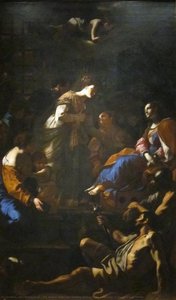
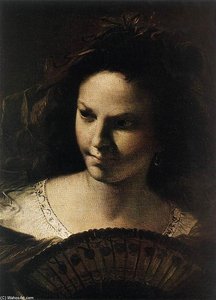
Portret Mattia Preti

98 najsłynniejszych obrazów artysty Mattia Preti, każdy niepowtarzalny

Aktualizacja: Listopad 2026 · ranking według naszego wskaźnika popularności (liczba wyszukiwań, wizyt i zamówień dla każdego dzieła) · 99 dzieł Mattia Preti w naszym katalogu

W skrócie

The Marriage at Cana (1655) to obraz autorstwa Mattia Preti, który przyciąga najwięcej spojrzeń; oryginał znajduje się w National Gallery, Londyn. Następnie wzrok kieruje się na Tribute Money (1640) i St. John the Baptist Preaching. Spośród 99 dzieł Mattia Preti w naszym katalogu, tych 98 jest najbardziej znanych – każde z nich to unikatowy oryginał, przedstawiony wraz z rokiem powstania, muzeum oraz powodem, dla którego przetrwało próbę czasu.

1613 – 1699, Taverna Baroque dramatic lighting Najwięcej dzieł: Bawarskie Państwowe Zbiory Malarstwa

10 najlepszych obrazów autorstwa Mattia Preti według oka galerii

1
The Marriage at Cana (1655) autorstwa Mattia Preti

The Marriage at Cana

1655 · Oil On Canvas · National Gallery, Londyn

The air in the room feels heavy, thick with the scent of spilled wine and the heat of a crowded celebration. At the center of this bustling gathering, a miracle unfolds in silence. A long banquet table, draped in a stark white cloth, cuts through the darkness, acting as a stage for a divine transformation. Figures press against one another, their bodies overlapping in a dense, rhythmic movement that pulls…

2
Tribute Money (1640) autorstwa Mattia Preti

Tribute Money

1640 · Oil On Canvas · Pinacoteca di Brera, Mediolan

To stand before Mattia Preti's Tribute Money is to step directly into the charged atmosphere of 17th-century Italian devotion. This magnificent oil on canvas, executed in 1640, pulses with the dramatic energy characteristic of the Baroque period. It is not merely a depiction of an event; it is an immersive experience, masterfully orchestrated by Preti’s hand. The scene gathers a group of men around a central table, their gestures and…

3
St. John the Baptist Preaching autorstwa Mattia Preti

St. John the Baptist Preaching

Oil On Canvas · Legion of Honor, San Francisco

To stand before this depiction of St. John the Baptist is to be enveloped by the very breath of divine revelation. The scene pulses with an almost palpable energy, capturing that electrifying moment when sacred truth breaks through the mundane. At the heart of the composition stands St. John, a figure radiating both ascetic power and profound spiritual authority. He commands attention not merely through his central placement, but through…

4
Christ in Glory (1660) autorstwa Mattia Preti

Christ in Glory

1660 · Oil On Canvas · Museo del Prado, Madryt

A Triumph of Baroque Faith: Exploring Mattia Preti’s ‘Christ in Glory’ Mattia Preti, a Calabrian Knight of the Baroque, stands as an emblem of artistic dynamism and fervent devotion during his era. Born in Taverna, Calabria, on February 24, 1613, his journey was marked by absorbing diverse influences—primarily from Caravaggio—resulting in a uniquely expressive style characterized by dramatic chiaroscuro and meticulous realism that would define his oeuvre. Before 1630, he…

5
Clorinda Rescuing Sofronia and Olindo (1660) autorstwa Mattia Preti

Clorinda Rescuing Sofronia and Olindo

1660 · Oil On Canvas · Muzeum J. Paula Getty'ego, Los Angeles

The air in the painting feels heavy, thick with the scent of iron and dust. A single, theatrical light cuts through the murky atmosphere, striking the pale skin of a woman seated on the right. She is the center of a storm, a figure of vulnerability amidst a crowded, muscular arrangement of limbs and steel. Around her, the composition erupts in a series of sweeping diagonals. Weapons and reaching arms…

6
Ecce Homo (1661) autorstwa Mattia Preti

Ecce Homo

1661 · Oil On Canvas · Musée Condé, Chantilly

In this treatment of Ecce Homo, Mattia Preti employs a highly theatrical arrangement to command the viewer's attention. The composition is built upon a balcony placed transversely, a clever spatial device that pushes the figure of Christ into the immediate foreground. This positioning creates an intimate, almost confrontational proximity between the subject and the observer. The artist’s style here is both dramatic and heroic, moving beyond simple naturalism to imbue…

7
Saint Paul the Hermit (1650) autorstwa Mattia Preti

Saint Paul the Hermit

1650 · Oil On Canvas · Museu Nacional d'Art de Catalunya, Barcelona

The shadows press in from every corner, leaving only a sliver of light to illuminate the weathered face of Saint Paul the Hermit. He sits in a profound, heavy silence, his body a map of ascetic devotion. Every line etched into his skin tells a story of years spent in the desert, away from the clamor of the world. His eyes are turned upward, searching the darkness for a light…

8
Wedding at Cana (1655) autorstwa Mattia Preti

Wedding at Cana

1655 · Oil On Canvas · National Gallery, Londyn

Mattia Preti’s Wedding at Cana captures the first miracle of Christ during a wedding feast in Galilee. The scene brings together Christ, his mother, and the disciples within a crowded, festive setting. A long banquet table, draped in a white cloth, serves as the central stage for the unfolding event. Amidst the gathering, Mary directs the servants, while the steward observes the transformation of the liquid with astonishment.

9
Doubting Thomas (1660) autorstwa Mattia Preti

Doubting Thomas

1660 · Oil On Canvas · Kunsthistorisches Museum, Wiedeń

In this oil on canvas, we find ourselves pulled into an intimate, almost uncomfortable proximity to a profound biblical encounter. The scene captures the precise second when the apostle Thomas seeks physical verification of the resurrection, reaching out to touch the wound in Christ's side. There is a heavy, palpable tension in the way the figures are arranged along a diagonal axis, guiding our gaze directly toward that central point…

10
The crucifixion of St Andrew (1651) autorstwa Mattia Preti

The crucifixion of St Andrew

1651 · Oil On Canvas · Art Gallery of South Australia, Adelaide

The crucifixion of St Andrew is an oil on canvas work by Mattia Preti. Created about 1651, this piece belongs to the Baroque movement of seventeenth-century Italy. The scene captures a moment of profound religious significance, focusing on the martyrdom of the saint. It is a heavy, physical depiction of faith under the weight of wood and shadow.

Słynne obrazy artysty Mattia Preti, od 11 do 98

11St John the Baptist before Herod (1665) autorstwa Mattia PretiSt John the Baptist before Herod1665 12Saint Veronica with the Veil (1657) autorstwa Mattia PretiSaint Veronica with the Veil1657 · Los Angeles County Museum of Art 13Portrait of a Grand Master of the Knights of Malta, Martin de Redin (1660) autorstwa Mattia PretiPortrait of a Grand Master of the Knights of Malta, Martin de Redin1660 · Art Institute of Chicago 14Belisarius Receiving Alms (1660) autorstwa Mattia PretiBelisarius Receiving Alms1660 · Museum Boijmans Van Beuningen 15The Game of Draughts (1630) autorstwa Mattia PretiThe Game of Draughts1630 · Ashmolean Museum 16Ecce homo autorstwa Mattia PretiEcce homo 17Dice Players (1635) autorstwa Mattia PretiDice Players1635 · Muzeum Narodowe w Krakowie 18The Beheading of Saint John the Baptist (1640) autorstwa Mattia PretiThe Beheading of Saint John the Baptist1640 · National Gallery of Ireland 19The Pardon of St. John Chrysostom (1640) autorstwa Mattia PretiThe Pardon of St. John Chrysostom1640 · Cincinnati Art Museum 20Clorinda rescues Olindo and Sophronia (1646) autorstwa Mattia PretiClorinda rescues Olindo and Sophronia1646 · Musei di Strada Nuova 21Vocation of the Apostle Matthew (1637) autorstwa Mattia PretiVocation of the Apostle Matthew1637 · Kunsthistorisches Museum 22The Adoration of the Shepherds (1645) autorstwa Mattia PretiThe Adoration of the Shepherds1645 · Muzeum Narodowe w Warszawie 23the head of St. John presented to the king (1638) autorstwa Mattia Pretithe head of St. John presented to the king1638 24Bearded Old Man's Head (1656) autorstwa Mattia PretiBearded Old Man's Head1656 · Bawarskie Państwowe Zbiory Malarstwa 25Return of the Prodigal Son (1656) autorstwa Mattia PretiReturn of the Prodigal Son1656 · Bawarskie Państwowe Zbiory Malarstwa 26Mary Magdalene (1656) autorstwa Mattia PretiMary Magdalene1656 · Bawarskie Państwowe Zbiory Malarstwa 27Tobias and the Angel (1656) autorstwa Mattia PretiTobias and the Angel1656 · Bawarskie Państwowe Zbiory Malarstwa 28Saint Andrew (1656) autorstwa Mattia PretiSaint Andrew1656 · Bawarskie Państwowe Zbiory Malarstwa 29The Feast of Absalom (1658) autorstwa Mattia PretiThe Feast of Absalom1658 · Narodowa Galeria Kanady 30Salomé with the Head of St. John before Herod (1658) autorstwa Mattia PretiSalomé with the Head of St. John before Herod1658 · Gemäldegalerie Alte Meister im Schloss Wilhelmshöhe 31An Angel shows Hagar the Way (1656) autorstwa Mattia PretiAn Angel shows Hagar the Way1656 · Bawarskie Państwowe Zbiory Malarstwa 32Paul of Thebes (1675) autorstwa Mattia PretiPaul of Thebes1675 · Narodowe Muzeum Sztuki Dawnej 33Self-portrait (1695) autorstwa Mattia PretiSelf-portrait1695 34The Vision of Saint Paul (1700) autorstwa Mattia PretiThe Vision of Saint Paul1700 35The Martyrdom of Saint Catherine (1700) autorstwa Mattia PretiThe Martyrdom of Saint Catherine1700 · MUŻA 36The Denial of Saint Peter (1700) autorstwa Mattia PretiThe Denial of Saint Peter1700 · Musée des Beaux-Arts 37The Raising of Lazarus (1650) autorstwa Mattia PretiThe Raising of Lazarus1650 · Galleria Nazionale d'Arte Antica 38The Concert (1630) autorstwa Mattia PretiThe Concert1630 · Thyssen-Bornemisza Museum 39A Man Cutting Tobacco (1660) autorstwa Mattia PretiA Man Cutting Tobacco1660 40Wieczór Herodowy (1661) autorstwa Mattia PretiWieczór Herodowy1661 · Toledo Museum of Art 41Apelle painting Campaspe (1600) autorstwa Mattia PretiApelle painting Campaspe1600 · Pinacoteca Stuard 42The Baptism of Christ (1661) autorstwa Mattia PretiThe Baptism of Christ1661 · Konwentualna Katedra św. Jana 43The Roman Empress Faustina Visiting Saint Catherine of Alexandria in Prison (1643) autorstwa Mattia PretiThe Roman Empress Faustina Visiting Saint Catherine of Alexandria in Prison1643 · The Dayton Art Institute 44Queen Tomyris Receiving the Head of Cyrus, King of Persia (1670) autorstwa Mattia PretiQueen Tomyris Receiving the Head of Cyrus, King of Persia1670 45St. George Victorious over the Dragon (1678) autorstwa Mattia PretiSt. George Victorious over the Dragon1678 · Collegiate Basilica of St. George 46St John Reproaching Herod (1662) autorstwa Mattia PretiSt John Reproaching Herod1662 · Museo de Bellas Artes de Sevilla 47Christ and the Money Changers (1600) autorstwa Mattia PretiChrist and the Money Changers1600 · Museo di Capodimonte 48Concert (detail) (1630) autorstwa Mattia PretiConcert (detail)1630 · Ermitaż 49Anioł Lecący (1630) autorstwa Mattia PretiAnioł Lecący1630 · Kunstpalast 50The Adoration of the Shepherds (1699) autorstwa Mattia PretiThe Adoration of the Shepherds1699 · Walker Art Gallery 51Christ and the Woman Taken in Adultery autorstwa Mattia PretiChrist and the Woman Taken in AdulterySaint Louis Art Museum 52The Martyrdom of Saint Paul autorstwa Mattia PretiThe Martyrdom of Saint PaulMuseum of Fine Arts 53Tobias Healing His Father's Blindness autorstwa Mattia PretiTobias Healing His Father's BlindnessMuseum of Fine Arts 54Martyrdom of Saint Erasmus autorstwa Mattia PretiMartyrdom of Saint ErasmusBawarskie Państwowe Zbiory Malarstwa 55Martyrdom of Saint Andrew autorstwa Mattia PretiMartyrdom of Saint Andrew 56St. Paul the Hermit autorstwa Mattia PretiSt. Paul the HermitCleveland Museum of Art 57Concert in the family autorstwa Mattia PretiConcert in the family 58Zachary on his knees, and studies of his head autorstwa Mattia PretiZachary on his knees, and studies of his head 59Old man sitting, holding a book, speaking to a young man autorstwa Mattia PretiOld man sitting, holding a book, speaking to a young man 60Musical angels, studies for a ceiling compartment autorstwa Mattia PretiMusical angels, studies for a ceiling compartment 61A Group of Saints and Angels autorstwa Mattia PretiA Group of Saints and Angels 62God the Father surrounded by angels autorstwa Mattia PretiGod the Father surrounded by angels 63The Release of St Peter from Prison autorstwa Mattia PretiThe Release of St Peter from PrisonAcademy of Fine Arts Vienna 64Narodzenie św. Jana Chrzciciela (1649) autorstwa Mattia PretiNarodzenie św. Jana Chrzciciela1649 · Virginia Museum of Fine Arts 65Pilate Washing his Hands (1663) autorstwa Mattia PretiPilate Washing his Hands1663 · Metropolitan Museum of Art 66The Martyrdom of Saint Gennaro (1685) autorstwa Mattia PretiThe Martyrdom of Saint Gennaro1685 · National Gallery of Art 67The Martyrdom of St. Bartholomew autorstwa Mattia PretiThe Martyrdom of St. BartholomewPokrajinski muzej Ptuj- Ormož 68Saint John the Baptist Preaching (1650) autorstwa Mattia PretiSaint John the Baptist Preaching1650 · Metropolitan Museum of Art 69St John Cast into Prison (1661) autorstwa Mattia PretiSt John Cast into Prison1661 · Konwentualna Katedra św. Jana 70Seated Bishop with Arms Extended and Three Attendant Figures autorstwa Mattia PretiSeated Bishop with Arms Extended and Three Attendant Figures 71Salome z głową św. Jana Chrzestnego autorstwa Mattia PretiSalome z głową św. Jana ChrzestnegoRingling Museum of Art 72Design for the Decoration of a Cupola with a Prophet, King David and Two Putti autorstwa Mattia PretiDesign for the Decoration of a Cupola with a Prophet, King David and Two Putti 73A Mother Entrusting Her Sons to Christ autorstwa Mattia PretiA Mother Entrusting Her Sons to ChristPinacoteca di Brera 74Beheading of St. Catherine autorstwa Mattia PretiBeheading of St. CatherineNational Museum of Fine Arts 75Holy martyr (Saint Stephan?) autorstwa Mattia PretiHoly martyr (Saint Stephan?)Muzea Miejskie w Reggio Emilia 76Flying Angel (1699) autorstwa Mattia PretiFlying Angel1699 · Kunstpalast 77St Sebastian (1660) autorstwa Mattia PretiSt Sebastian1660 · Museo di Capodimonte 78Sophonisba Receiving the Goblet (1670) autorstwa Mattia PretiSophonisba Receiving the Goblet1670 · Musée des Beaux-Arts de Lyon 79St. Nicholas of Bari (1653) autorstwa Mattia PretiSt. Nicholas of Bari1653 · Museo di Capodimonte 80Aeneas, Anchises and Ascanius Fleeing Troy (1630) autorstwa Mattia PretiAeneas, Anchises and Ascanius Fleeing Troy1630 · Galleria Nazionale d'Arte Antica 81Saint John the Baptist autorstwa Mattia PretiSaint John the BaptistMuseo di Capodimonte 82Judith and Holofernes autorstwa Mattia PretiJudith and HolofernesMuseo di Capodimonte 83The Return of the Prodigal Son autorstwa Mattia PretiThe Return of the Prodigal Son 84The Martyrdom of Saint Peter (1630) autorstwa Mattia PretiThe Martyrdom of Saint Peter1630 · Musée de Grenoble 85Saint Anthony Abbot (1628) autorstwa Mattia PretiSaint Anthony Abbot1628 86Vanitas (1650) autorstwa Mattia PretiVanitas1650 87The Return of the Prodigal Son (1658) autorstwa Mattia PretiThe Return of the Prodigal Son1658 · Royal Palace of Naples 88The Four Evangelists (1650) autorstwa Mattia PretiThe Four Evangelists1650 · Galleria Regionale di Palazzo Abatellis 89Concert (1630) autorstwa Mattia PretiConcert1630 · Ermitaż 90The Banquet Of Baldassare autorstwa Mattia PretiThe Banquet Of Baldassare 91Absalom's Feast (1653) autorstwa Mattia PretiAbsalom's Feast1653 · Museo di Capodimonte 92The Madonna of Costantinople (1656) autorstwa Mattia PretiThe Madonna of Costantinople1656 · Museo di Capodimonte 93Christ and the Woman Taken in Adultery autorstwa Mattia PretiChrist and the Woman Taken in AdulteryGalleria Regionale di Palazzo Abatellis 94St. George on Horseback (1658) autorstwa Mattia PretiSt. George on Horseback1658 · Konwentualna Katedra św. Jana 95Saint John the Baptist Wearing the Red Tabard of the Order of Saint John (1671) autorstwa Mattia PretiSaint John the Baptist Wearing the Red Tabard of the Order of Saint John1671 · MUŻA 96The Banquet of the Rich Glutton (1685) autorstwa Mattia PretiThe Banquet of the Rich Glutton1685 · Galleria Nazionale d'Arte Antica 97Tomyris Plunges the Head of the Dead Cyrus Into a Vessel of Blood (1685) autorstwa Mattia PretiTomyris Plunges the Head of the Dead Cyrus Into a Vessel of Blood1685 98Plato and Diogenes (1690) autorstwa Mattia PretiPlato and Diogenes1690 · Muzea Kapitolińskie

Słynne obrazy Mattia Preti epoka po epoce

Tematy, które przyciągnęły wzrok Mattia Preti

Cztery motywy najczęściej powracające w tych oryginałach, z których każdy doczekał się swojego najdoskonalszego przykładu.

Muzea przechowujące oryginały Mattia Preti

8 muzeów, w których znajduje się najwięcej obrazów z tej strony.

Muzea Miasto Dzieła artysty Mattia Preti Obrazy z tej listy
Bawarskie Państwowe Zbiory Malarstwa, MonachiumBawarskie Państwowe Zbiory Malarstwa Monachium 7 Bearded Old Man's Head, Return of the Prodigal Son, Mary Magdalene
Museo di Capodimonte, NapoliMuseo di Capodimonte Napoli 7 Christ and the Money Changers, St Sebastian, St. Nicholas of Bari
Konwentualna Katedra św. Jana, VallettaKonwentualna Katedra św. Jana Valletta 3 The Baptism of Christ, St John Cast into Prison, St. George on Horseback
National Gallery, LondynNational Gallery Londyn 2 The Marriage at Cana, Wedding at Cana
Pinacoteca di Brera, MediolanPinacoteca di Brera Mediolan 2 Tribute Money, A Mother Entrusting Her Sons to Christ
Kunsthistorisches Museum, WiedeńKunsthistorisches Museum Wiedeń 2 Doubting Thomas, Vocation of the Apostle Matthew
MUŻA, VallettaMUŻA Valletta 2 The Martyrdom of Saint Catherine, Saint John the Baptist Wearing the Red Tabard of the Order of Saint John
Galleria Nazionale d'Arte Antica, RzymGalleria Nazionale d'Arte Antica Rzym 2 The Raising of Lazarus, Aeneas, Anchises and Ascanius Fleeing Troy

Mattia Preti na przestrzeni dekad: jeden unikatowy oryginał dla każdego

Dzieła według dekad

Wybierz dekadę, aby zobaczyć dzieło, które ją definiuje.

Obrazy artysty Mattia Preti: pytania do galerii

Jakie jest najsłynniejsze dzieło artysty Mattia Preti?Odkryj odpowiedź

The Marriage at Cana (1655), National Gallery, Londyn. Następne są Tribute Money (1640) oraz St. John the Baptist Preaching.

W jakim wieku Mattia Preti stworzył/a The Marriage at Cana?Odkryj odpowiedź

42 lat: The Marriage at Cana pochodzi z 1655, a Mattia Preti urodził(a) się w 1613.

Które dziesięć obrazów Mattia Preti jest najbardziej znanych?Odkryj odpowiedź

The Marriage at Cana, Tribute Money, St. John the Baptist Preaching, Christ in Glory, Clorinda Rescuing Sofronia and Olindo, Ecce Homo, Saint Paul the Hermit, Wedding at Cana, Doubting Thomas i The crucifixion of St Andrew. Powyższy ranking zawiera rok powstania oraz muzeum dla każdego z nich.

Ile znanych dzieł stworzył Mattia Preti?Odkryj odpowiedź

Nasz katalog zawiera 99 dzieł artysty Mattia Preti, datowanych od 1628 do 1699.

Gdzie można zobaczyć najsłynniejsze oryginały Mattia Preti?Odkryj odpowiedź

W większości znajdują się w Bawarskie Państwowe Zbiory Malarstwa (Monachium), Museo di Capodimonte (Napoli) i Konwentualna Katedra św. Jana (Valletta). Powyższa tabela muzeów zawiera ich pełną listę.

W jakim okresie Mattia Preti stworzył/a swoje najsłynniejsze obrazy?Odkryj odpowiedź

W 1650s: 22 z 98 dzieł na tej stronie powstało w tym czasie, w tym The Marriage at Cana.

Który z najsłynniejszych obrazów artysty Mattia Preti powstał najwcześniej, a który najpóźniej?Odkryj odpowiedź

Na tej stronie najwcześniejszy to Saint Anthony Abbot (1628), a najpóźniejszy The Adoration of the Shepherds (1699).

Jakie tematy preferował Mattia Preti?Odkryj odpowiedź

Man (30), Woman (14) i Drapery (14), w ramach 98 dzieł na tej stronie.

Jakich materiałów Mattia Preti używał najczęściej?Odkryj odpowiedź

Oil On Canvas, dla 52 z 98 dzieł na tej stronie.

Do jakiego nurtu należy twórczość Mattia Preti?Odkryj odpowiedź

Baroque dramatic lighting, sądząc po oryginałach na tej stronie.

Jakie oryginały Mattia Preti można zobaczyć w Bawarskie Państwowe Zbiory Malarstwa?Odkryj odpowiedź

Bearded Old Man's Head, Return of the Prodigal Son i Mary Magdalene: Bawarskie Państwowe Zbiory Malarstwa, Monachium posiada 7 dzieł widocznych na tej stronie.

Mattia Preti: portret artysty

A Calabrian Knight of the Baroque

Mattia Preti, znany jako Il Cavaliere Calabrese – Kalwaryjski Krzyżan, stanowi kluczową postać w sztuce włoskiego baroku XVII wieku. Urodzony w Tavernie, w regionie Calabria, we Włoszech 24 lutego 1613 roku, jego artystyczna podróż była dynamiczną ewolucją, absorpcją różnorodnych wpływów i ostatecznie doprowadziła do stworzenia unikalnego stylu, który na stałe zapisał się w historii sztuki, szczególnie w Malcie, gdzie spędził znaczną część swojego życia. Początki jego edukacji artystycznej przypadły na Giovanniego Battistę Caracciolo, malarza głęboko zakorzenionego w ruchu karawaggistyście. Ta fundamentalna ekspozycja wywarła na nim głębokie zrozumienie dramatycznego światłocienia – intensywnego tańca światła i cienia – oraz zaangażowanie w realistyczną reprezentację, które pozostały charakterystycznymi cechami jego twórczości przez całe życie. Przed 1630 rokiem dołączył do swojego brata Gregoriusa w Rzymie, zanurzając się w artystyczne burzliwość tego miasta i studiując mistrzów, którzy zdefiniowali tamtejszą epokę: Caravaggia, Guercino, Rubensa, Guido Reni i Giovanniego Lanfranco. Ten okres był kluczowy, kształtując nie tylko jego umiejętności techniczne, ale także jego wyobrażenia estetyczne.

Forging a Dynamic Style

Rozwój artystyczny Preti nie był jedynie naśladowaniem; był syntezą wpływów, sprytnie utkany w styl odmienny od innych. Początkowo głęboko zakorzeniony w karawaggismie, stopniowo przesunął się poza jego rygory, przyjmując dynamizm i intensywność emocjonalną, które charakteryzowały wyższy barok. Jego pobyt w Neapolu jeszcze bardziej doprecyzował tę ewolucję, wystawiając go na wpływ tętniącej życiem twórczości Luca Giordano. Ten okres zaowocował powiększeniem jego obrazów, skomplikowanymi kompozycjami i wzmożonym poczuciem dramy. Mistrzowsko wykorzystywał dramatyczne kontrasty światła i cienia, dziedziczone od Caravaggia, nie tylko jako urządzenie techniczne, ale także jako sposób na wzmocnienie wpływu emocjonalnego i kierowanie wzrokiem widza. Jego postaci są nasycone wyczuwalnymi emocjami, wyrażonymi poprzez ekspresyjne twarze i dynamiczną postawę ciała. Ta umiejętność wywoływania potężnych uczuć – pobożności, rozpaczy, ekstazy – stała się definiującą cechą jego twórczości. Nie ograniczał się do przedstawiania scen; dążył do *ożywienia* ich, wstrzyknięcia życia do biblijnych narracji i ikon religijnych.

Commissions and Masterpieces Across Italy

Mattia Preti’s talent szybko zyskał uznanie, prowadząc do serii znaczących zleceń na całym obszarze Włoch. Na samym początku swojej kariery stworzył imponujące cykle freskowe w rzymskich kościołach, takich jak Sant’Andrea della Valle i San Carlo ai Catinari, demonstrując zdolność do tworzenia prac o dużej skali dekoracyjnej. Jego praca w kościele San Biagio w Modenie pokazała jego umiejętność adaptacji stylu do różnych ustawień architektonicznych. Jednak niektóre z jego najbardziej ambitnych – choć niestety utraconych – dzieł stanowiły freski, które namalował na siedem bram miasta Neapol przedstawiających życie i męczeństwo św. Jana Chrzciciela. Choć pozostają jedynie szkice, świadczą one o ogromie i wpływie tych monumentalnych dzieł. Te zlecenia nie były jedynie wypełnianiem prośby patrona; stanowiły okazję dla Preti do zaangażowania się w życie religijne i kulturowe społeczności, do których służył, nadając swojemu sztuce znaczenie i cel.

The Maltese Zenith: St. John’s Co-Cathedral

Jednak to właśnie na Malcie Preti osiągnął szczyt swojej artystycznej doskonałości. Appointed a Knight of the Order of Saint John w 1660 roku, podjął się transformującego projektu: pełnej renowacji wnętrza katedry św. Jana Chrzciciela w Wallettcie. Ta inicjatywa – prawdopodobnie jego najważniejsze dziedzictwo – obejmowała niesamowitą serię obrazów przedstawiających życie i męczeństwo św. Jana Chrzciciela. Ogrom skali tego przedsięwzięcia jest imponujący; Preti stworzył wizualną narrację, która otaczała widza, zanurzając go w historii świętego. Opulentne barokowe tło zapewniło idealną przestrzeń dla jego dramatycznego stylu, a wynikające z tego dzieła umocniły jego reputację jako jednego z czołowych malarzy Europy. Jego praca w St. John’s nie była jedynie dekoracyjna; była aktem wiary, świadectwem jego oddania i potężnym wyrazem tożsamości religijnej Zakonu.

A Lasting Legacy

Mattia Preti kontynuował otrzymywanie zleceń z całego continentu po sukcesie w Malcie, umacniając swoją pozycję jako czołowy twórca sztuki baroku włoskiego. Zmarł w 1699 roku, pozostawiając bogate artystyczne dziedzictwo, które nadal inspiruje i fascynuje odbiorców do dziś. Jego mistrzowskie wykorzystanie światła i cienia, skomplikowane kompozycje i umiejętność wyrażania intensywnych emocji pozostają charakterystycznymi cechami jego stylu. Jego wkład jest zachowany w muzeach takich jak Muzeum Capodimonte w Neapolu, a także dzięki reprodukcjom udostępnionym przez platformy takie jak OriginalUniqueArt.com, zapewniając, że jego sztuka dociera do nowych pokoleń. Trwały wpływ Preti’ego na sztukę można najlepiej odczuć we wnętrzach katedry św. Jana Chrzciciela, zapierającą dech w piersiach świadectwo jego artystycznego geniuszu i niezachwianej oddanej baroku estetyce. *Il Cavaliere Calabrese* naprawdę zasłużył na swoje miano – nie tylko jako rycerz, ale także jako mistrz malarstwa, który oświetlił świat swoim widzeniem.