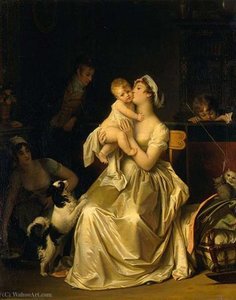
Portret Marguerite Gérard

44 najsłynniejszych obrazów artysty Marguerite Gérard, każdy niepowtarzalny

Aktualizacja: Listopad 2026 · ranking według naszego wskaźnika popularności (liczba wyszukiwań, wizyt i zamówień dla każdego dzieła) · 45 dzieł Marguerite Gérard w naszym katalogu

W skrócie

A Young Woman who has just Received a Letter from her Husband. Her Father is looking on a Globe for the Distance from Which the Letter Came (1808) to obraz autorstwa Marguerite Gérard, który przyciąga najwięcej spojrzeń; oryginał znajduje się w Nationalmuseum, Stockholm. Następnie wzrok kieruje się na The Reader (1817) i The Reader (1783). Spośród 45 dzieł Marguerite Gérard w naszym katalogu, tych 44 jest najbardziej znanych – każde z nich to unikatowy oryginał, przedstawiony wraz z rokiem powstania, muzeum oraz powodem, dla którego przetrwało próbę czasu.

1761 – 1837, Grasse Neoclassicism Najwięcej dzieł: Villa Fragonard

10 najlepszych obrazów autorstwa Marguerite Gérard według oka galerii

1
A Young Woman who has just Received a Letter from her Husband. Her Father is looking on a Globe for the Distance from Which the Letter Came (1808) autorstwa Marguerite Gérard

A Young Woman who has just Received a Letter from her Husband. Her Father is looking on a Globe for the Distance from Which the Letter Came

1808 · Oil On Canvas · Nationalmuseum, Stockholm

The air in the room feels heavy with the weight of unspoken words. A young woman stands poised, her silhouette framed by the soft, luminous glow of an unseen light source. She holds a letter, her fingers brushing the paper as she absorbs the news within. Her expression is serene, yet there is a quiet intensity in her gaze that suggests the contents of the parchment have momentarily stilled the…

3
The Reader (1783) autorstwa Marguerite Gérard

The Reader

1783 · Oil On Canvas · Fitzwilliam Museum

The Reader is an oil on canvas painted by Marguerite Gérard. Executed in Paris about 1817, the work captures a quiet moment within a refined indoor setting. A woman sits amidst the stillness, her presence anchored by a table laden with papers and a book. Nearby, a child and a cat inhabit this private sphere, their forms softened by the domestic atmosphere. The scene is a study of texture and…

4
Portrait of a Man in his Study (1785) autorstwa Marguerite Gérard

Portrait of a Man in his Study

1785 · Oil On Panel · Museum of Fine Arts, Boston

In Marguerite Gérard's Portrait of a Man in his Study, a young man sits within a quiet, scholarly sanctuary. The composition presents a full-length view, positioning the subject slightly off-center to create a balanced yet dynamic arrangement between the figure and the objects of his study. He is surrounded by the tools of a curious mind, specifically a globe and a large, open book. These elements suggest a life dedicated…

6
Presumed Portrait of Jean-Jacques Lagrenée, also known as Portrait of a Man in a Double-Breasted Coat (1787) autorstwa Marguerite Gérard

Presumed Portrait of Jean-Jacques Lagrenée, also known as Portrait of a Man in a Double-Breasted Coat

1787 · Oil On Canvas · Musée Cognacq-Jay, Paryż

A single light source descends from the upper left, carving a face out of the darkness. The man sits in a green upholstered chair, his body angled toward a wooden desk. He is draped in a heavy, double-breasted coat, the fabric catching the light in thick, sculptural folds. His hands rest near a large, open book, the white pages acting as a bright anchor amidst the surrounding gloom. This is…

7
Portrait of Læticia Bonaparte with Her Two Daughters (1786) autorstwa Marguerite Gérard

Portrait of Læticia Bonaparte with Her Two Daughters

1786 · Oil On Canvas

The oil on canvas titled Portrait of Læticia Bonaparte with Her Two Daughters captures a quiet moment of domesticity. Painted by Marguerite Gérard in 1786, the work centers on a mother and her two young children. The scene is set within an intimate interior, where the figures are gathered in a soft, shared space. It is a study of familial connection through the lens of Neoclassical poise.

8
Portrait of Claude-Nicolas Ledoux (1787) autorstwa Marguerite Gérard

Portrait of Claude-Nicolas Ledoux

1787 · Oil On Board · Musée Cognacq-Jay, Paryż

The Portrait of Claude-Nicolas Ledoux presents a formal encounter with the celebrated architect, capturing him in a moment of professional poise. Marguerite Gérard, the artist behind this work, renders the subject with a clarity that speaks to his intellectual stature. The sitter is positioned within a studio setting, surrounded by the tools of his trade that hint at the structural precision of his life's work. Every line of his period…

9
Portrait of Jean-Honoré Fragonard (1788) autorstwa Marguerite Gérard

Portrait of Jean-Honoré Fragonard

1788 · Oil On Canvas

In this three-quarter length portrait of Jean-Honoré Fragonard, Marguerite Gérard presents the sitter in a moment of quiet, intellectual repose. Seated slightly off-center, the subject gazes toward the viewer with a slight, knowing smile. He holds a writing implement, a detail that suggests an artistic or scholarly persona. The composition is set against a dark, atmospheric background that pushes the figure into the foreground, creating a sense of immediate presence.

10
I Reread them with Pleasure (1787) autorstwa Marguerite Gérard

I Reread them with Pleasure

1787 · Oil On Canvas · Bawarskie Państwowe Zbiory Malarstwa, Monachium

The air in the room feels heavy with the scent of old paper and the soft rustle of satin. A young man and woman sit in a shared, intimate silence, their bodies angled toward one another in a gentle triangular arrangement that pulls the viewer into their private world. They are lost in the act of reading, perhaps sharing the same letters or perhaps lost in their own separate reflections…

Słynne obrazy artysty Marguerite Gérard, od 11 do 44

11The Song (1795) autorstwa Marguerite GérardThe Song1795 · Villa Fragonard 12Portrait of doctor François Thiery (1787) autorstwa Marguerite GérardPortrait of doctor François Thiery1787 13A Young Lady and a Little Girl (1790) autorstwa Marguerite GérardA Young Lady and a Little Girl1790 · Holburne Museum 14Head of a Blond Child (Évariste Fragonard) (1800) autorstwa Marguerite GérardHead of a Blond Child (Évariste Fragonard)1800 · Villa Fragonard 15Portrait of Madame Gérard, wife of Henri Gérard (1799) autorstwa Marguerite GérardPortrait of Madame Gérard, wife of Henri Gérard1799 · Villa Fragonard 16A Woman Seated Holding a Young Girl on Her Lap (1799) autorstwa Marguerite GérardA Woman Seated Holding a Young Girl on Her Lap1799 · Musée des Beaux-Arts de Dijon 17Unknown woman (1800) autorstwa Marguerite GérardUnknown woman1800 · Nationalmuseum 18Bad news (1804) autorstwa Marguerite GérardBad news1804 19The Nursing Mother (1804) autorstwa Marguerite GérardThe Nursing Mother1804 20Portrait of Henri Gérard, the artist's brother (1799) autorstwa Marguerite GérardPortrait of Henri Gérard, the artist's brother1799 · Villa Fragonard 21Jeune femme à la rose (1797) autorstwa Marguerite GérardJeune femme à la rose1797 · Musée Antoine Vivenel 22Petite fille au panier de fleurs (1797) autorstwa Marguerite GérardPetite fille au panier de fleurs1797 · Musée Antoine Vivenel 23The Hussar and His Family (1800) autorstwa Marguerite GérardThe Hussar and His Family1800 · Denver Art Museum 24Clemency of Napoleon (1806) autorstwa Marguerite GérardClemency of Napoleon1806 · Musée national de Malmaison et Bois-Préau 25Portrait of a Young Girl (1820) autorstwa Marguerite GérardPortrait of a Young Girl1820 26La Lecture d'une lettre (1817) autorstwa Marguerite GérardLa Lecture d'une lettre1817 · Musée Thomas Henry 27La Visite (1815) autorstwa Marguerite GérardLa Visite1815 · Musée des Augustins 28The Summer (1820) autorstwa Marguerite GérardThe Summer1820 · Musée Hyacinthe Rigaud 29Artist Painting a Portrait of a Musician (1803) autorstwa Marguerite GérardArtist Painting a Portrait of a Musician1803 · Ermitaż 30Artist Painting a Portrait of a Musician (1796) autorstwa Marguerite GérardArtist Painting a Portrait of a Musician1796 · Ermitaż 31An Architect and His Family autorstwa Marguerite GérardAn Architect and His FamilyThe Baltimore Museum of Art 32Lady Reading in an Interior (1795) autorstwa Marguerite GérardLady Reading in an Interior1795 33The Beloved Child (L (1790) autorstwa Marguerite GérardThe Beloved Child (L1790 34Prelude to a Concert (1810) autorstwa Marguerite GérardPrelude to a Concert1810 · National Museum of Women in the Arts 35Portrait of Maréchale Lannes, Duchesse de Montebello with Her Children (1814) autorstwa Marguerite GérardPortrait of Maréchale Lannes, Duchesse de Montebello with Her Children1814 · Museum of Fine Arts 36The Drawing Lesson autorstwa Marguerite GérardThe Drawing LessonVilla Fragonard 37Sleep my child autorstwa Marguerite GérardSleep my childStaatliche Kunsthalle Karlsruhe 38Gift (1788) autorstwa Marguerite GérardGift1788 · Ermitaż 39The Duchess of Abrantes and General Junot autorstwa Marguerite GérardThe Duchess of Abrantes and General Junot 40Motherhood autorstwa Marguerite GérardMotherhood 41Madame de Stael and her daughter autorstwa Marguerite GérardMadame de Stael and her daughter 42The first steps autorstwa Marguerite GérardThe first stepsErmitaż 43Young Girl Giving Milk to Her Cat autorstwa Marguerite GérardYoung Girl Giving Milk to Her CatVilla Fragonard 44The Interesting Student (1786) autorstwa Marguerite GérardThe Interesting Student1786

Tematy, które przyciągnęły wzrok Marguerite Gérard

Cztery motywy najczęściej powracające w tych oryginałach, z których każdy doczekał się swojego najdoskonalszego przykładu.

Muzea przechowujące oryginały Marguerite Gérard

8 muzeów, w których znajduje się najwięcej obrazów z tej strony.

Muzea Miasto Dzieła artysty Marguerite Gérard Obrazy z tej listy
Villa Fragonard, GrasseVilla Fragonard Grasse 6 The Song, Head of a Blond Child (Évariste Fragonard), Portrait of Madame Gérard, wife of Henri Gérard
Ermitaż, Sankt PetersburgErmitaż Sankt Petersburg 4 Artist Painting a Portrait of a Musician, Artist Painting a Portrait of a Musician, Gift
Nationalmuseum, StockholmNationalmuseum Stockholm 2 A Young Woman who has just Received a Letter from her Husband. Her Father is looking on a Globe for the Distance from Which the Letter Came, Unknown woman
Musée Cognacq-Jay, ParyżMusée Cognacq-Jay Paryż 2 Presumed Portrait of Jean-Jacques Lagrenée, also known as Portrait of a Man in a Double-Breasted Coat, Portrait of Claude-Nicolas Ledoux
Musée Antoine Vivenel, CompiègneMusée Antoine Vivenel Compiègne 2 Jeune femme à la rose, Petite fille au panier de fleurs
Barber Institute of Fine Arts, BirminghamBarber Institute of Fine Arts Birmingham 1 The Reader
Fitzwilliam MuseumFitzwilliam Museum 1 The Reader
Museum of Fine Arts, BostonMuseum of Fine Arts Boston 1 Portrait of a Man in his Study

Marguerite Gérard na przestrzeni dekad: jeden unikatowy oryginał dla każdego

Dzieła według dekad

Wybierz dekadę, aby zobaczyć dzieło, które ją definiuje.

Obrazy artysty Marguerite Gérard: pytania do galerii

Jakie jest najsłynniejsze dzieło artysty Marguerite Gérard?Odkryj odpowiedź

A Young Woman who has just Received a Letter from her Husband. Her Father is looking on a Globe for the Distance from Which the Letter Came (1808), Nationalmuseum, Stockholm. Następne są The Reader (1817) oraz The Reader (1783).

W jakim wieku Marguerite Gérard stworzył/a A Young Woman who has just Received a Letter from her Husband. Her Father is looking on a Globe for the Distance from Which the Letter Came?Odkryj odpowiedź

47 lat: A Young Woman who has just Received a Letter from her Husband. Her Father is looking on a Globe for the Distance from Which the Letter Came pochodzi z 1808, a Marguerite Gérard urodził(a) się w 1761.

Które dziesięć obrazów Marguerite Gérard jest najbardziej znanych?Odkryj odpowiedź

A Young Woman who has just Received a Letter from her Husband. Her Father is looking on a Globe for the Distance from Which the Letter Came, The Reader, The Reader, Portrait of a Man in his Study, The Triumph of Minette, Presumed Portrait of Jean-Jacques Lagrenée, also known as Portrait of a Man in a Double-Breasted Coat, Portrait of Læticia Bonaparte with Her Two Daughters, Portrait of Claude-Nicolas Ledoux, Portrait of Jean-Honoré Fragonard i I Reread them with Pleasure. Powyższy ranking zawiera rok powstania oraz muzeum dla każdego z nich.

Ile znanych dzieł stworzył Marguerite Gérard?Odkryj odpowiedź

Nasz katalog zawiera 45 dzieł artysty Marguerite Gérard, datowanych od 1783 do 1820.

Gdzie można zobaczyć najsłynniejsze oryginały Marguerite Gérard?Odkryj odpowiedź

W większości znajdują się w Villa Fragonard (Grasse), Ermitaż (Sankt Petersburg) i Nationalmuseum (Stockholm). Powyższa tabela muzeów zawiera ich pełną listę.

W jakim okresie Marguerite Gérard stworzył/a swoje najsłynniejsze obrazy?Odkryj odpowiedź

W 1780s: 11 z 44 dzieł na tej stronie powstało w tym czasie, w tym The Reader.

Który z najsłynniejszych obrazów artysty Marguerite Gérard powstał najwcześniej, a który najpóźniej?Odkryj odpowiedź

Na tej stronie najwcześniejszy to The Reader (1783), a najpóźniejszy Portrait of a Young Girl (1820).

Jakie tematy preferował Marguerite Gérard?Odkryj odpowiedź

Woman (23), Man (13) i Child (10), w ramach 44 dzieł na tej stronie.

Jakich materiałów Marguerite Gérard używał najczęściej?Odkryj odpowiedź

Oil On Canvas, dla 21 z 44 dzieł na tej stronie.

Do jakiego nurtu należy twórczość Marguerite Gérard?Odkryj odpowiedź

Neoclassicism, sądząc po oryginałach na tej stronie.

Jakie oryginały Marguerite Gérard można zobaczyć w Villa Fragonard?Odkryj odpowiedź

The Song, Head of a Blond Child (Évariste Fragonard) i Portrait of Madame Gérard, wife of Henri Gérard: Villa Fragonard, Grasse posiada 6 dzieł widocznych na tej stronie.

Marguerite Gérard: portret artysty

Życie poświęcone sztuce

Marguerite Gérard wyłoniła się jako niezwykła postać na przełomie XVIII i XIX-wiecznej Francji, będąc pionierką, która wywalczyła sobie sukces w roli malarki gatunkowej w czasach, gdy świat sztuki był niemal całkowicie zdominowany przez mężczyzn. Urodzona w 1761 roku w pełnym zapachów Grasse, jej droga do artystycznego uznania nie wiodła przez uroczyste sale akademii – do których dostęp dla większości kobiet jej epoki był zamknięty – lecz poprzez więzi rodzinne i szczodre mentorstwo szwagra, słynnego mistrza rococo, Jean-Honoré Fragonarda. Już w wieku ośmiu lat przeprowadzka do Paryża wraz z siostrą Marie-Anne, żoną Fragonarda, nieodwracalnie zmieniła bieg życia młodej Marguerite. Ta relokacja postawiła ją w samym sercu paryskiej sceny artystycznej, dając jej nieocenioną szansę na naukę od jednego z jej najjaśniejszych umysłów.

Lata formacyjne i artystyczna współpraca

Atmosfera panująca w domu Fragonarda była bez wątpienia stymulująca, stanowiąc prawdziwe tygiel, w którym talent artystyczny mógł w pełni rozkwitnąć. Marguerite szybko stała się nieoficjalną adeptką, początkowo szlifując swoje umiejętności poprzez studiowanie rysunków Fragonarda oraz tworzenie rycin opartych na jego dziełach. Ten wczesny okres współpracy znalazł swój kulminacyjny punkt w 1778 roku wraz z powstaniem dziewięciu rycin – projektu, o którym dziś wiemy, że był w dużej mierze owocem pracy samej Gérard. Historycy wierzą, że to ona była główną artystką stojącą za pięcioma z tych prac, podczas gdy Fragonard prawdopodobnie służył jej radą lub przygotowywał kopie w celach dydaktycznych. Ten duch współpracy nie miał jedynie charakteru technicznego; budował on głębokie pokrewieństwo artystyczne, które ukształtowało styl oraz tematykę twórczości Gérard. Jednakże, z powodu braku formalnego wykształcenia akademickiego – a konkretnie braku możliwości studiowania aktu – artystka świadomie odeszła od tematów historycznych czy mitologicznych, koncentrując się zamiast tego na intymnym świecie codzienności.

Wyróżniający się styl: Domowość i holenderskie wpływy

Artystyczny rozwój Gérard był w sposób unikalny kształtowany przez jej życiowe okoliczności. Nie mogąc studiować aktu, zwróciła swoją uwagę ku scenom rodzajowym – przedstawieniom domowych wnętrz, rodzinnych interakcji oraz chwilom cichej kontemplacji. Jej styl zdradza wyraźny dług wdzięczności wobec XVII-wiecznych mistrzów niderlandzkich, takich jak Gerard ter Borch i Gabriel Metsu, artystów słynących z niezwykłej dbałości o detal, subtelnego operowania światłem i mistrzowsko łączonych pociągnięć pędzla. W przeciwieństwie do wielu malarek, które szukały artystycznej legitymacji poprzez odwołania do antyku, Gérard świadomie wybrała portretowanie scen z minionych wieków, przywołując poczucie nostalgii i intymności. Powracające w jej dziełach motywy – domowe koty i psy, instrumenty muzyczne czy książki – podkreślają tematykę macierzyństwa, dzieciństwa, kobiecej przyjaźni oraz prostych przyjemności płynących z domowego życia. Jej obrazy nie są wielkimi manifestami, lecz raczej cichymi obserwacjami, przesiąkniętymi ciepłem i głębokim wglądem psychologicznym.

Uznanie i dziedzictwo

Kariera Marguerite Gérard trwała ponad pięćdziesiąt lat, stanowiąc żywy dowód jej niezwykłego oddania sztuce i ogromnego talentu. Regularnie wystawiała swoje prace na paryskim Salonie w latach 1799–1824, zdobywając trzy medale i zyskując uznanie wśród najbardziej wpływowych mecenasów epoki. Szczególnym momentem w jej karierze był rok 1808, kiedy to sam cesarz Napoleon zakupił obraz Clemency of Napoleon, co stanowiło potężne potwierdzenie jej rosnącej sławy. Jej malarstwo cieszyło się ogromnym pożądaniem wśród zamożnych kolekcjonerów, a liczne grafiki i miedzioryty jej dzieł pozwoliły dotrzeć z jej wizją artystyczną do znacznie szerszego grona odbiorców. Dzieła takie jak Lady Reading in an Interior (1795), emanujące neoklasyczną elegancją i spokojem intelektualnym, czy Portrait of Maréchale Lannes, Duchesse de Montebello with Her Children (1814), ukazują jej mistrzostwo zarówno w malarstwie rodzajowym, jak i w portrecie. Być może jednym z najbardziej poruszających przykładów jej unikalnego stylu jest Sleep my child – obraz olejny, który z neoklasyczną gracją celebruje piękno macierzyństwa i kojąca moc muzyki. Historyczne znaczenie Marguerite Gérard wykracza jednak poza jej indywidualne osiągnięcia artystyczne; polega ono przede wszystkim na przełamywaniu barier, przed którymi stawały kobiety w świecie sztuki. Udowodniła ona, że sukces jest możliwy nawet poza sztywnymi ramami tradycyjnego systemu akademickiego, otwierając tym samym drogę przyszłym pokoleniom artystek do realizowania ich twórczych ambicji. Jej wpływ sięgał głęboko w obrębie własnej rodziny – z wielką troską i oddaniem, z jakim ona sama była niegdyś prowadzona, kształtowała talent swojego siostrzeńca, Alexandre-Évariste Fragonard. Dziedzictwo Marguerite Gérard trwa nadal jako świadectwo potęgi wytrwałości, artystycznej wizji oraz nieprzemijającego uroku intymnych scen zaczerpniętych z codziennego życia.