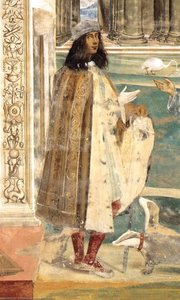
Portret Giovanni Antonio Bazzi

69 najsłynniejszych obrazów artysty Giovanni Antonio Bazzi – wybór z galerii

Aktualizacja: Listopad 2026 · ranking według naszego wskaźnika popularności (liczba wyszukiwań, wizyt i zamówień dla każdego dzieła) · 71 dzieł Giovanni Antonio Bazzi w naszym katalogu

W skrócie

Spośród wszystkich dzieł oryginalnych, które pozostawił Giovanni Antonio Bazzi, najsłynniejszym jest Napady Sabineńczyków (1506), znajdujący się w kolekcji Galleria Nazionale d'Arte Antica w Rzym. Tuż za nimi znajdują się Head of Christ (1537) oraz The Holy Family with Saint Elizabeth and the Infant Saint John the Baptist (1527). Nasz katalog zawiera 71 dzieł autorstwa Giovanni Antonio Bazzi; galeria zachowała 69 najbardziej podziwianych na świecie prac, z których każda została przedstawiona wraz z datą powstania, informacją o muzeum oraz jej historią.

1477 – 1549, Vercelli Renesans Najwięcej dzieł: National Gallery

10 najlepszych obrazów artysty Giovanni Antonio Bazzi: wybór galerii

1
Napady Sabineńczyków (1506) autorstwa Giovanni Antonio Bazzi

Napady Sabineńczyków

1506 · Obraz olejny na płycie · Galleria Nazionale d'Arte Antica, Rzym

Il Sodoma i „Sabinańskie Grabieżcze”: Klasyka z Szczytu Renesansu Giovanni Antonio Bazzi, znany szeroko jako Il Sodoma, stanowi niezwykle istotną postać w historii sztuki włoskiej – łącznika między jasną idealizacją florentyjskiego Высокого Возвращения и niepokojącymi eksploracjami psychologicznymi charakterystycznymi dla Mannerizmu. Narodzony około 1447 roku we Vercelli, jego twórcza droga rozwinęła się na tle kulturowego bogactwa Sieny, głęboko kształtując jego wyjątkowy styl i zapewniając mu miejsce wśród najbardziej wpływowych malarzy swojej…

2
Head of Christ (1537) autorstwa Giovanni Antonio Bazzi

Head of Christ

1537 · Oil · National Gallery, Londyn

In "Head of Christ" by Giovanni Gerolamo Savoldo, the viewer is met with a close-up portrait that focuses tightly on the face and upper shoulders. The subject is framed by long, dark, wavy hair and a full beard. A crown of thorns rests upon the brow, rendered through textured, dark lines that press against the skin. The eyes are cast downward, heavy with a sense of sadness or exhaustion. This…

3
The Holy Family with Saint Elizabeth and the Infant Saint John the Baptist (1527) autorstwa Giovanni Antonio Bazzi

The Holy Family with Saint Elizabeth and the Infant Saint John the Baptist

1527 · Oil · Walters Art Museum, Baltimore

Within the circular confines of this tondo, a quiet intimacy unfolds. The air feels heavy with the warmth of a Mediterranean afternoon, filtered through a soft, directional light that carves the figures out of the surrounding landscape. We find ourselves watching a tender moment of familial connection, where the boundaries between the divine and the human seem to blur. The Holy Family gathers closely, their forms wrapped in heavy, tactile…

4
The Ecstasy of Saint Catherine of Siena (1532) autorstwa Giovanni Antonio Bazzi

The Ecstasy of Saint Catherine of Siena

1532 · Oil · Yale University Art Gallery, Nowe Havane

The spiritual intensity of The Ecstasy of Saint Catherine of Siena unfolds before us through the hand of Il Sodoma. This religious art piece captures a profound moment of divine connection, centering entirely on the figure of Catherine of Siena. The scene invites a sense of wonder as the saint experiences a celestial encounter, her presence anchoring the composition amidst a swirling, sacred atmosphere. Every brushstroke seeks to translate the…

5
The Holy Family and St. John (1477) autorstwa Giovanni Antonio Bazzi

The Holy Family and St. John

1477 · Oil On Panel · Detroit Institute of Arts, Detroit

The Holy Family and St. John is a devotional work by the Italian artist Il Sodoma. This oil on wood panel depicts a sacred grouping of figures, centering on the intimate connection between Mary, Joseph, and the young Saint John the Baptist. The composition focuses on the quiet, tender interactions shared between the holy figures, presented in a manner that invites a sense of spiritual closeness.

6
The Madonna and Child with Saints and a Donor (1530) autorstwa Giovanni Antonio Bazzi

The Madonna and Child with Saints and a Donor

1530 · Oil On Panel · National Gallery, Londyn

Step closer to observe the way the light settles upon these figures. In this composition from around 1530, we find a sense of stability born from a pyramidal arrangement. At the apex sits the Virgin Mary, her presence anchoring the group. She holds the Christ Child with a natural, unforced tenderness that grounds the divine subject in something deeply human. The palette relies on deep ultramarine blue in her mantle…

7
Saint Jerome in Penitence (1540) autorstwa Giovanni Antonio Bazzi

Saint Jerome in Penitence

1540 · Oil On Canvas · National Gallery, Londyn

A muscular, semi-nude figure occupies the center of this 1540 oil painting, captured in a dynamic, crouching pose that cuts a diagonal path across the canvas. The subject, Saint Jerome, is immersed in a moment of intense religious devotion and physical hardship. Deep, earthy tones of brown and dark green dominate the composition, grounded by the heavy textures of a rugged, rocky landscape. A strong directional light source, characteristic of…

8
Death of Lucretia (1515) autorstwa Giovanni Antonio Bazzi

Death of Lucretia

1515 · Oil On Panel · Galleria Sabauda, Turyn

In this work, we find ourselves witnessing the final, harrowing moments of Lucretia, a woman whose life is being extinguished in a flash of steel and sorrow. The scene freezes a moment of profound tragedy, capturing the climactic end of a Roman noblewoman whose life was defined by virtue and ended by violence. The composition is thick with tension; the stillness of her form contrasts sharply with the looming presence…

9
Holy Family with St. John the Baptist as child (1525) autorstwa Giovanni Antonio Bazzi

Holy Family with St. John the Baptist as child

1525 · Oil · Kunsthistorisches Museum, Wiedeń

This oil painting, dated 1525, is presented within an arched lunette format. The scene focuses on a group of four figures: the Virgin Mary, the Christ Child, Saint Joseph, and a young Saint John the Baptist. Mary is positioned centrally, wearing a red tunic beneath a deep blue mantle. Her pale skin and the skin of the infants are illuminated by a soft, directional light that emerges from the side,…

10
The Madonna and Child (1525) autorstwa Giovanni Antonio Bazzi

The Madonna and Child

1525 · Oil On Panel · National Gallery, Londyn

The composition centers on the Virgin Mary and the infant Jesus, set against an atmospheric landscape of distant hills and trees. A soft, directional light illuminates the faces of the subjects and the child's body, while much of the background remains in shadow. This use of chiaroscuro creates a sense of three-dimensionality, sculpting the figures through subtle gradations of tone.

Kontynuacja zestawienia Giovanni Antonio Bazzi, od 11 do 69

11charity (1504) autorstwa Giovanni Antonio Bazzicharity1504 · Gemäldegalerie 12Benedict Presents the Olivetan Monks with His Rule (1505) autorstwa Giovanni Antonio BazziBenedict Presents the Olivetan Monks with His Rule1505 13Life of St Benedict, Scene 13: Benedict Frees a Monk (1505) autorstwa Giovanni Antonio BazziLife of St Benedict, Scene 13: Benedict Frees a Monk1505 14Life of St Benedict, Scene 12: Benedict Receives Maurus and Placidus (1505) autorstwa Giovanni Antonio BazziLife of St Benedict, Scene 12: Benedict Receives Maurus and Placidus1505 15Life of St Benedict, Scene 32: Benedict Appears in the Dreams of Two Monks (1505) autorstwa Giovanni Antonio BazziLife of St Benedict, Scene 32: Benedict Appears in the Dreams of Two Monks1505 16Holy Family with young Saint John (1525) autorstwa Giovanni Antonio BazziHoly Family with young Saint John1525 17Terrestrial Venus with Eros and Celestial Venus with Anteros and Two Cupids (1525) autorstwa Giovanni Antonio BazziTerrestrial Venus with Eros and Celestial Venus with Anteros and Two Cupids1525 18St Sebastian (1525) autorstwa Giovanni Antonio BazziSt Sebastian1525 · Palazzo Pitti 19Christ Carrying the Cross (1545) autorstwa Giovanni Antonio BazziChrist Carrying the Cross1545 · Gemäldegalerie 20The Crucifixion (1549) autorstwa Giovanni Antonio BazziThe Crucifixion1549 · Cleveland Museum of Art 21The Presentation of the Virgin in the Temple (1518) autorstwa Giovanni Antonio BazziThe Presentation of the Virgin in the Temple1518 · Oratory of San Bernardino 22The Holy Family (1511) autorstwa Giovanni Antonio BazziThe Holy Family1511 · Bawarskie Państwowe Zbiory Malarstwa 23The Death of Lucretia (1513) autorstwa Giovanni Antonio BazziThe Death of Lucretia1513 · Szépművészeti Múzeum 24The Mystic Marriage of St Catherine (1539) autorstwa Giovanni Antonio BazziThe Mystic Marriage of St Catherine1539 · Galleria Nazionale d'Arte Antica 25Pietà (1540) autorstwa Giovanni Antonio BazziPietà1540 · Galleria Borghese 26Holy Family with the Infant Saint John the Baptist (1530) autorstwa Giovanni Antonio BazziHoly Family with the Infant Saint John the Baptist1530 27Ecce Homo (1510) autorstwa Giovanni Antonio BazziEcce Homo1510 · Pinacoteca di Brera 28The Confirmation of the Olivetan Order by the Bishop of Arezzo (1503) autorstwa Giovanni Antonio BazziThe Confirmation of the Olivetan Order by the Bishop of Arezzo1503 29Man of Sorrow (1505) autorstwa Giovanni Antonio BazziMan of Sorrow1505 30Life of St Benedict, Scene 5: The Devil Destroys the Little Bell (1505) autorstwa Giovanni Antonio BazziLife of St Benedict, Scene 5: The Devil Destroys the Little Bell1505 31The Road to Calvary (1510) autorstwa Giovanni Antonio BazziThe Road to Calvary1510 · Szépművészeti Múzeum 32Life of St Benedict, Scene 6: A Priest Shares His Easter Meal with Benedict (1505) autorstwa Giovanni Antonio BazziLife of St Benedict, Scene 6: A Priest Shares His Easter Meal with Benedict1505 33Life of St Benedict, Scene 3: Benedict Repairs a Broken Colander through Prayer (detail) (1505) autorstwa Giovanni Antonio BazziLife of St Benedict, Scene 3: Benedict Repairs a Broken Colander through Prayer (detail)1505 34Deposition from the Cross (detail) (1510) autorstwa Giovanni Antonio BazziDeposition from the Cross (detail)1510 · Pinacoteca Nazionale 35Life of St Benedict, Scene 8: Benedict is Tempted (detail) (1505) autorstwa Giovanni Antonio BazziLife of St Benedict, Scene 8: Benedict is Tempted (detail)1505 36Life of St Benedict, Scene 19: Benedict Sends away the Harlots (1505) autorstwa Giovanni Antonio BazziLife of St Benedict, Scene 19: Benedict Sends away the Harlots1505 37Life of St Benedict, Scene 4: The Monk Romanus Dresses Benedict (detail) (1505) autorstwa Giovanni Antonio BazziLife of St Benedict, Scene 4: The Monk Romanus Dresses Benedict (detail)1505 38The Women of Darius's Family before Alexander the Great (1517) autorstwa Giovanni Antonio BazziThe Women of Darius's Family before Alexander the Great1517 · Villa Farnesina 39Life of St Benedict, Scene 19: Benedict Sends away the Harlots (detail) (1505) autorstwa Giovanni Antonio BazziLife of St Benedict, Scene 19: Benedict Sends away the Harlots (detail)1505 40Life of St Benedict, Scene 3: Benedict Repairs a Broken Colander through Prayer (1505) autorstwa Giovanni Antonio BazziLife of St Benedict, Scene 3: Benedict Repairs a Broken Colander through Prayer1505 41Life of St Benedict, Scene 15: Benedict Fishes the Pieces of a Broken Ax (detail) (1505) autorstwa Giovanni Antonio BazziLife of St Benedict, Scene 15: Benedict Fishes the Pieces of a Broken Ax (detail)1505 42Deposition from the Cross (1510) autorstwa Giovanni Antonio BazziDeposition from the Cross1510 · Pinacoteca Nazionale 43Life of St Benedict, Scene 1: Benedict Leaves His Parent's House (1505) autorstwa Giovanni Antonio BazziLife of St Benedict, Scene 1: Benedict Leaves His Parent's House1505 44Life of St Benedict, Scene 12: Benedict Receives Maurus and Placidus (detail) (1505) autorstwa Giovanni Antonio BazziLife of St Benedict, Scene 12: Benedict Receives Maurus and Placidus (detail)1505 45Life of St Benedict, Scene 11: Benedict Founds Twelve Monasteries (1505) autorstwa Giovanni Antonio BazziLife of St Benedict, Scene 11: Benedict Founds Twelve Monasteries1505 46Life of St Benedict, Scene 33: Benedict Gives Posthumous Absolution to Two Nuns (1505) autorstwa Giovanni Antonio BazziLife of St Benedict, Scene 33: Benedict Gives Posthumous Absolution to Two Nuns1505 47Life of St Benedict, Scene 31: Benedict Feeds the Monk (1505) autorstwa Giovanni Antonio BazziLife of St Benedict, Scene 31: Benedict Feeds the Monk1505 48Life of St Benedict, Scene 30: Benedict Foretells the Destruction of Montecassino (1505) autorstwa Giovanni Antonio BazziLife of St Benedict, Scene 30: Benedict Foretells the Destruction of Montecassino1505 49Life of St Benedict, Scene 30: Benedict Foretells the Destruction of Montecassino (detail) (1505) autorstwa Giovanni Antonio BazziLife of St Benedict, Scene 30: Benedict Foretells the Destruction of Montecassino (detail)1505 50Life of St Benedict, Scene 7: Benedict Instructs the Peasants (1505) autorstwa Giovanni Antonio BazziLife of St Benedict, Scene 7: Benedict Instructs the Peasants1505 51Saint George and the Dragon (1518) autorstwa Giovanni Antonio BazziSaint George and the Dragon1518 · National Gallery of Art 52The Beheading of Niccolò di Tuldo (1526) autorstwa Giovanni Antonio BazziThe Beheading of Niccolò di Tuldo1526 · San Domenico 53View of the Oratory (1520) autorstwa Giovanni Antonio BazziView of the Oratory1520 · Oratory of San Bernardino 54View of the Cappella di Santa Caterina (1526) autorstwa Giovanni Antonio BazziView of the Cappella di Santa Caterina1526 · San Domenico 55Wedding of Alexander and Roxane (detail) (1517) autorstwa Giovanni Antonio BazziWedding of Alexander and Roxane (detail)1517 · Villa Farnesina 56The Death of Lucretia (1535) autorstwa Giovanni Antonio BazziThe Death of Lucretia1535 · Szépművészeti Múzeum 57Cupid in a Landscape (1510) autorstwa Giovanni Antonio BazziCupid in a Landscape1510 · Ermitaż 58Ukrzyżowanie Chrystusa (1510) autorstwa Giovanni Antonio BazziUkrzyżowanie Chrystusa1510 · Szépművészeti Múzeum 59Mary Magdalene autorstwa Giovanni Antonio BazziMary Magdalene 60Christ Carrying the Cross autorstwa Giovanni Antonio BazziChrist Carrying the CrossPalazzo d'Arco 61St George and the Dragon autorstwa Giovanni Antonio BazziSt George and the DragonNational Gallery of Art 62A Scene from the Vita of Saint Catherine of Siena / The Execution of Niccolò Tuldo autorstwa Giovanni Antonio BazziA Scene from the Vita of Saint Catherine of Siena / The Execution of Niccolò TuldoGemäldegalerie 63self-portrait autorstwa Giovanni Antonio Bazziself-portrait 64Allegory of Celestial Love autorstwa Giovanni Antonio BazziAllegory of Celestial LoveChigi Saracini Collection 65Christ Presented to the People (Ecce Homo) (1544) autorstwa Giovanni Antonio BazziChrist Presented to the People (Ecce Homo)1544 · Metropolitan Museum of Art 66Wedding of Alexander and Roxane (1517) autorstwa Giovanni Antonio BazziWedding of Alexander and Roxane1517 · Villa Farnesina 67Man of Sorrows (1500) autorstwa Giovanni Antonio BazziMan of Sorrows1500 68Holy Family with Saint John the Baptist and an Angel (1530) autorstwa Giovanni Antonio BazziHoly Family with Saint John the Baptist and an Angel1530 · Musée Des Beaux 69Pietà (1533) autorstwa Giovanni Antonio BazziPietà1533

Słynne obrazy Giovanni Antonio Bazzi epoka po epoce

Tematy, które przyciągnęły wzrok Giovanni Antonio Bazzi

Cztery motywy najczęściej powracające w tych oryginałach, z których każdy doczekał się swojego najdoskonalszego przykładu.

Muzea przechowujące oryginały Giovanni Antonio Bazzi

8 muzeów, w których znajduje się najwięcej obrazów z tej strony.

Muzea Miasto Dzieła artysty Giovanni Antonio Bazzi Obrazy z tej listy
National Gallery, LondynNational Gallery Londyn 4 Head of Christ, The Madonna and Child with Saints and a Donor, Saint Jerome in Penitence
Szépművészeti Múzeum, BudapesztSzépművészeti Múzeum Budapeszt 4 The Death of Lucretia, The Road to Calvary, The Death of Lucretia
Gemäldegalerie, BerlinGemäldegalerie Berlin 3 charity, Christ Carrying the Cross, A Scene from the Vita of Saint Catherine of Siena / The Execution of Niccolò Tuldo
Villa Farnesina, RzymVilla Farnesina Rzym 3 The Women of Darius's Family before Alexander the Great, Wedding of Alexander and Roxane (detail), Wedding of Alexander and Roxane
Galleria Nazionale d'Arte Antica, RzymGalleria Nazionale d'Arte Antica Rzym 2 Napady Sabineńczyków, The Mystic Marriage of St Catherine
Oratory of San Bernardino, SienaOratory of San Bernardino Siena 2 The Presentation of the Virgin in the Temple, View of the Oratory
Pinacoteca Nazionale, SienaPinacoteca Nazionale Siena 2 Deposition from the Cross (detail), Deposition from the Cross
National Gallery of Art, WaszyngtonNational Gallery of Art Waszyngton 2 Saint George and the Dragon, St George and the Dragon

Giovanni Antonio Bazzi dekada po dekadzie: oryginały definiujące każdy okres

Dzieła według dekad

Wybierz dekadę, aby zobaczyć dzieło, które ją definiuje.

Pytania kolekcjonerów o obrazy Giovanni Antonio Bazzi

Z jakiego dzieła najbardziej znany jest Giovanni Antonio Bazzi?Odkryj odpowiedź

Napady Sabineńczyków (1506), Galleria Nazionale d'Arte Antica, Rzym. Następne są Head of Christ (1537) oraz The Holy Family with Saint Elizabeth and the Infant Saint John the Baptist (1527).

W jakim wieku był Giovanni Antonio Bazzi, gdy powstało Napady Sabineńczyków?Odkryj odpowiedź

29 lat: Napady Sabineńczyków pochodzi z 1506, a Giovanni Antonio Bazzi urodził(a) się w 1477.

Jakie są dziesięć najsłynniejszych obrazów, których autorem jest Giovanni Antonio Bazzi?Odkryj odpowiedź

Napady Sabineńczyków, Head of Christ, The Holy Family with Saint Elizabeth and the Infant Saint John the Baptist, The Ecstasy of Saint Catherine of Siena, The Holy Family and St. John, The Madonna and Child with Saints and a Donor, Saint Jerome in Penitence, Death of Lucretia, Holy Family with St. John the Baptist as child i The Madonna and Child. Powyższy ranking zawiera rok powstania oraz muzeum dla każdego z nich.

Ile obrazów pozostawił po sobie Giovanni Antonio Bazzi?Odkryj odpowiedź

Nasz katalog zawiera 71 dzieł artysty Giovanni Antonio Bazzi, datowanych od 1500 do 1549.

W których muzeach znajdują się arcydzieła Giovanni Antonio Bazzi?Odkryj odpowiedź

W większości znajdują się w National Gallery (Londyn), Szépművészeti Múzeum (Budapeszt) i Gemäldegalerie (Berlin). Powyższa tabela muzeów zawiera ich pełną listę.

W których latach Giovanni Antonio Bazzi namalował swoje najsłynniejsze dzieła?Odkryj odpowiedź

W 1500s: 26 z 69 dzieł na tej stronie powstało w tym czasie, w tym Napady Sabineńczyków.

Jakie są pierwsze i ostatnie słynne oryginały Giovanni Antonio Bazzi?Odkryj odpowiedź

Na tej stronie najwcześniejszy to Man of Sorrows (1500), a najpóźniejszy The Crucifixion (1549).

Jakie tematy Giovanni Antonio Bazzi wybierał najczęściej?Odkryj odpowiedź

Man (21), People (21) i Woman (14), w ramach 69 dzieł na tej stronie.

Której techniki Giovanni Antonio Bazzi używał najczęściej?Odkryj odpowiedź

Fresco, dla 29 z 69 dzieł na tej stronie.

Do jakiego nurtu artystycznego należy Giovanni Antonio Bazzi?Odkryj odpowiedź

Renesans, sądząc po oryginałach na tej stronie.

Które dzieła Giovanni Antonio Bazzi znajdują się w National Gallery?Odkryj odpowiedź

Head of Christ, The Madonna and Child with Saints and a Donor i Saint Jerome in Penitence: National Gallery, Londyn posiada 4 dzieł widocznych na tej stronie.

Giovanni Antonio Bazzi: życie i twórczość

Enigmatyczna dusza renesansu syeneńskiego

W barwnym gobelinie włoskiego renesansu niewiele postaci posiada imię tak prowokujące lub dziedzictwo tak wielowymiarowe, jak Giovanni Antonio Bazzi, znany historii pod sugestywnym przydomkiem Il Sodoma. Urodzony w Vercelli około 1477 roku, Bazzi wyłonił się nie tylko jako malarz, ale jako siła transformująca, która wypełniła lukę między świetlistym, zrównoważonym idealizmem dojrzałego renesansu a emocjonalnym, często niepokojącym dramatem manieryzmu. Jego artystyczna podróż była procesem głębokiej syntezy, w której zdyscyplinowane tradycje szkoły syeneńskiej spotkały się z rozległymi, nastrojowymi innowacjami stylu lombardzkiego oraz subtelną głębią psychologiczną inspirowaną przez Leonarda da Vinci.

Wczesne lata życia Bazziego zostały naznaczone rygorystyczną praktyką mistrzowską, która położyła fundamenty pod jego techniczną biegłość. Pod okiem takich mistrzów jak „archaiczny” Martino Spanzotti oraz Giovenone, przyswoił on podstawowe zrozumienie formy i koloru. Gdy przeniósł się do kulturalnego epicentrum Sieny, jego twórczość zaczęła odzwierciedlać unikalną ewolucję stylistyczną. Posiadał rzadką zdolność nakładania wyrafinowanej, klasycznej gracji wczesnego XVI-wiecznego Rzymu na bardziej prowincjonalne, dekoracyjne tradycje Toskanii. Ta fuzja pozwoliła mu tworzyć dzieła, które wydawały się jednocześnie zakorzenione w lokalnym dziedzictwie i będące częścią znacznie większej, ogólno-włoskiej rewolucji artystycznej.

Mistrzostwo światła, emocji i formy

Obserwowanie dzieła Il Sodomy to bycie świadkiem delikatnego tańca między spokojem a napięciem. Jego technika charakteryzowała się wyśmienitym panowaniem nad sfumato oraz bogatym, emocjonalnym użyciem koloru, który potrafił przejść od czułego ciepła policzka Madonny do dramatycznych cieni mitologicznej walki. Ta wszechstronność jest najbardziej widoczna w jego różnorodnej tematyce, która z jednakową pasją obejmowała sferę sacrum i profanum.

Jego wkład w tradycję fresku jest po prostu monumentalny. W Oratory of San Bernardino w Sienie, Bazzi wykazał się zdolnością do opanowania ogromnych przestrzeni architektonicznych, tkając złożone narracje poprzez zrównoważone kompozycje, które mimo to pulsowały ludzką emocją. Jego dzieła religijne, takie jak The Presentation of the Virgin in the Temple, ukazują głęboką duchową łagodność, podczas gdy jego płaszczyzny świeckie i mitologiczne, jak urzekający Cupid in a Landscape, ujawniają fascynację tym, co zmysłowe i idylliczne. W tych krajobrazach odnajdujemy spokojną włoską panoramę, która służy jako scena dla bóstw lub mitów, oddaną z klarownością zapraszającą widza w stan marzenia sennego.

Dziedzictwo mistrza przejściowego

Historyczne znaczenie Il Sodomy tkwi w jego roli jako stylistycznego łącznika. Nie tylko podążał za trendami swojej epoki; pomógł ukształtować przejście od harmonijnej stabilności dojrzałego renesansu do bardziej eksperymentalnego, zdeformowanego i ekspresyjnego języka manieryzmu. Wprowadzając przesadną gestykulację i podwyższoną emocjonalność w ustalony ramy szkoły syeneńskiej, przygotował drogę kolejnym pokoleniom artystów do eksploracji złożoności ludzkiej psychiki.

Nawet gdy jego nazwisko niosło ze sobą pewną kontrowersję, jego dorobek artystyczny pozostał świadectwem technicznego geniuszu i intelektualnej głębi. Jego zdolność do nawigowania między prestiżowymi zleceniami papieży a potężnymi mecenasami — w tym kontaktami z wpływowym Agostino Chigi — sprawiła, że jego wpływ rozbrzmiewał daleko poza murami Sieny. Dziś Bazzi jawi się jako kluczowa postać, której twórczość nieustannie zachwyca, przypominając nam o okresie, w którym sztuka była głęboką eksploracją zarówno ziemskiego piękna, jak i duchowych tajemnic ludzkiej kondycji.