Portret George Stubbs

100 najsłynniejszych obrazów artysty George Stubbs, każdy niepowtarzalny

Aktualizacja: Listopad 2026 · ranking według naszego wskaźnika popularności (liczba wyszukiwań, wizyt i zamówień dla każdego dzieła) · 223 dzieł George Stubbs w naszym katalogu

W skrócie

Whistlejacket (1762) to obraz autorstwa George Stubbs, który przyciąga najwięcej spojrzeń; oryginał znajduje się w National Gallery, Londyn. Następnie wzrok kieruje się na Leon Attakujący Konia (1765) i Myśliwy z Dwa Psałki (1777). Spośród 223 dzieł George Stubbs w naszym katalogu, tych 100 jest najbardziej znanych – każde z nich to unikatowy oryginał, przedstawiony wraz z rokiem powstania, muzeum oraz powodem, dla którego przetrwało próbę czasu.

1724 – 1806, Liverpool Classical romanticism Najwięcej dzieł: Yale Center for British Art

10 najlepszych obrazów autorstwa George Stubbs według oka galerii

1
Whistlejacket (1762) autorstwa George Stubbs

Whistlejacket

1762 · Obraz olejny na płótnie · National Gallery, Londyn

W tym powstałym w 1762 roku dziele typu oil-on-canvas, George Stubbs prezentuje Whistlejacket – majestatycznego, podpłomiennego Thoroughbreda, który zdaje się wyłaniać wprost z samej tkanki obrazu. Koń należy do Markesa Rockingham, a jego obecność jest natychmiastowa i budząca respekt. Zwierzę nie tylko stoi; ono rwie się w górę, uchwycone w nagłym, potężnym ruchu, który rzuca wyzwanie statyczności medium. Mięśniowa budowa zwierzęcia faluje własnym życiem, a jego energia skierowana jest ku…

2
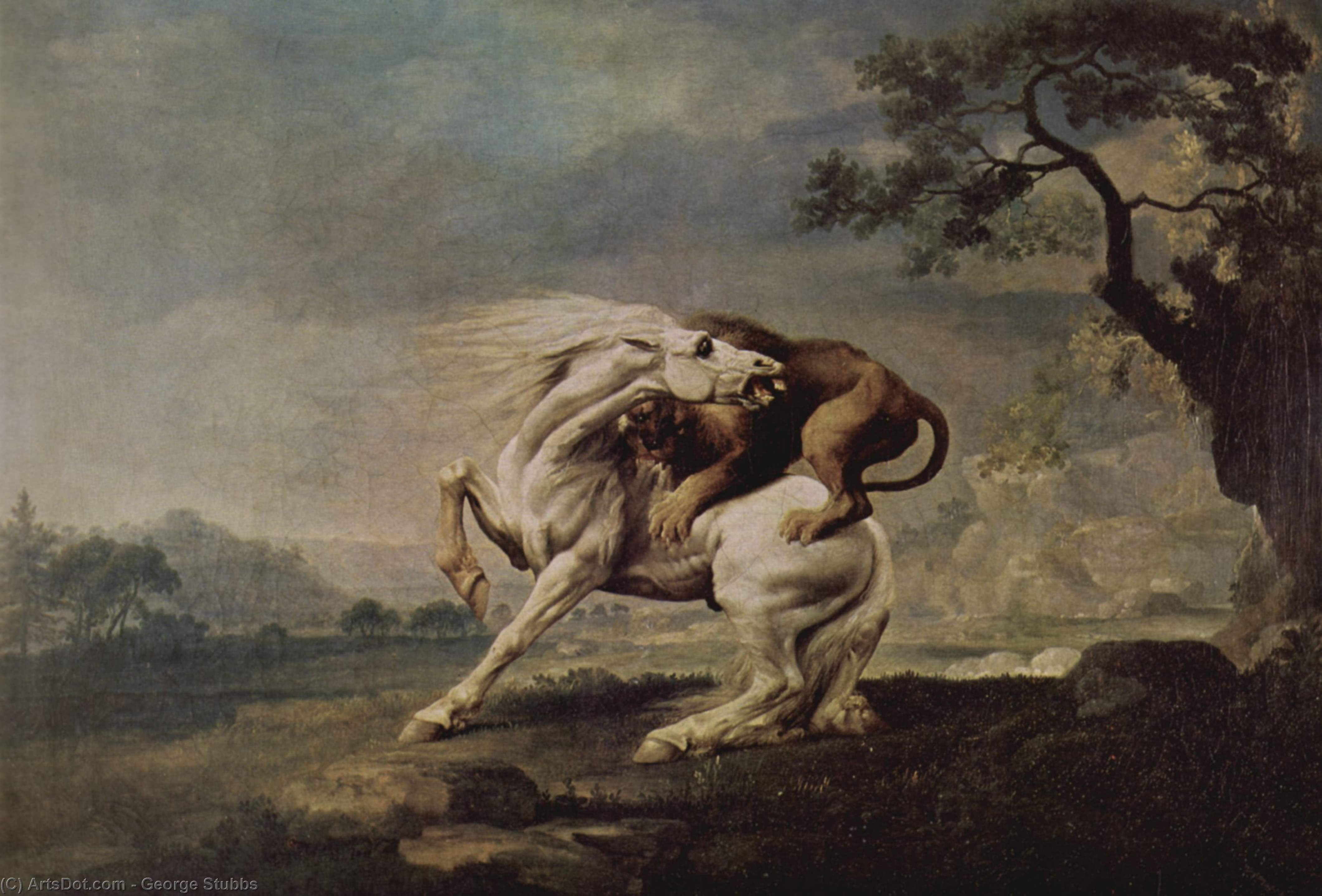
Leon Attakujący Konia (1765) autorstwa George Stubbs

Leon Attakujący Konia

1765 · Obraz olejny na płótnie · Yale University Art Gallery, Hartford

George Stubbs, angielski malarz z XVIII wieku, pozostawił po sobie dziedzictwo pełne niezwykłych obrazów, a jeden z nich – "Leon atakujący konia" – wciąż fascynuje i porusza. To nie tylko scena walki zwierząt, ale głęboka refleksja nad siłą natury, dramatycznym napięciem i pierwotnymi emocjami. Obraz ten, stworzony w 1765 roku, to świadectwo mistrzostwa Stubbsa w oddawaniu dynamiki, anatomii i ekspresji emocjonalnej – cech, które czynią go prawdziwym arcydziełem epoki.

3
Myśliwy z Dwa Psałki (1777) autorstwa George Stubbs

Myśliwy z Dwa Psałki

1777 · Obraz olejny na płótnie

W świecie sztuki, gdzie barwy i formy tańczą w symfonii, rzadko spotyka się obraz, który tak bezkompromsowo łączy w sobie majestat natury z subtelną grą emocji. „A Bay Hunter With Two Spaniels” George’a Stubbsa, stworzony w 1777 roku, to więcej niż tylko przedstawienie konia i psów; to fascynująca podróż do serca angielskiego krajobrazu i głębi obserwacji artysty.

5
Tiger (1771) autorstwa George Stubbs

Tiger

1771 · Oil On Canvas · Virginia Museum of Fine Arts, Richmond

George Stubbs’s “Tiger,” painted in 1771, isn’t merely a depiction of an animal; it's a visceral exploration of power, instinct, and the sublime. This oil painting, now housed within the collections of Google Arts & Culture, immediately commands attention with its dramatic composition and masterful use of light and shadow. The scene unfolds within a shadowy forest, a carefully constructed stage for the tiger’s predatory grace – a creature rendered…

6
Horse Frightened by a Lion (1770) autorstwa George Stubbs

Horse Frightened by a Lion

1770 · Acrylic On Canvas · Walker Art Gallery, Liverpool

George Stubbs's "Horse Frightened by a Lion," painted in 1770, isn’t merely a depiction of animals; it’s a visceral exploration of primal fear and the raw power of nature. This monumental oil painting, measuring an impressive 1261 x 1001 cm, commands attention with its masterful use of chiaroscuro – the dramatic interplay of light and shadow – characteristic of the Baroque period yet imbued with a distinctly Romantic sensibility. The…

7
Whistlejacket (1762) autorstwa George Stubbs

Whistlejacket

1762 · Oil

In the grand tradition of British sporting art, few works command the room with as much raw vitality and anatomical precision as George Stubbs’s Whistlejacket. Painted in 1762, this monumental canvas transcends the boundaries of a mere portrait, offering instead a breathtaking study of power, grace, and kinetic energy. The subject, a magnificent bay Thoroughbred, is captured in a moment of suspended animation, galloping across a space that feels both…

8
Lord Grosvenor (1765) autorstwa George Stubbs

Lord Grosvenor

1765 · Acrylic On Canvas · Kimbell Art Museum, Fort Worth

George Stubbs' "Lord Grosvenor’s Arabian Stallion with a Groom," painted in 1765, isn’t merely a portrait; it’s a meticulously crafted tableau vivant—a snapshot of aristocratic leisure and the profound connection between man and beast. Stubbs, already recognized as the foremost painter of horses of his era, transcends simple representation, instead offering a deeply considered study of anatomy, movement, and psychological nuance. This work exemplifies his pioneering approach to animal painting,…

9
A Lion Attacking a Stag (1766) autorstwa George Stubbs

A Lion Attacking a Stag

1766 · Oil On Canvas · Yale Center for British Art, New Haven

Subject and Composition The canvas opens to a dramatic tableau in which a lion, the undisputed monarch of the savannah, has seized a stag mid‑flight. The predator’s muscular frame dominates the foreground, its jaws poised as if about to deliver the decisive bite. Below, the stag’s antlers curl like twisted branches, its body caught in a moment of frantic escape. A solitary bird perches on a branch near the upper…

10
Baronet (1794) autorstwa George Stubbs

Baronet

1794 · Oil On Canvas · Yale Center for British Art, New Haven

To gaze upon this depiction of a man mounted on his magnificent steed is to be swept away by the very energy of the late eighteenth century. George Stubbs, master chronicler of equine grace and human dignity, captures a moment brimming with aristocratic vitality. The central figure, the titular Baronet, commands attention not merely through his striking red jacket—a bold splash of color against the muted tones of the background—but…

Słynne obrazy artysty George Stubbs, od 11 do 100

11A Lion attacking a Horse (1770) autorstwa George StubbsA Lion attacking a Horse1770 · Yale University Art Gallery 12Lion Devouring a Horse (1763) autorstwa George StubbsLion Devouring a Horse1763 · Tate Gallery 13Horse Devoured by a Lion (1763) autorstwa George StubbsHorse Devoured by a Lion1763 · Tate Britain 14Foxhound (1760) autorstwa George StubbsFoxhound1760 · Yale Center for British Art 15The Fall of Phaëton (1777) autorstwa George StubbsThe Fall of Phaëton1777 · National Trust 16Study of a Fowl, Lateral View, with skin and underlying fascial layers removed, from 'A Comparative Anatomical Exposition of the Structure of the Human Body with that of a Tiger and a Common Fowl' autorstwa George StubbsStudy of a Fowl, Lateral View, with skin and underlying fascial layers removed, from 'A Comparative Anatomical Exposition of the Structure of the Human Body with that of a Tiger and a Common Fowl'Yale Center for British Art 17Freeman, The Earl of Clarendon's Gamekeeper, with a Dying Doe and Hound (1800) autorstwa George StubbsFreeman, The Earl of Clarendon's Gamekeeper, with a Dying Doe and Hound1800 · Yale Center for British Art 18Prince of Wales Phaeton (1793) autorstwa George StubbsPrince of Wales Phaeton1793 19Studies for or after "The third Duke of Richmond with the Charleton Hunt" (1750) autorstwa George StubbsStudies for or after "The third Duke of Richmond with the Charleton Hunt"1750 · Yale Center for British Art 20A Dark Bay Thoroughbred in a Landscape (1762) autorstwa George StubbsA Dark Bay Thoroughbred in a Landscape1762 21King Charles Spaniel (1769) autorstwa George StubbsKing Charles Spaniel1769 22Olbrzymiec Lincolński (1790) autorstwa George StubbsOlbrzymiec Lincolński1790 · Walker Art Gallery 23'Molly Long Legs' with Her Jockey (1762) autorstwa George Stubbs'Molly Long Legs' with Her Jockey1762 · Walker Art Gallery 24Reaper (1795) autorstwa George StubbsReaper1795 · Yale Center for British Art 25Captain Samuel Sharpe Pocklington with His Wife, Pleasance, and possibly His Sister, Frances (1769) autorstwa George StubbsCaptain Samuel Sharpe Pocklington with His Wife, Pleasance, and possibly His Sister, Frances1769 · National Gallery of Art 26Mares and Foals in a River Landscape (1768) autorstwa George StubbsMares and Foals in a River Landscape1768 27Viscount Gormanston's White Dog (1781) autorstwa George StubbsViscount Gormanston's White Dog1781 28Margaret Newton (née Coningsby), Countess of Coningsby in the Costume of the Charlton Hunt (1760) autorstwa George StubbsMargaret Newton (née Coningsby), Countess of Coningsby in the Costume of the Charlton Hunt1760 · Yale Center for British Art 29Self-Portrait (1759) autorstwa George StubbsSelf-Portrait1759 · Yale Center for British Art 30Horse Attacked by a Lion (Episode C) (1768) autorstwa George StubbsHorse Attacked by a Lion (Episode C)1768 · Yale Center for British Art 31White Poodle in a Punt (1780) autorstwa George StubbsWhite Poodle in a Punt1780 · National Gallery of Art 32Viscount Gormanston's White Dog - George Stubbs (2026) autorstwa George StubbsViscount Gormanston's White Dog - George Stubbs2026 33James Stanley (1755) autorstwa George StubbsJames Stanley1755 34Two gentlemen going a shooting, with a view of Creswell Crags (1767) autorstwa George StubbsTwo gentlemen going a shooting, with a view of Creswell Crags1767 · Muzeum Narodowe w Warszawie 35Two Gentlemen Going a Shooting, with a View of Creswell Crags, Taken on the Spot (1767) autorstwa George StubbsTwo Gentlemen Going a Shooting, with a View of Creswell Crags, Taken on the Spot1767 · Yale Center for British Art 36Two Gentlemen Shooting (1769) autorstwa George StubbsTwo Gentlemen Shooting1769 · Królewskie Muzea Sztuk Pięknych w Belgii 37John Christian Santhague (d1. 821) (1782) autorstwa George StubbsJohn Christian Santhague (d1. 821)1782 · Royal Collection 38Sir Sidney Medows (1701-92) (1778) autorstwa George StubbsSir Sidney Medows (1701-92)1778 · Royal Collection 39Phaeton with a Pair of Cream Ponies and a Stable-Lad (1780) autorstwa George StubbsPhaeton with a Pair of Cream Ponies and a Stable-Lad1780 · Yale Center for British Art 40George IV (1762-1830), when Prince of Wales (1791) autorstwa George StubbsGeorge IV (1762-1830), when Prince of Wales1791 · Royal Collection 41A Bay Horse with a Groom (1791) autorstwa George StubbsA Bay Horse with a Groom1791 · Royal Collection 42Portrait of a Gentleman (1791) autorstwa George StubbsPortrait of a Gentleman1791 · Royal Collection 43Mares and Foals in a River Landscape - George Stubbs (2026) autorstwa George StubbsMares and Foals in a River Landscape - George Stubbs2026 44Lion and Lione (1770) autorstwa George StubbsLion and Lione1770 · Yale Center for British Art 45Self-Portrait (1775) autorstwa George StubbsSelf-Portrait1775 46Cheetah with two Indian servants and a deer (1765) autorstwa George StubbsCheetah with two Indian servants and a deer1765 47The Marquess of Rockingham's Arabian Stallion (1780) autorstwa George StubbsThe Marquess of Rockingham's Arabian Stallion1780 · Scottish National Gallery 48Pavian and Albino Makake (1780) autorstwa George StubbsPavian and Albino Makake1780 49The Marquess of Rockingham (1780) autorstwa George StubbsThe Marquess of Rockingham1780 · Scottish National Gallery 50George Stubbs (1781) autorstwa George StubbsGeorge Stubbs1781 · National Portrait Gallery 51Hound Coursing a Stag (1762) autorstwa George StubbsHound Coursing a Stag1762 · Philadelphia Museum of Art 52Horse Attacked by a Lion (1762) autorstwa George StubbsHorse Attacked by a Lion1762 53Greenland Falcon (1780) autorstwa George StubbsGreenland Falcon1780 · Yale Center for British Art 54Isabella Salstonstall as Una in Spenser's 'Faerie Queene' (1782) autorstwa George StubbsIsabella Salstonstall as Una in Spenser's 'Faerie Queene'1782 · Fitzwilliam College 55Study of the Human Figure, Anterior View, from 'A Comparative Anatomical Exposition of the Structure of the Human Body with that of a Tiger and a Common Fowl' autorstwa George StubbsStudy of the Human Figure, Anterior View, from 'A Comparative Anatomical Exposition of the Structure of the Human Body with that of a Tiger and a Common Fowl'Yale Center for British Art 56A Foxhound (1760) autorstwa George StubbsA Foxhound1760 · Yale Center for British Art 57A Gentleman driving a Lady in a Phaeton (1787) autorstwa George StubbsA Gentleman driving a Lady in a Phaeton1787 58The Farmer's Wife and the Raven, from John Gay's 'Fables' (1786) autorstwa George StubbsThe Farmer's Wife and the Raven, from John Gay's 'Fables'1786 · Yale Center for British Art 59Gimcrack with John Pratt up on Newmarket Heath (1765) autorstwa George StubbsGimcrack with John Pratt up on Newmarket Heath1765 · Fitzwilliam College 60'Lustre' Held by a Groom (1762) autorstwa George Stubbs'Lustre' Held by a Groom1762 · Yale Center for British Art 61The Moose autorstwa George StubbsThe Moose 62James Stanley (b.c.1722) (1755) autorstwa George StubbsJames Stanley (b.c.1722)1755 · Walker Art Gallery 63A Chestnut Racehorse autorstwa George StubbsA Chestnut Racehorse 64Lord and Lady in a Phaeton (1787) autorstwa George StubbsLord and Lady in a Phaeton1787 · National Gallery 65Georg Fryderyk Fothergill z Yorku (1746) autorstwa George StubbsGeorg Fryderyk Fothergill z Yorku1746 · Ferens Art Gallery 66Bulls Fighting (1786) autorstwa George StubbsBulls Fighting1786 · Yale Center for British Art 67Labourers (1761) autorstwa George StubbsLabourers1761 · Yale Center for British Art 68James Stanley (1755) autorstwa George StubbsJames Stanley1755 · Walker Art Gallery 69The Milbanke and Melbourne Families (1769) autorstwa George StubbsThe Milbanke and Melbourne Families1769 · National Gallery 70Joseph Smyth Esquire, Lieutenant of Whittlebury Forest, Northamptonshire, on a Dapple Grey Horse (1764) autorstwa George StubbsJoseph Smyth Esquire, Lieutenant of Whittlebury Forest, Northamptonshire, on a Dapple Grey Horse1764 · Fitzwilliam College 71Harvest (1785) autorstwa George StubbsHarvest1785 72Portrait of a dark brown and white Newfoundland spaniel (1743) autorstwa George StubbsPortrait of a dark brown and white Newfoundland spaniel1743 73Untitled (Hound Chasing a Hare) (1765) autorstwa George StubbsUntitled (Hound Chasing a Hare)1765 · Auckland Art Gallery Toi o Tāmaki 74Horse Frightened by a Lion (1762) autorstwa George StubbsHorse Frightened by a Lion1762 · Yale Center for British Art 75Turf, with Jockey up, at Newmarket (1765) autorstwa George StubbsTurf, with Jockey up, at Newmarket1765 · Yale Center for British Art 76Newmarket Heath, with a Rubbing-down House (1765) autorstwa George StubbsNewmarket Heath, with a Rubbing-down House1765 · Yale Center for British Art 77Mares and Foals in a Wooded Landscape (1762) autorstwa George StubbsMares and Foals in a Wooded Landscape1762 78Horse Attacked by a Lion (1765) autorstwa George StubbsHorse Attacked by a Lion1765 79Cheetah and Stag with Two Indians (1765) autorstwa George StubbsCheetah and Stag with Two Indians1765 80Lord Grosvenor's Arabian Stallion with a Groom (1765) autorstwa George StubbsLord Grosvenor's Arabian Stallion with a Groom1765 81Newmarket Heath, with a Rubbing Down House (1765) autorstwa George StubbsNewmarket Heath, with a Rubbing Down House1765 82Mares and foals are anxious before a looming storm (1765) autorstwa George StubbsMares and foals are anxious before a looming storm1765 83Frontal view of the skeleton of a horse, study No. 10 from 'The Anatomy of the Horse' (1766) autorstwa George StubbsFrontal view of the skeleton of a horse, study No. 10 from 'The Anatomy of the Horse'1766 84A Repose after Shooting (1770) autorstwa George StubbsA Repose after Shooting1770 · Yale Center for British Art 85Portrait of John Nelthorpe as a child (1775) autorstwa George StubbsPortrait of John Nelthorpe as a child1775 86Pumpkin with a Stable Lad (1774) autorstwa George StubbsPumpkin with a Stable Lad1774 87'Pumpkin' (1773) autorstwa George Stubbs'Pumpkin'1773 · Ascott House 88Portrait of a Huntsman (1768) autorstwa George StubbsPortrait of a Huntsman1768 89The Moose (1773) autorstwa George StubbsThe Moose1773 · The Hunterian Museum and Art Gallery 90Mares and Foals under an Oak Tree (1775) autorstwa George StubbsMares and Foals under an Oak Tree1775 91Mares and Foals in a Mountainous Landscape (1769) autorstwa George StubbsMares and Foals in a Mountainous Landscape1769 92Lady Reading in a Wooded Park (1770) autorstwa George StubbsLady Reading in a Wooded Park1770 93A Horse Frightened by a Lion (1770) autorstwa George StubbsA Horse Frightened by a Lion1770 94Otho, with John Larkin up (1768) autorstwa George StubbsOtho, with John Larkin up1768 95Portrait of Isabella Saltonstall (1775) autorstwa George StubbsPortrait of Isabella Saltonstall1775 96The Third Duke of Dorset's Hunter with a Groom and a Dog (1768) autorstwa George StubbsThe Third Duke of Dorset's Hunter with a Groom and a Dog1768 · Metropolitan Museum of Art 97Mother and Child (1774) autorstwa George StubbsMother and Child1774 98Lion and Lioness (1771) autorstwa George StubbsLion and Lioness1771 · Museum of Fine Arts 99A Lion and Tiger (1779) autorstwa George StubbsA Lion and Tiger1779 · Walker Art Gallery 100Lord Clanbrassil with Hunter Mowbrary (1769) autorstwa George StubbsLord Clanbrassil with Hunter Mowbrary1769 · The Vestey Gallery of British Sporting Art

Słynne obrazy George Stubbs epoka po epoce

Tematy, które przyciągnęły wzrok George Stubbs

Cztery motywy najczęściej powracające w tych oryginałach, z których każdy doczekał się swojego najdoskonalszego przykładu.

Muzea przechowujące oryginały George Stubbs

8 muzeów, w których znajduje się najwięcej obrazów z tej strony.

Muzea Miasto Dzieła artysty George Stubbs Obrazy z tej listy
Yale Center for British Art, New HavenYale Center for British Art New Haven 33 A Lion Attacking a Stag, Baronet, Foxhound
Walker Art Gallery, LiverpoolWalker Art Gallery Liverpool 9 Horse Frightened by a Lion, Olbrzymiec Lincolński, 'Molly Long Legs' with Her Jockey
Royal Collection, LondynRoyal Collection Londyn 16 John Christian Santhague (d1. 821), Sir Sidney Medows (1701-92), George IV (1762-1830), when Prince of Wales
National Gallery, LondynNational Gallery Londyn 4 Whistlejacket, Lord and Lady in a Phaeton, The Milbanke and Melbourne Families
Fitzwilliam College, CambridgeFitzwilliam College Cambridge 3 Isabella Salstonstall as Una in Spenser's 'Faerie Queene', Gimcrack with John Pratt up on Newmarket Heath, Joseph Smyth Esquire, Lieutenant of Whittlebury Forest, Northamptonshire, on a Dapple Grey Horse
National Gallery of Art, WaszyngtonNational Gallery of Art Waszyngton 2 Captain Samuel Sharpe Pocklington with His Wife, Pleasance, and possibly His Sister, Frances, White Poodle in a Punt
Scottish National Gallery, EdynburgScottish National Gallery Edynburg 2 The Marquess of Rockingham's Arabian Stallion, The Marquess of Rockingham
Tate Gallery, LondynTate Gallery Londyn 2 Lion Devouring a Horse

George Stubbs na przestrzeni dekad: jeden unikatowy oryginał dla każdego

Dzieła według dekad

Wybierz dekadę, aby zobaczyć dzieło, które ją definiuje.

Obrazy artysty George Stubbs: pytania do galerii

Jakie jest najsłynniejsze dzieło artysty George Stubbs?Odkryj odpowiedź

Whistlejacket (1762), National Gallery, Londyn. Następne są Leon Attakujący Konia (1765) oraz Myśliwy z Dwa Psałki (1777).

W jakim wieku George Stubbs stworzył/a Whistlejacket?Odkryj odpowiedź

38 lat: Whistlejacket pochodzi z 1762, a George Stubbs urodził(a) się w 1724.

Które dziesięć obrazów George Stubbs jest najbardziej znanych?Odkryj odpowiedź

Whistlejacket, Leon Attakujący Konia, Myśliwy z Dwa Psałki, Polowanie Grosvenorów, Tiger, Horse Frightened by a Lion, Whistlejacket, Lord Grosvenor, A Lion Attacking a Stag i Baronet. Powyższy ranking zawiera rok powstania oraz muzeum dla każdego z nich.

Ile znanych dzieł stworzył George Stubbs?Odkryj odpowiedź

Nasz katalog zawiera 223 dzieł artysty George Stubbs, datowanych od 1743 do 1800.

Gdzie można zobaczyć najsłynniejsze oryginały George Stubbs?Odkryj odpowiedź

W większości znajdują się w Yale Center for British Art (New Haven), Walker Art Gallery (Liverpool) i Royal Collection (Londyn). Powyższa tabela muzeów zawiera ich pełną listę.

W jakim okresie George Stubbs stworzył/a swoje najsłynniejsze obrazy?Odkryj odpowiedź

W 1760s: 44 z 100 dzieł na tej stronie powstało w tym czasie, w tym Whistlejacket.

Który z najsłynniejszych obrazów artysty George Stubbs powstał najwcześniej, a który najpóźniej?Odkryj odpowiedź

Na tej stronie najwcześniejszy to Portrait of a dark brown and white Newfoundland spaniel (1743), a najpóźniejszy Freeman, The Earl of Clarendon's Gamekeeper, with a Dying Doe and Hound (1800).

Jakie tematy preferował George Stubbs?Odkryj odpowiedź

Landscape (25), Horse (22) i Horses (14), w ramach 100 dzieł na tej stronie.

Jakich materiałów George Stubbs używał najczęściej?Odkryj odpowiedź

Oil On Canvas, dla 37 z 100 dzieł na tej stronie.

Do jakiego nurtu należy twórczość George Stubbs?Odkryj odpowiedź

Classical romanticism, sądząc po oryginałach na tej stronie.

Jakie oryginały George Stubbs można zobaczyć w Yale Center for British Art?Odkryj odpowiedź

A Lion Attacking a Stag, Baronet i Foxhound: Yale Center for British Art, New Haven posiada 24 dzieł widocznych na tej stronie.

George Stubbs: portret artysty

Wczesne lata, rodzina i kształcenie

Liverpool, Zjednoczone Królestwo, rok 1724. George Stubbs przychodzi na świat jako syn Johna Stubbsa, garbarza, oraz Mary. Jego dzieciństwo upływa w kręgu rodzinnego rzemiosła, pośród skór i narzędzi. Ta wczesna styczność z fizycznymi właściwościami zwierzęcych skór stanowi namacalny fundament dla rodzącej się ciekawości świata. Gdy artysta osiąga piętnasty rok życia, pociąg ku wizualnej reprezentacji rzeczywistości staje się niemożliwy do zignorowania. Swoją artystyczną ścieżkę zaczyna nie w murach formalnych akademii, lecz poprzez nieustępliwy, samodzielny dążenie do zrozumienia mechanizmów życia.

Droga ta nie jest jednak usłana różami. Krótka praktyka pod okiem Hamleta Winstanleya, malarza i rytownika z Lancashire, daje jedynie mglisty wgląd w rzemiosło, pozostając jedynie krótkim rozdziałem w jego biografii. Stubbs poszukuje czegoś znacznie bardziej rygorystycznego niż zwykła imitacja. Przeprowadza się do York, gdzie punkt ciężkości przesuwa się z powierzchownego wyglądu na wewnętrzną strukturę. Pod okiem chirurga Charlesa Atkinssona w szpitalu hrabstwa York, rozpoczyna głębokie studia anatomiczne. Ten okres sekcji zwłok transformuje jego podejście, zmieniając artystę w badacza układów szkieletowych i mięśniowych.

Pozostaje w dużej mierze samoukiem, budując biegłość techniczną poprzez obserwację dokonań współczesnych mu mistrzów XVIII wieku. Chłonie metody takich wielkich artystów jak Joshua Reynolds czy Thomas Gainsborough, jednak jego skupienie pozostaje zakotwiczone w nauce. On nie chce jedynie malować tematu; on pragnie zrozumieć napięcie ścięgien i ułożenie kości pod skórą. To właśnie to przecięcie chirurgicznej precyzji i estetyki definiuje jego wczesny rozwój artystyczny.

Mecenasi, pracownia i zamówienia

Sukces artysty otwiera przed nim drzwi angielskiej arystokracji. Do 1759 roku 3. książę Richmond zleca mu namalowanie trzech wielkich płócien, co staje się przełomowym momentem, który trwale ugruntowuje pozycję zawodową, jaką zdobył George Stubbs. Jego niezwykła zdolność do oddawania fizycznej rzeczywistości zwierząt błyskawicznie przyciąga uwagę czołowych przedstawicieli elit, a on sam przenosi się z peryferii świata sztuki do najbliższego kręgu możnowładców, tworząc dzieła dla wielu książąt i lordów. Ten nieustanny strumień prestiżowych zamówień zapewnia mu stabilność finansową niezbędną do osiedlenia się w stolicy. Ostatecznie George Stubbs kupuje dom w londyńskiej dzielnicy Marylebone, gdzie spędzi resztę swojego życia.

Popyt na jego unikalną wiedzę sięga najwyższych szczebli społeczeństwa, co potwierdza fakt korzystania przez artystę z protekcji królewskiej. Renoma twórcy opiera się na umiejętności zaspokajania specyficznych potrzeb właścicieli, którzy w swoich koniach widzieli przede wszystkim symbole statusu. Mecenasi ci poszukiwali czegoś więcej niż tylko powierzchownych podobieństw; wymagali anatomicznej precyzji, którą potrafił zapewnić jedynie George Stubbs. Jego pracownia staje się miejscem intensywnej twórczości, zaspokajającej gusta klasy społecznej wręcz obsesyjnie oddanej doskonałości jeździeckiej oraz hodowli wybitnych zwierząt.

Technika i Styl

Twórczość George'a Stubbsa rozwija się na fascynującym styku rygorystycznego dociekania naukowego i czystej sztuki pięknej. Jego podejście opiera się na pionierskim realizmie, głęboko zakorzenionym w fizycznej rzeczywistości formy zwierzęcej. Łącząc anatomiczną precyzję z ekspresyjnymi detalami, artysta wykracza poza ramy zwykłego podobieństwa, by uchwycić same mechanizmy życia. Poprzez subtelne gradacje cienia tchnie życie w każdy ścięgno i mięsień, oddając wewnętrzną strukturę swoich tematów z klarownością, która jest bezpośrednim owocem jego głębokich studiów anatomicznych.

Ta fascynacja mechaniką ruchu często manifestuje się w scenach o ogromnym napięciu dramatycznym. Artysta nieustannie powraca do motywu dzikiego konia zagrożonego przez lwa, badając ten temat w wielu różnych wariantach. Te przedstawienia lwa atakującego konia stanowią wczesne i niezwykle istotne przykłady nurtu romantycznego. W tych dziełach punkt ciężkości przesuwa się z posągowego portretu ku pierwotnej, instynktownej energii przetrwania, gdzie napięcie mięśniowe staje się głównym motorem napędowym całej kompozycji.

Kluczowe dzieła i arcydzieła

Rok 1766 wyznacza decydujący zwrot na styku sztuki i nauki. George Stubbs publikuje The Anatomy of the Horse, przełomowy traktat, który wykracza daleko poza zwykłą obserwację. Książka ta, zawierająca 18 szczegółowych ilustracji, jest owocem wieloletnich studiów nad anatomią, prowadzonych poprzez żmudne sekcje zwłok, mające na celu zrozumienie mechaniki życia. To monumentalne dzieło ustanawia go jako niekwestionowanego autorytetę w dziedzinie budowy konia, tworząc wizualny język dla mięśni i ścięgien, które definiują żywe stworzenie.

W tym samym roku uwaga artysty przenosi się z wnętrza organizmu na pierwotną, instynktowną siłę. Dzieło A Lion Attacking a Stag chwyta moment surowej, nieprzepisanej walki o przetrwanie. Napięcie między drapieżnikiem a ofiarą jest niemal namacalne w sposobie, w jaki oddano ich dynamikę. Motyw konfliktu – dzikiego konia zagrożonego przez lwa – staje się powracającą obsesją, pojawiającą się w różnych wariantach w całej karierze malarza. Jest to studium potęgi i ruchu, które buduje most między dokumentacją naukową a rodzącym się ruchem romantycznym.

Szczytowym osiągnięciem jego portretu konnego staje się Whistlejacket. Obraz ten, zamówiony przez 2. Markiza Rockingham, przedstawia ruszającego konia na jednolitym tle, co stanowiło odważne zerwanie z ówczesnymi konwencjami malarskimi. Obecność podmiotu jest uderzająca i natychmiastowa. Około 1780 roku artysta tworzy The Marquess of Rockingham's Arabian Stallion, co jeszcze bardziej umacnia jego pozycję w elitarnych kręgach ówczesnego społeczeństwa. Jego niezwykła zdolność do uchwycenia samej esencji konkretnego zwierzęcia pozostaje jego najtrwalszym wkładem w ten gatunek sztuki.

  • Whistlejacket
  • The Anatomy of the Horse (1766)
  • A Lion Attacking a Stag (1766)
  • The Marquess of Rockingham's Arabian Stallion (ok. 1780)

Gdzie dziś można podziwiać jego dzieła

Dziedzictwo anatomicznej precyzji, którą pozostawił po sobie George Stubbs, przetrwało w murach najważniejszych światowych instytucji. W Londynie National Gallery skrywa Whistlejacket – monumentalny portret czystej krwi konia wyścigowego, który zapiera dech w piersiach swoją formą. Również Tate Gallery posiada w swoich zbiorach kilka jego płócien, pozwalając widzom na bezpośredni kontakt z niezwykłą dokładnością, która zdefiniowała całą jego twórczość.

Po drugiej stronie Atlantyku, Yale Center for British Art w New Haven przechowuje znaczącą liczbę jego dzieł, tworząc spójny i skoncentrowany obraz dorobku artysty. W samej Wielkiej Brytanii Walker Art Gallery w Liverpoolu pielęgnuje jego malarstwo, przywracając jego wizualne dziedzictwo regionowi, w którym przyszedł na świat. Wpływ artysty wykracza jednak daleko poza ramy obrazu, przenikając do świata nauki; jego przełomowa księga, Anatomia konia, pozostaje fundamentalnym dziełem referencyjnym w dziedzinie studiów nad anatomią koni.