Portret Giovanni Antonio Canal

100 najsłynniejszych obrazów artysty Giovanni Antonio Canal – wybór z galerii

Aktualizacja: Listopad 2026 · ranking według naszego wskaźnika popularności (liczba wyszukiwań, wizyt i zamówień dla każdego dzieła) · 549 dzieł Giovanni Antonio Canal w naszym katalogu

W skrócie

Spośród wszystkich dzieł oryginalnych, które pozostawił Giovanni Antonio Canal, najsłynniejszym jest Kanał Grande i Kościół Salute (1730), znajdujący się w kolekcji Museum of Fine Arts w Houston. Tuż za nimi znajdują się The Bucintoro Returning to the Molo on Ascension Day (1730) oraz Capriccio with Ruins and Porta Portello, Padua (1750). Nasz katalog zawiera 549 dzieł autorstwa Giovanni Antonio Canal; galeria zachowała 100 najbardziej podziwianych na świecie prac, z których każda została przedstawiona wraz z datą powstania, informacją o muzeum oraz jej historią.

1697 – 1768, Wenecja Rococo style Najwięcej dzieł: Royal Collection

10 najlepszych obrazów artysty Giovanni Antonio Canal: wybór galerii

1
Kanał Grande i Kościół Salute (1730) autorstwa Giovanni Antonio Canal

Kanał Grande i Kościół Salute

1730 · Obraz olejny na płótnie · Museum of Fine Arts, Houston

Dzieło Canaletta, zatytułowane „Kanał Grande i Kościół Salute”, uchwyciło wyjątkowy moment w życiu Wenecji. Ten wenecki pejzaż miejski, namalowany w 1730 roku, stawia widza bezpośrednio nad brzegiem wody. Scena rozwija się z majestatyczną kopułą Santa Maria della Salute, która stanowi kotwicę kompozycji, wznosząc swoją masywną strukturę ponad tętniącą życiem aktywnością kanału. Światło słoneczne tańczy na pofalowanej powierzchni, rzucając świetliste refleksy, które tchną życie w kamienne fasady. Można niemal usłyszeć rytmiczny…

2
The Bucintoro Returning to the Molo on Ascension Day (1730) autorstwa Giovanni Antonio Canal

The Bucintoro Returning to the Molo on Ascension Day

1730 · Oil On Canvas

In the heart of the eighteenth century, few sights could rival the grandeur of Venice during the festivities of Ascension Day. Giovanni Antonio Canal, known universally as Canaletto, captures this ephemeral magic in his masterpiece, The Bucintoro Returning to the Molo on Ascension Day. This sweeping oil-on-canvas work is far more than a mere topographical record; it is a window into a lost era of maritime splendor and civic pride.…

3
Capriccio with Ruins and Porta Portello, Padua (1750) autorstwa Giovanni Antonio Canal

Capriccio with Ruins and Porta Portello, Padua

1750 · Oil On Canvas · Gallerie dell'Accademia di Venezia, Wenecja

Giovanni Antonio Canal, universally known as Canaletto, possessed an extraordinary gift for capturing the essence of Venice – its light, its atmosphere, and its vibrant daily life. His “Capriccio with Ruins and Porta Portello,” painted in 1750, is a quintessential example of this mastery, offering not merely a depiction of a scene but a carefully constructed evocation of memory, history, and the enduring beauty of a fading grandeur. This painting…

4
Capriccio of a Renaissance Triumphal Arch seen from the Portico of a Palace (1755) autorstwa Giovanni Antonio Canal

Capriccio of a Renaissance Triumphal Arch seen from the Portico of a Palace

1755 · Oil On Canvas

To gaze upon Giovanni Antonio Canaletto’s Capriccio of a Renaissance Triumphal Arch seen from the Portico of a Palace is to step directly into a meticulously crafted dreamscape, a moment where the grandeur of classical antiquity meets the vibrant energy of 18th-century life. Painted in 1755, this oil on canvas is far more than a mere depiction of architecture; it is a masterful meditation on permanence, memory, and the enduring…

5
The Feast Day of St Roch (1735) autorstwa Giovanni Antonio Canal

The Feast Day of St Roch

1735 · Oil On Canvas · National Gallery, Londyn

To step before Canaletto’s “The Feast Day of St Roch” is to be instantly transported to the sun-drenched, bustling streets of 18th-century Venice. Created in 1735, this masterpiece serves as much more than a mere topographical record; it is a vibrant, breathing window into a vanished era of grandeur and communal devotion. The painting captures a pivotal moment during the feast day of Saint Roch, a figure deeply revered by…

6
The Grand Canal (1728) autorstwa Giovanni Antonio Canal

The Grand Canal

1728 · Oil On Canvas · Galleria degli Uffizi, Florencja

To gaze upon Canaletto’s 1728 masterpiece, The Grand Canal, is to be transported instantly to the golden age of the Venetian Republic. This breathtaking canvas does not merely depict a waterway; it captures the very soul of a city at its zenith, pulsating with commerce, elegance, and an almost ethereal light. As the eye wanders across the expansive horizontal panorama, one feels the gentle movement of gondolas slicing through the…

7
Piazza San Marco (1730) autorstwa Giovanni Antonio Canal

Piazza San Marco

1730 · Oil On Canvas · Metropolitan Museum of Art, Nowy Jork

Piazza San Marco by Canaletto presents a wide view of the principal public square in Venice, Italy. Completed in 1730, the oil painting captures a Venetian cityscape centered on the activity within the square. The scene is populated by various figures, including citizens, merchants, and clergy, who move across the open space. The composition includes architectural landmarks such as St. Mark's Basilica and the Campanile, which rise above the surrounding…

8
Grand Canal: Looking North-East from Santa Croce to San Geremia (1732) autorstwa Giovanni Antonio Canal

Grand Canal: Looking North-East from Santa Croce to San Geremia

1732 · Etching · Royal Collection, Londyn

To gaze upon this depiction of the Grand Canal looking northeast from Santa Croce toward San Geremia is to step directly into the heart of 18th-century Venice. It is more than just an architectural record; it is a meticulously preserved moment of life, rendered with the breathtaking precision characteristic of Giovanni Antonio Canaletto. The scene unfolds before us, dominated by the majestic sweep of the waterway, where history and daily…

9
Piazza San Marco with the Basilica (1730) autorstwa Giovanni Antonio Canal

Piazza San Marco with the Basilica

1730 · Oil On Canvas · Harvard Art Museums, Cambridge

The sun hangs high over the bustling heart of Venice in Canaletto's 1730 oil on canvas, Piazza San Marco with the Basilica. This scene captures the very essence of the city's most famous square, where the air feels thick with the movement of a thousand daily lives. We find ourselves standing within the wide expanse of the piazza, looking toward the grand architecture that defines this urban center. The light…

10
Venice: The Canale di San Marco with the Bucintoro at Anchor (1730) autorstwa Giovanni Antonio Canal

Venice: The Canale di San Marco with the Bucintoro at Anchor

1730 · Royal Collection, Londyn

Giovanni Antonio Canal, universally known as Canaletto, possessed an extraordinary gift for capturing the vibrant pulse of 18th-century Venice. His “Venice: The Bucintoro at the Molo on Ascension Day,” painted around 1754, stands as a testament to this skill – a monumental canvas brimming with life, color, and meticulously rendered detail. More than just a depiction of a specific event, it’s an immersive experience, transporting the viewer directly into the…

Kontynuacja zestawienia Giovanni Antonio Canal, od 11 do 100

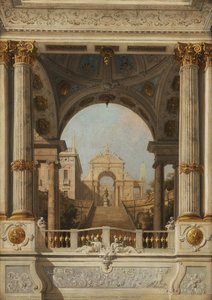
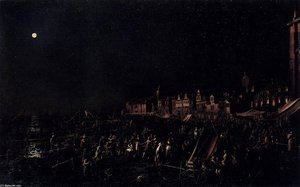
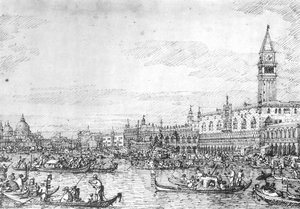
11The Piazzetta Looking towards the Torre dell'Orologio (1725) autorstwa Giovanni Antonio CanalThe Piazzetta Looking towards the Torre dell'Orologio1725 · Royal Collection 12The Piazzetta: Looking North, the Campanile under Repair (1745) autorstwa Giovanni Antonio CanalThe Piazzetta: Looking North, the Campanile under Repair1745 · Royal Collection 13Santi Giovanni e Paolo and the Scuola di San Marco (1725) autorstwa Giovanni Antonio CanalSanti Giovanni e Paolo and the Scuola di San Marco1725 · Gemäldegalerie Alte Meister 14Piazza San Marco: Looking East from the North-West Corner (1760) autorstwa Giovanni Antonio CanalPiazza San Marco: Looking East from the North-West Corner1760 · National Gallery 15London: Ranelagh, Interior of the Rotunda (1754) autorstwa Giovanni Antonio CanalLondon: Ranelagh, Interior of the Rotunda1754 · National Gallery 16Grand Canal: Looking North-East toward the Rialto Bridge (detail) (1725) autorstwa Giovanni Antonio CanalGrand Canal: Looking North-East toward the Rialto Bridge (detail)1725 · Gemäldegalerie Alte Meister 17Grand Canal: Looking South-East from the Campo Santa Sophia to the Rialto Bridge (1756) autorstwa Giovanni Antonio CanalGrand Canal: Looking South-East from the Campo Santa Sophia to the Rialto Bridge1756 · Berlińskie Muzea Państwowe 18View through a Baroque Colonnade into a Garden, 1760-1768 (1768) autorstwa Giovanni Antonio CanalView through a Baroque Colonnade into a Garden, 1760-17681768 · Albertina 19The Grand Canal near the Rialto Bridge, Venice (1730) autorstwa Giovanni Antonio CanalThe Grand Canal near the Rialto Bridge, Venice1730 · Museum of Fine Arts 20Grand Canal: Looking North from Near the Rialto Bridge (1726) autorstwa Giovanni Antonio CanalGrand Canal: Looking North from Near the Rialto Bridge1726 · Gemäldegalerie Alte Meister 21Capriccio: The Grand Canal, with an Imaginary Rialto Bridge and Other Buildings (1740) autorstwa Giovanni Antonio CanalCapriccio: The Grand Canal, with an Imaginary Rialto Bridge and Other Buildings1740 · Galleria Nazionale 22View of San Giovanni dei Battuti at Murano (1725) autorstwa Giovanni Antonio CanalView of San Giovanni dei Battuti at Murano1725 · Ermitaż 23Interior of San Marco, Venice (1745) autorstwa Giovanni Antonio CanalInterior of San Marco, Venice1745 · Montreal Museum of Fine Arts 24Venice: Palazzo Grimani (1756) autorstwa Giovanni Antonio CanalVenice: Palazzo Grimani1756 · National Gallery 25London: The Thames and the City of London from Richmond House (1747) autorstwa Giovanni Antonio CanalLondon: The Thames and the City of London from Richmond House1747 26Alnwick Castle (1747) autorstwa Giovanni Antonio CanalAlnwick Castle1747 27Venice, Bacino di San Marco on Ascension Day (1754) autorstwa Giovanni Antonio CanalVenice, Bacino di San Marco on Ascension Day1754 28London seen through an arch of Westminster Bridge (1747) autorstwa Giovanni Antonio CanalLondon seen through an arch of Westminster Bridge1747 29Entrance to the Grand Canal: Looking East (1725) autorstwa Giovanni Antonio CanalEntrance to the Grand Canal: Looking East1725 · Gemäldegalerie Alte Meister 30Landscape with Ruins (also known as picket Duty in Virginia) autorstwa Giovanni Antonio CanalLandscape with Ruins (also known as picket Duty in Virginia) 31The Piazzetta to the South (1720) autorstwa Giovanni Antonio CanalThe Piazzetta to the South1720 · Royal Collection 32Piazza San Marco: Looking East along the Central Line (1723) autorstwa Giovanni Antonio CanalPiazza San Marco: Looking East along the Central Line1723 · Thyssen-Bornemisza Museum 33Grand Canal: The Rialto Bridge from the South (1727) autorstwa Giovanni Antonio CanalGrand Canal: The Rialto Bridge from the South1727 34Capriccio: The Horses of San Marco in the Piazzetta (1743) autorstwa Giovanni Antonio CanalCapriccio: The Horses of San Marco in the Piazzetta1743 35Palazzo Ducale and the Piazza di San Marco (1755) autorstwa Giovanni Antonio CanalPalazzo Ducale and the Piazza di San Marco1755 · Galleria degli Uffizi 36Piazza San Marco: Looking East from the South West Corner (1760) autorstwa Giovanni Antonio CanalPiazza San Marco: Looking East from the South West Corner1760 · National Gallery 37Piazza San Marco, Looking toward San Geminiano (1735) autorstwa Giovanni Antonio CanalPiazza San Marco, Looking toward San Geminiano1735 · Galleria Corsini 38View of the Arch of Constantine with the Colosseum (1742) autorstwa Giovanni Antonio CanalView of the Arch of Constantine with the Colosseum1742 · Muzeum J. Paula Getty'ego 39Arrival of the French Ambassador in Venice (detail) (1740) autorstwa Giovanni Antonio CanalArrival of the French Ambassador in Venice (detail)1740 · Ermitaż 40Bacino di S. Marco: From the Piazzetta (1750) autorstwa Giovanni Antonio CanalBacino di S. Marco: From the Piazzetta1750 · National Gallery of Victoria 41The Grand Canal, Venice, Looking South toward the Rialto Bridge (1734) autorstwa Giovanni Antonio CanalThe Grand Canal, Venice, Looking South toward the Rialto Bridge1734 · Metropolitan Museum of Art 42The Colosseum (1743) autorstwa Giovanni Antonio CanalThe Colosseum1743 · Galleria Borghese 43Perspective View (Stage design) autorstwa Giovanni Antonio CanalPerspective View (Stage design)Accademia di San Luca 44Venice: Capriccio of the Courtyard of the Doges' Palace with the Scala dei Giganti (1744) autorstwa Giovanni Antonio CanalVenice: Capriccio of the Courtyard of the Doges' Palace with the Scala dei Giganti1744 · Pałac Buckingham 45Piazzetand the Doge s Palace from the Bacino di San Marco (1737) autorstwa Giovanni Antonio CanalPiazzetand the Doge s Palace from the Bacino di San Marco1737 46The Stonemason's Yard (1726) autorstwa Giovanni Antonio CanalThe Stonemason's Yard1726 · National Gallery 47Return of the Bucentoro to the Molo on Ascension Day (detail) (1732) autorstwa Giovanni Antonio CanalReturn of the Bucentoro to the Molo on Ascension Day (detail)1732 · Royal Collection 48Venice: The Bacino from the Giudecca (1740) autorstwa Giovanni Antonio CanalVenice: The Bacino from the Giudecca1740 · Wallace Collection 49The Doge's Palace with the Piazza di San Marco (1735) autorstwa Giovanni Antonio CanalThe Doge's Palace with the Piazza di San Marco1735 · Galleria degli Uffizi 50The Grand Canal, Venice, Looking Southeast, with the Campo della Carità to the Right (1734) autorstwa Giovanni Antonio CanalThe Grand Canal, Venice, Looking Southeast, with the Campo della Carità to the Right1734 · Metropolitan Museum of Art 51The Grand Canal with the Rialto Bridge and the Fondaco dei Tedeschi (1730) autorstwa Giovanni Antonio CanalThe Grand Canal with the Rialto Bridge and the Fondaco dei Tedeschi1730 · Rijksmuseum 52The Grand Canal and the Church of the Salute (detail) (1730) autorstwa Giovanni Antonio CanalThe Grand Canal and the Church of the Salute (detail)1730 · Museum of Fine Arts 53The Grand Canal from Campo San Vio towards the Bacino (1729) autorstwa Giovanni Antonio CanalThe Grand Canal from Campo San Vio towards the Bacino1729 · Royal Collection 54Piazza San Marco: Looking South-East (1735) autorstwa Giovanni Antonio CanalPiazza San Marco: Looking South-East1735 · National Gallery of Art 55Capriccio of the Rialto Bridge with the Lagoon Beyond (1746) autorstwa Giovanni Antonio CanalCapriccio of the Rialto Bridge with the Lagoon Beyond1746 56Piazza San Marco, Looking Towards San Geminiano (1737) autorstwa Giovanni Antonio CanalPiazza San Marco, Looking Towards San Geminiano1737 · Galleria Nazionale d'Arte Moderna 57A Regatta on the Grand Canal (1735) autorstwa Giovanni Antonio CanalA Regatta on the Grand Canal1735 · National Gallery 58Rio dei Mendicanti: Looking South (1725) autorstwa Giovanni Antonio CanalRio dei Mendicanti: Looking South1725 · Gemäldegalerie Alte Meister 59Grand Canal: Looking from Palazzo Balbi (1726) autorstwa Giovanni Antonio CanalGrand Canal: Looking from Palazzo Balbi1726 · Gemäldegalerie Alte Meister 60The Porta Portello with the Brenta Canal in Padua, 1740-1743 (1743) autorstwa Giovanni Antonio CanalThe Porta Portello with the Brenta Canal in Padua, 1740-17431743 · Albertina 61San Giacomo di Rialto (detail) (1725) autorstwa Giovanni Antonio CanalSan Giacomo di Rialto (detail)1725 · Gemäldegalerie Alte Meister 62San Marco Square (Venice) (1743) autorstwa Giovanni Antonio CanalSan Marco Square (Venice)1743 63Piazza San Marco, Looking East from the Southwest Corner (also known as Piazza San Marco and he Colonnade) (1756) autorstwa Giovanni Antonio CanalPiazza San Marco, Looking East from the Southwest Corner (also known as Piazza San Marco and he Colonnade)1756 · National Gallery 64SS. Giovanni e Paulo and the Scuola de San Marco (1725) autorstwa Giovanni Antonio CanalSS. Giovanni e Paulo and the Scuola de San Marco1725 · Staatliche Kunstsammlungen 65Rialto Bridge from the South (1737) autorstwa Giovanni Antonio CanalRialto Bridge from the South1737 · Galleria Nazionale d'Arte Antica 66A Regatta on the Grand Canal (1740) autorstwa Giovanni Antonio CanalA Regatta on the Grand Canal1740 67Entrance to the Grand Canal and the Church of La Salute (1735) autorstwa Giovanni Antonio CanalEntrance to the Grand Canal and the Church of La Salute1735 68The Grand Canal with the Rialto Bridge in the Background (detail) (1724) autorstwa Giovanni Antonio CanalThe Grand Canal with the Rialto Bridge in the Background (detail)1724 · Gemäldegalerie Alte Meister 69Capriccio: Ruins and Classic Buildings (1730) autorstwa Giovanni Antonio CanalCapriccio: Ruins and Classic Buildings1730 · Museo Poldi Pezzoli 70Capriccio (Venetian Courtyard) (1765) autorstwa Giovanni Antonio CanalCapriccio (Venetian Courtyard)1765 · Muzeum Sztuki w Tel Awiwie 71Venice: Riva degli Schiavoni (1730) autorstwa Giovanni Antonio CanalVenice: Riva degli Schiavoni1730 · Royal Collection 72Grand Canal, Looking East from the Campo San Vio (1723) autorstwa Giovanni Antonio CanalGrand Canal, Looking East from the Campo San Vio1723 · Thyssen-Bornemisza Museum 73Reception of the Imperial Ambassador at the Doge's Palace (1729) autorstwa Giovanni Antonio CanalReception of the Imperial Ambassador at the Doge's Palace1729 74Entrance of the Grand Canal - from the West End of the Molo autorstwa Giovanni Antonio CanalEntrance of the Grand Canal - from the West End of the MoloNational Gallery of Art 75Venice Viewed from the San Giorgio Maggiore autorstwa Giovanni Antonio CanalVenice Viewed from the San Giorgio MaggioreStädelsche Kunstinstitut Und Städtische Galerie 76The Grand Canal near the Ponte del Rialto (1725) autorstwa Giovanni Antonio CanalThe Grand Canal near the Ponte del Rialto1725 · Ashmolean Museum of Art and Archaeology 77Rome: The Arch of Constantine (detail) (1742) autorstwa Giovanni Antonio CanalRome: The Arch of Constantine (detail)1742 · Royal Collection 78Widok Kościoła i Pałacu Doga z Procuratie Vecchie (1742) autorstwa Giovanni Antonio CanalWidok Kościoła i Pałacu Doga z Procuratie Vecchie1742 · National Gallery of Art 79Perspective View with Portico (detail) (1765) autorstwa Giovanni Antonio CanalPerspective View with Portico (detail)1765 · Gallerie dell'Accademia di Venezia 80View of the Canale Grande from San Vio (Venice) autorstwa Giovanni Antonio CanalView of the Canale Grande from San Vio (Venice)Bawarskie Państwowe Zbiory Malarstwa 81Reception of the Ambassador in the Doge's Palace (1730) autorstwa Giovanni Antonio CanalReception of the Ambassador in the Doge's Palace1730 82The Vigilia di San Pietro autorstwa Giovanni Antonio CanalThe Vigilia di San PietroBerlińskie Muzea Państwowe 83Padua: The Prato della Valle with Santa Giustinia and the Church of Misericordia (sheet 1) (1740) autorstwa Giovanni Antonio CanalPadua: The Prato della Valle with Santa Giustinia and the Church of Misericordia (sheet 1)1740 · Royal Collection 84Kanał Wielki przy Bazylice Świętej Marii Saluti (1738) autorstwa Giovanni Antonio CanalKanał Wielki przy Bazylice Świętej Marii Saluti1738 · Kolekcja prywatna 85Grand Canal: San Geremia and the Entrance to the Cannaregio autorstwa Giovanni Antonio CanalGrand Canal: San Geremia and the Entrance to the CannaregioBarnes Foundation 86San Giacomo de Rialto autorstwa Giovanni Antonio CanalSan Giacomo de RialtoStaatliche Kunstsammlungen 87Imaginary View of Venice (1740) autorstwa Giovanni Antonio CanalImaginary View of Venice1740 · British Museum 88London: Westminster Abbey, with a Procession of Knights of the Bath (1749) autorstwa Giovanni Antonio CanalLondon: Westminster Abbey, with a Procession of Knights of the Bath1749 · Westminster Abbey 89La Vigilia di Santa Marta (1760) autorstwa Giovanni Antonio CanalLa Vigilia di Santa Marta1760 · Berlińskie Muzea Państwowe 90The Quay of the Dogana (1730) autorstwa Giovanni Antonio CanalThe Quay of the Dogana1730 91View of the Ducal Palace (1730) autorstwa Giovanni Antonio CanalView of the Ducal Palace1730 · El Paso Museum of Art 92Mestre (1741) autorstwa Giovanni Antonio CanalMestre1741 93Roofs and Chimneys in Venice (1735) autorstwa Giovanni Antonio CanalRoofs and Chimneys in Venice1735 94Padua: The Prato della Valle with Santa Giustinia and the Church of Misericordia (1740) autorstwa Giovanni Antonio CanalPadua: The Prato della Valle with Santa Giustinia and the Church of Misericordia1740 95The Molo with the Library and the Entrance to the Grand Canal (1740) autorstwa Giovanni Antonio CanalThe Molo with the Library and the Entrance to the Grand Canal1740 96Capriccio: a Palladian Design for the Rialto Bridge, with Buildings at Vicenza (1740) autorstwa Giovanni Antonio CanalCapriccio: a Palladian Design for the Rialto Bridge, with Buildings at Vicenza1740 · Galleria Nazionale 97London: the Thames and the City of London from the Terrace of Richmond House (1747) autorstwa Giovanni Antonio CanalLondon: the Thames and the City of London from the Terrace of Richmond House1747 98Piazza San Marco: Looking East from the South West Corner (1760) autorstwa Giovanni Antonio CanalPiazza San Marco: Looking East from the South West Corner1760 99Interior Court of the Doge's Palace, Venice - Canaletto (2026) autorstwa Giovanni Antonio CanalInterior Court of the Doge's Palace, Venice - Canaletto2026 · Fitzwilliam Museum 100The Feast Day of St Roch (detail) (1735) autorstwa Giovanni Antonio CanalThe Feast Day of St Roch (detail)1735 · National Gallery

Słynne obrazy Giovanni Antonio Canal epoka po epoce

Tematy, które przyciągnęły wzrok Giovanni Antonio Canal

Cztery motywy najczęściej powracające w tych oryginałach, z których każdy doczekał się swojego najdoskonalszego przykładu.

Muzea przechowujące oryginały Giovanni Antonio Canal

8 muzeów, w których znajduje się najwięcej obrazów z tej strony.

Muzea Miasto Dzieła artysty Giovanni Antonio Canal Obrazy z tej listy
Royal Collection, LondynRoyal Collection Londyn 54 Grand Canal: Looking North-East from Santa Croce to San Geremia, Venice: The Canale di San Marco with the Bucintoro at Anchor, The Piazzetta Looking towards the Torre dell'Orologio
National Gallery, LondynNational Gallery Londyn 21 The Feast Day of St Roch, Piazza San Marco: Looking East from the North-West Corner, London: Ranelagh, Interior of the Rotunda
Gemäldegalerie Alte Meister, DreznoGemäldegalerie Alte Meister Drezno 10 Santi Giovanni e Paolo and the Scuola di San Marco, Grand Canal: Looking North-East toward the Rialto Bridge (detail), Grand Canal: Looking North from Near the Rialto Bridge
Metropolitan Museum of Art, Nowy JorkMetropolitan Museum of Art Nowy Jork 7 Piazza San Marco, The Grand Canal, Venice, Looking South toward the Rialto Bridge, The Grand Canal, Venice, Looking Southeast, with the Campo della Carità to the Right
National Gallery of Art, WaszyngtonNational Gallery of Art Waszyngton 6 Piazza San Marco: Looking South-East, Entrance of the Grand Canal - from the West End of the Molo, Widok Kościoła i Pałacu Doga z Procuratie Vecchie
Museum of Fine Arts, HoustonMuseum of Fine Arts Houston 3 Kanał Grande i Kościół Salute, The Grand Canal near the Rialto Bridge, Venice, The Grand Canal and the Church of the Salute (detail)
Galleria degli Uffizi, FlorencjaGalleria degli Uffizi Florencja 3 The Grand Canal, Palazzo Ducale and the Piazza di San Marco, The Doge's Palace with the Piazza di San Marco
Berlińskie Muzea Państwowe, BerlinBerlińskie Muzea Państwowe Berlin 3 Grand Canal: Looking South-East from the Campo Santa Sophia to the Rialto Bridge, The Vigilia di San Pietro, La Vigilia di Santa Marta

Giovanni Antonio Canal dekada po dekadzie: oryginały definiujące każdy okres

Dzieła według dekad

Wybierz dekadę, aby zobaczyć dzieło, które ją definiuje.

Pytania kolekcjonerów o obrazy Giovanni Antonio Canal

Z jakiego dzieła najbardziej znany jest Giovanni Antonio Canal?Odkryj odpowiedź

Kanał Grande i Kościół Salute (1730), Museum of Fine Arts, Houston. Następne są The Bucintoro Returning to the Molo on Ascension Day (1730) oraz Capriccio with Ruins and Porta Portello, Padua (1750).

W jakim wieku był Giovanni Antonio Canal, gdy powstało Kanał Grande i Kościół Salute?Odkryj odpowiedź

33 lat: Kanał Grande i Kościół Salute pochodzi z 1730, a Giovanni Antonio Canal urodził(a) się w 1697.

Jakie są dziesięć najsłynniejszych obrazów, których autorem jest Giovanni Antonio Canal?Odkryj odpowiedź

Kanał Grande i Kościół Salute, The Bucintoro Returning to the Molo on Ascension Day, Capriccio with Ruins and Porta Portello, Padua, Capriccio of a Renaissance Triumphal Arch seen from the Portico of a Palace, The Feast Day of St Roch, The Grand Canal, Piazza San Marco, Grand Canal: Looking North-East from Santa Croce to San Geremia, Piazza San Marco with the Basilica i Venice: The Canale di San Marco with the Bucintoro at Anchor. Powyższy ranking zawiera rok powstania oraz muzeum dla każdego z nich.

Ile obrazów pozostawił po sobie Giovanni Antonio Canal?Odkryj odpowiedź

Nasz katalog zawiera 549 dzieł artysty Giovanni Antonio Canal, datowanych od 1720 do 1768.

W których muzeach znajdują się arcydzieła Giovanni Antonio Canal?Odkryj odpowiedź

W większości znajdują się w Royal Collection (Londyn), National Gallery (Londyn) i Gemäldegalerie Alte Meister (Drezno). Powyższa tabela muzeów zawiera ich pełną listę.

W których latach Giovanni Antonio Canal namalował swoje najsłynniejsze dzieła?Odkryj odpowiedź

W 1730s: 29 z 100 dzieł na tej stronie powstało w tym czasie, w tym Kanał Grande i Kościół Salute.

Jakie są pierwsze i ostatnie słynne oryginały Giovanni Antonio Canal?Odkryj odpowiedź

Na tej stronie najwcześniejszy to The Piazzetta to the South (1720), a najpóźniejszy View through a Baroque Colonnade into a Garden, 1760-1768 (1768).

Jakie tematy Giovanni Antonio Canal wybierał najczęściej?Odkryj odpowiedź

Architecture (55), Venice (37) i Cityscape (31), w ramach 100 dzieł na tej stronie.

Której techniki Giovanni Antonio Canal używał najczęściej?Odkryj odpowiedź

Oil On Canvas, dla 70 z 100 dzieł na tej stronie.

Do jakiego nurtu artystycznego należy Giovanni Antonio Canal?Odkryj odpowiedź

Rococo style i Baroque topographical, sądząc po oryginałach na tej stronie.

Które dzieła Giovanni Antonio Canal znajdują się w Royal Collection?Odkryj odpowiedź

Grand Canal: Looking North-East from Santa Croce to San Geremia, Venice: The Canale di San Marco with the Bucintoro at Anchor i The Piazzetta Looking towards the Torre dell'Orologio: Royal Collection, Londyn posiada 10 dzieł widocznych na tej stronie.

Giovanni Antonio Canal: życie i twórczość

Wczesne lata, rodzina i szkolenie

Giovanni Antonio Canal, znany wielu jako Canaletto, urodził się w Wenecji, we Włoszech, 18 października 1697 roku. Dorastał w domu, w którym linie perspektywy i iluzja przestrzeni stanowiły nieodłączny element codzienności. Jego ojciec, Bernardo Canal, był malarzem specjalizującym się w scenografii teatralnej, a matką była Artemisia Barbieri. Od najmłodszych lat Canaletto obserwował, w jaki sposób ojciec konstruuje tła sceniczne, ucząc się, jak sprawić, by płaska powierzchnia zdawała się głęboką, oddalającą się ulicą lub monumentalną salą.

Jego formalne wykształcenie rozpoczęło się pod czujnym okiem ojca. Nie pracował jednak samotnie; odbywał praktykę u boku swojego brata, a obaj zgłębiali rzemiosło malowania dekoracji teatralnych. Ta wczesna praca wymagała precyzyjnego zrozumienia tego, jak światło pada na powierzchnię oraz w jaki sposób można manipulować architekturą, aby oszukać ludzkie oko. Lata spędzone na pracy nad scenografią dostarczyły technicznych fundamentów dla jego późniejszego zainteresowania rzeczywistymi budynkami i kanałami Wenecji.

Wpływ rodzinnego rzemiosła towarzyszył mu przez całe życie, nawet gdy zwracał się ku bardziej trwałym tematom. Jego wczesne lata zostały zdefiniowane przez ten okres nauki, w którym głównym punktem zainteresowania była mechanika wzroku i konstruowanie przestrzeni. Nauczył się posługiwać pędzlem nie tylko po to, by przedstawiać dany obiekt, ale by budować świat, który wydaje się fizycznie obecny i namacalny.

Formacyjne lata w Rzymie

W 1718 roku Canaletto opuścił Wenecję, udając się do Rzymu, co zapoczątkowało niezwykle istotny rozdział w jego rozwoju artystycznym. Większość tego czasu spędził, zanurzony w świecie teatru, przenosząc umiejętności wyniesione od ojca na deski sceny. Podczas karnawału w 1720 roku brał udział w tworzeniu scenografii do dwóch oper wystawianych w Teatro Catranica. Dzieła te, skomponowane przez Alessandro Scarlattiego, Tito Sempronia Greco oraz Turno Aricino, wymagały od twórcy niezwykłej precyzji oraz głębokiego zrozumienia tego, jak światło i cień tańczą w zaprojektowanej przestrzeni. Praca nad tymi dekoracjami wymagała pewnej ręki i wyczucia, które wkrótce miały stać się fundamentem jego mistrzostwa.

Pobyt w Rzymie przyniósł mu jednak coś znacznie ważniejszego – spotkanie z twórczością vedutisty Giovanniego Paola Panniniego. To właśnie kontakt z podejściem Panniniego do widoków architektonicznych zaczął nieodwracalnie zmieniać jego artystyczny kierunek. Canaletto zaczął odchodzić od czysto teatralnej iluzji na rzecz autentycznego sposobu postrzegania miasta. Jego wzrok spoczął na namacalnej, fizycznej rzeczywistości budynków i ulic, co stało się nawykiem definiującym jego późniejszą twórczość. Ta subtelna, lecz fundamentalna przemiana – przejście od projektowania fantastycznych teatrów do dokumentowania prawdziwych przestrzeni miejskich – stała się kluczowym momentem w jego artystycznej drodze.

Weneckie vedute i styl topograficzny

Po powrocie do Wenecji Canaletto zaczął wypracowywać swój unikalny, rozpoznawalny styl topograficzny. Jego wzrok coraz częściej spoczywał na kanałach miasta, fasadach pałaców, tętniących życiem targowiskach oraz na subtelnych, cichych detalach codzienności. Jego pierwsze znane dzieło z podpisem i datą, czyli architektoniczne Capriccio z 1723 roku, pojawiło się w prywatnej kolekcji w Mediolanie. To wczesne dzieło już wtedy zdradzało rodzące się zainteresowanie tym, w jaki sposób budowle anektują i definiują przestrzeń.

Artysta poświęcił wiele czasu na dokumentowanie specyficznych tekstur weneckiego krajobrazu. W 1725 roku namalował The Stonemason's Yard, dzieło ukazujące jego wczesny kunszt w chwytaniu architektonicznego detalu. Canaletto z niezwykłą czułością rejestrował również ruch wody oraz gwar tłumów podczas publicznych uroczystości, takich jak regaty na Grand Canal. Jego obrazy nie były jedynie suchymi zapisami rzeczywistości; stanowiły one głębokie, uważne obserwacje tego, jak światło i cień kładą się na kamieniu oraz tafli wody.

  • Architectural Capriccio (1723)
  • The Stonemason's Yard (1725)
  • Regatta on the Grand Canal

Okres angielski i życie w Londynie

W latach 1746–1756 Canaletto odbył kilka podróży do Anglii, które na stałe zapisały się w jego biografii. W tym czasie artysta zdołał wypracować sobie ugruntowaną pozycję wśród brytyjskich kolekcjonerów, co było możliwe dzięki ogromnemu wsparciu kupca i znawcy sztuki, Josepha „Consula” Smitha. To właśnie wpływ Smitha pomógł Canaletto zająć trwałe miejsce w kręgach elit kolekcjonujących jego niezwykłe widoki. Choć jego myśli często powracały ku weneckiej architekturze, obecność w Anglii pozwoliła mu udokumentować zupełnie nowe krajobrazy i scenerie, przeznaczone dla odmiennego, zachwyconego jego kunsztem odbiorcy.

W latach 1749–1752 artysta osiadł w Londynie, mieszkając przy 41 Beak Street w dzielnicy Soho. Ten okres to czas nieustannych wędrówek przez miasto i jego okolice, podczas których Canaletto z niezwykłą czułością chwytał specyficzne światło oraz strukturę angielskiego krajobrazu. Twórczość z tych lat zdradza wyraźną ewolucję tematyki – artysta zaczął odchodzić od znajomych kanałów swojej ojczyzny, zwracając ku kamiennym budowlom i soczystej zieleni brytyjskiej prowincji.

  • Eton College (1746-1756)

Technika i styl artystyczny

Podejście Canaletto stanowiło wyraźne odejście od tematów religijnych i mitologicznych, tak bardzo cenionych przez wcześniejszych weneckich mistrzów. Zamiast tego, artysta zwrócił swoją uwagę ku namacalnej rzeczywistości ulic, wody i kamienia miast, które dokumentował. Jego dzieła opierały się na niezwykle precyzyjnym poczuciu perspektywy. Skrupulatność jego szkiców przygotowawczych skłoniła niektórych badaczy do przypuszczeń, że w celu osiągnięcia tak uderzającej dokładności topograficznej mógł korzystać z urządzenia camera obscura. Nie ograniczał się jednak do prostego rejestrowania sceny, jak uczyniłby to aparat; on raczej kreował obrazy tak, aby wydawały się harmonijne dla ludzkiego oka, umiejętnie balansując autentyczny widok z poczuciem kompozycyjnego ładu.

Poza malarstwem olejnym, Canaletto był również istotnym twórcą graficznym, który wykorzystywał technikę akwaforty, aby szerzej rozpowszechniać swoje wizualne zapiski. Jego dar chwytania światła i cienia nie polegał na zwykłej imitacji, lecz na głębokim zrozumieniu tego, jak światło faktycznie oddziałuje na powierzchnię przedmiotów. Obserwował, jak promienie słoneczne błyskają na tafli wody i jak rzucają długie cienie na placach, odtwarzając te efekty w swojej pracowni, by nadać dziełom głębię i trójwymiarowość. Ta uważna obserwacja pozwoliła mu skonstruować wizję Wenecji, która wydaje się jednocześnie prawdziwa i misternie uporządkowana.

Dziedzictwo i miejsca, w których można podziwiać jego dzieła

Twórczość Canaletto wciąż oddziałuje na odbiorców, znajdując swoje miejsce w kolekcjach najważniejszych instytucji w całej Europie i poza nią. W Londynie jego mistrzowska ręka jest widoczna w zbiorach National Gallery oraz w ramach Royal Collection. Dzieła te pozwalają nam dostrzec precyzyjną linię i unikalne światło, które artysta zdołał uchwycić podczas swojego pobytu w Wenecji oraz lat spędzonych w Anglii. Wiele z jego płócien znalazło swoje stałe miejsce w Gemäldegalerie w Dreźnie, co tylko podkreśla ogromny wpływ, jaki wywarł na sposób, w jaki dokumentuje się oblicza miast.

Po drugiej stronie Atlantyku, w National Gallery of Art w Waszyngtonie, można podziwiać jego dzieło z 1742 roku: View of the Church and the Doge's Palace from the Procuratie Vecchie. Kompozycja ta w zachwycający sposób ukazuje, jak artysta operował architekturą oraz jak potrafił oddać nieuchwytną atmosferę weneckich uliczek. Jego artystyczne dziedzictwo rozciągało się również na jego rodzinę, gdyż jego siostrzeniec, Bellotto, podążył jego śladem, stając się wybitnym artystą o własnej, unikalnej drodze twórczej.