Portret Anselm Feuerbach

Obrazy: 100 najsłynniejszych dzieł artysty Anselm Feuerbach – spojrzenie galerii

Aktualizacja: Listopad 2026 · ranking według naszego wskaźnika popularności (liczba wyszukiwań, wizyt i zamówień dla każdego dzieła) · 128 dzieł Anselm Feuerbach w naszym katalogu

W skrócie

Według galerii najsłynniejszym obrazem Anselm Feuerbach jest Orpheus and Eurydike (1869). Portrait of an Older Gentleman (1852) i Kinderständchen (1860) dopełniają trio, które zna każde oko. Z 128 dzieł Anselm Feuerbach w naszym katalogu, galeria prezentuje poniżej 100 najsłynniejszych prac – każda z nich jest oryginałem z podaniem roku powstania, muzeum oraz cech wyróżniających ją na tle innych.

1829 – 1880, Spira Romanticism Najwięcej dzieł: Bawarskie Państwowe Zbiory Malarstwa

10 najlepszych obrazów artysty Anselm Feuerbach w galerii

1
Orpheus and Eurydike (1869) autorstwa Anselm Feuerbach

Orpheus and Eurydike

1869 · Oil On Canvas

In this 1869 mythological painting, Orpheus and Eurydike appear caught in a moment of profound tension. The artist, Anselm Feuerbach, captures the figures as they navigate the heavy atmosphere of a tragic legend. Orpheus, the legendary musician, stands with his lyre, his presence defined by the weight of the myth that surrounds him. Beside him, Eurydike moves through the scene, her presence tied to the sorrow of her fate. The…

2
Portrait of an Older Gentleman (1852) autorstwa Anselm Feuerbach

Portrait of an Older Gentleman

1852 · Oil On Canvas · Staatliche Kunsthalle Karlsruhe, Karlsruhe

In Portrait of an Older Gentleman by Anselm Feuerbach, the subject is captured in a close-up, bust-length view. He sits centered against a dark, indistinct background that offers no distraction from his presence. The composition relies on a muted and earthy color palette, where deep blacks, browns, and ochres settle into the shadows. This somber arrangement focuses entirely on the weight of the man's character. The style is realistic, prioritizing…

3
Kinderständchen (1860) autorstwa Anselm Feuerbach

Kinderständchen

1860 · Oil On Canvas · Niedersächsisches Landesmuseum Hannover, Hanower

We are looking at Kinderständchen, an oil on canvas painted by Anselm Feuerbach. This work dates to 1860, a period when the artist was refining his specific approach to form and color. It is a substantial piece, measuring 116 x 231 cm, which gives the composition a significant presence when viewed in person.

4
Iphigenie II (1871) autorstwa Anselm Feuerbach

Iphigenie II

1871 · Oil · Staatsgalerie Stuttgart, Stuttgart

The salt spray hangs in the air as a woman sits alone upon the earth, her presence a quiet anchor against the rhythmic movement of the sea. She wears a white dress that spills around her, its folds catching the light in a way that suggests the stillness of carved stone. Her hands are clasped tightly against her chest, a gesture of inward focus that pulls the viewer into her…

5
Self-portrait (1873) autorstwa Anselm Feuerbach

Self-portrait

1873 · Oil On Canvas · Alte Nationalgalerie, Berlin

The oil on canvas titled Self-portrait was painted by the artist Anselm Feuerbach in 1873. This work captures a specific moment in the life of a man born in 1829 and deceased in 1880. The image remains a quiet study of the individual, fixed in time through the medium of paint.

6
Self-portrait as a boy (1845) autorstwa Anselm Feuerbach

Self-portrait as a boy

1845 · Oil On Canvas · Alte Nationalgalerie, Berlin

In this intimate oil on canvas, we encounter Self-portrait as a boy, a work painted by Anselm Feuerbach. It is a quiet, early reflection, capturing the artist, Anselm Feuerbach, in his youth. The painting offers a rare glimpse into the subject's own likeness, rendered with a sense of gravity that belies the age of the sitter.

7
The Artist's Step-mother, Henriette Feuerbach (1878) autorstwa Anselm Feuerbach

The Artist's Step-mother, Henriette Feuerbach

1878 · Oil · Alte Nationalgalerie, Berlin

Henriette Feuerbach sits in a three-quarter profile, her presence defined by a somber, steady gaze. The portrait, executed in 1878, captures the subject in her later years, presenting a face of pale, luminous skin against a dark, atmospheric background. Her attire, a heavy black mourning garment, is rendered with meticulous attention to the tactile quality of lace and fabric. The lighting, descending from the upper left, carves deep shadows into…

8
English The Judgement of Paris Deutsch Das Urteil des Paris Русский Суд Париса (1870) autorstwa Anselm Feuerbach

English The Judgement of Paris Deutsch Das Urteil des Paris Русский Суд Париса

1870 · Oil On Canvas · Hamburger Kunsthalle, Hamburg

In the grand tapestry of nineteenth-century art, few works capture the ethereal tension between classical grace and Romantic passion as profoundly as Anselm Feuerbach’s The Judgement of Paris. Created in 1870, this breathtaking oil painting serves as a window into a world where gods and mortals intersect amidst a lush, idyllic landscape. The scene depicts the pivotal moment of mythological destiny: the selection of the most beautiful goddess. As Venus,…

9
Selfportrait (1878) autorstwa Anselm Feuerbach

Selfportrait

1878 · Oil On Canvas · Kunsthaus Zürich, Zurych

The painting titled Selfportrait is a direct encounter with the artist Anselm Feuerbach. Created in 1878, this work belongs to the genre of self-portraiture. It captures a specific moment of the painter's own existence, rendered in oil on canvas. The image presents a man looking back at the viewer through a steady, unblinking gaze.

10
Samson and Delila (Copy after Rubens) (1848) autorstwa Anselm Feuerbach

Samson and Delila (Copy after Rubens)

1848 · Oil

This black and white reproduction of a dramatic, high-contrast painting depicts the biblical scene of Samson and Delilah. The composition is dynamic and crowded, characterized by intense movement and emotional turmoil. The subject matter captures the moment of Samson's betrayal or capture, with a central muscular male figure (Samson) being restrained or attacked by several men, while a woman (Delilah) watches from a seated position on the left. The perspective…

Obrazy artysty Anselm Feuerbach, uszeregowane od 11 do 100 miejsca

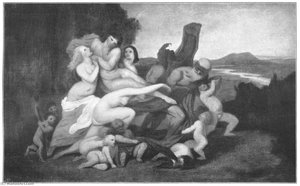
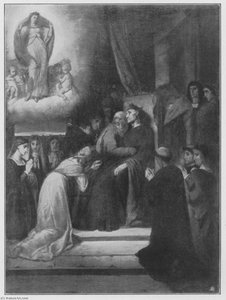
11Allegorie (1847) autorstwa Anselm FeuerbachAllegorie1847 12Bacchuszug (1847) autorstwa Anselm FeuerbachBacchuszug1847 13Diana, Emerging from her Bath, Surrounded by Nymphs (1854) autorstwa Anselm FeuerbachDiana, Emerging from her Bath, Surrounded by Nymphs1854 · Bawarskie Państwowe Zbiory Malarstwa 14Gypsy with Tambourine* (1854) autorstwa Anselm FeuerbachGypsy with Tambourine*1854 · Staatliche Kunsthalle Karlsruhe 15Youthful Self-Portrait (1852) autorstwa Anselm FeuerbachYouthful Self-Portrait1852 · Staatliche Kunsthalle Karlsruhe 16Portrait (of the author?) (1854) autorstwa Anselm FeuerbachPortrait (of the author?)1854 17Flower girl (1854) autorstwa Anselm FeuerbachFlower girl1854 · Staatliche Kunsthalle Karlsruhe 18Drei weibliche Gestalten an einem kleinen See (1855) autorstwa Anselm FeuerbachDrei weibliche Gestalten an einem kleinen See1855 19Zigeuner (1854) autorstwa Anselm FeuerbachZigeuner1854 20Rokokodamen am Wasser (1854) autorstwa Anselm FeuerbachRokokodamen am Wasser1854 21Landschaft mit Wasserfall (1855) autorstwa Anselm FeuerbachLandschaft mit Wasserfall1855 22Landschaft mit badenden Frauen (1854) autorstwa Anselm FeuerbachLandschaft mit badenden Frauen1854 23Blumenmädchen (1854) autorstwa Anselm FeuerbachBlumenmädchen1854 24Damenbildnis (1854) autorstwa Anselm FeuerbachDamenbildnis1854 25Tänzerin (dekoratives Panneau) (1854) autorstwa Anselm FeuerbachTänzerin (dekoratives Panneau)1854 26Bildnis des Geheimrats Prof. Umbreit (1853) autorstwa Anselm FeuerbachBildnis des Geheimrats Prof. Umbreit1853 27Der Tod des Pietro Aretino (1854) autorstwa Anselm FeuerbachDer Tod des Pietro Aretino1854 28Bildnis des Prof. C. Cannstatt (1850) autorstwa Anselm FeuerbachBildnis des Prof. C. Cannstatt1850 29Mädchen, um einen toten Vogel trauernd (1854) autorstwa Anselm FeuerbachMädchen, um einen toten Vogel trauernd1854 30Untitled (AQR3R6) (1854) autorstwa Anselm FeuerbachUntitled (AQR3R6)1854 31Versuchung des heiligen Antonius (1854) autorstwa Anselm FeuerbachVersuchung des heiligen Antonius1854 32Hafis in der Schenke (1852) autorstwa Anselm FeuerbachHafis in der Schenke1852 33Pietà (1854) autorstwa Anselm FeuerbachPietà1854 34The Golden Age (1857) autorstwa Anselm FeuerbachThe Golden Age1857 · Bawarskie Państwowe Zbiory Malarstwa 35Portrait of the Photographer Reitmayer (1860) autorstwa Anselm FeuerbachPortrait of the Photographer Reitmayer1860 36Musical Poetry (1856) autorstwa Anselm FeuerbachMusical Poetry1856 · Staatliche Kunsthalle Karlsruhe 37Nanna (1861) autorstwa Anselm FeuerbachNanna1861 · Alte Nationalgalerie 38Iphigenie (1862) autorstwa Anselm FeuerbachIphigenie1862 · Hessisches Landesmuseum 39Pietà (1863) autorstwa Anselm FeuerbachPietà1863 · Bawarskie Państwowe Zbiory Malarstwa 40Madonna (1863) autorstwa Anselm FeuerbachMadonna1863 · Bawarskie Państwowe Zbiory Malarstwa 41Portrait of a Roman Woman  (Nanna) (1862) autorstwa Anselm FeuerbachPortrait of a Roman Woman (Nanna)1862 · Schackgalerie 42Nanna (1862) autorstwa Anselm FeuerbachNanna1862 43Portrait of Nanna Risi (1861) autorstwa Anselm FeuerbachPortrait of Nanna Risi1861 · Staatliche Kunsthalle Karlsruhe 44Kinder am Wasser (1859) autorstwa Anselm FeuerbachKinder am Wasser1859 45Bildnis Allgeyers (1857) autorstwa Anselm FeuerbachBildnis Allgeyers1857 · Bawarskie Państwowe Zbiory Malarstwa 46Kinder am Springbrunnen (1859) autorstwa Anselm FeuerbachKinder am Springbrunnen1859 47Dantes Tod (1858) autorstwa Anselm FeuerbachDantes Tod1858 48Maria mit dem Kind (1860) autorstwa Anselm FeuerbachMaria mit dem Kind1860 49Der Herbst (Balgende Buben mit Früchten) (1860) autorstwa Anselm FeuerbachDer Herbst (Balgende Buben mit Früchten)1860 50Die Schauspielszene aus Hamlet (1858) autorstwa Anselm FeuerbachDie Schauspielszene aus Hamlet1858 51Dante mit Virgil in der Unterwelt (1857) autorstwa Anselm FeuerbachDante mit Virgil in der Unterwelt1857 · Bawarskie Państwowe Zbiory Malarstwa 52Children Making Music (1864) autorstwa Anselm FeuerbachChildren Making Music1864 · Alte Nationalgalerie 53Laura in the Church (1865) autorstwa Anselm FeuerbachLaura in the Church1865 · Bawarskie Państwowe Zbiory Malarstwa 54Henriette Feuerbach, the Stepmother of the Artist (1871) autorstwa Anselm FeuerbachHenriette Feuerbach, the Stepmother of the Artist1871 55Lucrezia Borgia; Portrait of a Roman woman in white tunic and red robe (1864) autorstwa Anselm FeuerbachLucrezia Borgia; Portrait of a Roman woman in white tunic and red robe1864 · Städel Museum 56Two ladies in a landscape (1867) autorstwa Anselm FeuerbachTwo ladies in a landscape1867 · Alte Nationalgalerie 57Musizierende Kinder, von einer Nymphe belauscht (1864) autorstwa Anselm FeuerbachMusizierende Kinder, von einer Nymphe belauscht1864 · Bawarskie Państwowe Zbiory Malarstwa 58Self-portrait with cigarette (1871) autorstwa Anselm FeuerbachSelf-portrait with cigarette1871 59The Symposium (1871) autorstwa Anselm FeuerbachThe Symposium1871 · Alte Nationalgalerie 60Sleeping Nymph (1870) autorstwa Anselm FeuerbachSleeping Nymph1870 · Germanisches Nationalmuseum 61Spring Scene (1868) autorstwa Anselm FeuerbachSpring Scene1868 · Alte Nationalgalerie 62Mutter mit Kind (1867) autorstwa Anselm FeuerbachMutter mit Kind1867 63Lesbia mit dem Vogel (1868) autorstwa Anselm FeuerbachLesbia mit dem Vogel1868 64Ricordo di Tivoli (1867) autorstwa Anselm FeuerbachRicordo di Tivoli1867 65Das Urteil des Paris (1870) autorstwa Anselm FeuerbachDas Urteil des Paris1870 66Untitled (AQR3NQ) (1864) autorstwa Anselm FeuerbachUntitled (AQR3NQ)1864 · Bawarskie Państwowe Zbiory Malarstwa 67Orpheus (1869) autorstwa Anselm FeuerbachOrpheus1869 68Bildnis der Stiefmutter des Künstlers (1867) autorstwa Anselm FeuerbachBildnis der Stiefmutter des Künstlers1867 69Im Frühling. (Sechs Damen im Freien.) (1868) autorstwa Anselm FeuerbachIm Frühling. (Sechs Damen im Freien.)1868 70Self-Portrait with Cigarette (1875) autorstwa Anselm FeuerbachSelf-Portrait with Cigarette1875 71Self-Portrait (1878) autorstwa Anselm FeuerbachSelf-Portrait1878 · Staatliche Kunsthalle Karlsruhe 72Sturz der Titanen (1874) autorstwa Anselm FeuerbachSturz der Titanen1874 73Landschaft mit Ziegen (1873) autorstwa Anselm FeuerbachLandschaft mit Ziegen1873 74Deutsch Zigeunertanz (1853) autorstwa Anselm FeuerbachDeutsch Zigeunertanz1853 · Hamburger Kunsthalle 75Untitled (AQR3NN) (1852) autorstwa Anselm FeuerbachUntitled (AQR3NN)1852 · Kunsthalle Mannheim 76German Titanensturz autorstwa Anselm FeuerbachGerman Titanensturz 77The Judgment of Paris (1870) autorstwa Anselm FeuerbachThe Judgment of Paris1870 · Hamburger Kunsthalle 78Mythologische Szene (Siegfrieds Tod ) (1846) autorstwa Anselm FeuerbachMythologische Szene (Siegfrieds Tod )1846 79Rock cleft with cows (1855) autorstwa Anselm FeuerbachRock cleft with cows1855 · Alte Nationalgalerie 80girls bathing in the evening (1854) autorstwa Anselm Feuerbachgirls bathing in the evening1854 81Untitled (AQR3QJ) (1854) autorstwa Anselm FeuerbachUntitled (AQR3QJ)1854 82Untitled (AQR3P4) (1851) autorstwa Anselm FeuerbachUntitled (AQR3P4)1851 83Männlicher Halbakt (1851) autorstwa Anselm FeuerbachMännlicher Halbakt1851 84Young witch who is led to the stake (1851) autorstwa Anselm FeuerbachYoung witch who is led to the stake1851 · Germanisches Nationalmuseum 85Hafis vor der Schenke (1852) autorstwa Anselm FeuerbachHafis vor der Schenke1852 · Kunsthalle Mannheim 86Heroic landscape (1856) autorstwa Anselm FeuerbachHeroic landscape1856 · Alte Nationalgalerie 87Untitled (AQR3SW) (1856) autorstwa Anselm FeuerbachUntitled (AQR3SW)1856 88Deutsch Garten des Ariost (1863) autorstwa Anselm FeuerbachDeutsch Garten des Ariost1863 · Schackgalerie 89Landscape with Waterfall (1865) autorstwa Anselm FeuerbachLandscape with Waterfall1865 · Bawarskie Państwowe Zbiory Malarstwa 90Coast near Porto d'Anzio (1866) autorstwa Anselm FeuerbachCoast near Porto d'Anzio1866 · Staatliche Kunsthalle Karlsruhe 91Landschaft (1871) autorstwa Anselm FeuerbachLandschaft1871 92Untitled (AQR3R4) (1864) autorstwa Anselm FeuerbachUntitled (AQR3R4)1864 · Schackgalerie 93Medea (1870) autorstwa Anselm FeuerbachMedea1870 94Untitled (AQR3S8) (1866) autorstwa Anselm FeuerbachUntitled (AQR3S8)1866 · Schackgalerie 95Kinder am Strande (1867) autorstwa Anselm FeuerbachKinder am Strande1867 · Museum Georg Schäfer 96Italiano Paolo e Francesca (1864) autorstwa Anselm FeuerbachItaliano Paolo e Francesca1864 · Schackgalerie 97Francesca da Rimini (1864) autorstwa Anselm FeuerbachFrancesca da Rimini1864 · Bawarskie Państwowe Zbiory Malarstwa 98Musizierende Kinder (1864) autorstwa Anselm FeuerbachMusizierende Kinder1864 · Kunstmuseum Moritzburg 99Gastmahl des Plato (1869) autorstwa Anselm FeuerbachGastmahl des Plato1869 · Staatliche Kunsthalle Karlsruhe 100German Pfingstrosen (Päonien) Peonies (1871) autorstwa Anselm FeuerbachGerman Pfingstrosen (Päonien) Peonies1871 · Neue Pinakothek

Słynne obrazy Anselm Feuerbach epoka po epoce

Tematy, które przyciągnęły wzrok Anselm Feuerbach

Cztery motywy najczęściej powracające w tych oryginałach, z których każdy doczekał się swojego najdoskonalszego przykładu.

Muzea przechowujące oryginały Anselm Feuerbach

8 muzeów, w których znajduje się najwięcej obrazów z tej strony.

Muzea Miasto Dzieła artysty Anselm Feuerbach Obrazy z tej listy
Bawarskie Państwowe Zbiory Malarstwa, MonachiumBawarskie Państwowe Zbiory Malarstwa Monachium 12 Diana, Emerging from her Bath, Surrounded by Nymphs, The Golden Age, Pietà
Alte Nationalgalerie, BerlinAlte Nationalgalerie Berlin 10 Self-portrait, Self-portrait as a boy, The Artist's Step-mother, Henriette Feuerbach
Staatliche Kunsthalle Karlsruhe, KarlsruheStaatliche Kunsthalle Karlsruhe Karlsruhe 10 Portrait of an Older Gentleman, Gypsy with Tambourine*, Youthful Self-Portrait
Schackgalerie, MonachiumSchackgalerie Monachium 15 Portrait of a Roman Woman (Nanna), Deutsch Garten des Ariost, Untitled (AQR3R4)
Hamburger Kunsthalle, HamburgHamburger Kunsthalle Hamburg 3 English The Judgement of Paris Deutsch Das Urteil des Paris Русский Суд Париса, Deutsch Zigeunertanz, The Judgment of Paris
Germanisches Nationalmuseum, NorymbergaGermanisches Nationalmuseum Norymberga 2 Sleeping Nymph, Young witch who is led to the stake
Niedersächsisches Landesmuseum Hannover, HanowerNiedersächsisches Landesmuseum Hannover Hanower 3 Kinderständchen
Staatsgalerie Stuttgart, StuttgartStaatsgalerie Stuttgart Stuttgart 1 Iphigenie II

Anselm Feuerbach, jedno kultowe dzieło na dekadę

Dzieła według dekad

Wybierz dekadę, aby zobaczyć dzieło, które ją definiuje.

Obrazy artysty Anselm Feuerbach: odpowiedzi galerii

Który obraz Anselm Feuerbach jest najsłynniejszy ze wszystkich?Odkryj odpowiedź

Orpheus and Eurydike (1869). Następne są Portrait of an Older Gentleman (1852) oraz Kinderständchen (1860).

Ile lat miał Anselm Feuerbach, gdy ukończył Orpheus and Eurydike?Odkryj odpowiedź

40 lat: Orpheus and Eurydike pochodzi z 1869, a Anselm Feuerbach urodził(a) się w 1829.

Które to 10 najlepszych obrazów Anselm Feuerbach?Odkryj odpowiedź

Orpheus and Eurydike, Portrait of an Older Gentleman, Kinderständchen, Iphigenie II, Self-portrait, Self-portrait as a boy, The Artist's Step-mother, Henriette Feuerbach, English The Judgement of Paris Deutsch Das Urteil des Paris Русский Суд Париса, Selfportrait i Samson and Delila (Copy after Rubens). Powyższy ranking zawiera rok powstania oraz muzeum dla każdego z nich.

Ile dzieł stworzył/a Anselm Feuerbach?Odkryj odpowiedź

Nasz katalog zawiera 128 dzieł artysty Anselm Feuerbach, datowanych od 1845 do 1878.

Gdzie można znaleźć najsłynniejsze oryginały autorstwa Anselm Feuerbach?Odkryj odpowiedź

W większości znajdują się w Bawarskie Państwowe Zbiory Malarstwa (Monachium), Alte Nationalgalerie (Berlin) i Staatliche Kunsthalle Karlsruhe (Karlsruhe). Powyższa tabela muzeów zawiera ich pełną listę.

Kiedy Anselm Feuerbach stworzył swoje najsłynniejsze obrazy?Odkryj odpowiedź

W 1850s: 41 z 100 dzieł na tej stronie powstało w tym czasie, w tym Portrait of an Older Gentleman.

Które z najsłynniejszych dzieł Anselm Feuerbach należą do jego najwcześniejszych i najpóźniejszych prac?Odkryj odpowiedź

Na tej stronie najwcześniejszy to Self-portrait as a boy (1845), a najpóźniejszy The Artist's Step-mother, Henriette Feuerbach (1878).

Do jakich tematów Anselm Feuerbach powracał najczęściej?Odkryj odpowiedź

Woman (35), Man (18) i Drapery (14), w ramach 100 dzieł na tej stronie.

W jakiej technice najczęściej tworzył Anselm Feuerbach?Odkryj odpowiedź

Oil On Canvas, dla 49 z 100 dzieł na tej stronie.

Z jakim nurtem związany jest Anselm Feuerbach?Odkryj odpowiedź

Romanticism i Neoclassicism, sądząc po oryginałach na tej stronie.

Które oryginały artysty Anselm Feuerbach znajdują się w zbiorach Bawarskie Państwowe Zbiory Malarstwa?Odkryj odpowiedź

Diana, Emerging from her Bath, Surrounded by Nymphs, The Golden Age i Pietà: Bawarskie Państwowe Zbiory Malarstwa, Monachium posiada 11 dzieł widocznych na tej stronie.

Anselm Feuerbach: artysta

Poeta klasycznej formy: Życie i wizja Anselma Feuerbacha

Anselm Feuerbach (1829-1880) jawi się jako monumentalna postać w tkance niemieckiego romantyzmu i neoklasycyzmu, stanowiąc ucieleśnienie rzadkiego i harmonijnego połączenia tych dwóch potężnych nurtów artystycznych. Urodzony w Speyer w rodzinie o głębokich tradycjach intelektualnych – jego ojciec, Joseph Anselm Ritter von Feuerbach, był znamienitym archeologiem – Feuerbach był przeznaczony do życia zanurzonego w badaniu antyku. Ta rodowa więź ze światem klasycznym w sposób niezwykle istotny ukształtowała jego wrażliwość artystyczną już od najmłodszych lat. Jego formalna edukacja rozpoczęła się w Akademii Duyskeldorfer między 1845 a 1848 rokiem, gdzie pod rygorystycznym okiem mistrzów takich jak Johann Wilhelm Schirmer i Wilhelm von Schadow, zaszczepiono w nim fundamentalne zrozumienie klasycznej estetyki oraz rzeźbiarskiej precyzji i kunsztu.

Trajektoria jego rozwoju była naznaczona nieustannymi poszukiwaniami wizualnego języka, który mógłby zasypać przepaść między emocjonalną głębią romantyzmu a strukturalną czystością neoklasycyzmu. Po doskonaleniu umiejętności w Akademii Monachijskiej, Feuerbach szukał inspiracji poza granicami Niemiec, osiadając w Antwerpii, aby pod przewodnictwem Gustave’a Wappersa opanować żywy wenecki koloryzm. Jego podróż przez Paryż w 1851 roku stała się przełomowym momentem w jego twórczości; to właśnie tam powstało dzieło Hafiz przy fontannie (1852). To zapierające dech w piersiach płótno, które nasyciło arabską poezję klasycznym idealizmem, stało się świadectwem jego unikalnej zdolności do syntezy rozbieżnych wpływów kulturowych w jedną, transcendentną wizję.

Pielgrzymka przez światło i antyk

Napędzany nieugasającym zachwytem nad włoskim renesansem, Feuerbach wyruszył w duchową i artystyczną pielgrzymkę do Włoch. Zanurzenie w Wenecji pozwoliło mu chłonąć ekspresyjny dynamizm i bogatą paletę barw weneckich mistrzów, podczas gdy pobyt we Florencji i Rzymie przypieczętował jego oddanie ideałom humanistycznym. Podczas długiej rezydencji w Rzymie, która trwała aż do 1873 roku, stał się centralną postacią wśród Deutschrömer – grupy niemieckich artystów żyjących we Włoszech, w skład której wchodzili tacy luminarze jak Arnold Böcklin i Hans von Marées. Okres ten charakteryzował się intensywnym skupieniem na godności ludzkiej formy oraz sugestywnej mocy tematów mitologicznych.

Jego technika stanowiła wyrafinowaną mieszankę kilku kluczowych elementów:

  • Klasyczny idealizm: oddanie czystości linii i zrównoważonej kompozycji odnalezionej w antycznej Grecji.
  • Wenecki koloryzm: wykorzystanie świetlistego, emocjonalnego koloru, który tchnął życie w statyczne formy.
  • Poetycka narracja: zdolność do przekładania tematów literackich, od mitów greckich po poezję perską, na wizualne arcydzieła.

Dziedzictwo i znaczenie historyczne

Twórczość Anselma Feuerbacha pozostaje głęboką medytacją nad trwałym pięknem klasycznej przeszłości. Nie był on jedynie naśladowcą antyku; raczej reinterpretował jego ducha dla nowoczesnej ery, tworząc kompozycje, które wydają się jednocześnie ponadczasowe i głęboko osobiste. Jego obrazy, często charakteryzujące się eleganckimi układami postaci i poczuciem melancholijnego spokoju, nieustannie zachwycają odbiorców swoją cichą intensywnością. Splatając strukturalny rygor neoklasycyzmu z duszną liryką romantyzmu, Feuerbach zapewnił sobie miejsce jako jeden z najważniejszych malarzy XIX wieku, pozostawiając po sobie dziedzictwo celebrujące wieczny dialog między człowiekiem a mitem.