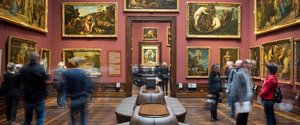
Portret Pietro Antonio Rotari

53 najsłynniejszych obrazów artysty Pietro Antonio Rotari – wybór z galerii

Aktualizacja: Listopad 2026 · ranking według naszego wskaźnika popularności (liczba wyszukiwań, wizyt i zamówień dla każdego dzieła) · 56 dzieł Pietro Antonio Rotari w naszym katalogu

W skrócie

Z wszystkich oryginałów pozostawionych przez Pietro Antonio Rotari, najsłynniejszym jest Girl with a book. Tuż za nimi znajdują się Alexander the Great and Roxane (1756) oraz Portrait of Maria Josepha of Austria (1755). Nasz katalog zawiera 56 dzieł autorstwa Pietro Antonio Rotari; galeria zachowała 53 najbardziej podziwianych na świecie prac, z których każda została przedstawiona wraz z datą powstania, informacją o muzeum oraz jej historią.

1707 – 1762, Werona Baroque Najwięcej dzieł: Staatliche Kunstsammlungen Dresden

10 najlepszych obrazów artysty Pietro Antonio Rotari: wybór galerii

1
Girl with a book autorstwa Pietro Antonio Rotari

Girl with a book

Oil On Canvas

The painting titled Girl with a book is a work by the artist Pietro Rotari. This portrait captures a quiet moment of study, rendered in oil on canvas. It belongs to the period of the artist's career spanning c. 1756 - 1762. The subject holds a book, a singular object that anchors the composition and defines the sitter's immediate purpose.

2
Alexander the Great and Roxane (1756) autorstwa Pietro Antonio Rotari

Alexander the Great and Roxane

1756 · Oil On Canvas · Ermitaż, Sankt Petersburg

The painting titled Alexander the Great and Roxane was executed by the artist Pietro Rotari. Completed in 1756, this oil on canvas work depicts a specific historical pairing. The subject matter focuses on Alexander III, the King of Macedon, and Roxana, his Persian princess wife. These two figures occupy the central space of the composition.

3
Portrait of Maria Josepha of Austria (1755) autorstwa Pietro Antonio Rotari

Portrait of Maria Josepha of Austria

1755 · Oil On Canvas · Muzeum Narodowe w Warszawie, Warszawa

In this 1755 oil portrait, we encounter Maria Josepha of Austria, the wife of King Augustus III of Poland. The sitter is presented in a three-quarter length view, her posture conveying a quiet, steady authority. There is a certain stillness to her presence, a composure that suggests the weight of her station without the need for overt drama. The light, descending from the upper left, gently sculpts the contours of…

4
Sleeping boy (1734) autorstwa Pietro Antonio Rotari

Sleeping boy

1734 · Oil · Staatliche Kunstsammlungen Dresden, Drezno

A young boy rests in the center of the frame, his head tilted in the heavy stillness of sleep. The composition is tight, focusing on the soft curve of his neck and the gentle rise of his shoulders. He wears a vest of muted brown over a creamy white shirt, the fabric rendered with a smooth, painterly touch. His hair falls in wavy, dark locks across his forehead, catching a…

5
Portrait of Jerzy August Mniszech (1715–1778), his own coat of arms (1746) autorstwa Pietro Antonio Rotari

Portrait of Jerzy August Mniszech (1715–1778), his own coat of arms

1746 · Oil On Canvas · Muzeum Narodowe w Warszawie, Warszawa

A single gaze meets the observer from the year 1746. Jerzy August Mniszech sits in a three-quarter pose, his body angled toward the left while his eyes remain fixed upon us. He is a man of the mid-18th century, draped in a heavy red coat that holds the light in its deep folds. A blue sash cuts across his torso, a cool stripe of color against the warmth of his…

6
Young boy (1734) autorstwa Pietro Antonio Rotari

Young boy

1734 · Oil · Staatliche Kunstsammlungen Dresden, Drezno

A young boy sits in a space of profound stillness, his presence filling the frame with a quiet, heavy introspection. He is caught in a moment of deep thought, his chin resting near his hand as he gazes out with eyes that seem to hold a weight beyond his years. The light, soft and directional, spills from the upper left, brushing against the gentle contours of his face and the…

8
A Sleeping Girl (1760) autorstwa Pietro Antonio Rotari

A Sleeping Girl

1760 · Oil On Canvas · National Gallery of Art, Waszyngton

A single moment of stillness defines this portrait. A young woman rests in a three-quarter profile, her eyes closed against the world. Her skin possesses a porcelain quality, luminous and pale under a soft light that descends from the upper left. This light traces the gentle curve of her neck and the soft folds of her white linen collar. A red cap sits upon her head, its plush fur trim…

9
Queen Maria Josepha, Wife of King Augustus III of Poland (1755) autorstwa Pietro Antonio Rotari

Queen Maria Josepha, Wife of King Augustus III of Poland

1755 · Oil On Canvas · Gemäldegalerie Alte Meister, Drezno

In the grand tapestry of eighteenth-century portraiture, few works capture the intersection of sovereign power and delicate femininity as exquisitely as Pietro Antonio Rotari’s 1755 masterpiece, Queen Maria Josepha, Wife of King Augustus III of Poland. This commanding portrait is far more than a mere likeness; it is a profound exploration of Baroque grandeur, designed to evoke an immediate sense of awe in any viewer. As the eye meets the…

10
Girl Looking through a Telescope (1757) autorstwa Pietro Antonio Rotari

Girl Looking through a Telescope

1757 · Oil · Nationalmuseum, Stockholm

The painting titled Girl Looking through a Telescope is a work by the Italian artist Pietro Rotari. Created in the late 1750s, this portrait captures a singular moment of observation. The work was commissioned by Queen Lovisa Ulrika, who possessed a known interest in the study of natural history and scientific instruments.

Kontynuacja zestawienia Pietro Antonio Rotari, od 11 do 53

11Electoral Prince Friedrich Christian of Saxony (1758) autorstwa Pietro Antonio RotariElectoral Prince Friedrich Christian of Saxony1758 · Bawarskie Państwowe Zbiory Malarstwa 12Portrait of a Lady (1734) autorstwa Pietro Antonio RotariPortrait of a Lady1734 · Bawarskie Państwowe Zbiory Malarstwa 13Crown Princess Maria Antonia of Sachsen (1734) autorstwa Pietro Antonio RotariCrown Princess Maria Antonia of Sachsen1734 · Bawarskie Państwowe Zbiory Malarstwa 14Electress Maria Antonia of Sachsen, Daughter of Emperor Karl VII (1734) autorstwa Pietro Antonio RotariElectress Maria Antonia of Sachsen, Daughter of Emperor Karl VII1734 · Bawarskie Państwowe Zbiory Malarstwa 15Boy on a pedestal (1734) autorstwa Pietro Antonio RotariBoy on a pedestal1734 · Staatliche Kunstsammlungen Dresden 16Man with fur cap (1734) autorstwa Pietro Antonio RotariMan with fur cap1734 · Staatliche Kunstsammlungen Dresden 17Smiling girl with pearl necklace (1734) autorstwa Pietro Antonio RotariSmiling girl with pearl necklace1734 · Staatliche Kunstsammlungen Dresden 18Slumbering girl (1734) autorstwa Pietro Antonio RotariSlumbering girl1734 · Staatliche Kunstsammlungen Dresden 19A Girl in a Blue Dress (1755) autorstwa Pietro Antonio RotariA Girl in a Blue Dress1755 · El Paso Museum of Art 20A Girl in a Red Dress (1755) autorstwa Pietro Antonio RotariA Girl in a Red Dress1755 · El Paso Museum of Art 21The pentiting Magdalena (1754) autorstwa Pietro Antonio RotariThe pentiting Magdalena1754 · Staatliche Kunstsammlungen Dresden 22Princess Kunigunde of Saxony (1755) autorstwa Pietro Antonio RotariPrincess Kunigunde of Saxony1755 · Staatliche Kunstsammlungen Dresden 23Young Woman Reading A Letter, Her Head Propped Up (1750) autorstwa Pietro Antonio RotariYoung Woman Reading A Letter, Her Head Propped Up1750 · Staatliche Kunstsammlungen Dresden 24Girl with a Flower in Her Hair (1759) autorstwa Pietro Antonio RotariGirl with a Flower in Her Hair1759 · Yekaterinburg Museum of Fine Arts 25Young Woman with Bonnet, White Shawl, and Book, known as “The Virtuous Girl" (1760) autorstwa Pietro Antonio RotariYoung Woman with Bonnet, White Shawl, and Book, known as “The Virtuous Girl"1760 26Young Woman with Black Collar and Flowers in her Hair, Known as "The Frivolous Girl" (1760) autorstwa Pietro Antonio RotariYoung Woman with Black Collar and Flowers in her Hair, Known as "The Frivolous Girl"1760 27Young Russian Woman (1759) autorstwa Pietro Antonio RotariYoung Russian Woman1759 · Walters Art Museum 28Young Girl Writing a Love Letter (1757) autorstwa Pietro Antonio RotariYoung Girl Writing a Love Letter1757 · Norton Simon Museum 29King Augustus III of Poland (1755) autorstwa Pietro Antonio RotariKing Augustus III of Poland1755 · Gemäldegalerie Alte Meister 30Portrait of Countess A.M. Vorontsova (1759) autorstwa Pietro Antonio RotariPortrait of Countess A.M. Vorontsova1759 · Ermitaż 31Princess Elisabeth of Saxe (1755) autorstwa Pietro Antonio RotariPrincess Elisabeth of Saxe1755 · Staatliche Kunstsammlungen Dresden 32Woman with a Fan and a Woman with a Rose autorstwa Pietro Antonio RotariWoman with a Fan and a Woman with a RoseMuzeum Narodowe w Krakowie 33Young Woman with a Fan (1755) autorstwa Pietro Antonio RotariYoung Woman with a Fan1755 · Narodowa Galeria Kanady 34A young Woman, Pietro Rotari, 1756 - 1762 (1762) autorstwa Pietro Antonio RotariA young Woman, Pietro Rotari, 1756 - 17621762 · Rijksmuseum 35A Young Woman with a Book, Pietro Rotari, 1756 - 1762 (1762) autorstwa Pietro Antonio RotariA Young Woman with a Book, Pietro Rotari, 1756 - 17621762 · Rijksmuseum 36Penitent girl autorstwa Pietro Antonio RotariPenitent girl 37Weeping Girl autorstwa Pietro Antonio RotariWeeping GirlBawarskie Państwowe Zbiory Malarstwa 38Young Woman with a Fan (1750) autorstwa Pietro Antonio RotariYoung Woman with a Fan1750 · Muzeum J. Paula Getty'ego 39Portrait of a maid. autorstwa Pietro Antonio RotariPortrait of a maid.Muzeum Narodowe w Warszawie 40Portrait of the nuncio at the Dresden court, Ignazio Accoramboni autorstwa Pietro Antonio RotariPortrait of the nuncio at the Dresden court, Ignazio AccoramboniGemäldegalerie 41Girl with Needle-work autorstwa Pietro Antonio RotariGirl with Needle-workNationalmuseum 42Sleeping Girl autorstwa Pietro Antonio RotariSleeping GirlAlte Pinakothek 43Young Girl with Distaff autorstwa Pietro Antonio RotariYoung Girl with DistaffSzépművészeti Múzeum 44Portrait of Marshall Franc. Rzewuski (1726-1800) autorstwa Pietro Antonio RotariPortrait of Marshall Franc. Rzewuski (1726-1800) 45Portrait of Elena Kurakina autorstwa Pietro Antonio RotariPortrait of Elena Kurakina 46Young Woman with a Fan autorstwa Pietro Antonio RotariYoung Woman with a Fan 47Portrait of Anna Galitzine autorstwa Pietro Antonio RotariPortrait of Anna Galitzine 48Portrait of Natalya Alexeevna of Russia autorstwa Pietro Antonio RotariPortrait of Natalya Alexeevna of Russia 49Portrait of Catherine Petrovna Holstein-Beck autorstwa Pietro Antonio RotariPortrait of Catherine Petrovna Holstein-Beck 50Portrait of Franciszek Michał Rzewuski. autorstwa Pietro Antonio RotariPortrait of Franciszek Michał Rzewuski.Zamek Królewski w Warszawie 51Portrait of a Woman autorstwa Pietro Antonio RotariPortrait of a Woman 52Portrait of Francesco Bartolomeo Rastrelli autorstwa Pietro Antonio RotariPortrait of Francesco Bartolomeo Rastrelli 53A Girl with a Flower in Her Hair (1762) autorstwa Pietro Antonio RotariA Girl with a Flower in Her Hair1762 · National Gallery of Art

Słynne obrazy Pietro Antonio Rotari epoka po epoce

Tematy, które przyciągnęły wzrok Pietro Antonio Rotari

Cztery motywy najczęściej powracające w tych oryginałach, z których każdy doczekał się swojego najdoskonalszego przykładu.

Muzea przechowujące oryginały Pietro Antonio Rotari

8 muzeów, w których znajduje się najwięcej obrazów z tej strony.

Muzea Miasto Dzieła artysty Pietro Antonio Rotari Obrazy z tej listy
Staatliche Kunstsammlungen Dresden, DreznoStaatliche Kunstsammlungen Dresden Drezno 11 Sleeping boy, Young boy, Old woman with fur hat
Bawarskie Państwowe Zbiory Malarstwa, MonachiumBawarskie Państwowe Zbiory Malarstwa Monachium 5 Electoral Prince Friedrich Christian of Saxony, Portrait of a Lady, Crown Princess Maria Antonia of Sachsen
Muzeum Narodowe w Warszawie, WarszawaMuzeum Narodowe w Warszawie Warszawa 3 Portrait of Maria Josepha of Austria, Portrait of Jerzy August Mniszech (1715–1778), his own coat of arms, Portrait of a maid.
Ermitaż, Sankt PetersburgErmitaż Sankt Petersburg 2 Alexander the Great and Roxane, Portrait of Countess A.M. Vorontsova
National Gallery of Art, WaszyngtonNational Gallery of Art Waszyngton 2 A Sleeping Girl, A Girl with a Flower in Her Hair
Gemäldegalerie Alte Meister, DreznoGemäldegalerie Alte Meister Drezno 2 Queen Maria Josepha, Wife of King Augustus III of Poland, King Augustus III of Poland
Nationalmuseum, StockholmNationalmuseum Stockholm 2 Girl Looking through a Telescope, Girl with Needle-work
El Paso Museum of Art, El PasoEl Paso Museum of Art El Paso 2 A Girl in a Blue Dress, A Girl in a Red Dress

Pietro Antonio Rotari dekada po dekadzie: oryginały definiujące każdy okres

Dzieła według dekad

Wybierz dekadę, aby zobaczyć dzieło, które ją definiuje.

Pytania kolekcjonerów o obrazy Pietro Antonio Rotari

Z jakiego dzieła najbardziej znany jest Pietro Antonio Rotari?Odkryj odpowiedź

Girl with a book. Następne są Alexander the Great and Roxane (1756) oraz Portrait of Maria Josepha of Austria (1755).

Jakie są dziesięć najsłynniejszych obrazów, których autorem jest Pietro Antonio Rotari?Odkryj odpowiedź

Girl with a book, Alexander the Great and Roxane, Portrait of Maria Josepha of Austria, Sleeping boy, Portrait of Jerzy August Mniszech (1715–1778), his own coat of arms, Young boy, Old woman with fur hat, A Sleeping Girl, Queen Maria Josepha, Wife of King Augustus III of Poland i Girl Looking through a Telescope. Powyższy ranking zawiera rok powstania oraz muzeum dla każdego z nich.

Ile obrazów pozostawił po sobie Pietro Antonio Rotari?Odkryj odpowiedź

Nasz katalog zawiera 56 dzieł artysty Pietro Antonio Rotari, datowanych od 1734 do 1762.

W których muzeach znajdują się arcydzieła Pietro Antonio Rotari?Odkryj odpowiedź

W większości znajdują się w Staatliche Kunstsammlungen Dresden (Drezno), Bawarskie Państwowe Zbiory Malarstwa (Monachium) i Muzeum Narodowe w Warszawie (Warszawa). Powyższa tabela muzeów zawiera ich pełną listę.

W których latach Pietro Antonio Rotari namalował swoje najsłynniejsze dzieła?Odkryj odpowiedź

W 1750s: 19 z 53 dzieł na tej stronie powstało w tym czasie, w tym Alexander the Great and Roxane.

Jakie są pierwsze i ostatnie słynne oryginały Pietro Antonio Rotari?Odkryj odpowiedź

Na tej stronie najwcześniejszy to Sleeping boy (1734), a najpóźniejszy A young Woman, Pietro Rotari, 1756 - 1762 (1762).

Jakie tematy Pietro Antonio Rotari wybierał najczęściej?Odkryj odpowiedź

Woman (26), Portrait (10) i Skin tones (9), w ramach 53 dzieł na tej stronie.

Której techniki Pietro Antonio Rotari używał najczęściej?Odkryj odpowiedź

Oil On Canvas, dla 27 z 53 dzieł na tej stronie.

Do jakiego nurtu artystycznego należy Pietro Antonio Rotari?Odkryj odpowiedź

Baroque, sądząc po oryginałach na tej stronie.

Które dzieła Pietro Antonio Rotari znajdują się w Staatliche Kunstsammlungen Dresden?Odkryj odpowiedź

Sleeping boy, Young boy i Old woman with fur hat: Staatliche Kunstsammlungen Dresden, Drezno posiada 11 dzieł widocznych na tej stronie.

Pietro Antonio Rotari: życie i twórczość

Początek Drogi: Wczesne Lata i Formacja Artystyczna

Pietro Antonio Rotari, urodzony w 1707 roku w tętniącym życiem artystycznym mieście Werona, wyrósł w środowisku głęboko zakorzenionym w tradycji baroku. Jednakże, Werona była również otwarta na nowe prądy malarskie płynące z całych Włoch. Jego początkowe studia pod okiem Antonio Balestry zapewniły mu solidne podstawy kompozycji klasycznej i techniki – fundamenty, na których zbudował swój niepowtarzalny styl. Ten formacyjny okres wpoił Rotariemu docenienie dla precyzyjnych detali i wyrafinowanego podejścia do formy, cech, które stały się znakiem rozpoznawczym jego twórczości. W latach 1725-1727 pobyt w Wenecji poszerzył jego horyzonty artystyczne, wystawiając go na unikalną mieszankę wpływów tego miasta – połączenie weneńskiego koloryzmu i dramatycznego wyrazu. To doświadczenie okazało się kluczowe, kształtując jego wrażliwość i przygotowując do dalszych studiów.

Ambicja Rotariego poprowadziła go dalej, najpierw do Rzymu w latach 1728-1732, gdzie doskonalił swoje umiejętności pod opieką Francesco Trevisaniego. Wpływ Trevisaniego jest widoczny we wczesnych pracach Rotariego, szczególnie w delikatnym operowaniu światłem i cieniem oraz rosnącym nacisku na uchwycenie głębi psychologicznej portretów. Kolejny okres współpracy z Francesco Solimeną w Neapolu (1731-1734) jeszcze bardziej wzbogacił jego słownictwo artystyczne. Solimena, mistrz neapolitańskiego baroku, przekazał Rotariemu poczucie wielkości i dramatycznej intensywności, które rezonowały przez całą jego karierę.

Wzrastająca Gwiazda: Kształtowanie Się Stylu

Po powrocie do Werony Pietro Antonio Rotari szybko ustabilizował swoją pozycję jako niezależny artysta, otwierając własne studio i przyciągając rosnące grono klientów. Zaczął kształtować styl, który był wyjątkowo jego własny – charakteryzujący się niezwykłym realizmem, stonowaną elegancją i wyrafinowaną wrażliwością. Silnie zakorzeniony w tradycji baroku, Rotariemu udało się nadać swoim pracom lekkość dotyku i subtelność, które odróżniały go od bardziej ekspresyjnych stylów panujących w tamtych czasach. Jego wczesne zamówienia często obejmowały monumentalne ołtarze dla lokalnych kościołów, takie jak Czterej Męczennicy (1745) w kościele San Giacomo we Weronie, demonstrując jego zdolność do tworzenia złożonych kompozycji i nadawania scenom religijnym emocjonalnej siły.

Jednak to w portrecie Rotari osiągnął prawdziwe mistrzostwo. Posiadał wyjątkowy dar uchwycenia nie tylko fizycznego podobieństwa modela, ale także jego osobowości, wewnętrznej gracji i pozycji społecznej. Jego portrety były czymś więcej niż tylko przedstawieniami; były wnikliwymi studiami charakteru, ujawniając niuanse ludzkich emocji z niezwykłą subtelnością. Ten talent szybko zdobył mu uznanie wśród kręgów arystokratycznych północnych Włoch.

Królewski Patronat i Międzynarodowy Rozgłos

Rok 1750 był punktem zwrotnym w karierze Rotariego, kiedy to udał się na północ do Wiednia, poszukując możliwości na dworze cesarskim. Choć początkowy sukces nie przyszedł natychmiast, przygotował grunt pod jego późniejszy triumf. W 1756 roku los zrządził, że zwrócił uwagę Carycy Elżbiety Pietrowny Rosji. Zaproszony do Sankt Petersburga, Rotari szybko stał się ulubionym portrecistą rosyjskiej arystokracji. Jego zdolność do schlebiania i idealizowania modeli przy jednoczesnym zachowaniu pewnego stopnia realizmu okazała się nieodparcie pociągająca dla dworu.

Talenty Rotariego wykraczały poza Rosję; pracował również dla Augusta III z Polski w Dreźnie, umacniając swoją reputację jako czołowego portrecisty europejskich monarchów. Później powrócił do Sankt Petersburga, aby służyć Katarzynie II, kontynuując tworzenie portretów oddających przepych i potęgę rosyjskiego dworu. Jego zamówienia obejmowały wizerunki wielkich księżniczek, hrabiów i innych prominentnych postaci, każdy portret starannie wykonany z wykwintnymi szczegółami i głębokim zrozumieniem arystokratycznego etykietu.

Dziedzictwo i Trwały Wpływ

Sukces Rotariego jako malarza dworskiego odzwierciedla ogromne znaczenie portretu w XVIII wieku – okresie, w którym obrazy służyły nie tylko upamiętnieniu jednostek, ale także projektowaniu władzy, statusu i legitymizacji. Jego portrety stanowią bezcenny dokument historyczny europejskiej arystokracji i życia dworskiego w epoce znaczących zmian politycznych i społecznych.

Choć Rotari nie był rewolucjonistą, który dramatycznie zmienił bieg historii sztuki, jego wyrafinowany styl wywarł subtelny, ale trwały wpływ na innych artystów pracujących w tradycji baroku. Jego nacisk na realizm, elegancję i psychologiczny wgląd ustanowił wysoki standard portretu, inspirując pokolenia malarzy do dążenia do podobnego poziomu umiejętności i wrażliwości.

Rotari zmarł w Sankt Petersburgu w 1762 roku, pozostawiając po sobie dziedzictwo jako jednego z najbardziej poszukiwanych portrecistów swoich czasów. Jego prace nadal urzekają widzów swoim pięknem, gracją i wnikliwymi portretami europejskich monarchów i arystokracji. Gabinet Mod i Gracji w Pałacu Peterhof, ozdobiony setkami małych portretów autorstwa Rotariego, stanowi świadectwo jego niezwykłego talentu i trwałego wkładu w świat sztuki.