Portret Lucas Van Uden

55 najsłynniejszych obrazów artysty Lucas Van Uden, każdy niepowtarzalny

Aktualizacja: Listopad 2026 · ranking według naszego wskaźnika popularności (liczba wyszukiwań, wizyt i zamówień dla każdego dzieła) · 58 dzieł Lucas Van Uden w naszym katalogu

W skrócie

Landscape with a rainbow (1635) to obraz autorstwa Lucas Van Uden, który przyciąga najwięcej spojrzeń; oryginał znajduje się w Kunsthistorisches Museum, Wiedeń. Następnie wzrok kieruje się na Mercury and Herse (1633) i Landscape with Feast of the Gods (1633). Spośród 58 dzieł Lucas Van Uden w naszym katalogu, tych 55 jest najbardziej znanych – każde z nich to unikatowy oryginał, przedstawiony wraz z rokiem powstania, muzeum oraz powodem, dla którego przetrwało próbę czasu.

1595 – 1672, Antwerpia Flemish baroque Najwięcej dzieł: Bawarskie Państwowe Zbiory Malarstwa

10 najlepszych obrazów autorstwa Lucas Van Uden według oka galerii

1
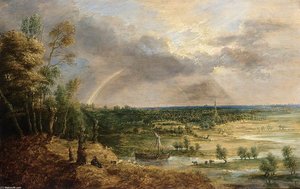
Landscape with a rainbow (1635) autorstwa Lucas Van Uden

Landscape with a rainbow

1635 · Oil · Kunsthistorisches Museum, Wiedeń

In this 1635 oil painting, we find ourselves standing at the edge of a tranquil Flemish countryside. The scene unfolds with a quiet, rhythmic grace, centered around a group of shepherds and their flock. A dog rests near a stream, its presence grounding the composition in a sense of lived-in reality. As the eye moves through the landscape, it follows the gentle curve of a stone bridge and the distant,…

2
Mercury and Herse (1633) autorstwa Lucas Van Uden

Mercury and Herse

1633 · Oil On Copper · Bawarskie Państwowe Zbiory Malarstwa, Monachium

A sudden movement breaks the stillness of the wooded landscape. From a heavy, billowing cloud, Mercury descends, his winged hat marking his celestial origin. He moves toward a group of women gathered near the water's edge. The scene is captured in a monochromatic palette, where shades of black, white, and gray define the drama of the encounter. Light spills from the upper left, catching the curve of a face and…

3
Landscape with Feast of the Gods (1633) autorstwa Lucas Van Uden

Landscape with Feast of the Gods

1633 · Oil · Bawarskie Państwowe Zbiory Malarstwa, Monachium

In Landscape with Feast of the Gods by Lucas Van Uden, the composition is organized around an asymmetrical arrangement of natural forms. On the right side of the frame, a heavy, textured rocky outcrop forms a grotto that provides a sheltered space for the subject matter. Within this rocky overhang, a group of classical or mythological figures is gathered for a feast. These figures occupy the right foreground and midground,…

4
The Judgment of Midas (1633) autorstwa Lucas Van Uden

The Judgment of Midas

1633 · Oil · Bawarskie Państwowe Zbiory Malarstwa, Monachium

The Judgment of Midas is a work by Lucas Van Uden, executed about 1633. The artist, born in Antwerp, Belgium, in 1595, was a central figure in the Flemish Baroque landscape tradition. His career spanned much of the seventeenth century until his death in 1672.

5
Wooded Landscape (1648) autorstwa Lucas Van Uden

Wooded Landscape

1648 · Oil On Panel

Wooded Landscape is a painting by Lucas Van Uden. The work is dated about 1648. It captures a quiet moment within the natural world, rendered through the hand of a master who understood the weight of the earth and the softness of the air.

6
Hilly landscape (1649) autorstwa Lucas Van Uden

Hilly landscape

1649 · Drawing · Gemäldegalerie, Berlin

is a landscape painting by the Flemish artist Lucas Van Uden. Born in Antwerp, Belgium, in 1595, Van Uden established himself as a significant figure within the Antwerp school during the seventeenth century. His career spanned the transition of the Baroque period until his death in 1672.

7
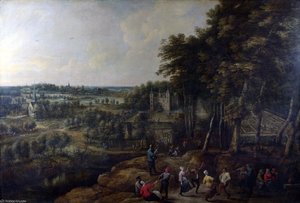
Scene in a park (1650) autorstwa Lucas Van Uden

Scene in a park

1650 · Oil On Canvas · Muzeum Narodowe w Warszawie, Warszawa

The air feels still in Scene in a park, a work that brings us into a lively social gathering within a grand estate. Lucas Van Uden, the artist behind this vision, captures a moment of aristocratic leisure where figures on foot and mounted on horses move through a sprawling landscape. We find ourselves watching an outing from about 1650, a time when the social rhythms of the park were dictated…

8
Landscape with a water-mill (1620) autorstwa Lucas Van Uden

Landscape with a water-mill

1620 · Oil

In this 1620 landscape, we find ourselves drawn into a silent, pastoral world rendered in a delicate range of grays. The composition is anchored by a dense grove of mature trees on the left, their bark textured with a tactile precision that suggests the weight of years. These trees reach across the upper frame, their leafy canopies framing a view that recedes into a soft, atmospheric distance. A slender spire…

9
Landscape with a Hawking Party (1620) autorstwa Lucas Van Uden

Landscape with a Hawking Party

1620 · Oil · The Hunterian Museum and Art Gallery, Glasgow

The air feels still, yet there is a sense of movement as a group of figures gathers upon the lush grass. They are a hawking party, gathered in a moment of quiet social ritual near the edge of a tranquil body of water. A bird cuts through the sky above, its wings catching the light as it drifts over the scene. In the distance, the silhouette of a castle rises…

10
Landscape (1633) autorstwa Lucas Van Uden

Landscape

1633 · Oil On Panel · Bawarskie Państwowe Zbiory Malarstwa, Monachium

The eye enters through a cluster of mature trees on the right, their bark textured by fine, detailed brushwork. These dark, dense forms act as a heavy curtain, pushing the viewer toward a vast, panoramic view of the natural world. A rolling terrain stretches into the midground, where groves of trees huddle near a small, quiet body of water. The landscape unfolds in layers of grayscale, moving from the deep…

Słynne obrazy artysty Lucas Van Uden, od 11 do 55

11Flat Landscape at Sunset (1633) autorstwa Lucas Van UdenFlat Landscape at Sunset1633 · Bawarskie Państwowe Zbiory Malarstwa 12River Landscape with Peasants on the Way to Market (1629) autorstwa Lucas Van UdenRiver Landscape with Peasants on the Way to Market1629 · Städel Museum 13Stormy coast landscape (1635) autorstwa Lucas Van UdenStormy coast landscape1635 · Bawarskie Państwowe Zbiory Malarstwa 14landscape (1635) autorstwa Lucas Van Udenlandscape1635 · Bonnefanten Museum 15Ulysses and Nausicaä (1635) autorstwa Lucas Van UdenUlysses and Nausicaä1635 16Panoramic View with Herdsman and Cattle (1638) autorstwa Lucas Van UdenPanoramic View with Herdsman and Cattle1638 17Woodland Scene by a Canal (1641) autorstwa Lucas Van UdenWoodland Scene by a Canal1641 · National Museum of Art, Architecture and Design 18River Landscape with a Stag Hunt (1643) autorstwa Lucas Van UdenRiver Landscape with a Stag Hunt1643 19Landscape with rainbow, shepherds and sheep (1648) autorstwa Lucas Van UdenLandscape with rainbow, shepherds and sheep1648 · Finnish National Gallery 20Landscape with a rainbow (1640) autorstwa Lucas Van UdenLandscape with a rainbow1640 · Rubens House 21Landscape with cows (1640) autorstwa Lucas Van UdenLandscape with cows1640 · Rubens House 22Landscape with river and hay - harvest (1639) autorstwa Lucas Van UdenLandscape with river and hay - harvest1639 · Musée Comtadin-Duplessis 23Winter landscape (1649) autorstwa Lucas Van UdenWinter landscape1649 · Muzeum Plantin-Moretus 24Landscape with Pastures and Clusters of Trees (1655) autorstwa Lucas Van UdenLandscape with Pastures and Clusters of Trees1655 · Städel Museum 25Evening Landscape (1650) autorstwa Lucas Van UdenEvening Landscape1650 · Kunsthistorisches Museum 26The Oosterhuis in Antwerp (1660) autorstwa Lucas Van UdenThe Oosterhuis in Antwerp1660 · Królewskie Muzeum Sztuk Pięknych Antwerpia 27Landscape with Sunset (1650) autorstwa Lucas Van UdenLandscape with Sunset1650 · Królewskie Muzeum Sztuk Pięknych Antwerpia 28Water Mill (1650) autorstwa Lucas Van UdenWater Mill1650 · Królewskie Muzeum Sztuk Pięknych Antwerpia 29Winter landscape with skaters (1660) autorstwa Lucas Van UdenWinter landscape with skaters1660 30Landscape with the Flight into Egypt (1654) autorstwa Lucas Van UdenLandscape with the Flight into Egypt1654 · Rockox House 31Landscape with a Fortune-Teller (1640) autorstwa Lucas Van UdenLandscape with a Fortune-Teller1640 · Ermitaż 32Peasants Merrymaking autorstwa Lucas Van UdenPeasants MerrymakingNational Gallery of Ireland 33Paysage autorstwa Lucas Van UdenPaysage 34Alpine Landscape autorstwa Lucas Van UdenAlpine Landscape 35Winter Landscape with Hunters autorstwa Lucas Van UdenWinter Landscape with Hunters 36Panoramic River Landscape autorstwa Lucas Van UdenPanoramic River Landscape 37Landscape with Figures autorstwa Lucas Van UdenLandscape with Figures 38Landscape with Hunters (1640) autorstwa Lucas Van UdenLandscape with Hunters1640 · Ermitaż 39Landscape (1627) autorstwa Lucas Van UdenLandscape1627 · Bristol Museum - Art Gallery 40Landscape with Figures autorstwa Lucas Van UdenLandscape with FiguresStädel Museum 41Forest Landscape with Cows autorstwa Lucas Van UdenForest Landscape with CowsSzépművészeti Múzeum 42Landscape with Rainbow autorstwa Lucas Van UdenLandscape with RainbowKrólewskie Muzeum Sztuk Pięknych Antwerpia 43Cattle with cowherds autorstwa Lucas Van UdenCattle with cowherdsFinnish National Gallery 44Mountainous Landscape autorstwa Lucas Van UdenMountainous LandscapeNationalmuseum 45Landscape autorstwa Lucas Van UdenLandscapeMuzeum Narodowe w Warszawie 46River Landscape autorstwa Lucas Van UdenRiver Landscape 47Extensive Landscape autorstwa Lucas Van UdenExtensive Landscape 48Peasants merry-making before a Country House autorstwa Lucas Van UdenPeasants merry-making before a Country House 49Landscape with Tall Trees autorstwa Lucas Van UdenLandscape with Tall TreesHamburger Kunsthalle 50Paysage d'été avec moissonneurs autorstwa Lucas Van UdenPaysage d'été avec moissonneurs 51Wooded Dune Landscape autorstwa Lucas Van UdenWooded Dune Landscape 52Landscape with Figures autorstwa Lucas Van UdenLandscape with Figures 53The Escorial from a Foothill of the Guadarrama Mountains (after Peter Paul Rubens) autorstwa Lucas Van UdenThe Escorial from a Foothill of the Guadarrama Mountains (after Peter Paul Rubens)Fitzwilliam College 54A Procession of Cavalry Passing through a Wood beside Fishponds autorstwa Lucas Van UdenA Procession of Cavalry Passing through a Wood beside FishpondsPetworth House 55A Wooded River Landscape with Saint Philip autorstwa Lucas Van UdenA Wooded River Landscape with Saint PhilipNational Trust

Tematy, które przyciągnęły wzrok Lucas Van Uden

Cztery motywy najczęściej powracające w tych oryginałach, z których każdy doczekał się swojego najdoskonalszego przykładu.

Muzea przechowujące oryginały Lucas Van Uden

8 muzeów, w których znajduje się najwięcej obrazów z tej strony.

Muzea Miasto Dzieła artysty Lucas Van Uden Obrazy z tej listy
Bawarskie Państwowe Zbiory Malarstwa, MonachiumBawarskie Państwowe Zbiory Malarstwa Monachium 6 Mercury and Herse, Landscape with Feast of the Gods, The Judgment of Midas
Królewskie Muzeum Sztuk Pięknych Antwerpia, AntwerpiaKrólewskie Muzeum Sztuk Pięknych Antwerpia Antwerpia 4 The Oosterhuis in Antwerp, Landscape with Sunset, Water Mill
Städel Museum, Frankfurt nad MenemStädel Museum Frankfurt nad Menem 3 River Landscape with Peasants on the Way to Market, Landscape with Pastures and Clusters of Trees, Landscape with Figures
Kunsthistorisches Museum, WiedeńKunsthistorisches Museum Wiedeń 2 Landscape with a rainbow, Evening Landscape
Muzeum Narodowe w Warszawie, WarszawaMuzeum Narodowe w Warszawie Warszawa 2 Scene in a park, Landscape
Finnish National Gallery, HelsinkiFinnish National Gallery Helsinki 2 Landscape with rainbow, shepherds and sheep, Cattle with cowherds
Rubens House, AntwerpiaRubens House Antwerpia 2 Landscape with a rainbow, Landscape with cows
Ermitaż, Sankt PetersburgErmitaż Sankt Petersburg 2 Landscape with a Fortune-Teller, Landscape with Hunters

Lucas Van Uden na przestrzeni dekad: jeden unikatowy oryginał dla każdego

Dzieła według dekad

Wybierz dekadę, aby zobaczyć dzieło, które ją definiuje.

Obrazy artysty Lucas Van Uden: pytania do galerii

Jakie jest najsłynniejsze dzieło artysty Lucas Van Uden?Odkryj odpowiedź

Landscape with a rainbow (1635), Kunsthistorisches Museum, Wiedeń. Następne są Mercury and Herse (1633) oraz Landscape with Feast of the Gods (1633).

W jakim wieku Lucas Van Uden stworzył/a Landscape with a rainbow?Odkryj odpowiedź

40 lat: Landscape with a rainbow pochodzi z 1635, a Lucas Van Uden urodził(a) się w 1595.

Które dziesięć obrazów Lucas Van Uden jest najbardziej znanych?Odkryj odpowiedź

Landscape with a rainbow, Mercury and Herse, Landscape with Feast of the Gods, The Judgment of Midas, Wooded Landscape, Hilly landscape, Scene in a park, Landscape with a water-mill, Landscape with a Hawking Party i Landscape. Powyższy ranking zawiera rok powstania oraz muzeum dla każdego z nich.

Ile znanych dzieł stworzył Lucas Van Uden?Odkryj odpowiedź

Nasz katalog zawiera 58 dzieł artysty Lucas Van Uden, datowanych od 1620 do 1660.

Gdzie można zobaczyć najsłynniejsze oryginały Lucas Van Uden?Odkryj odpowiedź

W większości znajdują się w Bawarskie Państwowe Zbiory Malarstwa (Monachium), Królewskie Muzeum Sztuk Pięknych Antwerpia (Antwerpia) i Städel Museum (Frankfurt nad Menem). Powyższa tabela muzeów zawiera ich pełną listę.

W jakim okresie Lucas Van Uden stworzył/a swoje najsłynniejsze obrazy?Odkryj odpowiedź

W 1630s: 11 z 55 dzieł na tej stronie powstało w tym czasie, w tym Landscape with a rainbow.

Który z najsłynniejszych obrazów artysty Lucas Van Uden powstał najwcześniej, a który najpóźniej?Odkryj odpowiedź

Na tej stronie najwcześniejszy to Landscape with a water-mill (1620), a najpóźniejszy The Oosterhuis in Antwerp (1660).

Jakie tematy preferował Lucas Van Uden?Odkryj odpowiedź

Trees (23), Sky (22) i River (15), w ramach 55 dzieł na tej stronie.

Jakich materiałów Lucas Van Uden używał najczęściej?Odkryj odpowiedź

Oil, dla 16 z 55 dzieł na tej stronie.

Do jakiego nurtu należy twórczość Lucas Van Uden?Odkryj odpowiedź

Flemish baroque i Baroque, sądząc po oryginałach na tej stronie.

Jakie oryginały Lucas Van Uden można zobaczyć w Bawarskie Państwowe Zbiory Malarstwa?Odkryj odpowiedź

Mercury and Herse, Landscape with Feast of the Gods i The Judgment of Midas: Bawarskie Państwowe Zbiory Malarstwa, Monachium posiada 6 dzieł widocznych na tej stronie.

Lucas Van Uden: portret artysty

Mistrz Antwerpskich Pejzaży: Życie Lucas Van Uden

W samym sercu siedemnastowiecznej sceny sztuki flamandzkiej niewiele nazwisk przywołuje atmosferyczny spokój pejzażu barokowego tak skutecznie, jak Lucas Van Uden. Urodzony w Antwerpii w 1595 roku, van Uden wywodził się z rodu głęboko zakorzenionego w artystycznej tkance miasta. Jako syn Artusa van Uden, szanowanego malarza miejskiego, odpowiedzialnego za złocisty przepych cywilnych monumentów Antwerpii, Lucas od najmłodszych lat był zanurzony w estetyce wielkości i detalu. Choć nie podążył tradycyjną ścieżką ucznia zarejestrowanego w cechu św. Łukasza, jego mistrzostwo sugeruje intymną praktykę w warsztacie ojca. Do 1626 roku ugruntował swoją pozycję jako samodzielny mistrz, z niezwykłym sukcesem poruszając się w złożonych hierarchiach społecznych i zawodowych Antwerpii.

Życie van Uden było równie wielowymiarowe i złożone, jak pejzaże, które malował. Jego osobista historia była naznaczona zarówno oddaniem, jak i skandalem, w tym pozamałżeńskim związkiem, z którego przyszedł na świat syn, oraz późniejszym małżeństwem z Anną van Woelput, które przyniosło mu ośmioro dzieci. Ta domowa stabilność stanowiła fundament dla płodnej kariery, dzięki której stał się filarem szkoły antwerpskiej. Poza własnym pędzlem, jego dziedzictwo przetrwało dzięki uczniom – w tym Janowi Baptistowi Bonnecroyowi i Gillisowi Neytsovi – oraz dzieciom, takim jak córka Maria, która poszła w jego ślady jako malarka. Jego zdolność do utrzymania komfortowego stylu życia w centrum Antwerpii świadczy o ogromnym popycie na jego wizję świata natury.

Wizja Natury: Technika i Artystyczne Wpływy

Artyzm van Uden charakteryzuje się wykwintną dbałością o szczegół oraz głęboką wrażliwością na światło i atmosferę. Choć był twórcą wszechstronnym, jego prawdziwa dusza rezydowała w pejzażu. Jego dzieła często chwytają ulotne chwile pór roku, co widać zwłaszcza w słynnych scenach zimowych. W takich kompozycjach jak Winter Landscape with Hunters, można niemal poczuć przenikliwy chłód powietrza i skrzypienie szronu pod stopami. Te kompozycje nie są jedynie zapisami topograficznymi, lecz emocjonalnymi przywołaniami flamandzkiej wsi, gdzie gra cienia i światła tworzy poczucie głębi i ruchu.

Mimo że nigdy formalnie nie trafił do pracowni legendarnego Petera Paula Rubensa, wpływ wielkiego mistrza jest niepodważalnie wpleciony w strukturę techniki van Uden. Przyjął on pewną rytmiczną witalność i wyrafinowane podejście do koloru, które oddawało tradycję rubensowską, zachowując jednak odrębną tożsamość dzięki skrupulatnemu rysunkowi. Jego rysunki, w szczególności, są uważane przez historyków za jedne z jego najbardziej oryginalnych i poruszających osiągnięć, ukazujące surową, ekspresyjną jakość, która dopełnia wykończony blask jego olejnych obrazów. Często współpracował z malarzami figuralnymi swojej epoki, płynnie integrując ludzkie narracje w rozległe panoramy, tworząc tym samym holistyczne doświadczenie świata baroku.

Dziedzictwo i Znaczenie Historyczne

Historyczne znaczenie Lucas Van Uden polega na jego roli jako mostu między szczegółowymi tradycjami wczesnych mistrzów flamandzkich a bardziej dynamicznymi, rozległymi pejzażami późniejszego okresu baroku. Pomógł zdefiniować estetykę antwerpskiego pejzażu, odchodząc od sztywnych kompozycji w stronę scen, które wydawały się tętniące życiem i oddychające. Jego zdolność do uchwycenia zarówno pastoralnego spokoju lata, jak i surowego, dramatycznego piękna zimy, zapewniła mu trwałą obecność w zmieniającym się krajobrazie artystycznym.

Dziś van Uden jest wspominany nie tylko jako malarz widoków, ale jako mistrz atmosfery. Jego wkład w rozwój gatunku pejzażu flamandzkiego pozostaje kluczowy dla zrozumienia ewolucji sztuki europejskiej w XVII wieku. Dzięki skrupulatnemu warsztatowi i umiejętności odnajdywania wzniosłości w codzienności, pozostawił niezatarty ślad w historii Antwerpii, sprawiając, że jego wizja świata natury przetrwała długo po jego śmierci w 1672 roku.