Portret Lesser Ury

Obrazy: 92 najsłynniejszych dzieł artysty Lesser Ury – spojrzenie galerii

Aktualizacja: Listopad 2026 · ranking według naszego wskaźnika popularności (liczba wyszukiwań, wizyt i zamówień dla każdego dzieła) · 92 dzieł Lesser Ury w naszym katalogu

W skrócie

Według opinii kuratorów galerii, najsłynniejszym obrazem Lesser Ury jest Nude Lying Down (1889), którego oryginał znajduje się w Berlinische Galerie w Berlin. Moses on Mount Nebo Looking at the Promised Land (1927) i Praying Jew (1931) dopełniają trio, które zna każde oko. Z 92 dzieł Lesser Ury w naszym katalogu, galeria prezentuje poniżej 92 najsłynniejszych prac – każda z nich jest oryginałem z podaniem roku powstania, muzeum oraz cech wyróżniających ją na tle innych.

1861 – 1931, Międzychód Impressionism Najwięcej dzieł: Berlinische Galerie

10 najlepszych obrazów artysty Lesser Ury w galerii

1
Nude Lying Down (1889) autorstwa Lesser Ury

Nude Lying Down

1889 · Oil · Berlinische Galerie, Berlin

A woman rests upon a bed of deep red sheets. She lies on her side, her body a pale curve against the saturated fabric. The stillness of the room is heavy, held in place by the weight of shadows and the soft geometry of furniture. A chair sits near the edge of the frame, and a couch occupies the opposite side, anchoring the space in a domestic silence. High above,…

3
Praying Jew (1931) autorstwa Lesser Ury

Praying Jew

1931 · Oil On Canvas · Muzeum Żydowskie, Nowy Jork

Lesser Ury's "Praying Jew," painted in 1931, is more than just a portrait; it’s a poignant meditation on faith, solitude, and the quiet dignity of an aging man. Born Leo Lesser Ury in Birnbaum, Prussia (now Międzychód, Poland), his early life was marked by profound loss – the untimely death of his father instilled within him a sensitivity to the transient nature of existence, a theme that would permeate much…

4
Bülowstraße high station (1922) autorstwa Lesser Ury

Bülowstraße high station

1922 · Oil

The scene depicts a city street at night, rendered in a black and white palette. Rain falls through the air, creating a sense of movement across the composition. On the asphalt road, several vehicles are positioned at varying distances from the viewer. A bus moves along the street, its form defined by the light and the wet surface of the road. Traffic lights are placed at intervals throughout the urban…

5
Strolling in the Forest (1923) autorstwa Lesser Ury

Strolling in the Forest

1923

A man and a woman walk a narrow path carved through the woods. They move together, their figures small against the vertical lines of the trees. The forest closes in on both sides, creating a corridor of shade and light. Further ahead, a third figure drifts along the trail, a quiet presence in the distance. The air feels still, caught in the soft, dappled light of the canopy. It is…

6
Interior with Children (the Silblings) (1883) autorstwa Lesser Ury

Interior with Children (the Silblings)

1883 · Oil · Bawarskie Państwowe Zbiory Malarstwa, Monachium

In Interior with Children (the Silblings), Lesser Ury presents an intimate, quiet scene within a domestic setting. The composition is vertically oriented, drawing the viewer into a private moment shared by three siblings. The figures are arranged in a deliberate triangular formation that guides the eye through the room. At the base of this arrangement, a child sits on the floor in the foreground, facing the viewer directly. This placement…

7
Interior with Woman at the Piano (1888) autorstwa Lesser Ury

Interior with Woman at the Piano

1888 · Oil On Canvas

A dim hallway stretches into the distance, a narrow passage of receding walls that pulls the eye toward a doorway. The air feels heavy, thick with the quiet of a house at rest. A red sofa sits in the foreground, its saturated color anchoring the composition against a sea of dark tones. Light does not flood this space; it struggles through, creating sharp highlights and deep, velvet shadows that define…

8
Woman at a Desk (also known as At the Desk) (1898) autorstwa Lesser Ury

Woman at a Desk (also known as At the Desk)

1898 · Oil On Canvas · Alte Nationalgalerie, Berlin

The composition centers on a woman seated at a desk, positioned before a large window that divides the interior space from the exterior view. The scene is rendered in a grayscale palette, utilizing a range of black, white, and gray tones. The woman is oriented toward the desk, her posture suggesting she is engaged in reading or writing. To her side, a piano stool and various chairs are placed within…

9
Rebekka at the well (1908) autorstwa Lesser Ury

Rebekka at the well

1908 · Oil · Muzeum Żydowskie w Berlinie, Berlin

The air feels heavy with the stillness of a fading afternoon. A solitary woman stands poised by a stone well, her figure caught in a moment of quiet contemplation. She holds a water jug, her presence anchoring the composition slightly to the right of center. Around her, the world seems to soften into a haze of muted, earthy tones. Deep blues and dark browns ground the scene, while ochre and…

10
In the café - Woman in red (1911) autorstwa Lesser Ury

In the café - Woman in red

1911 · Oil · Alte Nationalgalerie, Berlin

A single figure anchors the composition, a woman draped in a saturated red garment that pulls the eye through the dimness of the café. She sits slightly off-center, her presence heavy and immediate, as if the viewer has just pulled up a chair at her table. Her blonde hair catches a soft, ambient light, contrasting against the pale skin of her face and the deep, murky tones of the background.…

Obrazy artysty Lesser Ury, uszeregowane od 11 do 92 miejsca

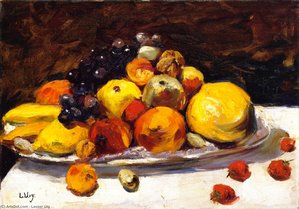
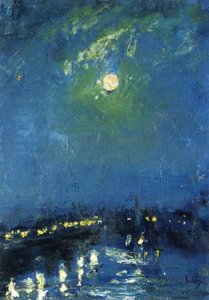
11Street scene at Night, Berlin (1920) autorstwa Lesser UryStreet scene at Night, Berlin1920 12Selfportrait (1921) autorstwa Lesser UrySelfportrait1921 13Café Scene in Paris (1928) autorstwa Lesser UryCafé Scene in Paris1928 14The Red Carpet (1894) autorstwa Lesser UryThe Red Carpet1894 · Muzeum Izraela 15On Lake Garda (1897) autorstwa Lesser UryOn Lake Garda1897 16The Pont Royal in Paris (1928) autorstwa Lesser UryThe Pont Royal in Paris1928 · Hamburger Kunsthalle 17Parisian Interior (1881) autorstwa Lesser UryParisian Interior1881 18Woman at the Kitchen Stove (1882) autorstwa Lesser UryWoman at the Kitchen Stove1882 19Flowers on the Mantel (1882) autorstwa Lesser UryFlowers on the Mantel1882 20Estaminet - Flämische Schenke (1884) autorstwa Lesser UryEstaminet - Flämische Schenke1884 · Alte Nationalgalerie 21Gargenlichtung am Zaun (1883) autorstwa Lesser UryGargenlichtung am Zaun1883 22Siblings (1883) autorstwa Lesser UrySiblings1883 23Self-Portrait (1881) autorstwa Lesser UrySelf-Portrait1881 24Newspaper Reader in a Café (also known as Woman in a Café or Café Interior) (1882) autorstwa Lesser UryNewspaper Reader in a Café (also known as Woman in a Café or Café Interior)1882 25In the Sunshine, near Volluvet (1884) autorstwa Lesser UryIn the Sunshine, near Volluvet1884 26Village Road at the Edge of the Forest (1884) autorstwa Lesser UryVillage Road at the Edge of the Forest1884 27Mountain Lake (1886) autorstwa Lesser UryMountain Lake1886 · Berlinische Galerie 28View into a Valley (1890) autorstwa Lesser UryView into a Valley1890 29The Coast of Rügen (1892) autorstwa Lesser UryThe Coast of Rügen1892 30Woman by the Chimney Fire (also known as Reverie by the Fireplace) (1890) autorstwa Lesser UryWoman by the Chimney Fire (also known as Reverie by the Fireplace)1890 31Rocky Shore at Capri (1890) autorstwa Lesser UryRocky Shore at Capri1890 32Young Lady with a Large Hat (1886) autorstwa Lesser UryYoung Lady with a Large Hat1886 33Leipzig Street (1889) autorstwa Lesser UryLeipzig Street1889 · Berlinische Galerie 34NIght Lights (1889) autorstwa Lesser UryNIght Lights1889 35Unter den Linden after the Rain (1888) autorstwa Lesser UryUnter den Linden after the Rain1888 36Lake Garda and Monte Baldo (1897) autorstwa Lesser UryLake Garda and Monte Baldo1897 37Old Man in a Fur Coat (1895) autorstwa Lesser UryOld Man in a Fur Coat1895 38Moonrise on the Grunewaldsee (1898) autorstwa Lesser UryMoonrise on the Grunewaldsee1898 39Evening at Café Bauer (1898) autorstwa Lesser UryEvening at Café Bauer1898 40Interior (also known as Interior Scene with Woman Reading on a Terrace) (1894) autorstwa Lesser UryInterior (also known as Interior Scene with Woman Reading on a Terrace)1894 41Reader with Magnifying Glass (1895) autorstwa Lesser UryReader with Magnifying Glass1895 42Sunset at Lake Grunewald (1900) autorstwa Lesser UrySunset at Lake Grunewald1900 43Ludwig Geiger (1905) autorstwa Lesser UryLudwig Geiger1905 44Eugen Schiffer (1905) autorstwa Lesser UryEugen Schiffer1905 45Landscape at Sunset (1900) autorstwa Lesser UryLandscape at Sunset1900 46View over Nollendorfplatz (1901) autorstwa Lesser UryView over Nollendorfplatz1901 47Otto Brahm in His Loge at the German Theater (1901) autorstwa Lesser UryOtto Brahm in His Loge at the German Theater1901 48Stroller in Tiergarten (1905) autorstwa Lesser UryStroller in Tiergarten1905 49Rainbow at Beelitzhof (also known as Brandenburg Landscape) (1899) autorstwa Lesser UryRainbow at Beelitzhof (also known as Brandenburg Landscape)1899 50On the Kurfurstendamm (1910) autorstwa Lesser UryOn the Kurfurstendamm1910 51Field workers in Thuringa (1911) autorstwa Lesser UryField workers in Thuringa1911 52Berlin street scene with horse-drawn cabs (1910) autorstwa Lesser UryBerlin street scene with horse-drawn cabs1910 53Berlin, Alexanderplatz (1910) autorstwa Lesser UryBerlin, Alexanderplatz1910 54Lake Garda Motif (1906) autorstwa Lesser UryLake Garda Motif1906 55Self-Portrait with Brush and Palette (1910) autorstwa Lesser UrySelf-Portrait with Brush and Palette1910 56Promontory on Lake Garda (1909) autorstwa Lesser UryPromontory on Lake Garda1909 57Sunset over the Grunewaldsee (1909) autorstwa Lesser UrySunset over the Grunewaldsee1909 58Rebecca at the Fountain (1908) autorstwa Lesser UryRebecca at the Fountain1908 59On a Canal (1912) autorstwa Lesser UryOn a Canal1912 60Lake Garda with Mount Baldo (1914) autorstwa Lesser UryLake Garda with Mount Baldo1914 61Self-Portrait with Dark Hat (1914) autorstwa Lesser UrySelf-Portrait with Dark Hat1914 62In Front of the Cafe (Berlin at Night) (1920) autorstwa Lesser UryIn Front of the Cafe (Berlin at Night)1920 63Lilac Bouquet (1922) autorstwa Lesser UryLilac Bouquet1922 64Street Scene with Woman, Berlin (1918) autorstwa Lesser UryStreet Scene with Woman, Berlin1918 65Newspaper Reader at the Café (also known as Gentleman at a Coffee House) (1920) autorstwa Lesser UryNewspaper Reader at the Café (also known as Gentleman at a Coffee House)1920 66Two Girls walking along the Street (1921) autorstwa Lesser UryTwo Girls walking along the Street1921 67Unter den Linden (1922) autorstwa Lesser UryUnter den Linden1922 68Vase of Flowers (1921) autorstwa Lesser UryVase of Flowers1921 69Champs-Elysees with Arc de Triomphe, Paris (1928) autorstwa Lesser UryChamps-Elysees with Arc de Triomphe, Paris1928 70Paris, Sunrise (1928) autorstwa Lesser UryParis, Sunrise1928 71Waterloo Bridge in the Fog (1926) autorstwa Lesser UryWaterloo Bridge in the Fog1926 72Eiffel Tower (1928) autorstwa Lesser UryEiffel Tower1928 73Nollendorfplazt at Night (1925) autorstwa Lesser UryNollendorfplazt at Night1925 74Lennéstraße (1925) autorstwa Lesser UryLennéstraße1925 75Traffic Jam at Potsdamer Platz (1925) autorstwa Lesser UryTraffic Jam at Potsdamer Platz1925 76Schloß Rheinstein am Rhein (1924) autorstwa Lesser UrySchloß Rheinstein am Rhein1924 77Charing Cross, London (1926) autorstwa Lesser UryCharing Cross, London1926 78Tiergarten Avenue with Siegessäule (1925) autorstwa Lesser UryTiergarten Avenue with Siegessäule1925 79Rainy Day in London, Thames Port (1926) autorstwa Lesser UryRainy Day in London, Thames Port1926 80Waterloo Bridge Emerging in the Sunlight (1926) autorstwa Lesser UryWaterloo Bridge Emerging in the Sunlight1926 81Paris, Rainy Day at the Quai Voltaire (1928) autorstwa Lesser UryParis, Rainy Day at the Quai Voltaire1928 82Untitled (Park Scene or Man in the Gray Suit) (1913) autorstwa Lesser UryUntitled (Park Scene or Man in the Gray Suit)1913 · Muzeum Żydowskie 83Morning Sun (1924) autorstwa Lesser UryMorning Sun1924 84A Jewish Man in His Prayer Shawl (1931) autorstwa Lesser UryA Jewish Man in His Prayer Shawl1931 85Still Life with Fruit on a White Table (1920) autorstwa Lesser UryStill Life with Fruit on a White Table1920 86Thames Bridges in the Twilight (also known as London Bridge) (1926) autorstwa Lesser UryThames Bridges in the Twilight (also known as London Bridge)1926 87Abendlicher Park bei Regenwetter autorstwa Lesser UryAbendlicher Park bei Regenwetter 88Tiergartenstrasse, Berlin autorstwa Lesser UryTiergartenstrasse, Berlin 89Landscape autorstwa Lesser UryLandscape 90Self Portrait with Spread Fingers autorstwa Lesser UrySelf Portrait with Spread Fingers 91The River Thames, London, Moonlight autorstwa Lesser UryThe River Thames, London, Moonlight 92The Fence (also known as Farmyard with Well) (1888) autorstwa Lesser UryThe Fence (also known as Farmyard with Well)1888

Słynne obrazy Lesser Ury epoka po epoce

Tematy, które przyciągnęły wzrok Lesser Ury

Cztery motywy najczęściej powracające w tych oryginałach, z których każdy doczekał się swojego najdoskonalszego przykładu.

Muzea przechowujące oryginały Lesser Ury

7 muzeów, w których znajduje się najwięcej obrazów z tej strony.

Muzea Miasto Dzieła artysty Lesser Ury Obrazy z tej listy
Berlinische Galerie, BerlinBerlinische Galerie Berlin 3 Nude Lying Down, Mountain Lake, Leipzig Street
Alte Nationalgalerie, BerlinAlte Nationalgalerie Berlin 3 Woman at a Desk (also known as At the Desk), In the café - Woman in red, Estaminet - Flämische Schenke
Muzeum Żydowskie, Nowy JorkMuzeum Żydowskie Nowy Jork 2 Praying Jew, Untitled (Park Scene or Man in the Gray Suit)
Bawarskie Państwowe Zbiory Malarstwa, MonachiumBawarskie Państwowe Zbiory Malarstwa Monachium 1 Interior with Children (the Silblings)
Muzeum Żydowskie w Berlinie, BerlinMuzeum Żydowskie w Berlinie Berlin 1 Rebekka at the well
Muzeum Izraela, JerozolimaMuzeum Izraela Jerozolima 1 The Red Carpet
Hamburger Kunsthalle, HamburgHamburger Kunsthalle Hamburg 1 The Pont Royal in Paris

Lesser Ury, jedno kultowe dzieło na dekadę

Dzieła według dekad

Wybierz dekadę, aby zobaczyć dzieło, które ją definiuje.

Obrazy artysty Lesser Ury: odpowiedzi galerii

Który obraz Lesser Ury jest najsłynniejszy ze wszystkich?Odkryj odpowiedź

Nude Lying Down (1889), Berlinische Galerie, Berlin. Następne są Moses on Mount Nebo Looking at the Promised Land (1927) oraz Praying Jew (1931).

Ile lat miał Lesser Ury, gdy ukończył Nude Lying Down?Odkryj odpowiedź

28 lat: Nude Lying Down pochodzi z 1889, a Lesser Ury urodził(a) się w 1861.

Które to 10 najlepszych obrazów Lesser Ury?Odkryj odpowiedź

Nude Lying Down, Moses on Mount Nebo Looking at the Promised Land, Praying Jew, Bülowstraße high station, Strolling in the Forest, Interior with Children (the Silblings), Interior with Woman at the Piano, Woman at a Desk (also known as At the Desk), Rebekka at the well i In the café - Woman in red. Powyższy ranking zawiera rok powstania oraz muzeum dla każdego z nich.

Ile dzieł stworzył/a Lesser Ury?Odkryj odpowiedź

Nasz katalog zawiera 92 dzieł artysty Lesser Ury, datowanych od 1881 do 1931.

Gdzie można znaleźć najsłynniejsze oryginały autorstwa Lesser Ury?Odkryj odpowiedź

W większości znajdują się w Berlinische Galerie (Berlin), Alte Nationalgalerie (Berlin) i Muzeum Żydowskie (Nowy Jork). Powyższa tabela muzeów zawiera ich pełną listę.

Kiedy Lesser Ury stworzył swoje najsłynniejsze obrazy?Odkryj odpowiedź

W 1920s: 29 z 92 dzieł na tej stronie powstało w tym czasie, w tym Moses on Mount Nebo Looking at the Promised Land.

Które z najsłynniejszych dzieł Lesser Ury należą do jego najwcześniejszych i najpóźniejszych prac?Odkryj odpowiedź

Na tej stronie najwcześniejszy to Parisian Interior (1881), a najpóźniejszy Praying Jew (1931).

Do jakich tematów Lesser Ury powracał najczęściej?Odkryj odpowiedź

Woman (8), Interior (7) i Night (6), w ramach 92 dzieł na tej stronie.

W jakiej technice najczęściej tworzył Lesser Ury?Odkryj odpowiedź

Oil On Canvas, dla 8 z 92 dzieł na tej stronie.

Z jakim nurtem związany jest Lesser Ury?Odkryj odpowiedź

Impressionism, sądząc po oryginałach na tej stronie.

Które oryginały artysty Lesser Ury znajdują się w zbiorach Berlinische Galerie?Odkryj odpowiedź

Nude Lying Down, Mountain Lake i Leipzig Street: Berlinische Galerie, Berlin posiada 3 dzieł widocznych na tej stronie.

Lesser Ury: artysta

A Life Painted in Light: The World of Leo Lesser Ury

Leo Lesser Ury, a name perhaps less instantly recognizable than some of his Impressionist contemporaries, nevertheless occupies a vital and evocative space within the narrative of German painting. Born on November 7, 1861, in Birnbaum, Prussia – now Międzychód, Poland – Ury’s journey was one marked by both artistic triumph and personal hardship. His early life was shadowed by loss; the death of his father, a baker, in 1872 forced a relocation to Berlin with his mother. This displacement instilled within him, perhaps, a lifelong sensitivity to urban landscapes and the transient nature of modern existence. Initially apprenticed to a tradesman, Ury’s artistic calling proved too strong to ignore, leading him to the Kunstakademie Düsseldorf in 1879. It was the beginning of an extended period of European exploration – Brussels, Paris, Munich, Stuttgart, Karlsruhe – each city contributing to the evolving palette and perspective that would define his unique style. These travels weren’t merely geographical; they were immersive studies in light, atmosphere, and the burgeoning energy of modern life.

Embracing Impressionism and Capturing a City's Soul

Ury’s artistic development was deeply intertwined with the currents of late 19th-century art. While initially met with resistance – his first exhibition in 1889 eliciting a hostile response – he found a champion in the esteemed Adolph Menzel, whose support opened doors within the Berlin Academy. This recognition proved pivotal, allowing Ury to further refine his technique and vision. His embrace of Impressionism wasn’t merely stylistic; it was a means of capturing the fleeting moments of modern urban life. He joined the Munich Secession in 1893, aligning himself with a group of artists who challenged academic conventions and sought new modes of expression. Ury's canvases began to shimmer with lively brushstrokes, impasto application creating texture and depth, and an acute sensitivity to light’s transformative power. His primary subjects crystallized around this time: landscapes imbued with atmosphere, intimate interior settings, but most notably, the vibrant, often nocturnal scenes of city life. He wasn’t simply *depicting* Berlin; he was capturing its very essence – the glow of gas lamps on rain-slicked streets, the bustling energy of cafes, the quiet solitude of shadowed corners. He meticulously studied postcards and photographs sent to him from Paris, using them as visual aids to capture the subtle details of urban architecture and street life. His work is characterized by a remarkable ability to convey mood and atmosphere, often evoking a sense of melancholy or nostalgia.

A Complex Artistic Career: Recognition and Challenges

Despite his growing reputation, Ury’s career was not without its challenges. The early years of the 20th century saw him navigating the complex social and artistic landscape of Berlin. While he achieved critical acclaim and commercial success, particularly during the 1920s, he also faced periods of obscurity and financial hardship. A significant obstacle to his recognition came from Max Liebermann, a prominent figure in the Berlin art scene, with whom Ury had a strained relationship. Liebermann’s refusal to allow Ury to join the Secession – a key artistic group at the time – significantly hampered his opportunities for exposure and collaboration. Furthermore, Ury developed a reputation as a difficult and sometimes uncompromising artist, which further isolated him from some of his peers. Despite these difficulties, he persevered, continuing to paint prolifically and refining his distinctive style. His work during this period is characterized by a heightened sense of intimacy and emotional depth, reflecting the personal struggles he faced.

Technique and Style: Pastel Master

Ury’s artistic technique was marked by a remarkable sensitivity to light and color. He was particularly adept at working with pastel, utilizing its delicate texture and luminous qualities to create works of exceptional beauty and atmospheric depth. His use of pastels allowed him to capture the subtle nuances of light and shadow, creating a sense of immediacy and realism that was rare for his time. He employed loose, expressive brushstrokes, often layering colors to build up rich textures and vibrant hues. While he drew inspiration from Impressionism, Ury developed a unique style characterized by a melancholic sensibility and a deep appreciation for the beauty of everyday life. His compositions are typically framed with a sense of intimacy, drawing the viewer into the scene and inviting them to share in his observations. His subjects often include urban landscapes, interiors, portraits, and still lifes – all rendered with a remarkable attention to detail and a profound understanding of color theory.

Historical Significance and Legacy

Leo Lesser Ury’s historical significance extends beyond his technical skill and aesthetic sensibilities. He is remembered as a keen observer and evocative portrayer of modern urban life, particularly the nocturnal landscapes of Berlin that resonated with audiences seeking to understand their rapidly changing world. His work offers a unique glimpse into a specific time and place – a city on the cusp of modernity, grappling with industrialization, social change, and the anxieties of a new era. Furthermore, as a Jewish artist navigating German society, Ury’s life and work reflect aspects of Jewish cultural identity and experience within a complex socio-political landscape. His paintings, while not overtly political, subtly convey a sense of belonging and alienation, offering a poignant perspective on the challenges faced by Jewish communities in Germany during this period. Despite facing hardship and obscurity throughout his career, Ury’s legacy endures as one of the most evocative and distinctive artists of early 20th-century Berlin. His paintings continue to be exhibited and admired for their beauty, atmosphere, and profound sense of time and place.