Portret Jan Provoost

55 najsłynniejszych obrazów artysty Jan Provoost – wybór z galerii

Aktualizacja: Listopad 2026 · ranking według naszego wskaźnika popularności (liczba wyszukiwań, wizyt i zamówień dla każdego dzieła) · 56 dzieł Jan Provoost w naszym katalogu

W skrócie

Spośród wszystkich dzieł oryginalnych, które pozostawił Jan Provoost, najsłynniejszym jest The Virgin and Child (1505), znajdujący się w kolekcji Scottish National Gallery w Edynburg. Tuż za nimi znajdują się The Dispute of Saint Catherine of Alexandria (1505) oraz Zechariah (1510). Nasz katalog zawiera 56 dzieł autorstwa Jan Provoost; galeria zachowała 55 najbardziej podziwianych na świecie prac, z których każda została przedstawiona wraz z datą powstania, informacją o muzeum oraz jej historią.

1465 – 1529, Mons Northern renaissance Najwięcej dzieł: Groeningemuseum

10 najlepszych obrazów artysty Jan Provoost: wybór galerii

1
The Virgin and Child (1505) autorstwa Jan Provoost

The Virgin and Child

1505 · Oil On Panel · Scottish National Gallery, Edynburg

The composition centers on the Virgin Mary, her form framed by a structured arch that defines a sacred, enclosed space. She holds the Christ Child against a backdrop of rolling hills and dark foliage under a pale sky. A deep red mantle covers her shoulders, contrasting with the dark blue of her inner garment and the white of her veil. The figures occupy the immediate foreground, their porcelain-like skin rendered…

3
Zechariah (1510) autorstwa Jan Provoost

Zechariah

1510 · Oil On Panel · Museo del Prado, Madryt

A single man occupies the center of the frame, his body carved from light and shadow. He is an elderly figure, leaning slightly forward as if caught in a moment of quiet reception. His hands are extended, palms open, reaching into the space between himself and the viewer. There is a stillness in his gaze, a directness that meets the eye with a sense of serene expectation. He is framed…

4
The Last Judgment (1525) autorstwa Jan Provoost

The Last Judgment

1525 · Oil On Panel · Detroit Institute of Arts, Detroit

The Last Judgment by Jan Provoost unfolds as a dramatic vision of the final reckoning. Created around 1525, this oil painting captures the moment of divine judgment as Jesus Christ reigns in glory. The scene presents a celestial hierarchy where the heavens meet the earthly realm, presenting a vision of the end of all mankind. It remains a prime example of the Northern Renaissance style, where every corner of the…

5
Mourning of Christ (1490) autorstwa Jan Provoost

Mourning of Christ

1490 · Tempera On Panel · Kunsthaus Zürich, Zurych

The composition centers on the body of Christ, which is being lowered from the cross by Nicodemus and John. The pale skin of the deceased figure contrasts with the deep reds and blues of the surrounding garments. Mary Magdalene, Mary the mother of Jesus, and Joseph of Arimathea are positioned closely around the central event, their forms creating a tight, organized arrangement within a shallow landscape. In the background, a…

6
The Annunciate Virgin, Saint Andrew with a Donor and His Sons, Saint Catherine of Alexandria with a Donor and Her Daughters, and the Annunciate Angel (1514) autorstwa Jan Provoost

The Annunciate Virgin, Saint Andrew with a Donor and His Sons, Saint Catherine of Alexandria with a Donor and Her Daughters, and the Annunciate Angel

1514 · Oil On Panel · Philadelphia Museum of Art, Filadelfia

The Annunciate Virgin, Saint Andrew with a Donor and His Sons, Saint Catherine of Alexandria with a Donor and Her Daughters, and the Annunciate Angel emerges from the early 16th century as a complex devotional structure. This work by Jan Provoost presents a multi-layered vision of faith, where the sacred and the earthly meet within a single wooden frame. The piece currently resides within the Philadelphia Museum of Art, where…

7
The Virgin and Child (1500) autorstwa Jan Provoost

The Virgin and Child

1500 · Oil On Panel · Museo del Prado, Madryt

In this intimate oil on panel, we find ourselves in the presence of a tender, maternal encounter. The Virgin Mary is depicted in a moment of nursing, her form draped in a mantle of deep teal and blue that holds a sculptural weight. She stands against a patterned backdrop, perhaps a carved screen or a heavy textile, which provides a structured, formal setting for this private act. The composition is…

8
Madonna and Child with angels (1480) autorstwa Jan Provoost

Madonna and Child with angels

1480 · Oil On Panel

The painting presents a seated Virgin Mary positioned centrally within a lush, enclosed garden. She wears a heavy, dark gown that contrasts with the lighter tones of the surrounding environment. In her right hand, she holds a small bouquet consisting of a red poppy and a white carnation. Above her head, two angelic figures hold a golden crown. To her left, the infant Christ reaches toward his mother's chest with…

9
Entombment of Christ (1490) autorstwa Jan Provoost

Entombment of Christ

1490 · Oil On Panel

The heavy silence of the tomb hangs over the Entombment of Christ, a work painted by Jan Provoost around 1490. In this somber scene, the weight of Christian sorrow settles deeply upon the figures gathered in the shadows. The air feels thick with the grief of the Deposition of Christ, capturing a moment where the physical reality of death meets the spiritual ache of those left behind. Every line and…

10
Annunciation (1500) autorstwa Jan Provoost

Annunciation

1500 · Oil · Musei di Strada Nuova, Genova

The Annunciation is an oil painting by Jan Provoost, created about 1500. The work depicts a religious scene within a domestic interior, featuring the Virgin Mary and the Archangel Gabriel. Mary is positioned on the left side of the composition in a seated, prayerful posture, wearing a deep red gown. To the right, the Archangel Gabriel appears with large wings and a light blue robe. A white dove, representing the…

Kontynuacja zestawienia Jan Provoost, od 11 do 55

11The Last Judgement (1500) autorstwa Jan ProvoostThe Last Judgement1500 · Fogg Museum 12The Lamentation (1490) autorstwa Jan ProvoostThe Lamentation1490 13Crucifixion (1500) autorstwa Jan ProvoostCrucifixion1500 · Groeningemuseum 14Saint Jerome in the Wilderness (1512) autorstwa Jan ProvoostSaint Jerome in the Wilderness1512 · Królewskie Muzea Sztuk Pięknych w Belgii 15Flagellation (1512) autorstwa Jan ProvoostFlagellation1512 · Saint Louis Art Museum 16The Nativity at Night (1507) autorstwa Jan ProvoostThe Nativity at Night1507 · Upton House 17Saint Clare (1510) autorstwa Jan ProvoostSaint Clare1510 18John the Baptist (1503) autorstwa Jan ProvoostJohn the Baptist1503 · Rijksmuseum Twenthe 19Saint Dominicus (1503) autorstwa Jan ProvoostSaint Dominicus1503 · Rijksmuseum Twenthe 20The Angel of the Annunciation in a stone niche (1503) autorstwa Jan ProvoostThe Angel of the Annunciation in a stone niche1503 21Crucifixion (1503) autorstwa Jan ProvoostCrucifixion1503 · Groeningemuseum 22Calvary (1517) autorstwa Jan ProvoostCalvary1517 · Museum of Fine Arts Ghent (MSK) 23Saint Barbara from Nicodemia (1505) autorstwa Jan ProvoostSaint Barbara from Nicodemia1505 · Królewskie Muzeum Sztuk Pięknych Antwerpia 24Adoration of the Magi (1505) autorstwa Jan ProvoostAdoration of the Magi1505 · Gemäldegalerie 25Virgin Mary and sleeping child enthroned by angels (1503) autorstwa Jan ProvoostVirgin Mary and sleeping child enthroned by angels1503 · Staatliche Kunsthalle Karlsruhe 26Diptych with Christ carrying the Cross and Portrait of a Friar Minor, memento mori (reverse) (1522) autorstwa Jan ProvoostDiptych with Christ carrying the Cross and Portrait of a Friar Minor, memento mori (reverse)1522 · Sint-Janshospitaal 27Last Judgement (1525) autorstwa Jan ProvoostLast Judgement1525 · Groeningemuseum 28The Virgin and Child in a Landscape (1512) autorstwa Jan ProvoostThe Virgin and Child in a Landscape1512 · National Gallery 29Allegory of Christianity (1515) autorstwa Jan ProvoostAllegory of Christianity1515 30Flowers in a vase in a niche (1480) autorstwa Jan ProvoostFlowers in a vase in a niche1480 31Crucifixion (1500) autorstwa Jan ProvoostCrucifixion1500 32Crucifixion (1500) autorstwa Jan ProvoostCrucifixion1500 33Saint Catherine of Alexandria (1505) autorstwa Jan ProvoostSaint Catherine of Alexandria1505 · Museum Boijmans Van Beuningen 34The Virgin and Saint Joseph at Bethlehem (recto) and Virgin Annunciate (verso) (1507) autorstwa Jan ProvoostThe Virgin and Saint Joseph at Bethlehem (recto) and Virgin Annunciate (verso)1507 · Upton House 35Triptych of The Adoration of the Magi and Shepherds (centre) with The Annunciation (left wing) and The Madonna adoring the Christ Child (right wing) and Saint John the Baptist and Saint Margaret (closed) (1507) autorstwa Jan ProvoostTriptych of The Adoration of the Magi and Shepherds (centre) with The Annunciation (left wing) and The Madonna adoring the Christ Child (right wing) and Saint John the Baptist and Saint Margaret (closed)1507 36Portrait of a Female Donor (1505) autorstwa Jan ProvoostPortrait of a Female Donor1505 · Thyssen-Bornemisza Museum 37The Last Judgment (1525) autorstwa Jan ProvoostThe Last Judgment1525 · Hamburger Kunsthalle 38Abraham, Sarah, and the Angel autorstwa Jan ProvoostAbraham, Sarah, and the Angel 39Last Judgement (1525) autorstwa Jan ProvoostLast Judgement1525 40The Martyrdom of St Catherine autorstwa Jan ProvoostThe Martyrdom of St CatherineKrólewskie Muzeum Sztuk Pięknych Antwerpia 41St. Andrew in landscape autorstwa Jan ProvoostSt. Andrew in landscape 42Donor with St. Nicholas and his Wife with St. Godelina autorstwa Jan ProvoostDonor with St. Nicholas and his Wife with St. Godelina 43Triptych with Virgin and Child, Saint John the Evangelist (left wing) and Mary Magdalene (right wing), Jan Provoost, c. 1505 - c. 1525 (1525) autorstwa Jan ProvoostTriptych with Virgin and Child, Saint John the Evangelist (left wing) and Mary Magdalene (right wing), Jan Provoost, c. 1505 - c. 15251525 · Mauritshuis 44St. Catherine autorstwa Jan ProvoostSt. Catherine 45The Coronation of the Virgin autorstwa Jan ProvoostThe Coronation of the Virgin 46The Coronation of the Virgin (detail) autorstwa Jan ProvoostThe Coronation of the Virgin (detail) 47The Martyrdom of St. Catherine autorstwa Jan ProvoostThe Martyrdom of St. Catherine 48Death and the Miser autorstwa Jan ProvoostDeath and the MiserGroeningemuseum 49Virgin and Child autorstwa Jan ProvoostVirgin and Child 50Virgin and Child Enthroned, with Saints Jerome and John the Baptist and a Carthusian Monk, Jan Provoost (attributed to), c. 1510 (1510) autorstwa Jan ProvoostVirgin and Child Enthroned, with Saints Jerome and John the Baptist and a Carthusian Monk, Jan Provoost (attributed to), c. 15101510 · Rijksmuseum 51Triptych of Our Lady of Mercy (1515) autorstwa Jan ProvoostTriptych of Our Lady of Mercy1515 · Narodowe Muzeum Sztuki Dawnej 52Triptych of the Calheta Matrix Church (1520) autorstwa Jan ProvoostTriptych of the Calheta Matrix Church1520 · Sacred Art Museum of Funchal 53The Virgin Mary in Glory (1524) autorstwa Jan ProvoostThe Virgin Mary in Glory1524 · Ermitaż 54Virgin and Child autorstwa Jan ProvoostVirgin and ChildErmitaż 55Virgin Giving Breast autorstwa Jan ProvoostVirgin Giving BreastMusée Des Beaux

Słynne obrazy Jan Provoost epoka po epoce

Tematy, które przyciągnęły wzrok Jan Provoost

Cztery motywy najczęściej powracające w tych oryginałach, z których każdy doczekał się swojego najdoskonalszego przykładu.

Muzea przechowujące oryginały Jan Provoost

8 muzeów, w których znajduje się najwięcej obrazów z tej strony.

Muzea Miasto Dzieła artysty Jan Provoost Obrazy z tej listy
Groeningemuseum, BrugiaGroeningemuseum Brugia 4 Crucifixion, Crucifixion, Last Judgement
Museum Boijmans Van Beuningen, RotterdamMuseum Boijmans Van Beuningen Rotterdam 2 The Dispute of Saint Catherine of Alexandria, Saint Catherine of Alexandria
Museo del Prado, MadrytMuseo del Prado Madryt 2 Zechariah, The Virgin and Child
Upton House, BanburyUpton House Banbury 2 The Nativity at Night, The Virgin and Saint Joseph at Bethlehem (recto) and Virgin Annunciate (verso)
Rijksmuseum Twenthe, EnschedeRijksmuseum Twenthe Enschede 2 John the Baptist, Saint Dominicus
Królewskie Muzeum Sztuk Pięknych Antwerpia, AntwerpiaKrólewskie Muzeum Sztuk Pięknych Antwerpia Antwerpia 2 Saint Barbara from Nicodemia, The Martyrdom of St Catherine
Ermitaż, Sankt PetersburgErmitaż Sankt Petersburg 2 The Virgin Mary in Glory, Virgin and Child
Scottish National Gallery, EdynburgScottish National Gallery Edynburg 1 The Virgin and Child

Jan Provoost dekada po dekadzie: oryginały definiujące każdy okres

Dzieła według dekad

Wybierz dekadę, aby zobaczyć dzieło, które ją definiuje.

Pytania kolekcjonerów o obrazy Jan Provoost

Z jakiego dzieła najbardziej znany jest Jan Provoost?Odkryj odpowiedź

The Virgin and Child (1505), Scottish National Gallery, Edynburg. Następne są The Dispute of Saint Catherine of Alexandria (1505) oraz Zechariah (1510).

W jakim wieku był Jan Provoost, gdy powstało The Virgin and Child?Odkryj odpowiedź

40 lat: The Virgin and Child pochodzi z 1505, a Jan Provoost urodził(a) się w 1465.

Jakie są dziesięć najsłynniejszych obrazów, których autorem jest Jan Provoost?Odkryj odpowiedź

The Virgin and Child, The Dispute of Saint Catherine of Alexandria, Zechariah, The Last Judgment, Mourning of Christ, The Annunciate Virgin, Saint Andrew with a Donor and His Sons, Saint Catherine of Alexandria with a Donor and Her Daughters, and the Annunciate Angel, The Virgin and Child, Madonna and Child with angels, Entombment of Christ i Annunciation. Powyższy ranking zawiera rok powstania oraz muzeum dla każdego z nich.

Ile obrazów pozostawił po sobie Jan Provoost?Odkryj odpowiedź

Nasz katalog zawiera 56 dzieł artysty Jan Provoost, datowanych od 1480 do 1525.

W których muzeach znajdują się arcydzieła Jan Provoost?Odkryj odpowiedź

W większości znajdują się w Groeningemuseum (Brugia), Museum Boijmans Van Beuningen (Rotterdam) i Museo del Prado (Madryt). Powyższa tabela muzeów zawiera ich pełną listę.

W których latach Jan Provoost namalował swoje najsłynniejsze dzieła?Odkryj odpowiedź

W 1500s: 20 z 55 dzieł na tej stronie powstało w tym czasie, w tym The Virgin and Child.

Jakie są pierwsze i ostatnie słynne oryginały Jan Provoost?Odkryj odpowiedź

Na tej stronie najwcześniejszy to Madonna and Child with angels (1480), a najpóźniejszy The Last Judgment (1525).

Jakie tematy Jan Provoost wybierał najczęściej?Odkryj odpowiedź

Woman (13), Child (9) i Landscape (9), w ramach 55 dzieł na tej stronie.

Której techniki Jan Provoost używał najczęściej?Odkryj odpowiedź

Oil On Panel, dla 25 z 55 dzieł na tej stronie.

Do jakiego nurtu artystycznego należy Jan Provoost?Odkryj odpowiedź

Northern renaissance i Early netherlandish, sądząc po oryginałach na tej stronie.

Które dzieła Jan Provoost znajdują się w Groeningemuseum?Odkryj odpowiedź

Crucifixion, Crucifixion i Last Judgement: Groeningemuseum, Brugia posiada 4 dzieł widocznych na tej stronie.

Jan Provoost: życie i twórczość

Renesansowy polihistor: Życie i dziedzictwo Jana Provoosta

W barwnym gobelinie północnego renesansu niewiele postaci potrafiło tak mistrzowsko splatać ze sobą nici sztuki, nauki i intelektu jak Jan Provoost. Urodzony około 1462 roku w Mons, a być może w Mouscron, Provoost wyłonił się nie tylko jako malarz, ale jako prawdziwy człowiek renesansu, którego horyzonty sięgały daleko poza sztalugę. Choć jego nazwisko zapisało się w historii dzięki subtelnym pociągnięciom pędzla niderlandzkich mistrzów, jego umysł nieustannie wędrował przez światy kartografii, inżynierii i architektury. To rzadkie połączenie technicznej precyzji z duchową głębią pozwoliło mu zbudować most między pobożnymi tradycjami średniowiecza a rodzącym się humanizmem nowej ery.

Wczesne lata życia Provoosta upłynęły pod znakiem głębokiego zanurzenia w nurtach artystycznych Niderlandów. Choć wiele z jego formacyjnego wykształcenia pozostaje spowitych mgłą czasu, badacze często wywodzą jego stylistyczną linię od legendarnego Hansa Memlinga. Chłonąc skrupulatną dbałość o detal oraz świetlistą, atmosferyczną jakość charakterystyczną dla szkoły brugeskiej, Provoost wypracował język wizualny, który był zarazem pełen spokoju, jak i głęboko symboliczny. Jego kariera obejmowała prowadzenie wpływowych warsztatów zarówno w Bruges—gdzie w 1494 roku uzyskał prestiżowy status obywatela—jak i w Antwerpii, tętniącym życiem ekonomicznym sercu regionu. Ta podwójna obecność sprawiła, że jego wpływ przeniknął do najważniejszych ośrodków artystycznych Europy.

Symfonia symbolizmu i techniki

Spojrzenie na dzieło Jana Provoosta to wejście do świata, w którym każdy cień skrywa tajemnicę, a każdy kolor opowiada historię. Jego technika definiowana była przez mistrzowskie wykorzystanie laserunku, polegające na nakładaniu cienkich, półprzezroczystych warstw farb olejnych, co tworzyło wrażenie wewnętrznego światła, zdającego się promieniować prosto z drewnianych paneli. Metoda ta pozwalała mu oddać ciężkie, rzeźbiarskie fałdy draperii oraz miękkie, wilgotne tekstury skóry z niemal namacalnym realizmem. Jego kompozycje często koncentrowały się wokół tematu Matki Boskiej z Dzieciątkiem, tematu, który podchodził z powściągliwą elegancją, unikającą dramatycznego teatralizmu na rzecz głębokiej, cichej świętości.

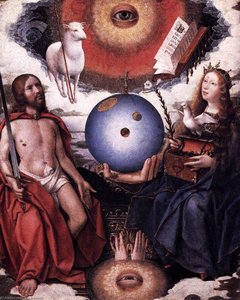
Poza dziełami dewocyjnymi, zdolność Provoosta do poruszania złożonych tematów alegorycznych jest widoczna w arcydziełach takich jak Alegoria chrześcijaństwa. W tym dziele artysta wykorzystuje wyrafinowany język symboli—księgi, szkatułki i sfery niebieskie—aby przekazać misterne doktryny wiary. Jego kunszt polegał na umiejętności zrównoważenia tych gęstych intelektualnych warstw z harmonijną paletą barw oraz klarownością formy, która pozostawała przystępna dla widza. Bez względu na to, czy przedstawiał powagę Sądu Ostatecznego, czy intymną czułość Madonny karmiącej, Provoost posiadał unikalną zdolność chwytania boskości w ludzkim doświadczeniu.

Trwały wpływ warsztatu Provoosta

Prawdziwa wielkość wkładu Jana Provoosta tkwi nie tylko w jego indywidualnym talencie, ale w nieprzemijającej żywotności jego warsztatu. Jego studio funkcjonowało jako kluczowy inkubator talentów, kształtując styl, który wpłynął na pokolenia niderlandzkich malarzy. Twórczość Warsztatu Jana Provoosta charakteryzowała się płynnym połączeniem gotyckiej pobożności z rodzącą się estetyką renesansu, co sprawiło, że tradycje niderlandzkich mistrzów ewoluowały, zamiast zanikać. Dzięki swojemu duchowi współpracy oraz zdolności przyciągania zarówno uczniów, jak i mistrzów, pomógł on podtrzymać artystyczny prestiż Brugii i Antwerpii w okresie ogromnych przemian kulturowych.

Reflektując nad jego życiem, dostrzegamy artystę, który był w równym stopniu naukowcem, co twórcą. Jego spotkania z takimi luminarzami jak Albrecht Dürer w Antwerpii sugerują człowieka głęboko zaangażowanego w zmieniające się prądy intelektualne Europy. Dziedzictwo Jana Provoosta odnajdujemy w cichej sile jego portretów, architektonicznej precyzji jego projektów oraz świetlistej głębi jego religijnych ikon. Pozostaje on kluczową postacią, której dzieła służą jako okno na transformacyjny moment w historii ludzkości, w którym oddanie starego świata spotkało się z dociekliwym duchem nowego.