Portret Jan Mankes

66 najsłynniejszych obrazów artysty Jan Mankes – wybór z galerii

Aktualizacja: Listopad 2026 · ranking według naszego wskaźnika popularności (liczba wyszukiwań, wizyt i zamówień dla każdego dzieła) · 66 dzieł Jan Mankes w naszym katalogu

W skrócie

Z wszystkich oryginałów pozostawionych przez Jan Mankes, najsłynniejszym jest The Hedgehog (1916). Tuż za nimi znajdują się Little Owl on a Mug (1909) oraz Evening Landscape (1912). Nasz katalog zawiera 66 dzieł autorstwa Jan Mankes; galeria zachowała 66 najbardziej podziwianych na świecie prac, z których każda została przedstawiona wraz z datą powstania, informacją o muzeum oraz jej historią.

1889 – 1920, Meppel Najwięcej dzieł: Museum Voor Moderne Kunst

10 najlepszych obrazów artysty Jan Mankes: wybór galerii

1
The Hedgehog (1916) autorstwa Jan Mankes

The Hedgehog

1916 · Woodblock Print

In this intimate wood block print, we find a singular moment of stillness. The subject, a hedgehog, is rendered in profile, moving softly from left to right across a void of solid black. There is no landscape to distract the eye, no horizon to ground the creature in a specific field or forest. Instead, the animal exists in a space defined entirely by its own texture. It is a study…

2
Little Owl on a Mug (1909) autorstwa Jan Mankes

Little Owl on a Mug

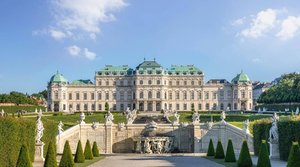
1909 · Oil · Austrian Gallery Belvedere, Wiedeń

A small owl perches atop a white mug, its presence commanding the quiet space of the composition. The bird looks directly at the viewer, its piercing eyes meeting our gaze with an intensity that feels immediate and alive. There is a profound stillness in this moment, as if the creature has paused mid-breath to observe the world alongside us. The mug, simple and functional with its distinct handle, provides a…

3
Evening Landscape (1912) autorstwa Jan Mankes

Evening Landscape

1912 · Oil On Canvas

The landscape unfolds in a quiet, nocturnal stillness. A row of slender, silhouetted trees cuts vertically through the composition, their forms softened by an atmospheric haze. Above, a luminous moon hangs in a dusky sky, casting a diffused, indirect light that settles over the terrain. A small figure moves along a suggested path, a solitary presence within the deepening shadows of the evening. The scene is defined by a muted…

4
Little Child's Head (1911) autorstwa Jan Mankes

Little Child's Head

1911 · Oil · Museum Voor Moderne Kunst, Arnhem

The painting presents a close-up profile view of a young child's head, oriented toward the right side of the frame. The subject occupies the majority of the composition, with the head and shoulders positioned against a dark, desaturated teal and greenish-grey background. The lighting originates from the front-left, casting soft shadows that define the contours of the nose, chin, and eye socket. This light creates a subtle gradient across the…

5
Father (1911) autorstwa Jan Mankes

Father

1911 · Oil On Canvas · Museum Voor Moderne Kunst, Arnhem

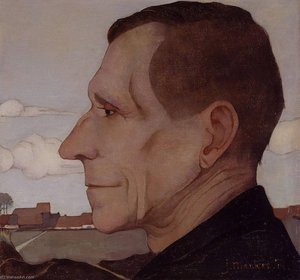
A profile view of a man dominates this intimate portrait, his head and neck occupying the majority of the frame. Facing toward the left, the subject is rendered in a muted palette of ochre, cream, tan, and dark brown. A dark garment absorbs the light, pushing the facial features into a soft, three-dimensional relief. The composition relies on organic, rounded shapes to define the forehead, nose, and jawline, avoiding harsh…

6
Self-portrait with owl (1911) autorstwa Jan Mankes

Self-portrait with owl

1911 · Oil · Museum Voor Moderne Kunst, Arnhem

Self-portrait with owl is an oil painting by the Dutch artist Jan Mankes. The work is dated 1911. This portrait depicts the artist himself alongside a barn owl. The subject is positioned in a close-up view, looking directly toward the viewer. The composition places the figure slightly off-center to the right.

7
Self-portrait (1909) autorstwa Jan Mankes

Self-portrait

1909 · Oil On Board · Centraal Museum, Utrecht

A young man stares through the veil of time, his gaze steady and heavy with a quiet melancholy. The face is a study in soft, desaturated tones, where pale flesh meets the dark shadow of hair. He is positioned slightly off-center, a solitary figure emerging from a neutral, greyish-blue void. The light falls from the front-left, tracing the structure of his neck and the stark white of a collar, leaving…

8
Self-Portrait (1909) autorstwa Jan Mankes

Self-Portrait

1909 · Oil On Canvas

The oil on canvas titled Self-Portrait was painted by Jan Mankes in 1909. This work captures the artist during a period of quiet observation, long before his life was cut short. He was born in Meppel, Netherlands, and his gaze remains fixed upon the viewer from this intimate frame. The image holds the weight of a man who sought the essence of his surroundings through a steady, searching eye.

9
Japanese Vases (1911) autorstwa Jan Mankes

Japanese Vases

1911 · Oil On Canvas

In "Japanese Vases" by Jan Mankes, a quiet stillness settles over the scene, as if time has paused mid-breath. The composition centers on a collection of objects resting upon a textured surface, arranged with a certain haphazard grace that lends the arrangement an informal, lived-in feel. A ceramic teapot and a cylindrical bottle anchor the grouping with their soft, organic curves, while a small figurine introduces a sharper, more angular…

10
Self-Portrait (1913) autorstwa Jan Mankes

Self-Portrait

1913 · Oil On Canvas · Museum Voor Moderne Kunst, Arnhem

Jan Mankes produced this Self-Portrait about 1913. The work belongs to a period of intense creative output for the Dutch painter, who was born in 1889. This specific piece captures the artist during his early twenties, a time preceding his death in 1920.

Kontynuacja zestawienia Jan Mankes, od 11 do 66

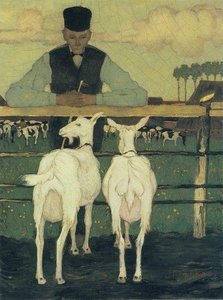
11Mother in Interior (1912) autorstwa Jan MankesMother in Interior1912 · Museum Belvédère 12Portrait of Anne Zernike (1887-1972) (1915) autorstwa Jan MankesPortrait of Anne Zernike (1887-1972)1915 · Museum Belvédère 13Self-portrait 1912 (1912) autorstwa Jan MankesSelf-portrait 19121912 · Museum Voor Moderne Kunst 14The old goat (1912) autorstwa Jan MankesThe old goat1912 · Fries Museum 15Portrait of Annie Mankes-Zernike (1916) autorstwa Jan MankesPortrait of Annie Mankes-Zernike1916 · Fries Museum 16Jongensportret (1915) autorstwa Jan MankesJongensportret1915 17Annie Mankes-Zernike (1915) autorstwa Jan MankesAnnie Mankes-Zernike1915 18Self-portrait 1918 (1918) autorstwa Jan MankesSelf-portrait 19181918 · Museum Belvédère 19Portrait of Anne Zernike (1918) autorstwa Jan MankesPortrait of Anne Zernike1918 20Camellias in glass (1913) autorstwa Jan MankesCamellias in glass1913 · Groninger Museum 21Selfportrait of Jan Mankes (1912) autorstwa Jan MankesSelfportrait of Jan Mankes1912 · Fries Museum 22Parelhoen (1910) autorstwa Jan MankesParelhoen1910 · Museum Belvédère 23Dead Little Bird (1908) autorstwa Jan MankesDead Little Bird1908 · Museum Voor Moderne Kunst 24Dead Snipe (1910) autorstwa Jan MankesDead Snipe1910 · Museum Voor Moderne Kunst 25Two Dead Kestrels (1909) autorstwa Jan MankesTwo Dead Kestrels1909 · Museum Voor Moderne Kunst 26Parchment booklets (1909) autorstwa Jan MankesParchment booklets1909 · Museum Voor Moderne Kunst 27Little Roof Bird on Branch (1911) autorstwa Jan MankesLittle Roof Bird on Branch1911 · Museum Voor Moderne Kunst 28White rabbits in autumn forest (1911) autorstwa Jan MankesWhite rabbits in autumn forest1911 29Liesje with geese (1911) autorstwa Jan MankesLiesje with geese1911 30Glass with lily (1910) autorstwa Jan MankesGlass with lily1910 31White rabbit, standing (1910) autorstwa Jan MankesWhite rabbit, standing1910 32White rabbit (1909) autorstwa Jan MankesWhite rabbit1909 · Centraal Museum 33Goldfinch on a Branch (1910) autorstwa Jan MankesGoldfinch on a Branch1910 34Hen with pewter dish (1913) autorstwa Jan MankesHen with pewter dish1913 · Museum Belvédère 35Crow on Screen (1913) autorstwa Jan MankesCrow on Screen1913 · Museum Voor Moderne Kunst 36Nightingales in Evening Mood (1912) autorstwa Jan MankesNightingales in Evening Mood1912 · Museum Voor Moderne Kunst 37Cologne pot with heron neck (1915) autorstwa Jan MankesCologne pot with heron neck1915 · Museum Voor Moderne Kunst 38View of Studio in Eerbeek (1917) autorstwa Jan MankesView of Studio in Eerbeek1917 · Museum Voor Moderne Kunst 39Still Life with Apple Blossom (1913) autorstwa Jan MankesStill Life with Apple Blossom1913 · Museum Voor Moderne Kunst 40Woudsterweg near Oranjewoud (1912) autorstwa Jan MankesWoudsterweg near Oranjewoud1912 · Museum Voor Moderne Kunst 41Vase with Jasmine (1913) autorstwa Jan MankesVase with Jasmine1913 · Museum Voor Moderne Kunst 42Still Life with Vase (1914) autorstwa Jan MankesStill Life with Vase1914 · Fries Museum 43Snow landscape with trench (1913) autorstwa Jan MankesSnow landscape with trench1913 · Museum Belvédère 44Guineafowl (1917) autorstwa Jan MankesGuineafowl1917 · Museum Belvédère 45White Orchid (1916) autorstwa Jan MankesWhite Orchid1916 · The New Art Gallery Walsall 46Young white goat (1914) autorstwa Jan MankesYoung white goat1914 · Museum Voor Moderne Kunst 47Row of trees (1915) autorstwa Jan MankesRow of trees1915 · Rijksmuseum 48Vrouw voor haar huis, Jan Mankes, 1914 (1914) autorstwa Jan MankesVrouw voor haar huis, Jan Mankes, 19141914 · Rijksmuseum 49Dusk (1914) autorstwa Jan MankesDusk1914 50Evening Landscape in Eerbeek (1917) autorstwa Jan MankesEvening Landscape in Eerbeek1917 51Landscape with Train (1915) autorstwa Jan MankesLandscape with Train1915 52Girl with Bird (1912) autorstwa Jan MankesGirl with Bird1912 53Milking the Cow (1914) autorstwa Jan MankesMilking the Cow1914 54Farmer with Goats (1914) autorstwa Jan MankesFarmer with Goats1914 55House in De Knipe (1914) autorstwa Jan MankesHouse in De Knipe1914 56Landscape (1912) autorstwa Jan MankesLandscape1912 57Goat in the Ditch (1913) autorstwa Jan MankesGoat in the Ditch1913 58Annie Mankes Zernike (1916) autorstwa Jan MankesAnnie Mankes Zernike1916 59Douwe with Spade (1915) autorstwa Jan MankesDouwe with Spade1915 60Father (1914) autorstwa Jan MankesFather1914 · Museum Voor Moderne Kunst 61Marmot in Autumn (1918) autorstwa Jan MankesMarmot in Autumn1918 62Eggs autorstwa Jan MankesEggs 63Moonlit Night autorstwa Jan MankesMoonlit Night 64Girl with white flower autorstwa Jan MankesGirl with white flowerMuseum Voor Moderne Kunst 65Gingerjar with Heath autorstwa Jan MankesGingerjar with Heath 66Etend jongetje autorstwa Jan MankesEtend jongetje

Słynne obrazy Jan Mankes epoka po epoce

Tematy, które przyciągnęły wzrok Jan Mankes

Cztery motywy najczęściej powracające w tych oryginałach, z których każdy doczekał się swojego najdoskonalszego przykładu.

Muzea przechowujące oryginały Jan Mankes

8 muzeów, w których znajduje się najwięcej obrazów z tej strony.

Muzea Miasto Dzieła artysty Jan Mankes Obrazy z tej listy
Museum Voor Moderne Kunst, ArnhemMuseum Voor Moderne Kunst Arnhem 20 Little Child's Head, Father, Self-portrait with owl
Museum Belvédère, HeerenveenMuseum Belvédère Heerenveen 7 Mother in Interior, Portrait of Anne Zernike (1887-1972), Self-portrait 1918
Fries Museum, LeeuwardenFries Museum Leeuwarden 4 The old goat, Portrait of Annie Mankes-Zernike, Selfportrait of Jan Mankes
Centraal Museum, UtrechtCentraal Museum Utrecht 2 Self-portrait, White rabbit
Rijksmuseum, AmsterdamRijksmuseum Amsterdam 2 Row of trees, Vrouw voor haar huis, Jan Mankes, 1914
Austrian Gallery Belvedere, WiedeńAustrian Gallery Belvedere Wiedeń 1 Little Owl on a Mug
Groninger Museum, GroningenGroninger Museum Groningen 1 Camellias in glass
The New Art Gallery Walsall, WalsallThe New Art Gallery Walsall Walsall 1 White Orchid

Jan Mankes rok po roku: oryginały, które definiują każdy z nich

Zaledwie dekada, od 1908 do 1918, dostarczyła światu każdy datowany oryginał Jan Mankes w tym zestawieniu: oto one, rok po roku.

Dzieła według lat

Wybierz rok, aby zobaczyć oryginały.

Pytania kolekcjonerów o obrazy Jan Mankes

Z jakiego dzieła najbardziej znany jest Jan Mankes?Odkryj odpowiedź

The Hedgehog (1916). Następne są Little Owl on a Mug (1909) oraz Evening Landscape (1912).

W jakim wieku był Jan Mankes, gdy powstało The Hedgehog?Odkryj odpowiedź

27 lat: The Hedgehog pochodzi z 1916, a Jan Mankes urodził(a) się w 1889.

Jakie są dziesięć najsłynniejszych obrazów, których autorem jest Jan Mankes?Odkryj odpowiedź

The Hedgehog, Little Owl on a Mug, Evening Landscape, Little Child's Head, Father, Self-portrait with owl, Self-portrait, Self-Portrait, Japanese Vases i Self-Portrait. Powyższy ranking zawiera rok powstania oraz muzeum dla każdego z nich.

Ile obrazów pozostawił po sobie Jan Mankes?Odkryj odpowiedź

Nasz katalog zawiera 66 dzieł artysty Jan Mankes, datowanych od 1908 do 1918.

W których muzeach znajdują się arcydzieła Jan Mankes?Odkryj odpowiedź

W większości znajdują się w Museum Voor Moderne Kunst (Arnhem), Museum Belvédère (Heerenveen) i Fries Museum (Leeuwarden). Powyższa tabela muzeów zawiera ich pełną listę.

W których latach Jan Mankes namalował swoje najsłynniejsze dzieła?Odkryj odpowiedź

W 1912: 9 z 66 dzieł na tej stronie powstało w tym czasie, w tym Evening Landscape.

Jakie są pierwsze i ostatnie słynne oryginały Jan Mankes?Odkryj odpowiedź

Na tej stronie najwcześniejszy to Dead Little Bird (1908), a najpóźniejszy Self-portrait 1918 (1918).

Jakie tematy Jan Mankes wybierał najczęściej?Odkryj odpowiedź

Man (8), Face (7) i Profile (6), w ramach 66 dzieł na tej stronie.

Której techniki Jan Mankes używał najczęściej?Odkryj odpowiedź

Oil On Canvas, dla 13 z 66 dzieł na tej stronie.

Które dzieła Jan Mankes znajdują się w Museum Voor Moderne Kunst?Odkryj odpowiedź

Little Child's Head, Father i Self-portrait with owl: Museum Voor Moderne Kunst, Arnhem posiada 20 dzieł widocznych na tej stronie.

Jan Mankes: życie i twórczość

Jan Mankes: Cichy obserwator duszy Fryzji

Jan Mankes (1889–1920) pozostaje postacią enigmatyczną w historii sztuki holenderskiej, malarzem, którego płodna twórczość skrywała życie przeżyte w dużej mierze w odosobnieniu. Urodzony w Meppel, w Holandii, posiadał niezwykłą wizję – oddanie procesowi chwytania subtelnego piękna świata natury oraz cichej godności ludzkiego doświadczenia, wyrażone przede wszystkim poprzez pejzaże i intymne portrety. Choć jego artystyczna kariera tragicznie zakończyła się przedwcześnie, w wieku zaledwie 30 lat, z powodu gruźlicy, dziedzictwo Mankesa trwa w muzeach na terenie Fryzji i Arnhem, gdzie jego obrazy nieustannie skłaniają do kontemplacji.
  • Wczesne lata i edukacja artystyczna: Mankes zdobył solidne podstawy artystyczne dzięki formalnym studiom w Akademii Sztuk Pięknych w Hadze, choć unikał wielkich akademickich ambicji. Zamiast tego pielęgnował głęboką więź z regionem Fryzji – a konkretnie z De Knipe, gdzie założył swój dom i pracownię – co było świadomym wyborem odzwierciedlającym jego wiarę menonicką oraz pragnienie niezależności od nacisków społecznych.
  • Dotyk symbolisty: Krytycy często klasyfikują Mankesa jako „realistę symbolicznego”, uznając, że choć jego technika opierała się na skrupulatnym detalu – szczególnie w wykorzystaniu półprzezroczystych laserunków w celu osiągnięcia niezwykłej świetlistości, zwłaszcza w bieli – jego dzieła wykraczają poza zwykłą reprezentację. Dążył on do przekazania głębszych rezonansów emocjonalnych i duchowych, czerpiąc z wpływów impresjonizmu i symbolizmu, nie przyjmując jednak w pełni ich konwencji stylistycznych.

Mecenat A.A.M. Pauwelsa i archiwum korespondencji

Artystyczne wysiłki Mankesa znacząco zyskały dzięki niezłomnemu wsparciu Antoniusa Alberta Marius Pauwelsa, kupca tytoniowego i żarliwego kolekcjonera sztuki mieszkającego w Hadze. Pauwels wcześnie dostrzegł talent Mankesa, zapewniając mu zarówno pomoc finansową, jak i nieocenioną inspirację materialną – wycinki z gazet dokumentujące wydarzenia kulturalne. Ta relacja, udokumentowana na ponad 7ł0 stronach korespondencji opublikowanej przez Holenderski Instytut Historii Sztuki, oferuje bezprecedensowy wgląd w proces twórczy artysty, jego ciekawość intelektualną oraz osobiste refleksje nad życiem i sztuką.
  • Technika i aspekty estetyczne: Charakterystyczne podejście Mankesa do malarstwa polegało na mistrzowskiej manipulacji światłem i kolorem. Osiągał on niezwykłą transparentność w swoich obrazach olejnych, szczególnie przy użyciu białego pigmentu – technika ta nadawała dziełom perłowy blask dzięki miękkim pociągnięciom pędzla właściwym dla jego stylu. Co istotne, sam zauważył, że efekt ten prowadził czasem do niepokojącej bladości w autoportretach, co świadczy o jego wrażliwości na percepcję wizualną.
  • Tematyka i powracające motywy: Twórczość Mankesa koncentrowała się wokół pejzaży – głównie Fryzji – oraz portretów, często przedstawiających osoby oddane cichym czynnościom. Ptaki i zwierzęta budziły w nim szczególną fascynację; jego skrupulatne studia anatomiczne chwytały ich formę z oszałamiającą dokładnością, odzwierciedlając głęboki podziw dla świata przyrody.

Wybitne dzieła i wystawy

Przed przedwczesną śmiercią Mankes stworzył około 200 obrazów, 100 rysunków i 50 grafik. Jego prace są eksponowane w Museum Arnhem, Museum Belvédère Heerenveen oraz Museum More Gorssel – instytucjach stojących na straży zachowania i upowszechniania dziedzictwa sztuki holenderskiej. Do jego najsławniejszych dzieł należą „Vrouw voor haar huis” (Kobieta przed swoim domem), przejmujący opis życia domowego oddany z niezwykłą wrażliwością, oraz „Annie Mankes-Zernike”, portret upamiętniający jego żonę, Anne Zernike, pionierkę duchownictwa z tytułem doktora – co stanowi świadectwo jego wizji artystycznej i osobistych przekonań.
  • Museum Arnhem: Muzeum to posiada znaczną kolekcję pejzaży Mankesa, ukazującą jego zdolność do oddawania spokojnego piękna fryzyjskiej prowincji.
  • Museum Belvédère Heerenveen & Museum More Gorssel: Muzea te prezentują osiągnięcia artystyczne Mankesa obok regionalnych zbiorów sztuki.
  • Dziedzictwo i znaczenie historyczne

    Wkład Jana Mankesa w holenderskie malarstwo symboliczne pozostaje niepozorny, lecz głęboki. Jego niezłomne oddanie obserwacji, połączone z mistrzowską techniką i ewokatywnym obrazowaniem – szczególnie świetlistymi pejzażami i psychologicznie trafnymi portretami – utwierdza jego miejsce jako wyjątkowego głosu w krajobrazie artystycznym Holandii początku XX wieku. Artysta ten nadal budzi podziw swoją cichą kontemplacją piękna i prawdy, przypominając widzom, że sztuka może wykraczać poza zwykłe przedstawienie, aby uchwycić samą esencję ludzkiego doświadczenia.