Portret Jacques D'Arthois

57 najsłynniejszych obrazów artysty Jacques D'Arthois, każdy niepowtarzalny

Aktualizacja: Listopad 2026 · ranking według naszego wskaźnika popularności (liczba wyszukiwań, wizyt i zamówień dla każdego dzieła) · 59 dzieł Jacques D'Arthois w naszym katalogu

W skrócie

Family Group in a Landscape (1645) to obraz autorstwa Jacques D'Arthois, który przyciąga najwięcej spojrzeń; oryginał znajduje się w Metropolitan Museum of Art, Nowy Jork. Następnie wzrok kieruje się na Extensive forest landscape with St. Stanisław Kostka (1665) i The Ford in the Forest (1660). Spośród 59 dzieł Jacques D'Arthois w naszym katalogu, tych 57 jest najbardziej znanych – każde z nich to unikatowy oryginał, przedstawiony wraz z rokiem powstania, muzeum oraz powodem, dla którego przetrwało próbę czasu.

1613 – 1686, Bruksela Baroque Najwięcej dzieł: Bawarskie Państwowe Zbiory Malarstwa

10 najlepszych obrazów autorstwa Jacques D'Arthois według oka galerii

1
Family Group in a Landscape (1645) autorstwa Jacques D'Arthois

Family Group in a Landscape

1645 · Oil On Canvas · Metropolitan Museum of Art, Nowy Jork

A man stands with an arm outstretched, his finger tracing a line toward the distant horizon. Beside him, a woman and three children form a silent, structured group against the wildness of the Belgian countryside. The light falls from the upper left, catching the heavy folds of their period clothing and the pale skin of their faces. They are anchored by the dark, heavy mass of a sprawling tree on…

2
Extensive forest landscape with St. Stanisław Kostka (1665) autorstwa Jacques D'Arthois

Extensive forest landscape with St. Stanisław Kostka

1665 · Oil On Canvas · Kunsthistorisches Museum, Wiedeń

The canvas presents a dense, large-scale forest landscape characterized by an asymmetrical arrangement of ancient trees. On the left, massive trunks with textured, craggy bark dominate the foreground, their sprawling canopies extending toward the center. These dark, heavy forms create a natural frame for the interior of the woods. A winding path or clearing cuts through the mid-ground, leading the eye toward a small group of figures positioned on the…

3
The Ford in the Forest (1660) autorstwa Jacques D'Arthois

The Ford in the Forest

1660 · Oil On Canvas · Bawarskie Państwowe Zbiory Malarstwa, Monachium

The air feels heavy with the scent of damp earth and ancient bark as the eye moves through a dense, dark frame of towering trees. These massive, irregular trunks act as a natural curtain, pulling the viewer into a secluded world where light and shadow perform a quiet dance. In the center of this woodland sanctuary, a shallow stream cuts through the terrain, creating a ford where life moves at…

4
Landscape with Entrance to a Forrest (1650) autorstwa Jacques D'Arthois

Landscape with Entrance to a Forrest

1650 · Oil On Canvas · Städel Museum, Frankfurt nad Menem

A natural archway of heavy, textured bark frames the view. On the left and right, massive trees reach upward, their limbs twisting like slow-moving currents. These foreground sentinels cast long, cooling shadows across the earth, creating a dark vignette that pushes the eye toward a luminous center. Through this organic gateway, a pale blue sky peeks through a canopy of soft white clouds. The light arrives from the upper left,…

5
Extensive forest landscape with St. Francis Borgia (1665) autorstwa Jacques D'Arthois

Extensive forest landscape with St. Francis Borgia

1665 · Oil On Canvas · Kunsthistorisches Museum, Wiedeń

Step into the quietude of this expansive woodland. Jacques d'Arthois invites us into a vast, untamed wilderness where the scale of nature dwarfs the human presence. The composition is framed by heavy, detailed trees on the left and right, creating a natural vignette that draws the eye toward a luminous center. Deep forest greens and earthy ochre tones dominate the foliage, while the sky breaks through the canopy in pale…

6
Landscape with Stag Hunt (1649) autorstwa Jacques D'Arthois

Landscape with Stag Hunt

1649 · Oil On Canvas · Bawarskie Państwowe Zbiory Malarstwa, Monachium

The scene unfolds within Landscape with Stag Hunt, a work that captures a moment of intense pursuit amidst the wild. Jacques D' Arthois, the hand behind this composition, breathes life into the rugged terrain through his precise rendering of the natural world. Born in Brussels, Belgium, in 1613, the artist brings a deep familiarity with the wooded landscapes of his homeland to this 1649 creation. The hunt moves through a…

7
Landscape (1682) autorstwa Jacques D'Arthois

Landscape

1682 · Oil On Canvas · Ermitaż, Sankt Petersburg

The composition is anchored by a dense, dark mass of trees occupying the left and central portions of the frame. These vertical elements create a sense of enclosure, casting much of the woodland into deep shadow. To the left, a sunlit rocky cliffside features a small, cascading waterfall that introduces movement into the otherwise still scene. In the lower foreground, a group of small figures and an animal gather near…

8
Landscape with a Herd (1630) autorstwa Jacques D'Arthois

Landscape with a Herd

1630 · Oil On Canvas · Ermitaż, Sankt Petersburg

In the heart of the Flemish Baroque era, Jacques d'Arthois captured a world where nature and pastoral life exist in a state of eternal, quiet grace. His masterpiece, Landscape with a Herd, is far more than a mere depiction of the countryside; it is an immersive window into a meticulously crafted vision of rural serenity. Painted between 1630 and 1650, this evocative oil on canvas invites the viewer to step…

9
Landscape with a herd (1665) autorstwa Jacques D'Arthois

Landscape with a herd

1665 · Oil On Canvas · Kunsthistorisches Museum, Wiedeń

In this 1630 oil on canvas, we find ourselves standing at the edge of a dense, shadowed woodland. The composition uses a repoussoir technique, where the dark, detailed bark of the foreground trees frames the view, drawing the eye inward toward a luminous, central valley. Sunlight breaks through a heavy, cloud-swept sky, casting a soft light upon the rolling hills and the distant, misty horizon. It is a scene of…

10
Landscape with waterfall (1638) autorstwa Jacques D'Arthois

Landscape with waterfall

1638 · Oil On Canvas

The scene is a vertical landscape dominated by a rugged, rocky terrain on the left side. A waterfall descends through this stone formation, creating white foam as the water moves downward. To the right and above the falls, dense trees with detailed foliage extend toward the top edge of the frame. The mid-ground features a sloping terrain that descends toward a distant, low-lying horizon. This horizon line suggests a wide…

Słynne obrazy artysty Jacques D'Arthois, od 11 do 57

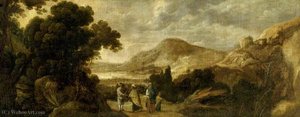
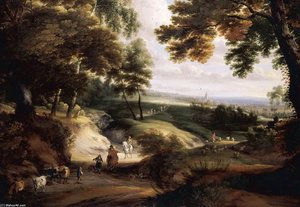
11Path to the Lake (1650) autorstwa Jacques D'ArthoisPath to the Lake1650 · Słowacka Galeria Narodowa w Bratysławie 12Deer Hunt (1649) autorstwa Jacques D'ArthoisDeer Hunt1649 · Bawarskie Państwowe Zbiory Malarstwa 13Falconry (1649) autorstwa Jacques D'ArthoisFalconry1649 · Bawarskie Państwowe Zbiory Malarstwa 14Landscape with Staffage (1649) autorstwa Jacques D'ArthoisLandscape with Staffage1649 · Bawarskie Państwowe Zbiory Malarstwa 15A Bay (1649) autorstwa Jacques D'ArthoisA Bay1649 · Bawarskie Państwowe Zbiory Malarstwa 16Forest Path (1649) autorstwa Jacques D'ArthoisForest Path1649 · Bawarskie Państwowe Zbiory Malarstwa 17Forest Edge (1649) autorstwa Jacques D'ArthoisForest Edge1649 · Bawarskie Państwowe Zbiory Malarstwa 18Wilderness Landscape with Waterfall (1649) autorstwa Jacques D'ArthoisWilderness Landscape with Waterfall1649 · Bawarskie Państwowe Zbiory Malarstwa 19Landscape with Trees and Water (1649) autorstwa Jacques D'ArthoisLandscape with Trees and Water1649 · Bawarskie Państwowe Zbiory Malarstwa 20Landscape with Trees (1649) autorstwa Jacques D'ArthoisLandscape with Trees1649 · Bawarskie Państwowe Zbiory Malarstwa 21Sunken Road in a Wood (1658) autorstwa Jacques D'ArthoisSunken Road in a Wood1658 · National Museum of Art, Architecture and Design 22Woodland Scene (1653) autorstwa Jacques D'ArthoisWoodland Scene1653 · National Museum of Art, Architecture and Design 23Landscape near Brussels (1654) autorstwa Jacques D'ArthoisLandscape near Brussels1654 · Ermitaż 24Wooded landscape with hunters and travellers (1657) autorstwa Jacques D'ArthoisWooded landscape with hunters and travellers1657 · Groninger Museum 25Wooded Landscape with Hunters (1657) autorstwa Jacques D'ArthoisWooded Landscape with Hunters1657 · Statens Museum for Kunst 26View taken in Brabant with figures and animals (1660) autorstwa Jacques D'ArthoisView taken in Brabant with figures and animals1660 · Musée des Beaux-Arts de Quimper 27Mountain pass with soldiers attacking peasants (1657) autorstwa Jacques D'ArthoisMountain pass with soldiers attacking peasants1657 · Staatliche Kunsthalle Karlsruhe 28Rudolf von Habsburg Handing over his Horse to a Priest (1650) autorstwa Jacques D'ArthoisRudolf von Habsburg Handing over his Horse to a Priest1650 29Landscape (1665) autorstwa Jacques D'ArthoisLandscape1665 · Groeningemuseum 30Landscape with a Group of Trees at the Shore of a Lake, Three Riders on the Road in the Foreground (1667) autorstwa Jacques D'ArthoisLandscape with a Group of Trees at the Shore of a Lake, Three Riders on the Road in the Foreground1667 · Städel Museum 31Waters with Planted Dykes (1660) autorstwa Jacques D'ArthoisWaters with Planted Dykes1660 · Bawarskie Państwowe Zbiory Malarstwa 32Cavaliers Halting on a Road in a Landscape autorstwa Jacques D'ArthoisCavaliers Halting on a Road in a LandscapeCalke Abbey 33Landscape with a River and Figures autorstwa Jacques D'ArthoisLandscape with a River and Figures 34Wooded Landscape autorstwa Jacques D'ArthoisWooded Landscape 35Edge of a Wood autorstwa Jacques D'ArthoisEdge of a WoodLuwr 36Landscape with Shepherd autorstwa Jacques D'ArthoisLandscape with ShepherdRezidenzgalerie Salzburg 37Pond at the edge of a wood autorstwa Jacques D'ArthoisPond at the edge of a woodPalais des Beaux-Arts de Lille 38Landscape with Peasants Repelling Latona autorstwa Jacques D'ArthoisLandscape with Peasants Repelling LatonaMusée Des Beaux 39Landscape: Woodland with Lake and Figures autorstwa Jacques D'ArthoisLandscape: Woodland with Lake and FiguresAuckland Art Gallery Toi o Tāmaki 40The Sonian forest with figures autorstwa Jacques D'ArthoisThe Sonian forest with figuresMuseum of Fine Arts Ghent (MSK) 41Landscape autorstwa Jacques D'ArthoisLandscapeKrólewskie Muzeum Sztuk Pięknych Antwerpia 42Road through a Forest autorstwa Jacques D'ArthoisRoad through a ForestMuseum of Fine Arts 43Landscape with a Rider in Red autorstwa Jacques D'ArthoisLandscape with a Rider in RedNationalmuseum 44View of the woods of Soignies and the ponds of the Rood Klooster autorstwa Jacques D'ArthoisView of the woods of Soignies and the ponds of the Rood Klooster 45Landscape with a Huntsman autorstwa Jacques D'ArthoisLandscape with a Huntsman 46Hunting party autorstwa Jacques D'ArthoisHunting party 47A wooded landscape autorstwa Jacques D'ArthoisA wooded landscape 48Peasants at the Edge of a Forest autorstwa Jacques D'ArthoisPeasants at the Edge of a Forest 49Landscape with a Hunting Party autorstwa Jacques D'ArthoisLandscape with a Hunting PartyPetworth House 50Landscape with a River and Horsemen autorstwa Jacques D'ArthoisLandscape with a River and Horsemen 51Landscape, Riverbank with Figures autorstwa Jacques D'ArthoisLandscape, Riverbank with Figures 52Landscape with Figures autorstwa Jacques D'ArthoisLandscape with Figures 53Flemish landscape autorstwa Jacques D'ArthoisFlemish landscape 54Woody Landscape with Gypsies Telling a Gentleman's Fortune autorstwa Jacques D'ArthoisWoody Landscape with Gypsies Telling a Gentleman's Fortune 55Wooded Landscape autorstwa Jacques D'ArthoisWooded Landscape 56A rocky cove with fisherfolk on the shore, an artist sketching in the foreground autorstwa Jacques D'ArthoisA rocky cove with fisherfolk on the shore, an artist sketching in the foreground 57An Extensive Wooded Landscape with Travellers on a Path autorstwa Jacques D'ArthoisAn Extensive Wooded Landscape with Travellers on a Path

Tematy, które przyciągnęły wzrok Jacques D'Arthois

Cztery motywy najczęściej powracające w tych oryginałach, z których każdy doczekał się swojego najdoskonalszego przykładu.

Muzea przechowujące oryginały Jacques D'Arthois

8 muzeów, w których znajduje się najwięcej obrazów z tej strony.

Muzea Miasto Dzieła artysty Jacques D'Arthois Obrazy z tej listy
Bawarskie Państwowe Zbiory Malarstwa, MonachiumBawarskie Państwowe Zbiory Malarstwa Monachium 12 The Ford in the Forest, Landscape with Stag Hunt, Deer Hunt
Kunsthistorisches Museum, WiedeńKunsthistorisches Museum Wiedeń 3 Extensive forest landscape with St. Stanisław Kostka, Extensive forest landscape with St. Francis Borgia, Landscape with a herd
Ermitaż, Sankt PetersburgErmitaż Sankt Petersburg 3 Landscape, Landscape with a Herd, Landscape near Brussels
Städel Museum, Frankfurt nad MenemStädel Museum Frankfurt nad Menem 2 Landscape with Entrance to a Forrest, Landscape with a Group of Trees at the Shore of a Lake, Three Riders on the Road in the Foreground
National Museum of Art, Architecture and Design, OsloNational Museum of Art, Architecture and Design Oslo 2 Sunken Road in a Wood, Woodland Scene
Metropolitan Museum of Art, Nowy JorkMetropolitan Museum of Art Nowy Jork 1 Family Group in a Landscape
Słowacka Galeria Narodowa w Bratysławie, BratysławaSłowacka Galeria Narodowa w Bratysławie Bratysława 1 Path to the Lake
Groninger Museum, GroningenGroninger Museum Groningen 1 Wooded landscape with hunters and travellers

Jacques D'Arthois na przestrzeni dekad: jeden unikatowy oryginał dla każdego

Dzieła według dekad

Wybierz dekadę, aby zobaczyć dzieło, które ją definiuje.

Obrazy artysty Jacques D'Arthois: pytania do galerii

Jakie jest najsłynniejsze dzieło artysty Jacques D'Arthois?Odkryj odpowiedź

Family Group in a Landscape (1645), Metropolitan Museum of Art, Nowy Jork. Następne są Extensive forest landscape with St. Stanisław Kostka (1665) oraz The Ford in the Forest (1660).

W jakim wieku Jacques D'Arthois stworzył/a Family Group in a Landscape?Odkryj odpowiedź

32 lat: Family Group in a Landscape pochodzi z 1645, a Jacques D'Arthois urodził(a) się w 1613.

Które dziesięć obrazów Jacques D'Arthois jest najbardziej znanych?Odkryj odpowiedź

Family Group in a Landscape, Extensive forest landscape with St. Stanisław Kostka, The Ford in the Forest, Landscape with Entrance to a Forrest, Extensive forest landscape with St. Francis Borgia, Landscape with Stag Hunt, Landscape, Landscape with a Herd, Landscape with a herd i Landscape with waterfall. Powyższy ranking zawiera rok powstania oraz muzeum dla każdego z nich.

Ile znanych dzieł stworzył Jacques D'Arthois?Odkryj odpowiedź

Nasz katalog zawiera 59 dzieł artysty Jacques D'Arthois, datowanych od 1630 do 1682.

Gdzie można zobaczyć najsłynniejsze oryginały Jacques D'Arthois?Odkryj odpowiedź

W większości znajdują się w Bawarskie Państwowe Zbiory Malarstwa (Monachium), Kunsthistorisches Museum (Wiedeń) i Ermitaż (Sankt Petersburg). Powyższa tabela muzeów zawiera ich pełną listę.

W jakim okresie Jacques D'Arthois stworzył/a swoje najsłynniejsze obrazy?Odkryj odpowiedź

W 1640s: 11 z 57 dzieł na tej stronie powstało w tym czasie, w tym Family Group in a Landscape.

Który z najsłynniejszych obrazów artysty Jacques D'Arthois powstał najwcześniej, a który najpóźniej?Odkryj odpowiedź

Na tej stronie najwcześniejszy to Landscape with a Herd (1630), a najpóźniejszy Landscape (1682).

Jakie tematy preferował Jacques D'Arthois?Odkryj odpowiedź

Landscape (32), Sky (27) i Forest (27), w ramach 57 dzieł na tej stronie.

Jakich materiałów Jacques D'Arthois używał najczęściej?Odkryj odpowiedź

Oil On Canvas, dla 26 z 57 dzieł na tej stronie.

Do jakiego nurtu należy twórczość Jacques D'Arthois?Odkryj odpowiedź

Baroque, sądząc po oryginałach na tej stronie.

Jakie oryginały Jacques D'Arthois można zobaczyć w Bawarskie Państwowe Zbiory Malarstwa?Odkryj odpowiedź

The Ford in the Forest, Landscape with Stag Hunt i Deer Hunt: Bawarskie Państwowe Zbiory Malarstwa, Monachium posiada 12 dzieł widocznych na tej stronie.

Jacques D'Arthois: portret artysty

Mistrz brukselskich scen leśnych: Życie i sztuka Jacques d’Arthois

Jacques d'Arthois, urodzony w Brukseli w 1613 roku, pojawił się na scenie artystycznej w niezwykle żywotnym okresie dla sztuki flamandzkiej—w czasach, gdy malarstwo pejzażowe zyskiwało stałą pozycję, krocząc ramię w ramię z ugruntowanymi tradycjami portretu i malarstwa historycznego. Choć nie cieszył się tak powszechną sławą jak niektórzy z jego współczesnych, d’Arthois wypracował dla siebie wyjątkową niszę, tworząc niezwykle szczegółowe przedstawienia leśnych krajobrazów, zamieszkanych przez postacie oddane codziennym trudom lub sielankowym, pasterskim zajęciom. Jego kariera rozwijała się na tle politycznych i religijnych niepokojów, a jednak zdołał on wykształcić spójny styl, który silnie oddziaływał na mecenasów poszukujących w swoim otoczeniu zarówno piękna, jak i spokoju. Jako uczeń Jana Mertensa od 1625 roku, d'Arthois przeszedł przez proces kształcenia, którego szczegóły pozostają nieco niejasne; wiadomo jednak z całą pewnością, że szybko rozwinął niezwykłą pasję do oddawania świata natury z uderzającą precyzją. Przyjęcie do cechu św. Łukasza w Brukseli w 1634 roku stanowiło formalne uznanie jego talentów, ugruntowując jego pozycję jako profesjonalnego malarza w tętniącej życiem społeczności artystycznej miasta.

Projektant tkanin i ideał pasterski

D'Arthois nie ograniczał się wyłącznie do malarstwa sztalugowego; odniósł również znaczący sukces jako projektant tkanin, stając się w 1655 roku oficjalnym projektantem kartonów dla miasta Brukseli. Ta podwójna rola ma fundamentalne znaczenie, gdyż rzuca światło na jego szerokie wrażliwość artystyczną – zdolność do przekładania kompozycji z jednego medium na drugie oraz głębokie zrozumienie zasad dekoracyjnych. Projektowanie tkanin wymagało klarowności formy i narracji, co prawdopodobnie wywarło istotny wpływ na jego malarstwo, skłaniając go do tworzenia scen, które były jednocześnie wizualnie porywające i łatwe do odczytania przez odbiorcę. Jego krajobrazy często przywołują poczucie idealistycznej harmonii, odzwierciedlając ideał pasterski tak powszechny w sztuce XVII wieku – tęsknotę za prostszym, bardziej cnotliwym życiem zakorzenionym w naturze. Lasy otaczające Brukselę stanowiły jego główne źródło inspiracji, a on sam przedstawiał je z niezwykłą uważnością na efekty atmosferyczne oraz subtelne niuanse światła i cienia. Postacie w jego kompozycjach były często dodawane przez innych artystów, w szczególności przez Davida Teniersa Młodszego oraz Gonzalesa Coquesa, co zaowocowało powstaniem dzieł kolaboracyjnych, prezentujących zarówno biegłość D'Arthois w malowaniu pejzaży, jak i kunszt malarzy figuralnych w ożywianiu tych scen.

Wpływy i rozwój artystyczny

Śledzenie inspiracji kształtujących styl Jacques D'Arthois ukazuje fascynującą, złożoną grę tradycji artystycznych. Jego wczesne dzieła zdradzają wyraźne długi wobec Lodewijka de Vaddera, innego wybitnego brukselskiego pejzażarza, którego kompozycje często operowały podobnymi, leśnymi sceneriami i specyficznymi grupami postaci. Jednak z biegiem czasu d'Arthois stopniowo wypracowywał własny, niepowtarzalny głos, charakteryzujący się jeszcze większym przywiązaniem do detalu oraz bardziej wyrafinowanym wyczuciem perspektywy powietrznej. W jego początkowych płótnach można również dostrzec ślady oddziaływania Denisa van Alsloota, co objawia się zwłaszcza w niezwykle precyzyjnym sposobie oddawania kształtów drzew i gęstwiny liści. Wraz z dojrzałością artystyczną, Jacques D'Arthois zaczął eksperymentować z krajobrazami o większej skali, odpowiadając na rosnące zapotrzebowanie na dzieła dekoracyjne, które mogłyby zdobić wnętrza kościołów i opactw. Tak ambitne kompozycje wymagały od malarza nie tylko wyrafinowanego zrozumienia organizacji przestrzeni, ale także prawdziwego mistrzostwa w operowaniu kolorem i tonacją. Choć dowody dokumentalne są w tej kwestii ograniczone, przypuszcza się, że około 1650 roku Cornelis Huysmans mógł przebywać w pracowni d'Arthois, choć skala jego wpływu na twórczość mistrza pozostaje kwestią niepewną.

Dziedzictwo naśladownictwa i znaczenie historyczne

Jacques D'Arthois cieszył się za życia owocną karierą, przyciągając liczne zlecenia zarówno od prywatnych mecenasów, jak i instytucji religijnych. Jego pomyślność i głęboka więź z naturą, którą tak żarliwie uwieczniał na płótnach, znalazły odzwierciedlenie w posiadanych przez niego nieruchomościach, w tym w domu położonym w malowniczym Lesie Sonian. Choć w późniejszych latach życia musiał mierzyć się z trudnościami finansowymi, jego artystyczna sława nie osłabła. Wpływ, jaki wywarł na sztukę, wykraczał daleko poza granice Brukseli, o czym świadczy obecność uczniów, którzy nie tylko naśladowali jego styl, ale także szerzyli jego zasady estetyczne w całym regionie. W świecie sztuki fascynuje fakt, że choć żadne dzieło nie zostało jednoznacznie podpisane przez jego brata Nicolaesa czy syna Jana Baptysty, uważa się, że wiele obrazów przypisywanych Jacques'owi D'Arthois w rzeczywistości wyszło spod pędzli członków jego rodziny. Ta niejednoznaczność podkreśla wyzwania, jakie niosą ze sobą atrybucje siedemnastowiecznych flamandzkich pejzaży, ale jednocześnie rzuca światło na niezwykłą trwałość stylu D'Arthois — stylu, który przez pokolenia był masowo kopiowany i podążany przez innych twórców krajobrazu. Jego wkład w sztukę nie polegał na radykalnym przełomie, lecz na mistrzowskim opanowaniu uwielbianego gatunku oraz niezwykłej zdolności do chwytania piękna i spokoju belgijskiej wsi. Artysta ten stanowi kluczowe ogniwo w rozwoju flamandzkiego malarstwa pejzażowego, stanowiąc pomost między dawnymi tradycjami a bardziej wyrafinowanymi nurtami, które rozkwitły w kolejnych stuleciach.