Portret Jacob Van Es

Obrazy: 44 najsłynniejszych dzieł artysty Jacob Van Es – spojrzenie galerii

Aktualizacja: Listopad 2026 · ranking według naszego wskaźnika popularności (liczba wyszukiwań, wizyt i zamówień dla każdego dzieła) · 46 dzieł Jacob Van Es w naszym katalogu

W skrócie

Według opinii kuratorów galerii, najsłynniejszym obrazem Jacob Van Es jest Still-Life with Fruit, którego oryginał znajduje się w Groeninge Museum w Brugia. Nature morte au pichet i Still Life with Oysters, Fruit and Pastry (1619) dopełniają trio, które zna każde oko. Z 46 dzieł Jacob Van Es w naszym katalogu, galeria prezentuje poniżej 44 najsłynniejszych prac – każda z nich jest oryginałem z podaniem roku powstania, muzeum oraz cech wyróżniających ją na tle innych.

1596 – 1666, Antwerpia Baroque Najwięcej dzieł: Groeninge Museum

10 najlepszych obrazów artysty Jacob Van Es w galerii

1
Still-Life with Fruit autorstwa Jacob Van Es

Still-Life with Fruit

Oil On Panel · Groeninge Museum, Brugia

Jacob van Es presents Still-Life with Fruit, an oil on panel that captures a quiet arrangement of nature. The work measures 224 x 34 cm. It resides within the Groeninge Museum in Brugge, Belgium. The surface holds the weight of the fruit in a steady, silent presence.

2
Nature morte au pichet autorstwa Jacob Van Es

Nature morte au pichet

Oil On Canvas

A single lemon rests upon a dark velvet surface, its peel curling away in a waxy spiral. Beside it, a silver pitcher catches a soft, unseen light, casting a gentle glow across the scene. The composition is a study in stillness, where the heavy weight of the metal meets the delicate, organic curves of a rose. Shadows pool deeply in the folds of the fabric, creating a sense of immediate,…

3
Still Life with Oysters, Fruit and Pastry (1619) autorstwa Jacob Van Es

Still Life with Oysters, Fruit and Pastry

1619 · Oil On Canvas · Museum of Fine Arts Ghent (MSK), Gandawa

In Still Life with Oysters, Fruit and Pastry, Jacob van Es organizes a dense, horizontal arrangement of luxury items across a wooden tabletop. The composition utilizes a pyramidal structure to guide the eye through a collection of oysters, grapes, peaches, plums, pastries, and ornate metal vessels. This arrangement creates a sense of immediate presence through a direct, eye-level view. Depth is achieved through the strategic overlapping of objects and a…

4
stillife (1621) autorstwa Jacob Van Es

stillife

1621 · Oil

Shadows stretch across a draped tabletop, claiming the spaces between objects in a dance of light and dark. In this monochrome world, the air feels heavy with the scent of salt and citrus. An open oyster shell rests in the foreground, its pearlescent interior catching a sharp, directional light that seems to emerge from the upper left. Nearby, a lemon lies partially peeled, its curling rind frozen in a moment…

5
Floral still life of three roses in a glass vase surrounded by three butterflies, a beetle and a caterpillar (1621) autorstwa Jacob Van Es

Floral still life of three roses in a glass vase surrounded by three butterflies, a beetle and a caterpillar

1621 · Oil On Panel · Musée Des Beaux, Strasburg

A glass vase containing three large roses occupies the center of this 1621 oil on panel painting. The blooms appear in shades of white, pink, and deep red, positioned against a dark, near-black background. Light enters from the upper left, casting soft highlights on the petals and creating depth through shadows within the layers of the flowers. The vase sits upon a surface where a small caterpillar crawls along the…

6
Still Life (1631) autorstwa Jacob Van Es

Still Life

1631 · Oil On Panel · Bawarskie Państwowe Zbiory Malarstwa, Monachium

A horizontal arrangement of food items rests upon a dark, flat surface, emerging from a deep, shadowy background. The composition centers on a loaf of bread, a peeled citrus fruit, and a whole citrus fruit, accompanied by a small round fruit and a plate containing shrimp and a piece of broken fruit. In the background, a glass containing liquid catches the light. Directional lighting from the upper left defines the…

7
Still Life with Fruit and Ham (1627) autorstwa Jacob Van Es

Still Life with Fruit and Ham

1627 · Oil On Panel

A heavy piece of ham rests upon a platter, its surface catching a sharp, singular light. Around it, the table is crowded with the weight of a harvest. Grapes hang in clusters, their skins taut and translucent, while peaches and melons sit in a pyramidal arrangement. The scene is set against a dark, atmospheric background that pushes the objects forward into the viewer's space. Every texture is a tactile encounter,…

8
Breakfast Piece with Cheese and Goblet (1634) autorstwa Jacob Van Es

Breakfast Piece with Cheese and Goblet

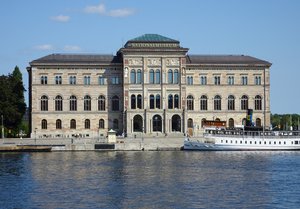
1634 · Oil On Canvas · Nationalmuseum, Stockholm

A heavy wooden tabletop anchors this 1634 composition, supporting a collection of breakfast items that emerge from a dark, indeterminate background. The arrangement is defined by a sharp chiaroscuro, where light enters from the upper left to sculpt the volume of each object. A large wedge of cheese, characterized by its porous texture, sits near a ceramic jug and ornate silver vessels. Sliced meat and citrus fruit provide deep reds…

9
Still Life with Fish on a Vending Counter (1637) autorstwa Jacob Van Es

Still Life with Fish on a Vending Counter

1637 · Oil On Canvas · Städel Museum, Frankfurt nad Menem

Still Life with Fish on a Vending Counter is a work by Jacob van Es, a prominent figure in the first generation of Flemish still-life painters. Born in Antwerp, Belgium, in 1596, Van Es established himself within the city's competitive artistic ecosystem. By 1617, he had achieved the status of master within the Antwerp Guild of Saint Luke. This professional standing allowed him to contribute to the development of the…

10
Still Life (1640) autorstwa Jacob Van Es

Still Life

1640 · Oil On Canvas · Królewskie Muzeum Sztuk Pięknych Antwerpia, Antwerpia

The painting titled Still Life is a work by Jacob van Es. It emerged from the artist's brush around 1640. This composition captures a quiet abundance of food, arranged with a focus on the tactile reality of the objects. A lobster, oysters, and fruit rest upon a dark surface, their forms defined by a sharp, directional light.

Obrazy artysty Jacob Van Es, uszeregowane od 11 do 44 miejsca

11Still life with fish, kitchenware, crabs and onions (1641) autorstwa Jacob Van EsStill life with fish, kitchenware, crabs and onions1641 · Staatliches Museum Schwerin 12Flower Stilllife (1640) autorstwa Jacob Van EsFlower Stilllife1640 · Niedersächsisches Landesmuseum 13Still life of bread, plate with olives, lemon and glassware (1640) autorstwa Jacob Van EsStill life of bread, plate with olives, lemon and glassware1640 · Staatliche Kunsthalle Karlsruhe 14Still life with a basket of fruit and a squirrel, glasses, and a cut melon on a tabletop (1650) autorstwa Jacob Van EsStill life with a basket of fruit and a squirrel, glasses, and a cut melon on a tabletop1650 15Still life with oysters, a jug and a wine glass (1650) autorstwa Jacob Van EsStill life with oysters, a jug and a wine glass1650 16Still life with fruit, artichokes, and a columbine cup (1650) autorstwa Jacob Van EsStill life with fruit, artichokes, and a columbine cup1650 17Plums in a Chinese dish (1650) autorstwa Jacob Van EsPlums in a Chinese dish1650 18Plums in a Chinese dish (1650) autorstwa Jacob Van EsPlums in a Chinese dish1650 · Thyssen-Bornemisza Museum 19Breakfast with Oysters (1645) autorstwa Jacob Van EsBreakfast with Oysters1645 · Ermitaż 20APPRETS D'UN REPAS autorstwa Jacob Van EsAPPRETS D'UN REPASLuwr 21Oysters and lemons autorstwa Jacob Van EsOysters and lemonsMuseo del Prado 22Still life with pitcher autorstwa Jacob Van EsStill life with pitcher 23HUITRES ET FRUITS autorstwa Jacob Van EsHUITRES ET FRUITS 24Still life of blue and white grapes, together with wild strawberries, all in a basked on a wooden ledge autorstwa Jacob Van EsStill life of blue and white grapes, together with wild strawberries, all in a basked on a wooden ledge 25Untitled (767) autorstwa Jacob Van EsUntitled (767) 26Still life with bacon autorstwa Jacob Van EsStill life with baconMusée des Beaux-Arts de Valenciennes 27Still life with squirrel autorstwa Jacob Van EsStill life with squirrel 28Peaches, pears, nuts and a vase of carnations on a table top autorstwa Jacob Van EsPeaches, pears, nuts and a vase of carnations on a table top 29Nancy lunch autorstwa Jacob Van EsNancy lunchMusée des Beaux-Arts de Nancy 30Still Life with lobster and oysters autorstwa Jacob Van EsStill Life with lobster and oysters 31Still-Life autorstwa Jacob Van EsStill-Life 32Nature morte au jambon autorstwa Jacob Van EsNature morte au jambon 33Le Déjeuner de hareng Nature morte au hareng autorstwa Jacob Van EsLe Déjeuner de hareng Nature morte au hareng 34Nature morte aux fruits dans des porcelaines autorstwa Jacob Van EsNature morte aux fruits dans des porcelaines 35Still Life with Meat Pies, a Roast Fowl, Olives, Capers and Strawberries autorstwa Jacob Van EsStill Life with Meat Pies, a Roast Fowl, Olives, Capers and Strawberries 36Still life with peaches, grapes and nuts on an entablature autorstwa Jacob Van EsStill life with peaches, grapes and nuts on an entablature 37Grapes with a Half Walnut autorstwa Jacob Van EsGrapes with a Half Walnut 38Still life with a salt cellar. autorstwa Jacob Van EsStill life with a salt cellar. 39Nature morte à l'écureuil autorstwa Jacob Van EsNature morte à l'écureuilMusée des Beaux-Arts 40Still-Life of Grapes, Plums and Apples autorstwa Jacob Van EsStill-Life of Grapes, Plums and Apples 41Grape with Walnut autorstwa Jacob Van EsGrape with WalnutNárodní galerie Praha 42An Iris and Three Roses in an Earthenware Pot autorstwa Jacob Van EsAn Iris and Three Roses in an Earthenware PotFondation Custodia 43Still life with a squirrel and a parrot (detail) autorstwa Jacob Van EsStill life with a squirrel and a parrot (detail) 44Still life with a fish on a terracotta plate, bunches of asparagus, artichokes and cherries in a scalloped dish, together with half a cheese in a basket, bread rolls, fraises de bois, lemons, oranges and crabs all arranged on a table top autorstwa Jacob Van EsStill life with a fish on a terracotta plate, bunches of asparagus, artichokes and cherries in a scalloped dish, together with half a cheese in a basket, bread rolls, fraises de bois, lemons, oranges and crabs all arranged on a table top

Słynne obrazy Jacob Van Es epoka po epoce

Tematy, które przyciągnęły wzrok Jacob Van Es

Cztery motywy najczęściej powracające w tych oryginałach, z których każdy doczekał się swojego najdoskonalszego przykładu.

Muzea przechowujące oryginały Jacob Van Es

8 muzeów, w których znajduje się najwięcej obrazów z tej strony.

Muzea Miasto Dzieła artysty Jacob Van Es Obrazy z tej listy
Groeninge Museum, BrugiaGroeninge Museum Brugia 1 Still-Life with Fruit
Museum of Fine Arts Ghent (MSK), GandawaMuseum of Fine Arts Ghent (MSK) Gandawa 1 Still Life with Oysters, Fruit and Pastry
Musée Des Beaux, StrasburgMusée Des Beaux Strasburg 1 Floral still life of three roses in a glass vase surrounded by three butterflies, a beetle and a caterpillar
Bawarskie Państwowe Zbiory Malarstwa, MonachiumBawarskie Państwowe Zbiory Malarstwa Monachium 1 Still Life
Nationalmuseum, StockholmNationalmuseum Stockholm 1 Breakfast Piece with Cheese and Goblet
Städel Museum, Frankfurt nad MenemStädel Museum Frankfurt nad Menem 1 Still Life with Fish on a Vending Counter
Królewskie Muzeum Sztuk Pięknych Antwerpia, AntwerpiaKrólewskie Muzeum Sztuk Pięknych Antwerpia Antwerpia 1 Still Life
Staatliches Museum Schwerin, SchwerinStaatliches Museum Schwerin Schwerin 1 Still life with fish, kitchenware, crabs and onions

Jacob Van Es, jedno kultowe dzieło na dekadę

Dzieła według dekad

Wybierz dekadę, aby zobaczyć dzieło, które ją definiuje.

Obrazy artysty Jacob Van Es: odpowiedzi galerii

Który obraz Jacob Van Es jest najsłynniejszy ze wszystkich?Odkryj odpowiedź

Still-Life with Fruit, Groeninge Museum, Brugia. Następne są Nature morte au pichet oraz Still Life with Oysters, Fruit and Pastry (1619).

Które to 10 najlepszych obrazów Jacob Van Es?Odkryj odpowiedź

Still-Life with Fruit, Nature morte au pichet, Still Life with Oysters, Fruit and Pastry, stillife, Floral still life of three roses in a glass vase surrounded by three butterflies, a beetle and a caterpillar, Still Life, Still Life with Fruit and Ham, Breakfast Piece with Cheese and Goblet, Still Life with Fish on a Vending Counter i Still Life. Powyższy ranking zawiera rok powstania oraz muzeum dla każdego z nich.

Ile dzieł stworzył/a Jacob Van Es?Odkryj odpowiedź

Nasz katalog zawiera 46 dzieł artysty Jacob Van Es, datowanych od 1619 do 1650.

Gdzie można znaleźć najsłynniejsze oryginały autorstwa Jacob Van Es?Odkryj odpowiedź

W większości znajdują się w Groeninge Museum (Brugia), Museum of Fine Arts Ghent (MSK) (Gandawa) i Musée Des Beaux (Strasburg). Powyższa tabela muzeów zawiera ich pełną listę.

Kiedy Jacob Van Es stworzył swoje najsłynniejsze obrazy?Odkryj odpowiedź

W 1640s: 5 z 44 dzieł na tej stronie powstało w tym czasie, w tym Still Life.

Które z najsłynniejszych dzieł Jacob Van Es należą do jego najwcześniejszych i najpóźniejszych prac?Odkryj odpowiedź

Na tej stronie najwcześniejszy to Still Life with Oysters, Fruit and Pastry (1619), a najpóźniejszy Still life with a basket of fruit and a squirrel, glasses, and a cut melon on a tabletop (1650).

Do jakich tematów Jacob Van Es powracał najczęściej?Odkryj odpowiedź

Fruit (12), Bread (9) i Grapes (8), w ramach 44 dzieł na tej stronie.

W jakiej technice najczęściej tworzył Jacob Van Es?Odkryj odpowiedź

Oil On Panel, dla 15 z 44 dzieł na tej stronie.

Z jakim nurtem związany jest Jacob Van Es?Odkryj odpowiedź

Baroque, sądząc po oryginałach na tej stronie.

Jacob Van Es: artysta

Cichy przepych Jacob Van Es

W złotym wieku flamandzkiego malarstwa barokowego, niewielu artystów potrafiło uchwycić ulotne piękno materialnego świata z taką powściągliwą gracją jak Jacob Van Es. Jako mistrz martwej natury, Van Es zajął kluczowe miejsce w pierwszym pokoleniu flamandzkich malarzy, którzy wynieśli przedstawianie jedzenia, flory i codziennych przedmiotów do rangi głębokiego, zmysłowego doświadczenia. Podczas gdy jego współcześni często skłaniali się ku dramaturgii lub przesadnemu przepychowi, Van Es pielęgnował estetykę wyrafinowanej elegancji. Jego dzieła, charakteryzujące się żarliwym oddaniem teksturze i światłu, nie tylko prezentują obiekty; one zapraszają widza do cichego, kontemplacyjnego dialogu z obfitością natury.

Choć szczegóły biograficzne jego wczesnych lat pozostają częściowo spowite mgłą siedemnastowiecznej historii, wiemy, że Van Es był głęboko zakorzeniony w tętniącym życiem ekosystemie artystycznym Antwerpii. Szacuje się, że urodził się około 1596 roku, prawdopodobnie w zamożnej rodzinie kupieckiej. To stabilne pochodzenie mogło stanowić fundament dla jego zdyscyplinowanego podejścia do sztuki. Do 1617 roku osiągnął prestiżowy status mistrza w Antwerpskim cechu św. Łukasza. Co ciekawe, brak wzmianek o jego nauce wewnątrz cechu sugeruje, że jego formacyjne szkolenie mogło odbywać się gdzie indziej, być może poprzez chłonięcie stylistycznych niuansów takich mistrzów jak Adam van Noort czy Maerten de Vos, zanim powrócił, by zbudować swoje dziedzictwo w rodzimym mieście.

Symfonia tekstury i światła

Prawdziwy geniusz Van Es tkwi w jego zdolności do tchnięcia życia w to, co nieożywione. Jego kompozycje to lekcje mistrzowskiej techniki chiaroscuro, gdzie subtelne przejścia między światłem a cieniem tworzą namacalne poczucie objętości i obecności. Obserwując jedną z jego kompozycji z owocami, takich jak słynne przedstawienia brzoskwiń, winogron czy orzechów, uderza sposób, w jaki światło otula aksamitną skórkę brzoskwini lub błyszczy na półprzezroczystej powierzchni winogrona. Posiadał on niezwykłą zdolność oddawania dotyku – szorstkości muszli ostrygi, kruchości liścia czy ciężaru gzymsu.

Jego techniczny repertuar wykraczał poza proste studia żywności, wkraczając w delikatny świat aranżacji kwiatowych, a nawet kolaboracyjnych malarstw girlandowych. W tych pracach współpracował z innymi mistrzami, tworząc misterne wieńce z kwiatów, które stanowiły ramy dla centralnych tematów religijnych lub portretowych. Ten duch współpracy podkreśla jego integrację z szerszą flamandzką tradycją, stając ramię w ramię z takimi luminarzami jak Osias Beert i Clara Peeters. Jego pociągnięcia pędzla nigdy nie były ostentacyjne; zamiast tego służyły wyższemu celowi: oddaniu hołdu skomplikowanym detalom świata naturalnego, sprawiając, że każdy okruch, kropla i płatek wydawały się zakotwiczone w rzeczywistości.

Dziedzictwo i znaczenie historyczne

Sukces Jacob Van Es nie był jedynie lokalnym fenomenem, lecz uznanym standardem doskonałości na całym siedemnastowiecznym rynku sztuki. Trwała wartość jego twórczości znajduje potwierdzenie w obecności jego dzieł w najbardziej prestiżowych kolekcjach epoki. Co najważniejsze, legendarny Peter Paul Rubens uwzględnił dwa dzieła Van Es w swoim prywatnym inwentarzu, co stanowi świadectwo szacunku, jakim nawet giganci ery baroku darzyli jego kunszt. Jego pozycja społeczna była równie znacząca; fakt, że wybitni artyści, tacy jak Jacob Jordaens, pełnili funkcję ojców chrzestnych jego dzieci, sugeruje, że poruszał się on w najwyższych kręgach intelektualnej i artystycznej elity Antwerpii.

Patrząc wstecz na jego dorobek, widzimy coś więcej niż tylko artefakty historyczne; widzimy most między renesansowym skupieniem na obserwacji a barokową pasją do dramatyzmu. Wkład Van Es w holenderską i flamandzką tradycję martwej natury pozostaje fundamentalny. Pomógł on zdefiniować gatunek, który celebrował piękno tego, co przyziemne, zmieniając zwykłe śniadanie lub misę owoców w medytację nad obfitością, śmiertelnością i ulotną naturą czasu. Jego dziedzictwo żyje w każdym obrazie, który usiłuje odnaleźć to, co niezwykłe, w tym, co zwyczajne.